
7 Signs of Stucco Leaks: Don’t Let Your Walls Throw a Tantrum
Is Your Stucco Hiding a Costly Secret? What Homeowners Need to Know
Stucco siding water damage is one of the most expensive and deceptive problems a homeowner can face. Water sneaks behind the surface, silently rotting wood, feeding mold, and threatening your home’s structure — often for years before you see a single warning sign.
Here’s a quick overview of what to look for:
| Sign | What It Means |
|---|---|
| Cracks in stucco | Water entry points, especially around windows and doors |
| Brown or dark staining | Water carrying contaminants through the wall |
| Efflorescence (white powder) | Dissolved salts left behind by evaporating moisture |
| Bubbling or blistering | Moisture trapped beneath the surface |
| Crumbling or soft texture | Advanced deterioration, possible rot behind the wall |
| Soft drywall inside | Moisture has already reached your interior walls |
| Musty odors | Likely mold growth behind the stucco |
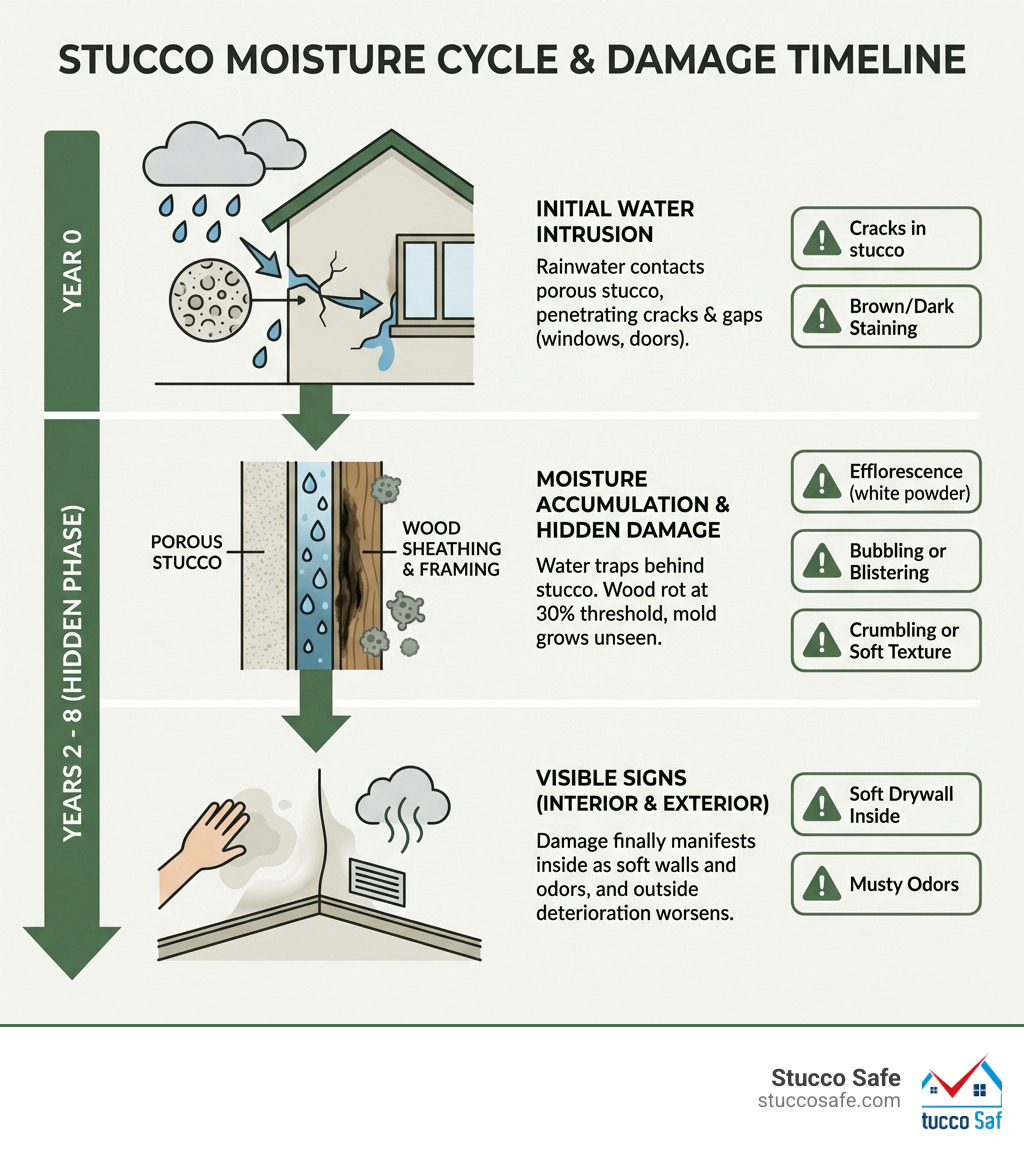
The problem runs deeper than most homeowners realize. By the time visible signs appear on the outside, the damage inside — to your wood sheathing, framing, and insulation — has often already been building for years. In fact, it can take anywhere from 2 to 8 years for stucco problems to become visible, and homes built between 1993 and 2006 carry a particularly high failure rate due to building codes that allowed incorrect stucco installation practices.
If you’re planning to sell, or simply want to protect your investment, catching this early is everything.
I’m Gabe Kesslick, an EDI Level 2 Certified Stucco Inspector and Building Envelope Forensic Inspector with over two decades of experience diagnosing stucco siding water damage across Pennsylvania, New Jersey, and Delaware. In this guide, I’ll walk you through exactly what to look for, how professionals detect hidden moisture, and what your real options are when damage is found.
Simple stucco siding water damage word guide:
Understanding stucco siding water damage: The Silent Destroyer

To understand why stucco siding water damage is such a “silent destroyer,” we first have to look at what stucco actually is. Traditional stucco is a cement-based material, often made from Portland cement, sand, and lime. While it looks solid, it is actually a “reservoir system.” This means stucco is naturally porous; it absorbs water like a sponge when it rains and is designed to let that water evaporate back out when the sun shines.
However, modern home construction has changed the rules of the game. In homes built from the 1990s through the mid-2000s, builders often prioritized energy efficiency by creating “tight” envelopes. While closed-cell insulation and high-performance house wraps are great for your heating bill, they drastically reduce the “drying potential” of your walls. If water gets behind the stucco through a crack or a poorly sealed window, it becomes trapped. In older, “drafty” homes, this moisture might have dried out. In a modern home, it sits against your wood sheathing, creating a slow-motion disaster.
Furthermore, EPA’s guide on mold and moisture reminds us that mold only needs a little bit of water and a food source (like your plywood sheathing) to thrive. This is why stucco house issues are so prevalent in humid areas like Philadelphia and the surrounding suburbs; the environment simply doesn’t allow for easy drying once a leak begins.
7 Red Flags: Identifying Stucco Siding Water Damage
Because stucco is a reservoir, it can be hard to tell the difference between a wall that is just “wet” from rain and a wall that is suffering from moisture behind stucco. As inspectors, we look for specific “red flags” that suggest the water isn’t just on the surface—it’s getting inside.
Visual Cues of stucco siding water damage
- Cracking: Not all cracks are equal. Small hairline “spiderweb” cracks might be from the house settling, but larger cracks, especially those around windows and doors, are major highways for water.
- Efflorescence: Have you noticed a white, powdery substance on your walls? That’s efflorescence. As water moves through the stucco, it dissolves internal salts. When the water evaporates, it leaves the salt behind. If you see this, it means water is moving through your wall, not just over it.
- Brown Streaks and Stains: Often called “stucco tears,” these stucco water stains usually appear below the corners of windows or where the roof meets the wall. These stains are caused by rainwater carrying dirt and contaminants from inside the wall assembly to the surface.
- Bubbling and Peeling Paint: If your stucco is painted and you see blisters or peeling, it’s a sign that moisture is trapped between the stucco and the paint layer. This is a common issue when the wrong type of paint is used, preventing the stucco from “breathing.”
- Crumbling Texture: If you touch your stucco and it crumbles away like a dry cookie, the structural integrity of the material has failed. This usually happens after years of being saturated.
Hidden Symptoms and Interior Warnings
Sometimes the most telling signs aren’t on the outside at all.
- Interior Soft Spots and Odors: If you notice stucco window leaks appearing as damp spots on your interior drywall or a persistent musty, earthy smell in a specific room, you likely have a significant intrusion.
- Basement Moisture and Health Issues: Water that enters through the stucco often travels down the wall cavity, ending up in the basement or crawlspace. Additionally, The CDC’s mold resources note that hidden mold can cause unexplained respiratory issues, sneezing, or skin irritation for the inhabitants.
The High Stakes of Ignoring Moisture Intrusion
Ignoring stucco siding water damage is a bit like ignoring a small leak in a ship; eventually, the whole thing is going to have a problem. The magic number in our industry is 30%. When the moisture content of the wood sheathing behind your stucco reaches 30%, stucco wood rot begins. This isn’t just a cosmetic issue; the sheathing and framing are what hold your house up.
If left unchecked, the wood can become so soft that it can no longer hold the nails or staples that keep the stucco attached to the house. In extreme cases, this leads to “delamination,” where large chunks of stucco can actually fall off the wall. Furthermore, damp wood is a beacon for termites and carpenter ants, which can accelerate structural failure. From a financial perspective, a home with unaddressed stucco failure can lose significant property value, and many insurance companies in Pennsylvania and New Jersey are becoming increasingly hesitant to cover stucco-related claims without a clean inspection report.
Forensic Detection: How Professionals Measure Moisture
You cannot manage what you cannot measure. Because stucco is so good at hiding its secrets, we use forensic tools to see behind the curtain. At Stucco Safe, we don’t just “look” at the wall; we test it.
- Moisture Meters: We use professional-grade Extech moisture meters. Unlike cheap DIY versions, these provide an accurate reading from 1% to 100%.
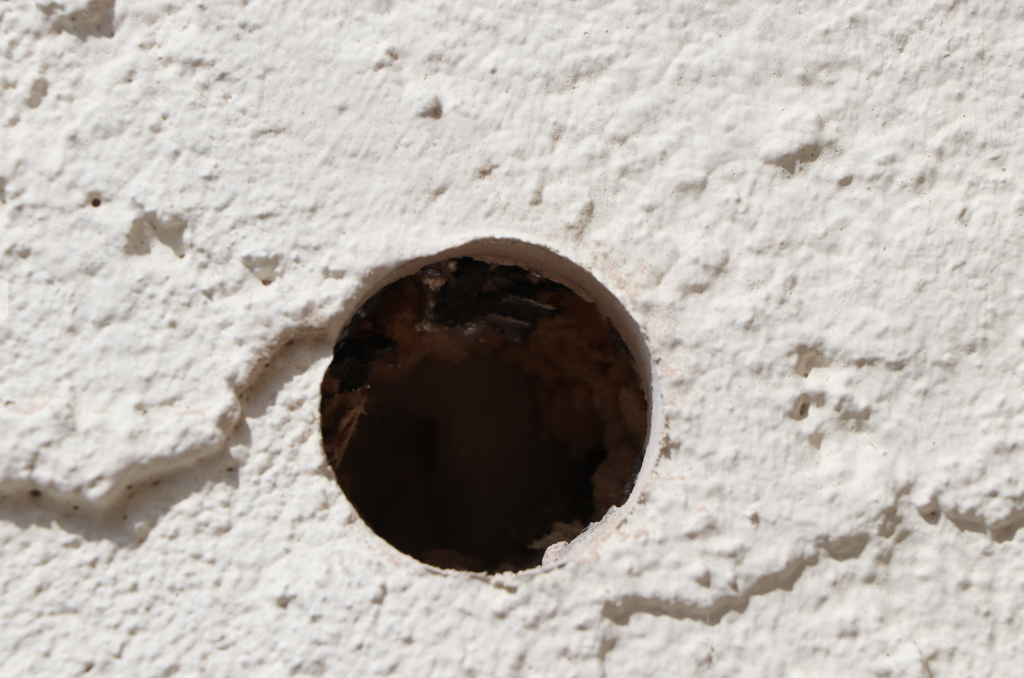
- Probe Testing: This is the “gold standard.” We drill tiny 3/16th-inch holes (about the size of a pencil eraser) in inconspicuous areas, such as under window corners. We then insert probes to measure the moisture and resistance of the wood substrate. A reading of over 20% moisture is a strong indicator that damage is occurring.
- Thermal Imaging: Infrared cameras can help us identify “cold spots” in a wall, which often indicate where moisture is gathered. However, we always follow this up with moisture intrusion stucco probing to confirm the findings.
- EDI Certification: Our inspectors are certified by the Exterior Design Institute (EDI), meaning they have undergone rigorous training to understand the complex physics of how water moves through a building’s envelope.
Once the testing is complete, we seal the tiny probe holes with color-matched, ASTM C920-compliant sealant, leaving your home exactly as we found it—just with a lot more data.
Repair vs. Remediation: Permanent Fixes for stucco siding water damage
When we find damage, homeowners usually ask: “Can I just patch it?” It is vital to understand the difference between a “patch” and a “cure.”
| Feature | Stucco Repair (Patching) | Stucco Remediation (Full Fix) |
|---|---|---|
| Scope | Filling cracks or replacing small sections. | Removing stucco to address the root cause. |
| Moisture Barrier | Usually leaves the old, failing barrier in place. | Replaces the entire weather-resistant barrier. |
| Underlying Rot | Often covers up rotted wood. | Replaces rotted sheathing and framing. |
| Long-term Result | High risk of the problem returning. | A permanent, warrantied solution. |
| Drainage | Rarely adds better drainage. | Installs weep screeds and rainscreen systems. |
For a permanent solution, stucco moisture remediation is often the only way forward. This involves removing the stucco, fixing the rotted wood, and then installing a modern drainage system. Many homeowners in West Chester and Villanova choose to replace their failing stucco with James Hardie fiber cement siding, which offers the durability of masonry without the moisture-trapping risks of traditional stucco.
One of the most effective modern upgrades is a rainscreen system. This creates a small gap between the siding and the house, allowing any water that gets in to drain out through a “weep screed” at the bottom of the wall.
Frequently Asked Questions about Stucco Damage
How long does it take for stucco water damage to appear?
It’s a slow burn. Most issues take 2 to 8 years to manifest as visible signs like staining or cracking. However, if the installation was particularly poor—such as missing flashing around windows—structural rot can begin in as little as 2 years. Factors like the amount of rainfall in your part of Southeastern PA or NJ and the direction your house faces (sun exposure) will influence this timeline.
Can I just paint over stucco cracks to stop leaks?
This is a dangerous “band-aid” fix. While elastomeric paint can bridge small cracks, it often acts as a vapor barrier. If there is already moisture inside the wall, painting over it traps that water, accelerating the rot. You must address the source of the leak before sealing the surface.
Why do newer homes fail more often than older stucco homes?
It comes down to “breathability.” Older stucco homes (pre-1950) were often built over solid masonry or drafty wood frames that allowed moisture to dry out through the wall. Modern homes are tightly insulated and use engineered wood products like OSB, which rots much faster than old-growth lumber when it gets wet.
Conclusion
Your home is likely your largest investment. Don’t let a “silent destroyer” eat away at its value from the inside out. Whether you are a homeowner in Cherry Hill noticing a suspicious stain or a buyer in King of Prussia looking for peace of mind, professional testing is the only way to know the truth.
At Stucco Safe, we provide the forensic clarity you need. Our EDI-certified inspectors serve Southeastern Pennsylvania, New Jersey, and Delaware, providing detailed reports that can save you tens of thousands of dollars in the long run. Stucco inspections typically range from $495 to $1595, a small price to pay compared to the $50,000+ cost of a full remediation.
Don’t wait for your walls to throw a tantrum. Schedule a professional stucco inspection and testing in Philadelphia or your local area today and protect your home for the future.