
Stucco Inspection Phoenixville: Ultimate 3-Pronged Guide
Why Your Phoenixville Home Might Be Hiding a Costly Secret
Stucco inspection Phoenixville services are essential because over half of all local stucco inspections reveal some level of failure, often hidden behind a sound exterior. Here’s what you need to know:
Quick Answer: Professional Stucco Inspection Services in Phoenixville
| What You Need | Why It Matters |
|---|---|
| Certified Inspector | EDI or BESI certified professionals use forensic testing methods |
| Invasive Testing | Moisture meters and resistance probes detect hidden water damage |
| Cost Range | $495 to $1,595+ depending on home size |
| When to Inspect | Before buying/selling, during warranty period, or every 2-3 years |
| Common Issues Found | Trapped moisture, wood rot, mold growth behind stucco |
If you own a stucco home in Phoenixville, PA, you’re facing a real problem. The area’s harsh winters and monthly precipitation create the perfect storm for stucco failure. What looks fine from the outside can hide catastrophic damage underneath.
Stucco acts as a reservoir system—it’s designed to absorb water. When installed incorrectly, that water becomes trapped. The wood structure rots, mold grows inside your walls, and the longer it goes undetected, the more expensive repairs become.
Many Chester County homes, from historic neighborhoods to new subdivisions in Phoenixville, are experiencing these issues. Even new homes show stucco failure at alarming rates. Visual signs are often subtle: small tear-shaped stains below windows (“stucco tears”), minor cracking, or discoloration. But beneath the surface, the damage can be extensive.
A standard home inspection won’t catch these problems. You need specialized testing with moisture meters, infrared cameras, and invasive probes to understand what’s happening behind your stucco.
I’m Gabe Kesslick, and I’ve been investigating building envelope failures since 2001. As an EDI and BESI Certified Inspector, I’ve conducted countless stucco inspection Phoenixville projects and know what local homeowners face. This guide will walk you through protecting your home and investment.
Why Stucco is a Major Concern for Phoenixville Homeowners
Stucco is a cement-based plaster applied to a home’s exterior. It’s valued for its classic appearance and durability. The problem isn’t stucco itself, but improper installation or poor maintenance.
Phoenixville’s weather is tough on exteriors. We experience hard freezes and several inches of precipitation monthly. This freeze-thaw cycle stresses the building envelope. Stucco is a “reservoir system,” designed to absorb and release water. This only works with proper flashing, drainage, and installation.
When moisture gets trapped behind stucco, the nightmare begins. Moisture intrusion leads to wood rot, as sheathing and framing deteriorate. This compromises your home’s structural integrity, often without any obvious signs. Trapped moisture also creates the perfect environment for mold growth, which is a health concern for your family.
Our data is sobering: over 50% of our stucco inspection Phoenixville projects reveal some level of failure. We find significant problems across Chester County, even in new homes, pointing to widespread, persistent installation issues.
Telltale Signs of Stucco Failure
Stucco problems hide well. Your home can look fine from the street while the structure rots. But there are warning signs every Phoenixville homeowner should know.
-
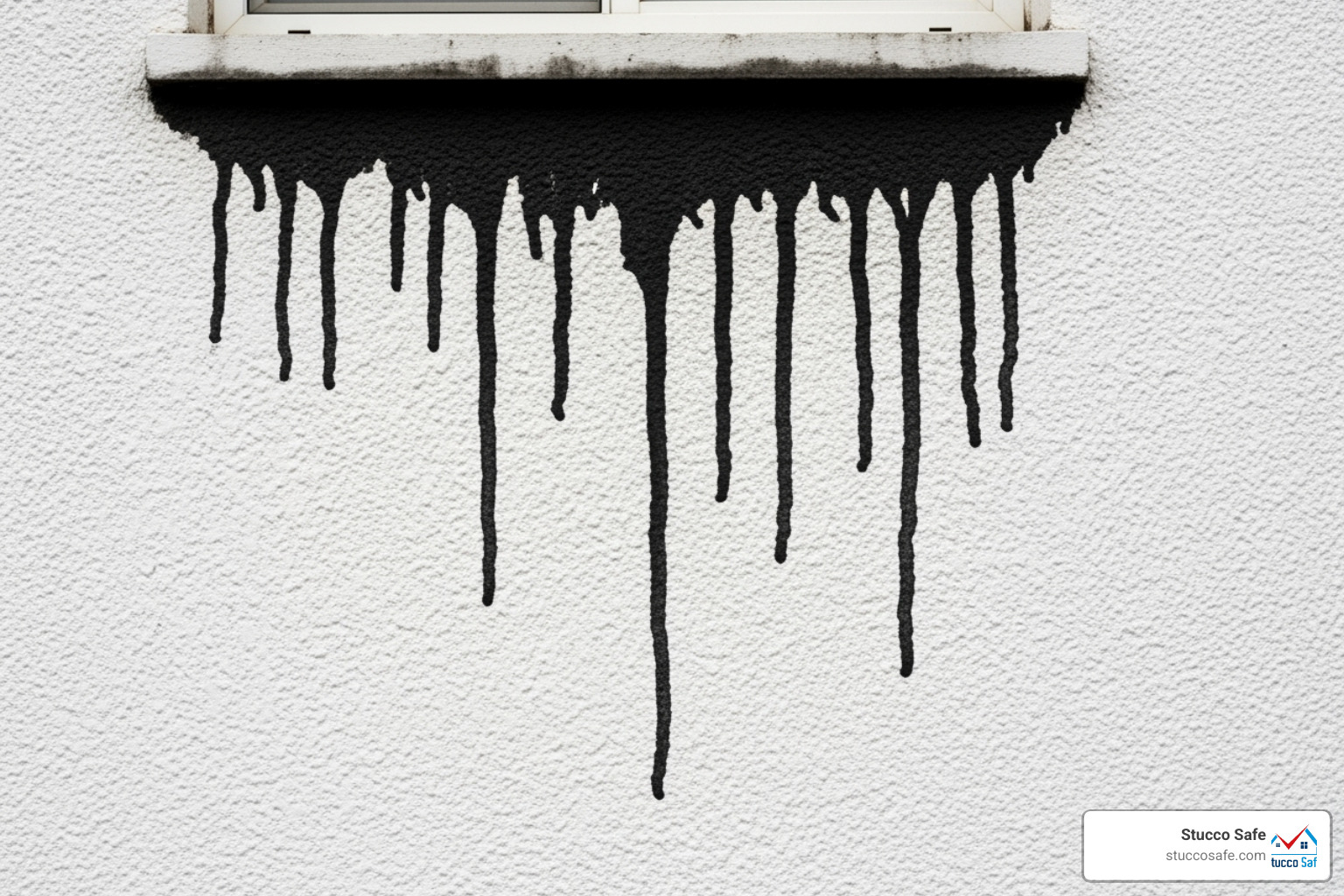
Stucco tears: These small, dark, tear-shaped stains below window corners are a strong indicator of concealed water damage. They are often called your home “crying for help.”
-
Spider cracks: While minor hairline cracks can be normal, web-like patterns radiating from window and door corners often reveal underlying moisture problems eating at the substrate.
-
Bulging or buckling stucco: Wavy or outward-pushing sections show the stucco is delaminating. This happens when trapped moisture and rot have compromised the bond to your home’s structure.
-
Discoloration and stains: Dark patches, green streaks, or black staining can indicate mold, algae, or prolonged moisture exposure.
-
Pieces of stucco falling off the wall: When sections crumble, the damage is extreme, often exposing the deteriorated substrate underneath.
If you spot any of these signs, it’s not a cosmetic issue. Your home needs immediate professional attention to protect your investment and your family’s safety.
The Anatomy of a Professional Stucco Inspection Phoenixville
A professional stucco inspection Phoenixville is a forensic investigation, not just a visual check. A general home inspector can spot visible cracks, but that’s only the tip of the iceberg. The real danger—catastrophic damage costing tens of thousands—is hidden beneath the surface.
A standard inspector isn’t equipped to find hidden moisture. They can’t measure moisture in your sheathing, assess drainage planes, or verify correct flashing installation. Our specialized approach focuses exclusively on the building envelope, using professional-grade equipment and forensic methods to uncover the truth about your stucco system.
The Three-Pronged Approach We Use
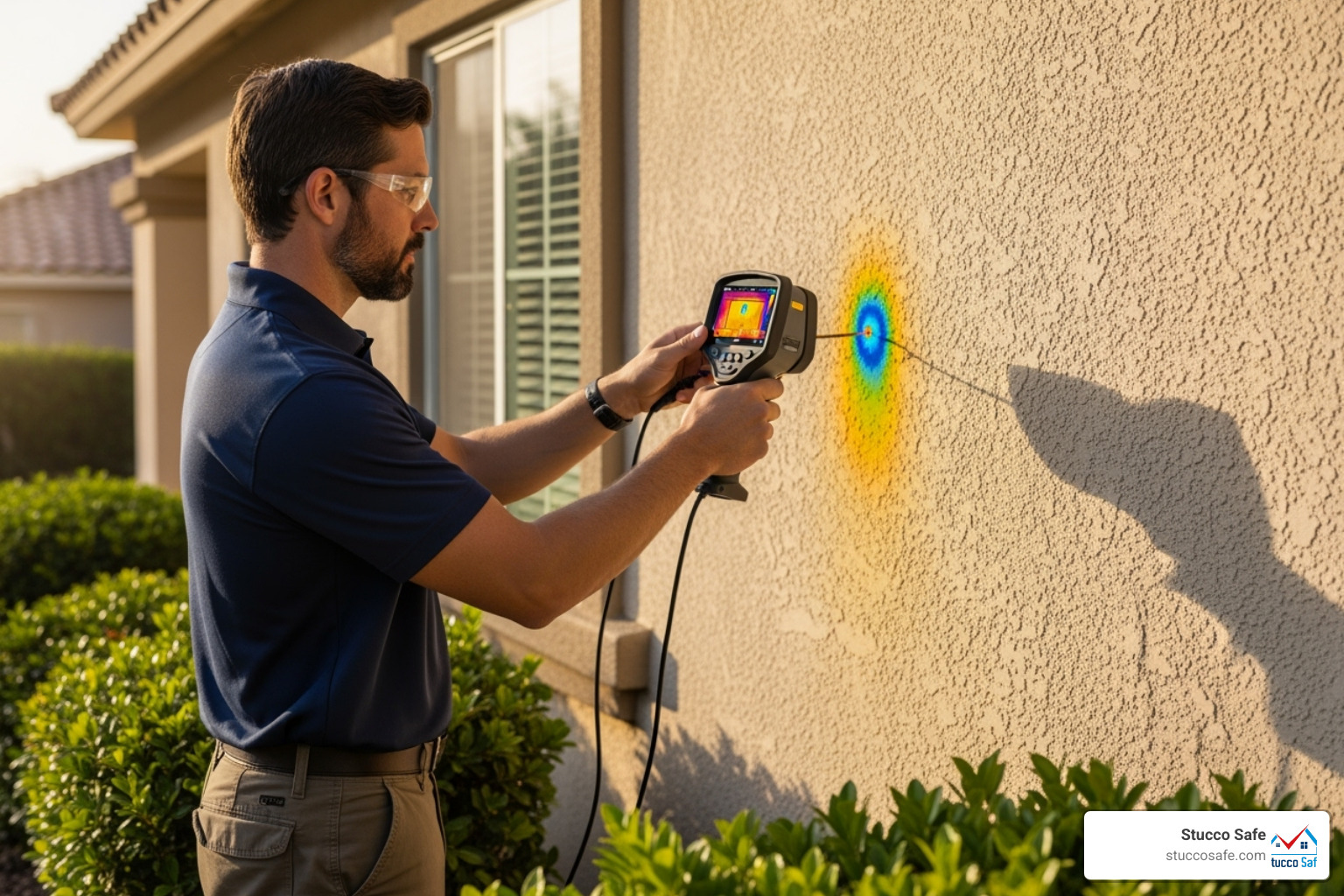
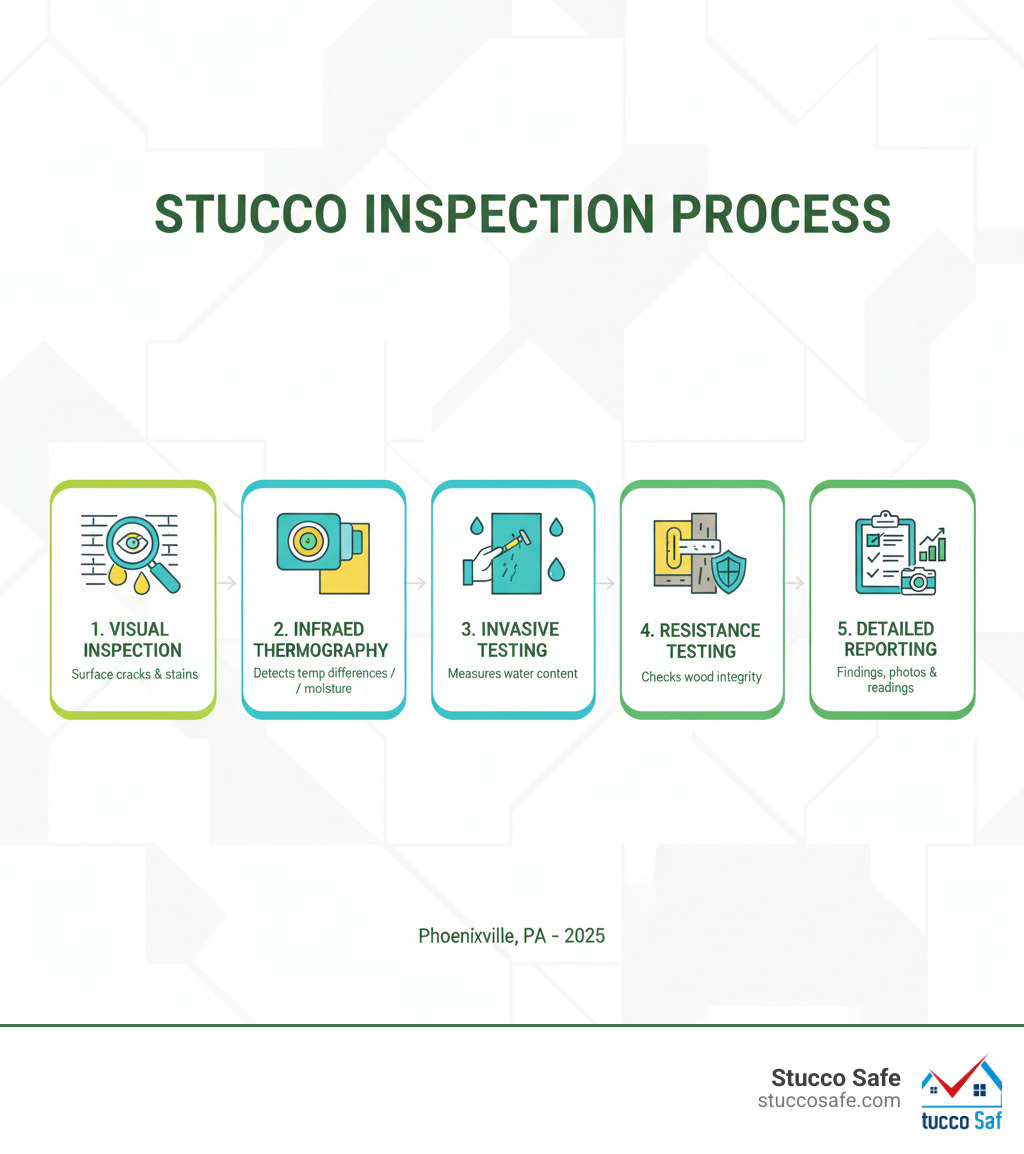
Every thorough inspection combines three methods:
-
Detailed Visual Inspection: We examine every detail of your exterior, including weep screeds, expansion joints, window and door seals, and all flashing. We look for telltale signs like stucco tears, spider cracks, and bulging.
-
Non-Invasive Testing: We use infrared thermography to detect temperature differences across your stucco. Trapped moisture retains heat differently than dry materials, so unusual thermal patterns reveal potential problem areas that need a closer look.
-
Invasive Testing: At strategic locations, we get definitive answers. We drill small, ¼-inch probe holes and insert specialized moisture meters to measure the exact moisture content in your substrate. We also use resistance probes to assess the wood’s integrity. High moisture or weak resistance means deterioration has begun. We may also take core samples to examine the substrate and Water Resistant Barrier (WRB).
We seal every probe hole with ASTM C920 compliant sealant that’s color-matched to your stucco, making the repairs virtually invisible. A few sealed holes are a small price to pay to avoid the catastrophic damage that goes undetected when homeowners skip this step.
What Our Specialized Inspection Reveals
A forensic stucco inspection provides answers a standard inspection can’t. We examine the critical components that determine if your stucco system is working.
-
Water Resistant Barrier (WRB) Condition: We assess this essential layer behind the stucco. If it’s damaged or improperly installed, water is getting into your walls.
-
Substrate Moisture Levels: We use precision instruments to measure the exact moisture in your sheathing and framing, telling you if it’s at dangerous levels.
-
Flashing Details: We evaluate flashing around windows, doors, and rooflines. Improper flashing is a common cause of stucco failure.
-
System Components: We check weep screeds, expansion joints, window/door seals, and kick-out flashing to ensure they are functioning correctly to manage water.
This comprehensive approach is the difference between hoping your stucco is fine and knowing the truth.
Finding a Qualified Inspector and Understanding the Results
Finding the right stucco inspection Phoenixville professional is crucial. The best inspector is one with no financial interest in repairs. At Stucco Safe, we don’t offer remediation services. This is intentional, as it ensures our objectivity. Our reports are purely fact-based, giving you the unvarnished truth about your home’s condition.
When evaluating inspectors, ask about their knowledge of the International Building Code (IBC) and International Residential Code (IRC). Since 2002, these codes have set standards for stucco application. A qualified inspector must know these guidelines and how they apply to Phoenixville homes.
Key Certifications for a Stucco Inspector in Phoenixville
Credentials represent specialized training and experience. Look for certifications that demonstrate expertise in building envelope forensics.
-
The EDI certification from the Exterior Design Institute (EDI) is the gold standard. We hold multiple EDI certifications, including Level 2 Stucco Inspector.
-
InterNACHI certification from Home inspector training from InterNACHI provides excellent foundational knowledge that specialized inspectors build upon.
-
The BESI Level 2 Certified Building Envelope Forensic Inspector credential signifies a deep understanding of how the entire building envelope functions.
-
A Certified Mold Investigator adds another layer of protection, identifying potential biological hazards inside your walls.
Other respected credentials include Moisture Free Warranty Corp Certified Inspector and membership in ASHI. The key is finding an inspector with multiple certifications specific to moisture intrusion and building envelope failure.
What to Expect in Your Phoenixville Stucco Inspection Report
After our investigation, you’ll receive a comprehensive, easy-to-understand report. It’s designed to be clear and actionable.
Your report will include:
-
Detailed Findings: An explanation of everything we observed, both visible and hidden, and what it means for your home.
-
Photographic Evidence: High-resolution, annotated images that clearly show problem areas.
-
Moisture Level Readings: Straightforward data from each probe location, with context explaining what the numbers mean.
-
Clear Recommendations: An outline of the required scope of work for any necessary repairs or remediation.
-
Scope of Damage: A big-picture view of the situation, whether it’s an isolated issue or systemic failure.
Transparency is key. You can View a Sample Stucco Inspection Report to see the comprehensive documentation we provide. Our goal is to equip you with the information to make confident decisions.
The Practicalities: Timing, Costs, and Consequences
Ignoring stucco problems doesn’t make them go away; it makes them exponentially more expensive. When moisture gets trapped, it starts a slow-motion catastrophe. Wood rots, compromising your home’s structure, and mold grows, creating health hazards. With each season, the damage spreads.
We’ve seen what could have been a minor repair turn into a $40,000+ remediation project because it wasn’t caught early by a stucco inspection Phoenixville. Beyond the staggering cost of structural damage, there’s the stress and disruption of major repairs. Your property value also takes a hit, as buyers will walk away or demand huge price reductions if issues are found.
When Should You Schedule an Inspection?
The best time to inspect is before you have a problem. The second-best time is now. A stucco inspection Phoenixville is critical in these situations:
-
Buying a home: Get an inspection before you close. It protects you from inheriting a moisture nightmare and provides negotiating power.
-
Selling a home: A pre-listing inspection is a brilliant strategy. Find and fix problems on your terms, not a buyer’s, and market your home with confidence.
-
New construction: Even new homes have stucco failure. An inspection during the warranty period can identify defects the builder must fix at their cost.
-
Routine maintenance: Inspections every 2-3 years catch small issues before they become big, expensive problems, saving you thousands.
-
After severe weather: Major storms or freezes can create or worsen moisture entry points. An assessment is a wise precaution.
Understanding the Costs
A professional stucco inspection Phoenixville typically costs between $495 and $1,595, depending on your home’s size and the inspection’s scope. A comprehensive forensic inspection costs more than a basic visual check but is the only way to know what’s happening behind your walls.
While the inspection fee may seem high, consider the alternative. Stucco remediation regularly costs $30,000 to $50,000 or more. An early-caught repair might only be a few thousand. The inspection cost is a tiny fraction of what you’ll pay if problems go undetected. Think of it as essential insurance for your largest financial asset.
Frequently Asked Questions about Stucco Inspections
Is all stucco bad?
No, not all stucco is inherently bad. When properly installed and maintained, it’s a durable, beautiful siding. The problems we see stem from improper installation, not the material itself.
Stucco is a reservoir system, meant to absorb and then safely release water. This works only when it includes proper drainage planes, flashing, and modern installation techniques. Many homes built over the last 30 years lack these features, as building codes have evolved significantly since 2002. A modern stucco system with components like kick-out flashings and casing beads can perform exceptionally well. The real question isn’t “is stucco bad?” but “was this stucco installed correctly?” A professional stucco inspection Phoenixville provides that answer.
Can I inspect my own stucco?
Visual checks are helpful, and every homeowner should regularly look for “stucco tears,” spider cracks, or bulging. Spotting these signs is an important first step.
However, the DIY approach has limits because the most destructive problems are invisible. Professional equipment is essential for detecting hidden moisture. Our infrared cameras and calibrated moisture meters provide precise data that requires specialized training to interpret. Invasive testing requires real expertise to know where to probe, how to analyze the data, and how to properly seal the test sites. There’s too high a risk of missing significant hidden damage on your own. A professional stucco inspection Phoenixville is the only way to know for sure what’s happening behind your walls.
Will an invasive inspection damage my home?
This is a common concern, but invasive testing causes minimal impact. We drill small ¼ inch holes in strategic locations identified during our visual and infrared scans. These spots are chosen to give us the most accurate data while being as discreet as possible.
After testing, we professionally seal every hole with a high-quality, weather-resistant sealant that meets ASTM C920 standards. We carefully match the sealant color to your existing stucco, making the repairs virtually invisible. The peace of mind from knowing the true condition of your home is well worth the minimal, professionally repaired intrusion.
Conclusion: Protect Your Phoenixville Home and Investment
Stucco problems in Phoenixville are common due to our climate and widespread improper installation. Over half the homes we inspect have some level of failure, and undetected issues only become more expensive to fix. You don’t have to be caught off guard. Proactive, professional inspection identifies problems early, protecting your health and financial investment.
You now know why a stucco inspection Phoenixville is essential, from recognizing warning signs like “stucco tears” to understanding the difference between a standard inspection and a forensic one using specialized tools.
The importance of a certified, unbiased inspector is paramount. Because we don’t offer repairs, you get honest, fact-based reporting. Our EDI and BESI certifications mean we approach every inspection like building envelope scientists, giving you the complete picture.
Since 2001, Stucco Safe has helped countless Chester County homeowners catch problems early, avoiding catastrophic wood rot and five-figure remediation bills. That’s the difference a professional inspection makes.
Your home is your largest investment. Don’t let hidden moisture destroy it. Whether you’re buying, selling, or want peace of mind, a comprehensive stucco inspection Phoenixville is your best defense against costly surprises.
Take control of your home’s future. Schedule your professional stucco inspection in Phoenixville, PA and get the answers you need from inspectors who put your interests first.