Home Stucco Inspection NJ: Protect Your Home 2025
Why New Jersey Stucco Homes Need Professional Inspection
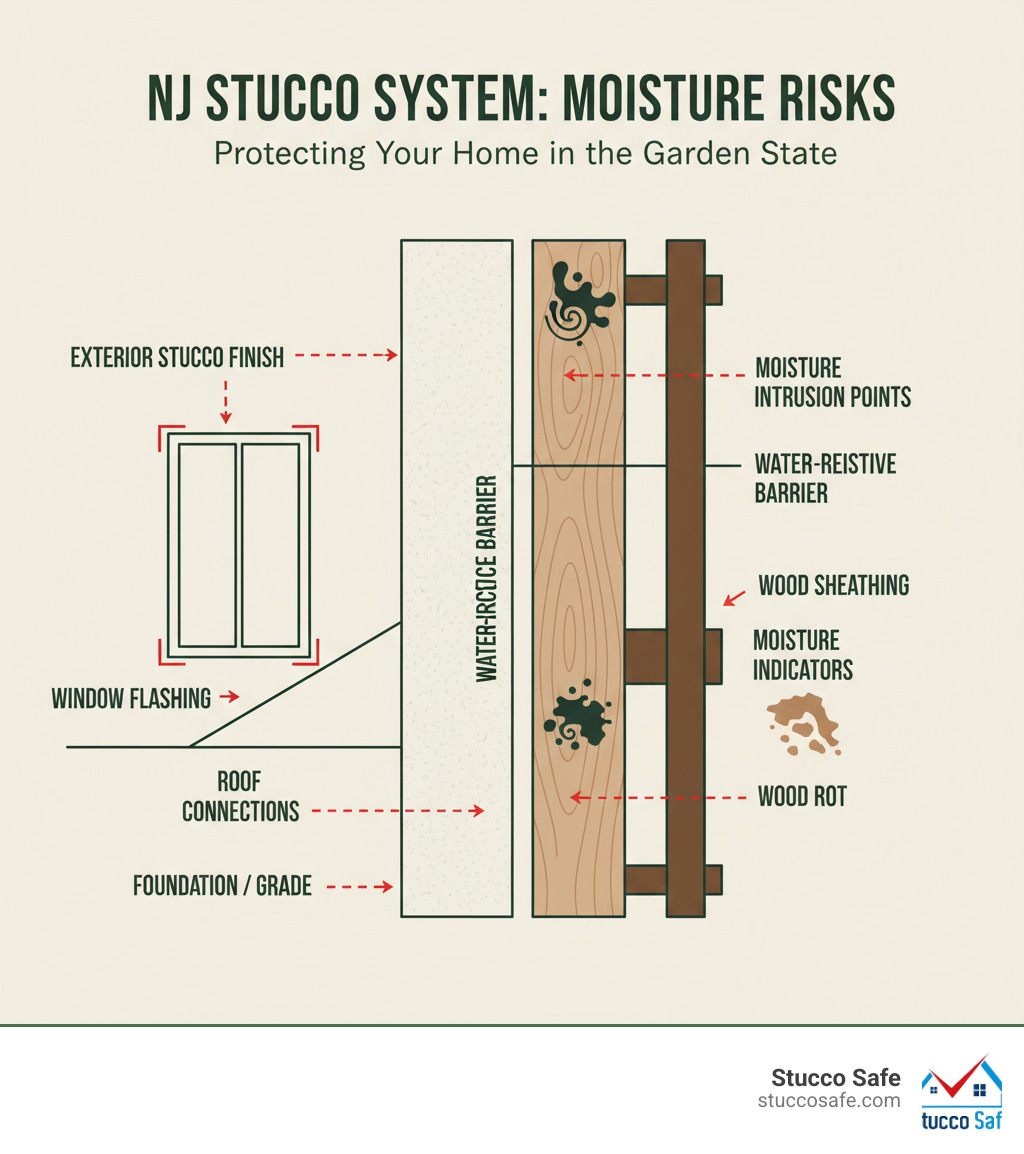
Home stucco inspection NJ services are essential for protecting your largest investment from potentially devastating hidden damage. New Jersey’s climate—with its freeze-thaw cycles and high humidity—makes stucco particularly vulnerable to water intrusion. When moisture gets trapped behind stucco, it can cause serious structural damage that is invisible from the outside.
Key Facts for NJ Homeowners:
- Over 90% of stucco installations in the Northeast from the past 15-20 years were improperly installed.
- Homes built 1993-2006 have failure rates as high as 90% due to incorrect building codes.
- Repair costs can exceed $100,000 when wood rot occurs behind the stucco.
- Inspection costs range from $495 to $1,595 depending on home size.
Many stucco systems lack proper drainage, allowing moisture to penetrate and cause wood rot in your home’s framing. Visual inspections alone cannot detect these hidden issues; only invasive moisture testing can reveal what’s happening behind your walls. Stucco repairs can be one of the most expensive problems a home can have, with remediation often costing over $100,000.
I’m Gabe Kesslick, founder of Stucco Safe. Since 2001, I’ve specialized in leak detection and repair. I started Stucco Safe in 2015 to help homeowners with professional home stucco inspection NJ services. As an EDI Level 2 Certified Stucco Inspector and BESI Level 2 Certified Building Envelope Forensic Inspector, I know that early detection can save homeowners from catastrophic repair costs.
Why Your New Jersey Stucco Needs a Check-Up
New Jersey’s four distinct seasons are beautiful, but they can wreak havoc on stucco exteriors. The state’s climate creates a perfect storm of conditions that challenge stucco systems.
Freeze-thaw cycles are a major enemy. As temperatures fluctuate, stucco expands and contracts, creating microscopic cracks that act as highways for water. Combined with our high humidity and frequent rainfall, moisture is constantly seeking a way into your home’s structure. This is why a professional home stucco inspection NJ is essential protection for your investment.
Common Signs of Stucco Failure or Moisture Intrusion
Your home may show warning signs of hidden damage. Learning to spot them can save you thousands:
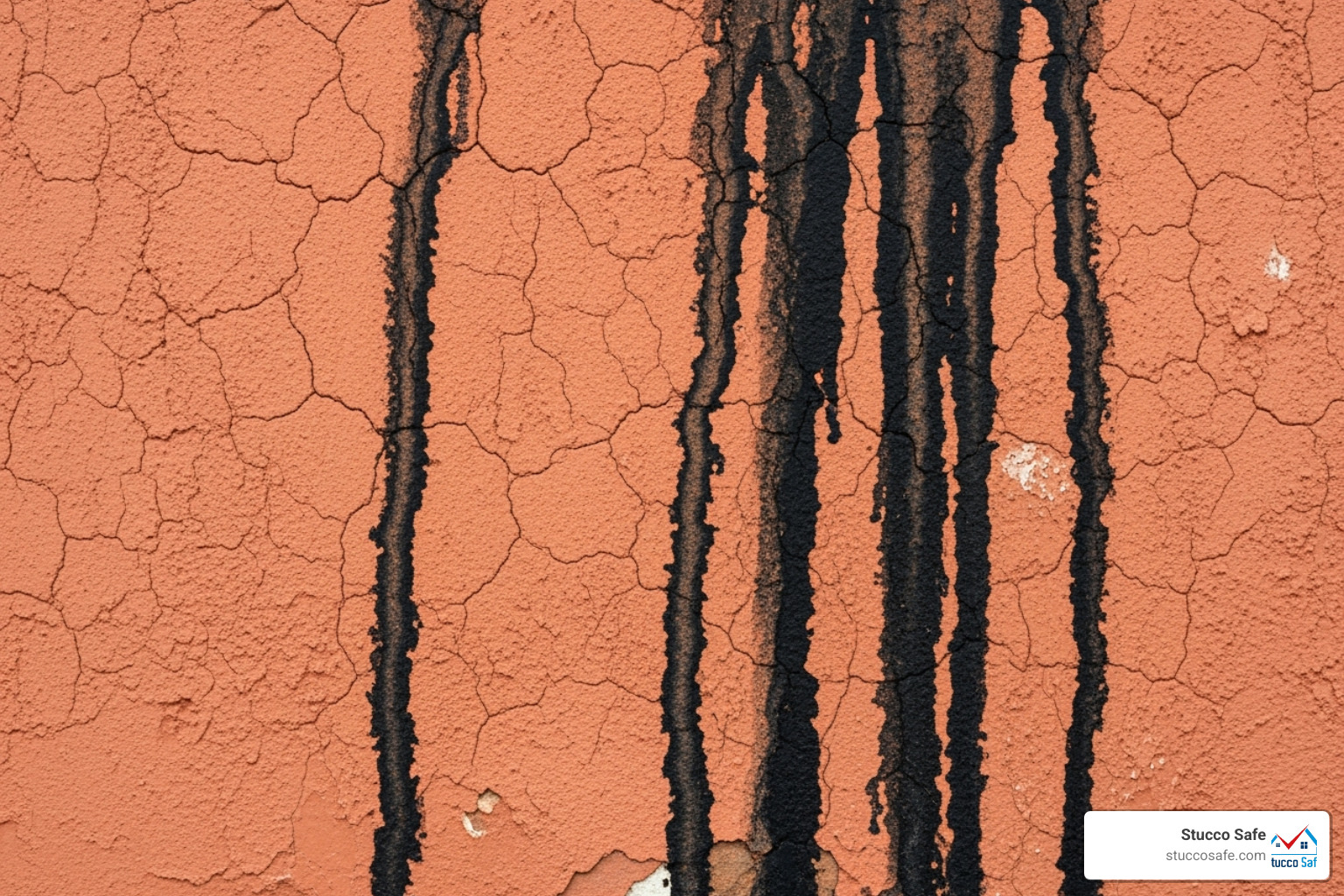
- Staining and discoloration: Dark streaks running down from windows or doors indicate water is carrying materials from behind the stucco to the surface.
- Cracks and bulging: While hairline cracks can be normal, larger, spidering cracks are a red flag. Stucco that feels soft or bouncy suggests it’s pulling away from the wall due to moisture damage underneath.
- Efflorescence: White, chalky deposits on the surface are mineral salts left behind as water evaporates, signaling moisture intrusion.
- Interior signs: Mold or mildew growth around windows and doors, or a persistent musty smell, often means moisture has breached your building envelope.
- Damaged sealants and flashing: Compromised seals around openings and at roof connections provide easy access for water.
Consequences of Neglecting Stucco Inspections and Maintenance
Ignoring these signs or delaying a home stucco inspection NJ can lead to severe consequences. Structural wood rot is the nightmare scenario; once moisture saturates the wood sheathing and framing, rot can cause damage costing over $100,000 to repair. This damp environment also encourages mold and mildew growth, which poses health risks and damages building materials. Finally, your property value takes a hit, as savvy buyers are wary of stucco issues. A minor problem that could be fixed for hundreds can escalate into a tens-of-thousands-dollar remediation project. Early detection is your best defense.
When to Schedule an Inspection
Timing your home stucco inspection NJ is key to preventing major repairs. Schedule an inspection when:
- Buying or selling a home: An inspection protects buyers from hidden issues and helps sellers address problems before they become deal-breakers.
- Performing routine maintenance: Every 2-3 years is ideal to catch small problems early.
- After severe weather: High winds, driving rain, or extreme temperature swings can compromise your stucco.
- Noticing visual warning signs: Stains, cracks, or soft spots are your home’s call for help.
- A builder warranty is expiring: Identify installation defects that the builder may be required to fix at no cost to you.
The “Stucco Boom” Problem: 1993-2006
If your home was built between 1993 and 2006, be extra vigilant. This “stucco boom” period had a failure rate up to 90% in the Northeast due to incorrect building codes and inexperienced installers. The fundamental flaw was inadequate drainage systems. While stucco is designed to absorb some moisture, these installations often lacked the water-resistant barriers and drainage planes needed to let water escape. This trapped moisture, leading to serious sheathing and framing deterioration. For homes from this era, a professional home stucco inspection NJ is absolutely essential.
The Inspection Process: Visual vs. Invasive Testing
Not all home stucco inspection NJ services are equal. A general home inspector’s visual check is a start, but it’s often not enough to find hidden problems. A comprehensive inspection involves both visual and invasive methods.
| Feature | Visual Stucco Inspection | Invasive Stucco Inspection |
|---|---|---|
| Methodology | Surface-level observation, photography, non-contact tools | Drilling small, discreet holes, moisture probes, core sampling |
| Tools Used | Binoculars, cameras, thermal imaging (limited), electronic surface scanners | Moisture meters (Extech with hammer probes), resistance probes, drilling tools, caulk |
| What it Reveals | Visible cracks, discoloration, efflorescence, damaged sealants, flashing issues, general condition | Hidden moisture content, wood rot, structural integrity, condition of sheathing/framing, presence of drainage plane |
| Accuracy | Limited to visible symptoms; can miss severe hidden issues | Highly accurate for detecting hidden moisture and damage |
| Invasiveness | Non-invasive | Minimally invasive (small holes are sealed afterward) |
| Cost | Generally lower, sometimes part of a general home inspection | Higher, due to specialized tools, expertise, and time involved |
| Recommendation | Good for initial assessment, but insufficient for full diagnosis | Essential for comprehensive understanding, especially in real estate transactions or when issues are suspected |
Non-Invasive Limitations: Why Visual Isn’t Enough
The harsh reality is that the stucco itself is often the last thing to show signs of failure. By the time you see obvious damage, significant destruction may have been happening for years. A visual inspection can spot red flags like large cracks or staining, but it can’t see behind the wall where the real damage occurs. We’ve inspected pristine-looking homes that had severe moisture issues, and stained homes that were perfectly dry. The appearance of your stucco simply cannot tell you what’s happening behind it. This is why invasive testing is essential for a thorough home stucco inspection NJ.
EIFS vs. Traditional Stucco Differences and Inspection Challenges
New Jersey homes typically feature two main types of stucco systems:
- Traditional hardcoat stucco: A cement-based system applied in three coats over wire lath. It’s naturally porous and requires a proper drainage system to allow absorbed moisture to escape.
- EIFS (Exterior Insulation and Finish Systems): Also known as synthetic stucco, this is a multi-layered system with foam insulation. Early EIFS were designed as waterproof barriers, which trapped any water that got in. Modern EIFS include drainage, but both types require specialized inspection knowledge.
Methods and Tools of the Trade
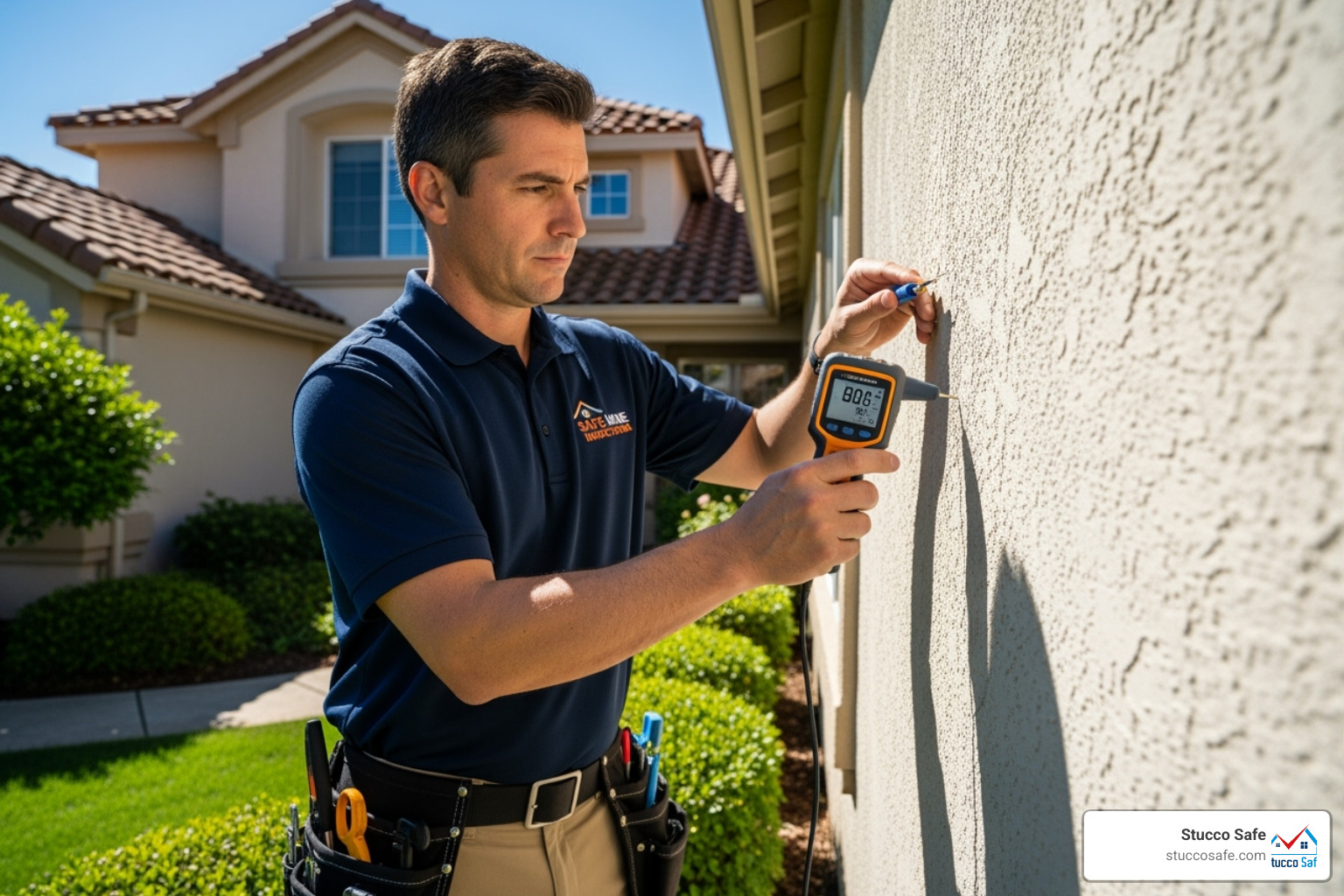
Our comprehensive inspection combines multiple techniques. We start with a thorough visual assessment, examining the entire exterior for warning signs, paying close attention to windows, doors, and roof-to-wall connections. We may use thermal imaging and electronic surface moisture scanning to identify potential problem areas.
The most critical part is our invasive moisture probes. We drill tiny, 3/16th-inch holes in strategic locations and insert state-of-the-art Extech moisture meters. These give us precise moisture content readings. According to industry standards: 14% and below is normal, 15-18% is marginally liftd, and 19% and above indicates a moisture problem. We seal each hole with color-matching caulk when finished.
During testing, we also check substrate firmness to feel for soft spots indicating rot. Finally, we evaluate your weep screed and flashing systems, which are critical for proper drainage and keeping water out. In some cases, we may recommend core sampling for a definitive look at the layers beneath the stucco.
Choosing the Right Professional for a Home Stucco Inspection NJ
Choosing the right inspector for your home stucco inspection NJ is a critical decision. You need a specialist, not a generalist, to protect your home’s structural integrity.
Standard Home Inspector Limitations
Your typical home inspector is great for assessing overall property conditions, but they are not equipped for the forensic work stucco requires. Most rely on visual assessments, which cannot detect hidden moisture damage behind the stucco. They generally lack the specialized moisture detection equipment and training to understand the complex failure patterns of stucco systems. Stucco inspection is a specialized field that requires focused expertise.
Need for a Specialized, Unbiased Inspector
This is where specialized stucco inspectors come in. We are building envelope detectives trained to understand how moisture moves through wall systems. Our entire focus is on exterior cladding like stucco and EIFS, using forensic testing methods that combine visual inspection with invasive moisture testing.
Crucially, you should choose an inspector who has no financial stake in the repairs. We do not offer repair services, so our only job is to provide an accurate, unbiased assessment. An inspector who also runs a repair business has a conflict of interest, as they have an incentive to find or exaggerate problems. Always choose an independent, third-party inspector.
Legal Implications in Real Estate
In New Jersey’s real estate market, stucco issues can lead to serious legal problems. Buyers can find major problems after closing, leading to lawsuits against sellers. For buyers, a professional home stucco inspection NJ is crucial protection, uncovering issues before you buy or providing negotiating power. For sellers, a clean inspection report can speed up a sale and protect you from future legal claims. An inspection is a small price to pay to avoid litigation.
Key Qualifications and Certifications to Look For
When choosing your inspector, look for these qualifications:
- Exterior Design Institute (EDI) certification: This is the gold standard in our industry. EDI-certified inspectors have completed rigorous training on exterior wall systems. We are proud to be EDI certified and follow the Exterior Design Institute (EDI) Standards of Practice.
- Specialized Experience: Look for a proven track record with years of fieldwork. Our founder, Gabe Kesslick, has over 20 years in leak detection and holds credentials as an EDI Level 2 Certified Stucco Inspector and BESI Level 2 Certified Building Envelope Forensic Inspector.
- Local Knowledge: An inspector who understands New Jersey building codes and how they’ve changed over time will provide more relevant recommendations.
The bottom line: choose a certified specialist with no conflicts of interest and a deep understanding of the local market.
Deciphering Your Stucco Inspection Report and Costs
Once your home stucco inspection NJ is complete, you’ll receive a comprehensive report that acts as a roadmap for your home’s exterior health. It’s a valuable tool packed with information that can save you thousands.
Understanding the Investment: What You Can Expect to Pay
Stucco inspection costs typically range from $495 to $1,595, with very large homes potentially costing more. Consider this an insurance policy against the $100,000+ repair bills that can result from undetected moisture damage. The final price depends on your home’s size, accessibility, and the complexity of the stucco system. While an invasive inspection costs more than a visual one, it’s the only way to know what’s truly happening behind your walls.
What Your Report Will Tell You
We deliver your detailed, easy-to-understand report within 24-48 hours. It includes:
- Executive Summary: A clear overview of our findings and what you need to do.
- Detailed Observations: A room-by-room breakdown of both problem areas and properly functioning elements.
- Photographic Evidence: High-resolution images illustrating our findings.
- Moisture Level Readings: Hard data from our invasive testing, with clear explanations of what the percentages mean (19% and above signals a problem).
- Substrate Condition Analysis: An assessment of the wood sheathing and framing behind your stucco, noting any softening from rot.
- Detailed Recommendations: A prioritized action plan with specific guidance on repair methods.
The Long-Term Value of Professional Inspection
Investing in a professional home stucco inspection NJ provides significant long-term benefits. It offers peace of mind by giving you a trustworthy assessment of your home’s condition. It helps protect your property value, as a clean report is a powerful selling point in New Jersey’s market. Most importantly, it provides cost avoidance by catching problems early, before they escalate into six-figure repairs. A professional inspection also ensures a healthy and safe living environment by preventing mold growth and structural decay, ultimately extending your stucco system’s lifespan.
Frequently Asked Questions about NJ Stucco
As a stucco inspector in New Jersey since 2001, I’ve heard many of the same questions from concerned homeowners. Here are straight answers to the most common ones.
Can’t I just patch the cracks I see on my stucco?
Patching visible cracks is like putting a bandage on a serious wound—it covers the symptom but doesn’t fix the underlying problem. Most stucco cracks are caused by moisture getting behind the wall. Sealing a crack without addressing the water intrusion can trap moisture, accelerating wood rot and mold growth. A professional home stucco inspection NJ is needed to diagnose the root cause of the cracks before any repairs are made.
Is a stucco home a bad investment in New Jersey?
Not necessarily. A stucco home is not inherently a bad investment, but knowledge is critical. While homes built between 1993 and 2006 have a higher risk of failure due to poor installation practices, many stucco homes are in excellent condition. The key is to get a thorough, invasive home stucco inspection NJ before you buy. This allows you to make an informed decision, whether that means walking away, negotiating repairs, or buying with confidence. Don’t let fear guide you; let knowledge.
How long does a typical stucco inspection take?
A typical inspection takes about 2 to 4 hours on-site, depending on the home’s size, complexity, and accessibility. Larger or more complex homes will be on the longer end of that range. After the on-site work is complete, we deliver your comprehensive report within 24 to 48 hours, giving you the answers you need quickly, which is especially important during a real estate transaction.
Conclusion: Securing Your Home’s Exterior Health
Living in New Jersey means your stucco faces serious challenges from freeze-thaw cycles and high humidity. Combined with widespread installation issues from the 1990s and early 2000s, the risk of hidden damage is high. Over 90% of stucco installations from that era have problems, and repairs can easily exceed $100,000 when wood rot and mold take hold behind walls that look perfectly fine.
This is why a specialized, invasive home stucco inspection NJ is essential protection for your investment. Visual inspections simply aren’t enough to see what’s happening inside your walls. Our forensic testing methods provide the real story, giving you accurate moisture readings and a clear assessment of your home’s structural health.
Whether you’re buying, selling, or maintaining your property, an unbiased, professional inspection empowers you to avoid costly surprises and protect your property value. The small investment in a thorough inspection is minimal compared to the potential cost of ignoring a hidden problem.
Don’t let hidden moisture turn your home into a financial nightmare. We’re here to help homeowners throughout New Jersey. Take control of your property’s health today.
Get a comprehensive stucco inspection for your Bayonne home and protect your investment with confidence.