
How to anchor a ledger board on stucco house: 1 Best Way
Why Proper Ledger Board Anchoring Matters for Your Stucco Home
How to anchor a ledger board on a stucco house requires careful planning to prevent catastrophic failures. Improper installation can lead to deck collapse, severe water damage, and structural repairs costing tens of thousands of dollars. The essential process involves:
- Remove stucco at the ledger location.
- Install proper flashing behind and over the ledger.
- Use structural fasteners (lag screws or bolts) into the rim joist.
- Seal all penetrations with high-quality caulk.
- Alternative: Attach through stucco using spacers and extra sealing.
Stucco presents unique challenges due to its thickness, potential foam backing, and the difficulty of creating waterproof seals. This complicates what seems like a simple task. Adding to the complexity, building codes are often debated; while the International Residential Code may require siding removal, some builders attach directly through stucco, creating confusion.
I’m Gabe Kesslick, a certified stucco inspector with over 20 years of experience in leak detection. I’ve seen countless cases where improper ledger board anchoring led to hidden moisture damage and structural problems that only surfaced years later.

Before You Begin: Critical Pre-Installation Checks
Properly anchoring a ledger board starts long before you pick up a drill. You must understand your home’s construction, its load capacity, and local building codes. Skipping these steps invites costly disasters.
This is where a professional Stucco Inspection and Testing is invaluable. For $495 to $1,595, you get a complete picture of your stucco system’s condition before you start drilling holes.
Understanding Your Stucco System
Not all stucco is the same, and the type on your house determines the fasteners and techniques you’ll use.
- Traditional 3-coat stucco: Typically about an inch thick, this robust system is applied in three layers over a wire mesh and moisture barrier. It can handle moderate loads when you anchor to the structural framing, but all penetrations must be perfectly sealed. Learn more about potential issues in our guide to Hard Coat Stucco Problems.
- One-coat stucco systems: These use a foam insulation board base with a thinner stucco layer (around 3/8 inch). The foam can compress under load, so hitting solid framing is non-negotiable.
- EIFS (synthetic stucco): This multi-layered system is applied over foam insulation. It’s energy-efficient but unforgiving of improper penetrations, as the foam can crush easily and trap water. If you suspect you have EIFS, review our discussion of Artificial Stucco Problems before proceeding.
Your stucco’s thickness impacts fastener selection. For 3-coat systems, fasteners need to penetrate the stucco and reach the framing, requiring screws at least 2 to 2½ inches long. One-coat systems may require screws of 2½ to 3 inches.
Assessing Structural Integrity and Load Requirements
Your wall must be able to handle the load of your new deck or pergola. The primary attachment point is the rim joist—the horizontal lumber that caps the floor joists, usually located at the floor line.
- Shear walls have continuous plywood or OSB sheathing behind the stucco, providing solid backing between studs and increasing resistance to lateral forces.
- Open stud walls lack this continuous backing, meaning every fastener must hit a stud or rim joist without exception.
Load calculations are complex, factoring in the structure’s weight (dead load), its contents (live load), and environmental forces. For anything beyond a small structure, consult a structural engineer. A Building Envelope Inspection can also assess your wall’s overall condition.
Checking Local Building Codes
Building codes vary significantly by jurisdiction. The International Residential Code (IRC) and resources like the AWC Prescriptive Residential Wood Deck Construction Guide typically require siding to be removed before installing ledger boards. This ensures a direct structural connection and allows for proper flashing.
However, local building departments may interpret these rules differently, especially when distinguishing between decks and patio covers. A deck for human occupancy will have stricter requirements than a simple pergola.
The permit process is your safety net, providing plan reviews and inspections to catch problems early. We work with clients throughout Southeastern Pennsylvania, New Jersey, and Delaware and see how requirements vary. Always call your local building department to confirm specific requirements for ledger board attachment to stucco homes.
The Great Debate: Removing Stucco vs. Attaching Through It
When deciding how to anchor a ledger board on a stucco house, you face a choice between two primary methods. Do you cut the stucco for a direct attachment, or drill through it? Each approach has merits depending on your priorities and local codes.
Method 1: Removing Stucco (The Code-Compliant Method)
This “by-the-book” approach involves cutting and removing the stucco where the ledger board will sit. It’s a precise method designed for long-term success.
- Advantage: Structural Integrity. Attaching directly to the wood framing provides the strongest possible connection, with no compressible stucco layer to act as a weak link.
- Advantage: Superior Waterproofing. With the stucco removed, you can install flashing behind the ledger board and integrate it with the home’s weather barrier. This creates a continuous drainage plane that directs water out and away.
- Advantage: Code Compliance. The International Residential Code typically requires siding removal for ledger boards, so this method helps you pass inspections.
However, this method has drawbacks. The labor is intensive and messy, requiring specialized saws. Stucco patching and matching the existing color and texture is an art form and can be difficult to get right, as detailed in our guide on Patching a Hole in Stucco. The cost is also typically higher upfront.
Method 2: Attaching Through Stucco (The Alternative Method)
This approach involves drilling through the stucco. It’s often favored by contractors looking to avoid the complexity of stucco removal.
The key to this method is using spacers or washers to create a drainage gap (typically around an inch) between the ledger and the stucco. This allows air circulation and prevents trapped moisture.
However, crushing the stucco is a real risk, especially with EIFS or foam-backed systems. Over-tightening fasteners can damage the stucco and compromise the connection. Waterproofing is also a major challenge, as this method relies heavily on caulk and sealant. Any failure in the sealant can trap water behind the ledger, leading to Moisture Behind Stucco and rot. Decks naturally expand and contract, which can break these seals over time.
Here’s how the two methods compare:
| Factor | Method 1: Removing Stucco | Method 2: Attaching Through Stucco |
|---|---|---|
| Cost | Higher (stucco removal/repair) | Lower (less labor/material upfront) |
| Labor | More intensive, specialized skills | Less intensive, but requires precision |
| Waterproofing | Superior (integrated flashing) | Challenging (relies heavily on caulk/spacers) |
| Structural Integrity | Excellent (direct to framing) | Good (but potential for stucco crush) |
| Code Compliance | Generally compliant | Often not compliant for decks |
Both methods can work if executed by experienced professionals. However, for superior waterproofing and structural integrity, removing the stucco is the recommended choice.
Step-by-Step Guide: How to Anchor a Ledger Board on a Stucco House
This guide covers the recommended method: removing the stucco for a direct, solid, and waterproof attachment. Precision and the right tools are essential.

Step 1: Mark and Prepare the Wall
Patience during preparation prevents costly mistakes.
- Mark the ledger location with a level chalk line, typically about 1 inch below any door threshold.
- Locate the framing (rim joist and studs) behind the stucco using a quality stud finder and by tapping the wall to listen for solid sounds. Mark these locations.
- Determine stucco depth by drilling a small pilot hole in a hidden spot. Set your saw blade to this exact depth to avoid cutting the sheathing or house wrap underneath.
- Cut the stucco using a circular saw with a diamond blade. Wear safety glasses, a dust mask, and ear protection.
- Remove the loosened stucco carefully with a hammer and chisel, preserving the surrounding stucco. For more drilling tips, see our guide on How to Drill into Stucco.
Step 2: Install Flashing for Ultimate Water Protection
Flashing is the unsung hero that keeps your walls dry.
- Prepare the surface by cleaning the exposed sheathing. If the weather-resistive barrier (WRB) was damaged, patch it with compatible house wrap tape.
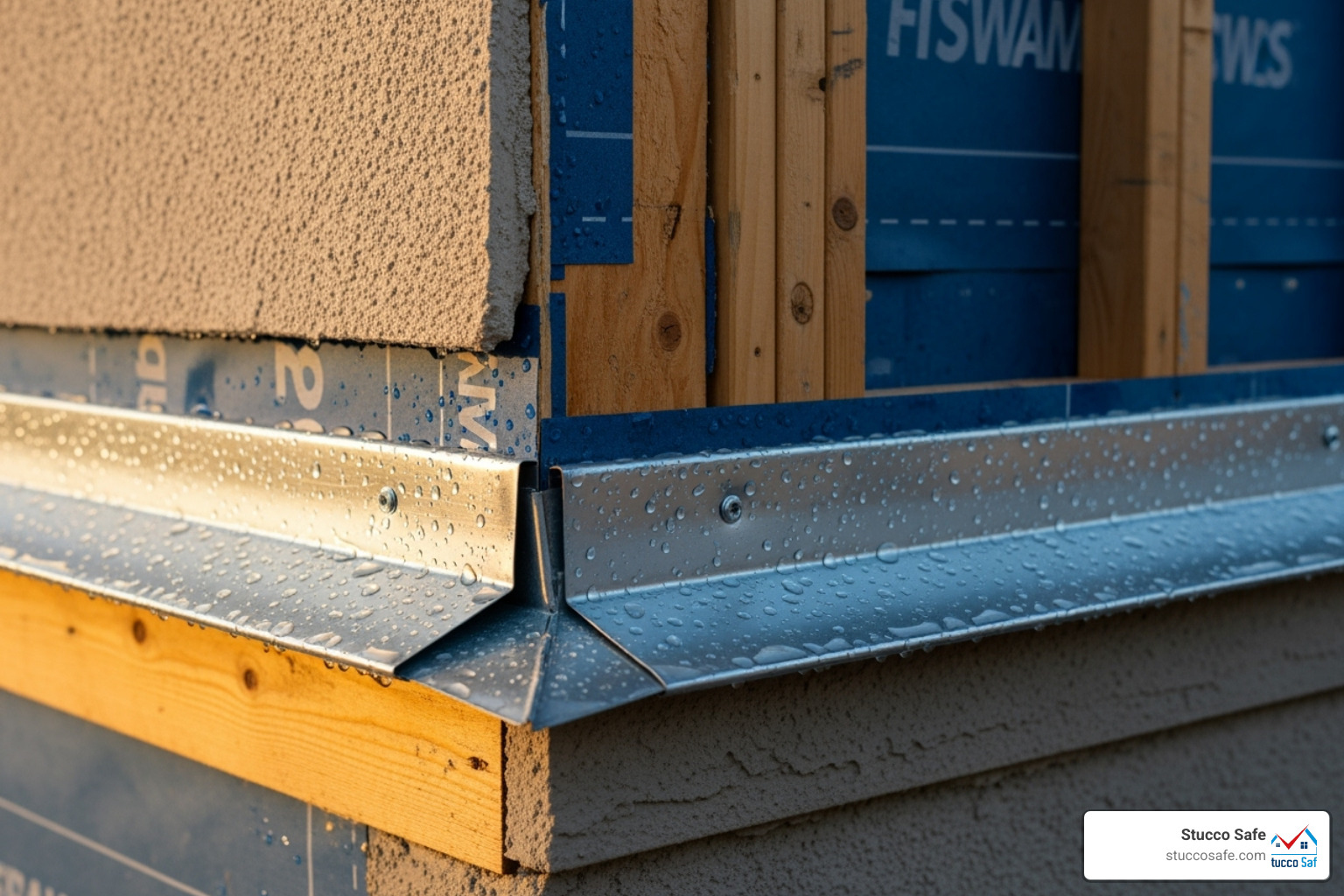
- Install Z-flashing. This metal piece tucks behind the stucco above your cut and extends over the top of the ledger board, directing water away.
- Integrate with the WRB. The top leg of the Z-flashing must slide behind the existing house wrap.
- Seal all flashing seams and joints with a high-quality polyurethane or silicone sealant to prevent leaks.
Step 3: How to anchor a ledger board on a stucco house using the right fasteners
Use heavy-duty mechanical fasteners rated for structural applications.
- Choose the right fasteners: Lag screws are the traditional choice, driven with a wrench. Modern structural screws (like FastenMaster LedgerLOK or Simpson Strong-Tie Strong-Drive) are engineered for high strength and easier installation.
- Calculate fastener length: The fastener must pass through the ledger (1.5 inches), flashing, and deep into the framing. For 3-coat stucco over shear walls, aim for at least 2.5 inches of penetration into the rim joist; for 1-coat systems, aim for 3 inches.
- Pre-drill pilot holes for lag screws to prevent splitting the lumber. The hole should be slightly smaller than the screw’s shank. Check manufacturer instructions for structural screws, as some are self-drilling.
- Seal pilot holes by squirting polyurethane caulk into each hole before driving the fastener. This creates a waterproof gasket. For more fastener details, see our guides on Stucco Screw Anchors and Best Anchors for Stucco.
Step 4: Attach and Seal the Ledger Board
This is the final assembly.
- Position the ledger against the wall, ensuring it’s level and aligned with your marks and flashing.
- Follow the fastener pattern specified by building codes (e.g., AWC DCA6 guide). A common pattern is staggered lag screws every 16 inches on center.
- Drive the fasteners firmly with a wrench or impact driver until snug. Do not over-tighten, as this can strip threads or crush wood.
- Apply polyurethane caulk in a continuous bead along the top edge where the ledger meets the house and along the vertical ends.
- Leave the bottom edge unsealed or create weep holes. This is critical for drainage, allowing any water that gets behind the ledger to escape.
Alternatives and Long-Term Considerations
Sometimes, the best way to anchor a ledger board on a stucco house is to avoid penetrating the wall entirely. It’s also crucial to understand the risks of improper installation.
Considering a Freestanding Deck
A freestanding deck is a self-supporting structure built on its own foundation, sitting close to the house but not attached to it.
- The biggest advantage is eliminating wall penetrations. This avoids stucco cutting, complex flashing, and the risk of moisture intrusion. Permitting may also be simpler.
- Freestanding decks offer flexibility for future siding changes or wall maintenance.
The main trade-offs are the cost of additional footings and posts and the small gap (typically 1-2 inches) left between the deck and the house for drainage and movement.
The Dangers of Improper Installation
Shortcuts on ledger board installation can have devastating consequences.
- Wood Rot: Water trapped behind an improperly sealed ledger board leads to rot that can spread from the ledger into your home’s rim joist and wall framing.
- Deck Collapse: A rotted or poorly fastened ledger can fail suddenly and catastrophically, posing a serious safety risk.
- Water Intrusion: Moisture can travel far beyond the attachment point, damaging insulation and interior finishes like drywall and flooring.
- Mold Growth: Hidden moisture creates a breeding ground for mold, which is expensive to remediate and poses health risks.
- Reduced Property Value: Documented water intrusion and structural issues can severely impact your home’s marketability.
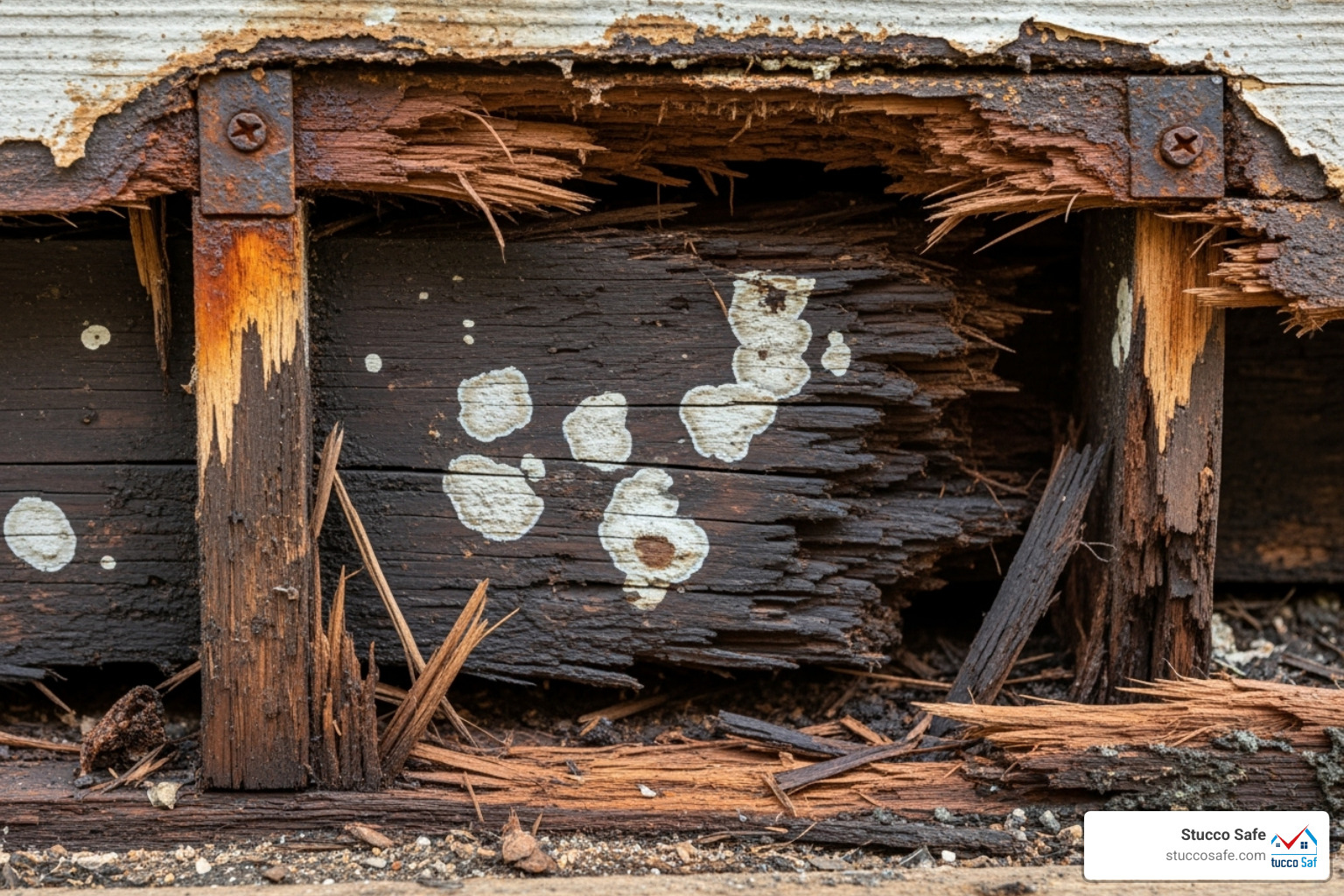
Our Stucco Leak Detection services in Southeastern Pennsylvania, New Jersey, and Delaware often uncover severe damage that started with a simple ledger board. Doing it right the first time is a small investment compared to the potential cost of repairs. Learn more about these risks in our guides to Stucco House Issues and Moisture Problems with Stucco.
Frequently Asked Questions about Anchoring to Stucco
Homeowners often ask about the specifics of how to anchor a ledger board on a stucco house. Here are the most common questions and their answers.
Can I use adhesive to attach a structural ledger board?
No, absolutely not. Adhesives like Liquid Nails are not rated for the structural loads of a deck or pergola, which can amount to thousands of pounds. Mechanical fasteners anchored to the house frame are required by code. This means using lag screws, structural screws, or bolts to create a physical connection to the rim joist or wall studs. There is no substitute when safety is on the line.
What kind of caulk is best for sealing the ledger board?
For this critical application, use a high-quality polyurethane or silicone sealant designed for exterior use. These premium sealants provide a flexible, waterproof seal that can handle temperature-related expansion and contraction. Cheaper acrylic caulks will crack and fail, leading to water intrusion. Look for products rated for masonry and wood applications.
How do I know if my stucco has moisture damage before I start?
This is a critical question, as damage often hides behind a perfect-looking finish. You might see visual cues like Stucco Water Stains or cracks, but these aren’t always present.
The only certain method is a professional Stucco Moisture Test. Certified inspectors use specialized equipment to take readings from within the wall system. Stucco Inspections vary in cost from $495 to $1595 or more for very large homes, a small price compared to the tens of thousands you might spend fixing hidden water damage finded mid-project.
We serve homeowners throughout Southeastern PA, New Jersey, and Delaware, providing the peace of mind that comes from knowing the true condition of your walls before you begin a major project.
Conclusion: Build with Confidence and Protect Your Home
Learning how to anchor a ledger board on a stucco house is about protecting your investment and ensuring safety. The key takeaways are to prioritize a solid structural connection to the house frame, implement flawless waterproofing with proper flashing and sealants, and always adhere to local building codes. These are the foundations of a safe, long-lasting installation.
Working with stucco carries high stakes. The material can hide moisture problems for years, making prevention critical. We’ve seen homeowners face tens of thousands in repairs from cutting corners, a cost that far outweighs the initial investment in doing the job correctly.
That’s why a pre-construction inspection is so valuable. Before you start, knowing the condition of your wall system can save you from costly surprises. Our forensic stucco inspections help homeowners across Southeastern PA, New Jersey, and Delaware understand exactly what they’re working with. A Stucco Inspection, costing from $495 to $1595, is a small price for peace of mind.
When you’re ready to choose your hardware, our guide to the Best Anchors for Stucco can help. Build with confidence, protect your home, and create the outdoor space you’ve been dreaming of—the right way, from the start.