
Visual Mold Inspection: 5 Critical Signs
Your First Line of Defense Against Hidden Mold
A visual mold inspection is the foundational first step in identifying potential mold problems in your home. Here’s what you need to know:
- What it is: A systematic, non-invasive examination of your property to identify visible mold growth, water damage, and conditions that promote mold development.
- Why it matters: Mold needs moisture to grow, and a visual inspection identifies both existing growth and the moisture sources feeding it—before problems escalate.
- What inspectors look for: Water stains, discoloration, musty odors, condensation, peeling paint, and any areas with past or present moisture intrusion.
- Key finding: Research from NIOSH confirms that thorough visual inspections and detecting musty odors are more reliable than air sampling alone for identifying mold problems.
Mold doesn’t announce itself with a warning sign. It hides in crawlspaces, behind walls, and within the layers of stucco facades. By the time you see a fuzzy black patch on your bathroom ceiling, the problem has often been growing for weeks or months.
That’s why a visual mold inspection is so critical. It’s your opportunity to catch moisture issues and mold growth early—before they threaten your family’s health or your home’s structural integrity.
A visual inspection is more than just a quick glance around your house. It’s a methodical process that combines sensory observation (what you see and smell) with specialized tools like moisture meters and thermal imaging cameras. Professional inspectors examine every vulnerable area of your property, from the roof to the foundation, searching for the telltale signs of moisture intrusion and mold colonization.
The numbers tell the story. About a third of all homes in the United States experience some type of water damage every year. And where there’s water damage, mold growth can begin in as little as 24 to 48 hours. That’s why moisture control is the primary strategy for preventing mold—and why identifying those moisture sources through visual inspection is so essential.
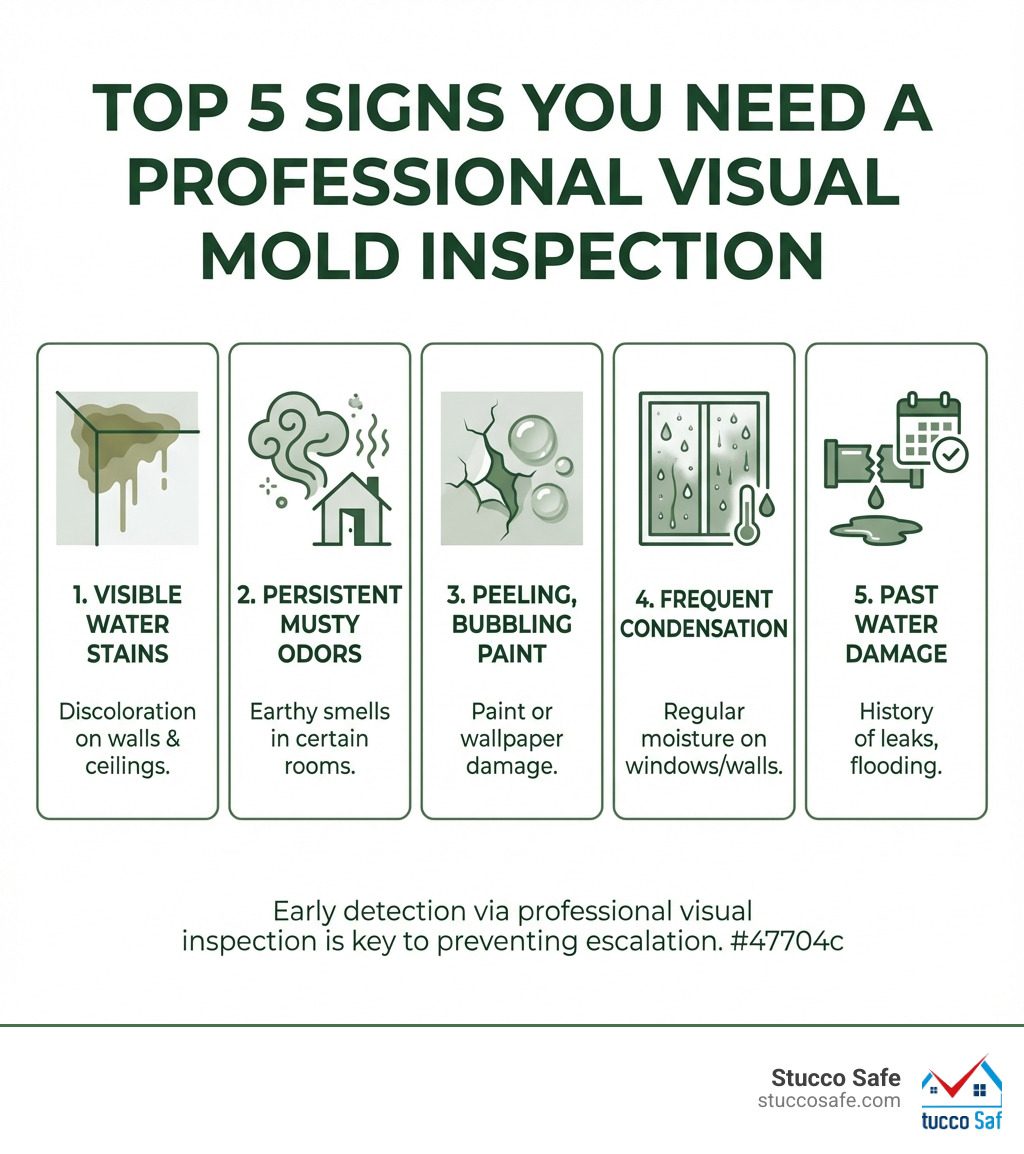
Visual inspections focus on the most common culprits: basements prone to flooding, bathrooms with poor ventilation, attics with roof leaks, kitchens with plumbing issues, and yes—stucco exteriors where water can seep behind the façade unnoticed. Inspectors look for discoloration, water stains, peeling or bubbling paint, condensation on windows, and any musty odors that signal active mold growth.
But here’s the important caveat: a visual inspection has its limitations. It cannot detect mold hidden within wall cavities, inside HVAC ductwork, or beneath flooring. It won’t tell you the specific species of mold present or quantify airborne spore concentrations. That’s why it’s considered the “lowest level of confirmation” for mold. When health concerns are significant, hidden mold is suspected, or you’re involved in a real estate transaction, professional mold testing—including air and surface sampling—becomes necessary.
For homeowners like Helen, who are concerned about hidden moisture issues in stucco homes, a visual inspection is the critical starting point. It identifies problem areas and helps determine whether further investigation is warranted. And when performed by a certified professional, it provides the documentation and expert analysis needed to take decisive action.
I’m Gabe Kesslick, and I’ve been conducting visual mold inspections and stucco moisture investigations since 2001. As a BESI Level 2 Certified Building Envelope Forensic Inspector and EDI Level 2 Certified Stucco Inspector, I’ve seen how early visual detection through professional inspection can save homeowners from catastrophic damage—and how ignoring early warning signs can lead to costly remediation down the road.
The Telltale Signs: What Prompts a Visual Mold Inspection?
Mold spores are everywhere, both indoors and outdoors. No indoor space is completely free from them. However, they only become a problem when they find a suitable environment to grow – which means moisture. A visual mold inspection is often prompted by certain indicators that suggest mold might be present or conditions are ripe for its growth.
Here’s what often sends homeowners in Southeastern PA, New Jersey, and Delaware looking for answers:
- Water Damage: Any history of past or present flooding, plumbing leaks, roof leaks, or even persistent condensation can indicate a breeding ground for mold. We look for the evidence of where water has been.
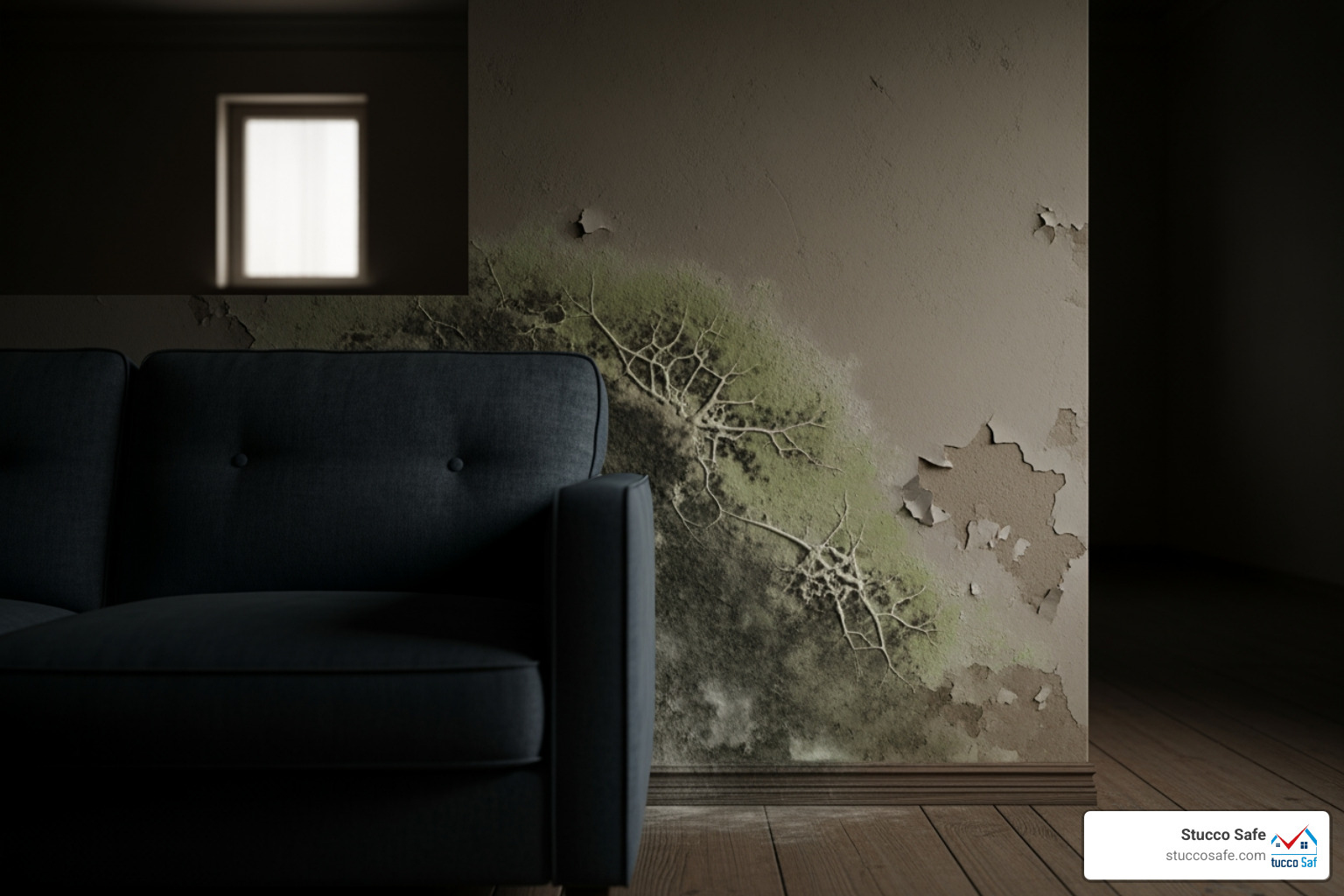
- Stains & Discoloration: Mold often appears as fuzzy, discolored patches – black, green, brown, white, or even pink. These can show up on walls, ceilings, floors, and personal belongings. Sometimes, what looks like a simple water stain can actually be mold or a sign of a moisture problem that will lead to mold.
- Musty Odors: This is one of the most reliable indicators. If you smell an earthy, musty, or damp odor, especially in a particular room or area, it’s a strong sign that mold is growing, even if you can’t see it. This is why NIOSH found that thorough visual inspections or detecting problems by musty odors are more reliable than air sampling alone.
- Peeling or Bubbling Paint: This often points to moisture trapped behind walls or surfaces, creating a perfect hidden environment for mold to thrive.
- Condensation on Windows: Excessive condensation on windows or walls can signal high indoor humidity, a key ingredient for mold growth.
- Health Symptoms: Inhaling mold spores can trigger respiratory issues, especially for those with asthma or allergies. Symptoms can include wheezing, coughing, shortness of breath, and nasal congestion. Many people with chronic sinus infections were previously exposed to mold. If you or your family members are experiencing unexplained respiratory problems, skin irritation, or other allergy-like symptoms, mold could be the culprit.
- Past Flooding: If your property has experienced any form of water intrusion, a visual mold inspection is crucial, even if the area appears dry. Mold can start growing within 24-48 hours of water damage.
Ignoring mold issues can lead to significant problems. Mold can cause structural damage to your home, necessitating costly repairs. It can also dramatically diminish your property value, as potential buyers are often wary of homes with a history of mold. More importantly, mold spore exposure can cause respiratory problems, skin irritation, and other health issues, and can aggravate pre-existing conditions like asthma or allergies.
Common Hotspots for Mold in Your Home
When we conduct a visual mold inspection, we know where mold likes to hide. We thoroughly check these common problem areas:
- Basements & Crawlspaces: These areas are prone to moisture, leaks, and high humidity, making them prime locations for mold growth. We look for standing water, efflorescence, or visible mold on walls, floors, and structural elements.
- Attics: Roof leaks, poor ventilation, or inadequate insulation can lead to moisture buildup and mold on wood sheathing and insulation.
- Bathrooms & Kitchens: High humidity, leaks around plumbing fixtures, and condensation make these rooms frequent mold sites. We inspect around sinks, toilets, showers, and under cabinets.
- Around Windows: Condensation and leaks around window frames can lead to mold on sills, frames, and adjacent walls.
- HVAC Systems: Mold can grow in damp ducts or on coils, spreading spores throughout your home. We check for visible growth and musty odors emanating from vents.
- Stucco Exteriors: As stucco inspection specialists, we understand that moisture can become trapped behind stucco, leading to hidden mold growth and rot in the sheathing and framing underneath. A mold inspection in stucco homes requires specialized knowledge to identify subtle signs of moisture intrusion.
Health and Property Risks of Ignoring Mold
The health risks associated with mold exposure are a serious concern for homeowners in our service areas of Southeastern PA, New Jersey, and Delaware. Mold spore exposure can cause a range of issues, from mild irritation to severe respiratory problems.
- Allergic Reactions: Many people experience allergy-like symptoms such as sneezing, runny nose, red eyes, and skin rash when exposed to mold.
- Respiratory Problems: For individuals with asthma or other respiratory conditions, mold can trigger attacks, wheezing, coughing, and shortness of breath. Even healthy individuals can develop respiratory issues from prolonged exposure. The majority of people with chronic sinus infections have been exposed to mold.
- Property Damage: Mold feeds on organic materials like wood, drywall, and insulation, leading to wood rot, compromised insulation, and structural degradation. If left undetected or untreated, mold can lead to significant and costly repairs.
A professional home mold inspection is critical for preventing these negative outcomes. Early detection and intervention are key to safeguarding both your health and your investment.
The Anatomy of a Professional Visual Mold Inspection
When we perform a professional visual mold inspection for our clients in Southeastern PA, New Jersey, and Delaware, it’s a comprehensive and systematic process designed to uncover any potential mold concerns. It goes beyond a quick glance, combining expertise with advanced tools.
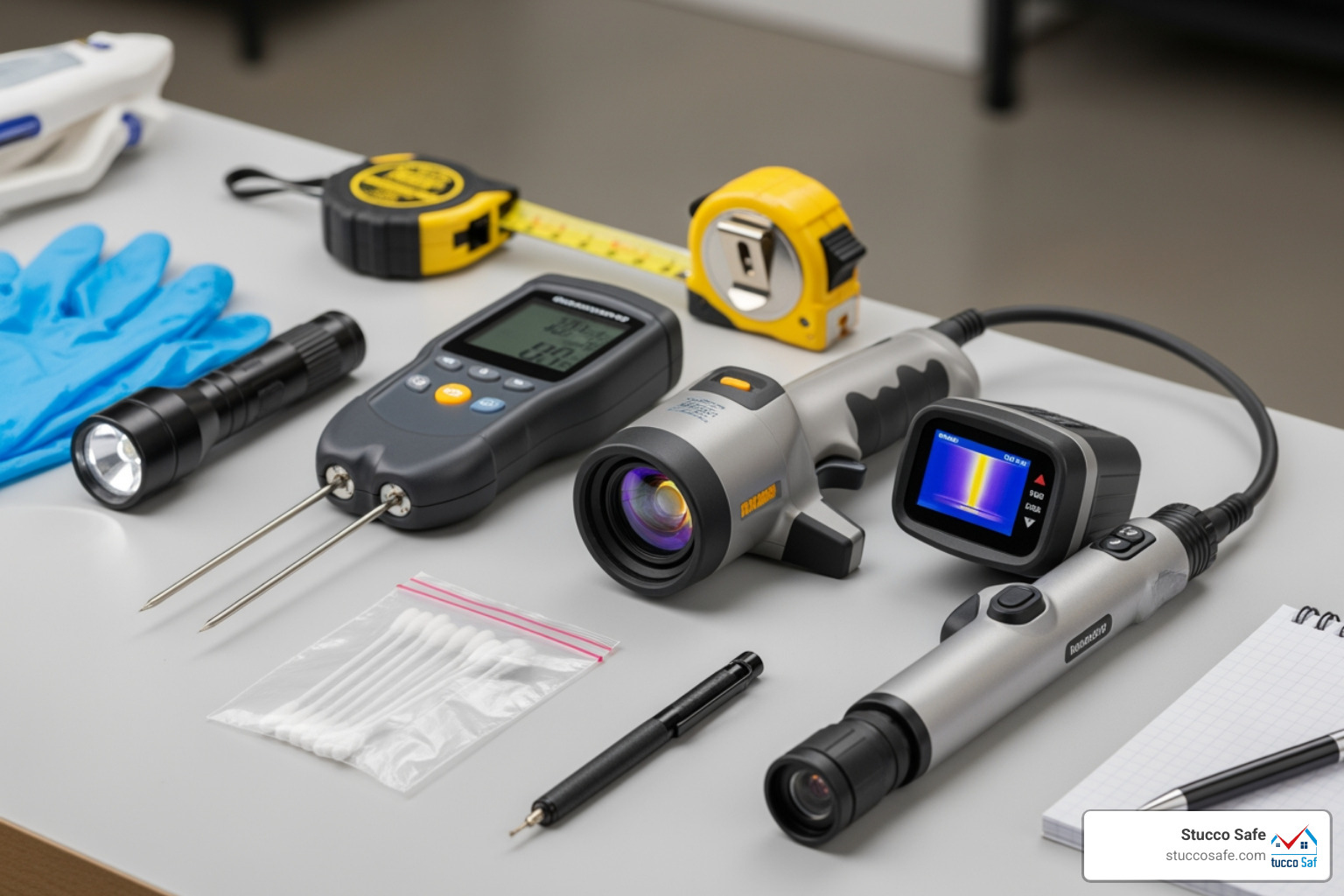
Our process typically involves:
- Property History Review: We start by gathering information about your home’s history, including any past water leaks, flooding, repairs, or unusual odors you’ve noticed. Your observations are invaluable clues.
- Occupant Interviews: We listen to your suspicions of mold location, any health concerns, or persistent odors. This helps us focus our investigation.
- Systematic Walkthrough: We conduct a thorough, non-intrusive examination of readily accessible areas throughout your property, from the basement to the attic. This includes examining the home’s ventilation, looking for indications of past or present flooding, and checking for crawl space moisture problems.
- Identifying Moisture Sources: Since excess moisture is the major cause of indoor mold growth, a crucial part of our assessment is to identify existing or potential moisture problems. We look for leaks, condensation, and areas with high humidity.
- Non-Intrusive Examination: We prioritize non-destructive methods first. We visually inspect surfaces, look for discoloration, and identify conditions conducive to mold growth.
- Role of a Certified Inspector: Our certified inspectors bring significant training and expertise to every job. We adhere to industry norms and protocols, ensuring a thorough and accurate assessment. This expert eye is crucial, especially for complex structures like stucco homes where moisture intrusion can be hidden.
Essential Tools and Techniques
While our eyes and noses are invaluable, modern technology significantly improves our ability to detect mold and moisture. Our toolkit for a visual mold inspection includes:
- Moisture Meters: These devices measure the moisture content in building materials like drywall, wood, and concrete. High moisture readings indicate areas where mold is likely to grow, even if not yet visible.
- Thermal Imaging Cameras: These cameras detect temperature variations, which can reveal hidden moisture behind walls or ceilings. Damp or wet building materials are almost always cooler than dry materials. While they don’t detect mold directly, they pinpoint potential moisture intrusion from plumbing leaks or roof leaks, guiding further investigation.
- Borescopes: For suspected hidden mold behind walls or in other inaccessible cavities, a borescope (a flexible camera) allows us to peer into these areas through a small, non-damaging hole. This helps confirm the presence of mold without extensive demolition.
- Hygrometers: These measure humidity levels in the air. Maintaining indoor relative humidity below 60% (ideally between 40-60%) is crucial for limiting microbial growth.
- Flashlights: A powerful flashlight helps illuminate dark corners and hidden spaces, making it easier to spot subtle signs of mold.
- Sensory Inspection (Sight and Smell): Our experience allows us to recognize the visual characteristics of mold and identify the distinct musty odors it produces.
- Digital Documentation: We digitally document all our findings with high-resolution photographs, which are included in your report.
What to Expect in Your Inspection Report
Following our professional visual mold inspection, you’ll receive a comprehensive and easy-to-understand report within 48 hours. This report is carefully compiled to give you a clear picture of our findings and actionable recommendations.
Here’s what our report typically includes:
- Digital Photographs: High-quality images of any visible mold, water damage, or conditions conducive to mold growth.
- Detailed Findings: A clear description of all observations, including locations of suspected mold, moisture sources, and areas of concern.
- Moisture Mapping: If moisture meters or thermal imaging were used, the report will include details on moisture levels, helping to map the extent of water intrusion.
- Identification of Affected Areas: A precise outline of where mold or moisture problems were found.
- Conducive Conditions Noted: We highlight any environmental factors or building deficiencies that could lead to future mold growth (e.g., poor ventilation, humidity issues).
- Recommendations for Next Steps: Clear, actionable advice on how to address the identified issues. This might include suggestions for repairs, remediation, or further testing.
- Scope of Work for Remediation: If remediation is recommended, our report can outline a potential scope of work, including cleanup suggestions and preventative measures.
Our goal is to provide a trustworthy, thorough, and educational report that empowers you to make informed decisions about your property.
Visual Inspection vs. Mold Testing: Knowing the Difference
It’s common for homeowners to confuse visual mold inspection with mold testing, but they serve distinct purposes. Think of a visual inspection as the detective work, while mold testing is the forensic analysis.
| Feature | Visual Mold Inspection | Professional Mold Testing (Air/Surface Sampling) |
|---|---|---|
| Cost | Generally lower (Stucco Inspections range $495 – $1595+) | Higher, as it involves laboratory analysis |
| Purpose | Identifies visible mold, moisture sources, and conducive conditions. Determines if a problem exists and where. | Confirms mold type, quantifies spore levels, identifies hidden mold, assesses health risks. Determines what kind of mold and how much. |
| Limitations | Cannot identify mold species, quantify airborne spores, or reliably detect hidden mold. Considered the “lowest level of confirmation.” | Provides a snapshot; results can vary based on conditions. No federal standards for airborne mold, so interpretation requires expertise. |
| When it’s Used | Initial assessment, visible mold, musty odors, suspected moisture issues, general property evaluation. | Suspected hidden mold, health concerns, post-remediation verification, real estate transactions, litigation. |
A visual mold inspection is always the starting point. It’s a straightforward way to begin detecting mold, especially when you notice visible signs like stains or a musty odor. However, it has limitations. It cannot definitively tell you what type of mold you’re dealing with, nor can it quantify the concentration of airborne mold spores, which is crucial for assessing potential health impacts. It also struggles with detecting mold in hidden areas like inside wall cavities or HVAC ductwork.
When is Professional Mold Testing Necessary?
While a thorough visual mold inspection can uncover many issues, there are specific situations where professional mold testing becomes essential:
- Suspected Hidden Mold: If you smell a strong musty odor but cannot see any visible mold, it’s highly likely that mold is growing behind walls, under flooring, or in other concealed areas. In such cases, air and surface sampling can confirm its presence.
- Health Concerns: If occupants are experiencing persistent health symptoms (respiratory issues, allergies) that you suspect are mold-related, testing can help identify the types and concentrations of mold spores present, aiding in medical diagnosis and remediation planning.
- Post-Remediation Verification (PRV): After mold remediation, clearance testing (also known as PRV testing) is crucial to ensure that cleanup efforts were successful and the environment is safe. This typically involves air and surface sampling.
- Real Estate Transactions or Litigation: In situations involving property sales or legal disputes, scientific proof of mold presence, type, and quantity, obtained through laboratory analysis, is often required.
- Unclear Sources: If a visual mold inspection identifies general moisture issues but the exact source or extent of mold growth remains unclear, testing can provide definitive answers.
Professional mold testing involves collecting air samples from different locations in your property to assess spore concentration and comparing them to outdoor samples. Surface sampling (swabs, tape lifts) is used to collect mold directly from surfaces for identification. These samples are then analyzed by a third-party accredited laboratory to identify mold species and quantify levels. It’s important to remember that there are no EPA or federal standards for airborne mold, so interpreting these results requires expert knowledge.
Understanding the Limitations of a Visual-Only Approach
A visual mold inspection is considered the lowest level of confirmation for mold, and for good reason. While incredibly valuable as a first step, it has inherent limitations:
- Hidden Mold: Mold often grows in dark, inaccessible places where moisture is present. A visual inspection cannot confirm mold in wall cavities, under subflooring, or inside HVAC systems without intrusive methods.
- Inability to Identify Species: You might see mold, but you can’t tell if it’s a common household mold or a species that produces mycotoxins just by looking. Only laboratory analysis can identify the specific types of mold.
- Cannot Quantify Airborne Spore Concentration: A visual inspection can’t tell you how many mold spores are circulating in your indoor air, which is a key factor in assessing potential health risks.
- Looks Can Be Deceiving: Sometimes, what looks like mold might be dirt, soot, or even paint. Conversely, some molds can be very subtle or blend into surfaces.
When these limitations are a concern, escalating from a visual inspection to professional mold testing by certified experts is the recommended next step to ensure a comprehensive understanding of your mold situation.
DIY vs. Professional: Who Should Perform the Inspection?
The decision of whether to attempt a visual mold inspection yourself or to hire a professional often comes down to the scale of the problem and your comfort level with potential risks.
DIY Visual Mold Inspection: A Homeowner’s Checklist
For very small, visible patches of mold (less than 10 square feet) on non-porous surfaces, or for routine preventative checks, a DIY approach might be sufficient. Here’s a checklist to guide your home mold check:
- Check for Musty Odors: Walk through your home, especially basements, bathrooms, and laundry rooms. A persistent musty smell is a key indicator.
- Inspect Plumbing Fixtures: Look for leaks or signs of past leaks around sinks, toilets, showers, and appliances like washing machines and dishwashers.
- Look for Water Stains: Examine ceilings, walls, and floors for any discoloration or stains that could indicate water intrusion.
- Check Ventilation Fans: Ensure bathroom and kitchen exhaust fans are working properly and vent to the outside, not into an attic. Test suction with a piece of toilet paper – if it stays, the fan is working.
- Examine Window Sills: Look for condensation, moisture, or mold growth around windows.
- Inspect Exterior Grading and Gutters: Ensure the ground slopes away from your foundation and gutters are clear, directing water at least 6-10 feet away from your home.
- Check for Condensation: Look for condensation on windows or walls, which signals high indoor humidity.
- Safety First: If you decide to investigate possible mold issues yourself, use appropriate safety gear as recommended by the EPA, including gloves, eye protection, and an N-95 respirator to avoid inhaling spores. Be aware that disturbing moldy areas can spread contamination.
Mold spores need a comfortable environment, food (like wood, paper, carpet, etc.), and moisture to grow. If you find moisture, locate the source, eliminate it, and dry the area within 24-48 hours to prevent mold growth.
When to Call a Certified Professional
While DIY checks are useful, there are clear instances when hiring a certified professional for a visual mold inspection (and potentially testing) is imperative. This is especially true for homeowners in Southeastern PA, New Jersey, and Delaware, where we often encounter complex moisture issues, particularly with stucco homes.
You should call a certified professional if:
- Large-Scale Contamination: If you suspect mold covers an area larger than 10 square feet, professional remediation is typically recommended.
- Suspected Hidden Mold: If you smell mold but cannot see it, or if you have experienced water damage but don’t see visible mold, a professional has the tools (like thermal cameras and borescopes) to find hidden growth.
- Persistent Musty Odors: A strong, unexplained musty odor is a red flag that often indicates hidden mold.
- After Major Water Damage: Following a flood or significant leak, even if you’ve dried the area, a professional inspection ensures all potential mold growth is identified.
- Real Estate Transactions: If you are buying or selling a home, a professional mold inspection provides peace of mind and can be crucial for negotiations.
- Occupants with High Health Risks: If anyone in your household has asthma, allergies, a compromised immune system, or is very young or elderly, minimizing mold exposure is critical.
- Stucco Safe’s Certified Inspectors: Our team specializes in detecting moisture and structural issues, particularly in stucco homes. We use forensic testing methods to uncover hidden problems that a standard visual inspection might miss. Our certified inspectors serve homeowners throughout Southeastern Pennsylvania (including Philadelphia, West Chester, Villanova, King of Prussia, Phoenixville, Berwyn, Paoli, and Chester County), New Jersey (including Bayonne, Brick, Camden, Cherry Hill, Clifton, East Orange, Edison, Elizabeth, Franklin Township, Gloucester Township, Hamilton Township, Jersey City, Lakewood, Middletown, Newark, North Bergen, Old Bridge, Passaic, Paterson, Toms River, Trenton, Union City, Vineland, and Woodbridge), and Delaware. Stucco Inspections, which often involve a visual mold inspection, vary in cost from $495 to $1595 or more for very large homes.
We can provide a comprehensive mold inspection in stucco homes, leveraging our expertise to identify moisture intrusion specific to this type of exterior.
Conclusion: Turning Your Inspection into Action
A visual mold inspection is far more than just a cursory glance; it is a critical, proactive step in safeguarding your home and the health of its occupants. It serves as your first line of defense, allowing for the early detection of moisture issues and potential mold growth before they escalate into major problems.
By identifying the “why”—the underlying moisture source—a thorough visual inspection empowers you to take control. It helps you understand where your home is vulnerable and what preventative measures need to be taken. Early detection saves you money by preventing costly remediation and protects health by reducing exposure to harmful mold spores.
For a comprehensive analysis and the peace of mind that comes from knowing your home is thoroughly assessed, professional testing by Stucco Safe is key. Our certified inspectors use forensic testing methods and advanced tools to provide a detailed understanding of any mold or moisture concerns, especially crucial for properties with stucco exteriors.
Don’t let hidden mold compromise your home or your family’s well-being. Take the next step with a professional mold test from Stucco Safe.
Learn more about our mold testing services and protect your home today.