
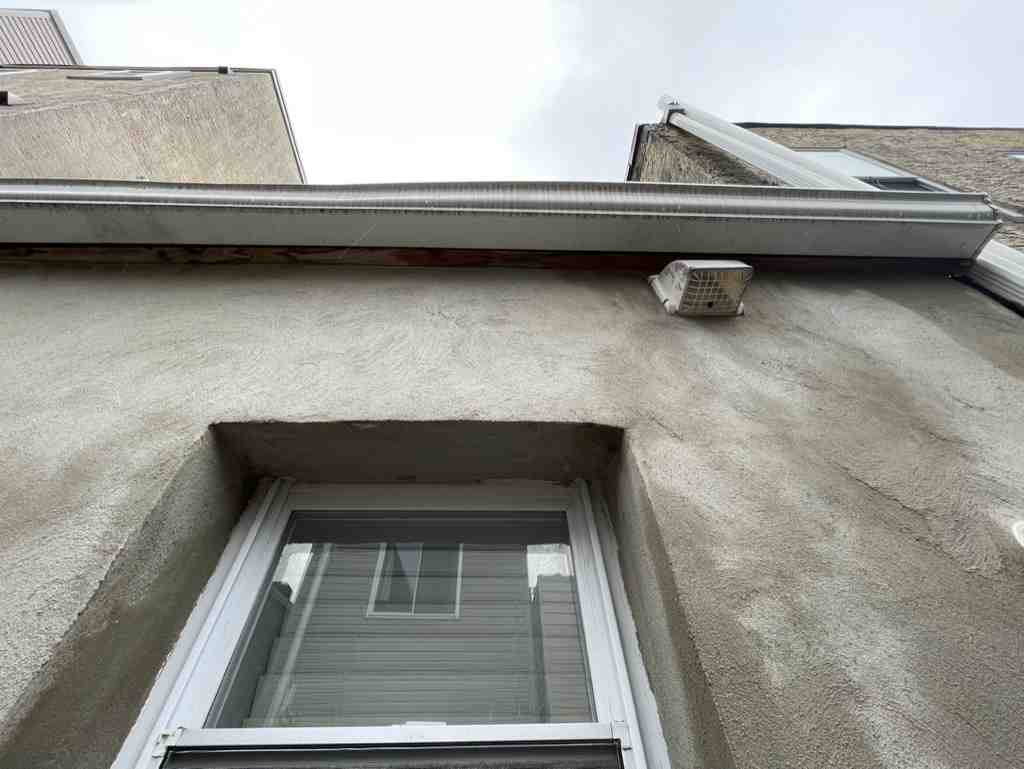
Stucco Inspections Camden: Protect Your Home 2025
Why Camden Homeowners Need Professional Stucco Inspections
Stucco inspections in Camden are essential for identifying hidden moisture damage that can lead to structural failure and costly repairs. For owners or buyers of stucco homes in Camden, NJ, a professional inspection can save thousands and protect your investment.
What You Need to Know About Stucco Inspections in Camden:
- Cost: Typically ranges from $495 to $1,595+ depending on home size
- Process: Includes visual assessment, thermal imaging, and invasive moisture testing
- When Needed: During real estate transactions, every 5-10 years, or when visible damage appears
- Hidden Risks: Over 90% of stucco applications in the Northeast from the past 15-30 years are estimated to be defective
- High-Risk Homes: Properties built between 1993-2006 have failure rates as high as 90%
Stucco is a popular exterior finish in South Jersey for its durability and appeal. However, beneath the surface, moisture intrusion can cause wood rot, mold, and structural decay—all invisible until the damage is severe.
Camden’s humid climate and weather changes make homes particularly vulnerable to moisture-related stucco failures. Dark stains, damp interior walls, or mold spots are all signs of a serious problem needing immediate attention.
The cost of ignoring these issues is staggering. Stucco repair expenses can range from $5,000 to over $100,000. A professional inspection, by contrast, is a minimal investment that can identify problems early—when they’re still affordable to fix.
I’m Gabe Kesslick, and I’ve been performing stucco inspections Camden and throughout New Jersey since founding Stucco Safe in 2015, with leak detection and repair experience dating back to 2001. As an EDI Level 2 Certified Stucco Inspector and BESI Level 2 Certified Building Envelope Forensic Inspector, I’ve seen how proper stucco inspections Camden can save homeowners from devastating financial losses.
Why Stucco Fails and the Hidden Risks for Camden Homeowners
Stucco is beautiful and durable, but not inherently waterproof. Its effectiveness depends on proper installation and a robust drainage system. Unfortunately, many applications, especially in the Northeast, are subpar. We estimate over 90% of stucco installed in the last 15-30 years is defective due to improper installation.
This issue is particularly pronounced in homes built between 1993 and 2006, which have a failure rate as high as 90%. This period suffered from incorrect building codes and poor installation techniques, creating widespread problems.
The primary culprit is moisture intrusion. When water gets trapped behind the stucco, it leads to a cascade of problems, often invisible until severe:
- Structural Rot: Trapped moisture causes wood sheathing and framing to rot. This compromises your home’s structural integrity, weakening its foundation and requiring extensive, costly repairs.
- Mold Growth: Moisture creates a breeding ground for mold, which degrades building materials and poses serious health risks to occupants, triggering allergies and asthma.
- Compromised Insulation: Moisture in wall cavities can saturate insulation, reducing energy efficiency and leading to higher energy bills.
- Decreased Property Value: Undetected stucco issues can severely impact your home’s market value. Buyers may walk away or demand significant price reductions upon learning of moisture problems.
- High Repair Costs: The cost to remediate stucco failure can range from $5,000 to over $100,000, underscoring the importance of early detection through an affordable inspection.
In South Jersey counties like Camden, our humid climate and seasonal weather changes exacerbate these issues. Homes here are especially vulnerable if the stucco lacks proper flashing, weep screeds, and drainage planes to purge moisture.
Common Warning Signs of Stucco Failure
While the most severe problems are hidden, your home might give you subtle clues. If you notice any of these signs, schedule a professional inspection:
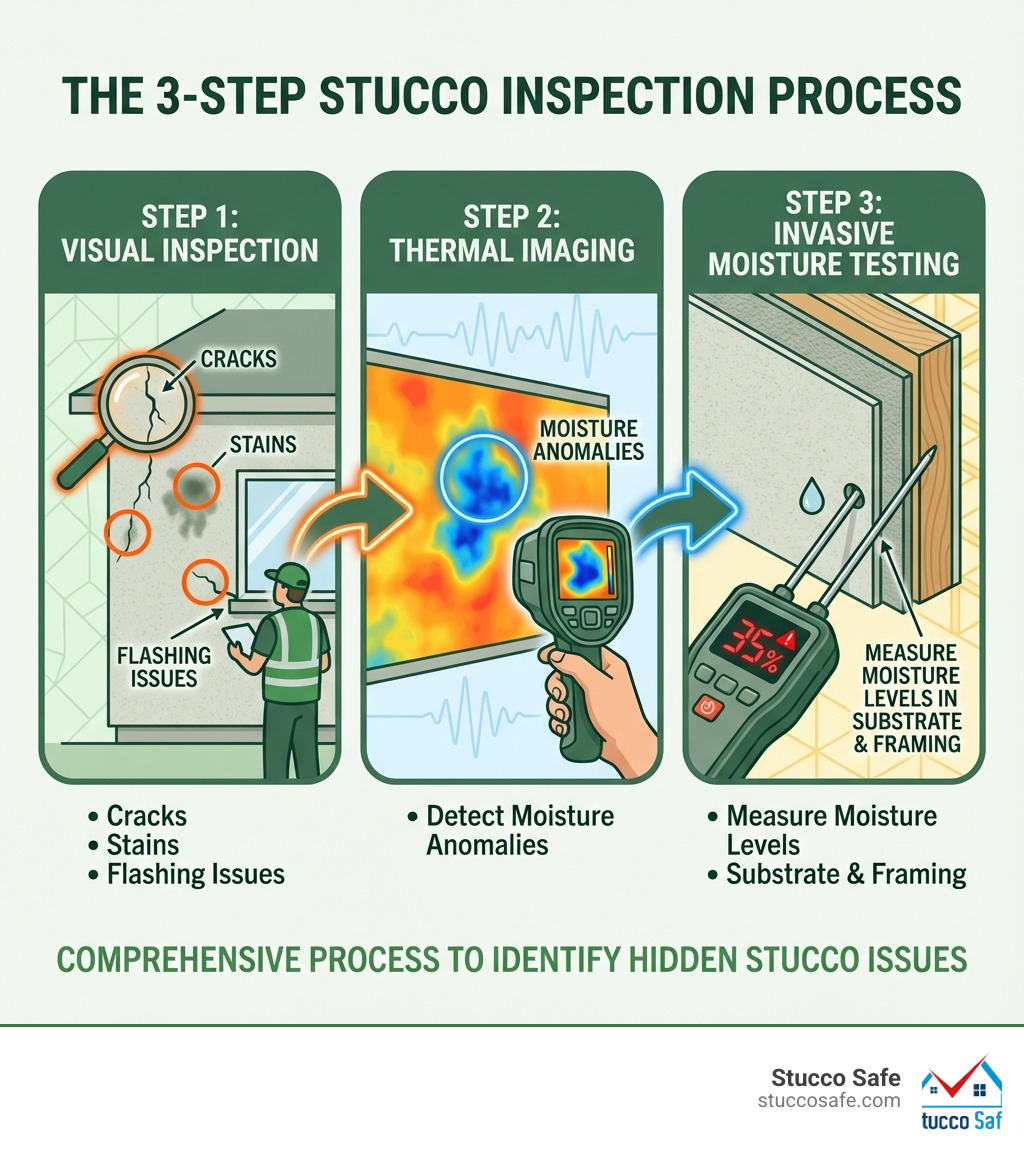
- Cracks or Bulging: Large, spiderweb-like, or horizontal cracks can indicate structural movement or trapped moisture. Bulging suggests water has gotten behind the stucco, causing it to delaminate.
- Dark Staining or Discoloration: Dark streaks below windows, doors, or at the base of walls are classic signs of moisture accumulation.
- Mold or Mildew Spots: Black, green, or white spots on the stucco surface indicate prolonged moisture exposure and potential mold within the wall.
- Damp Interior Walls: Dampness, peeling paint, or water stains on interior walls adjacent to stucco strongly indicate a breach in the exterior.
- Soft Spots on the Exterior: Spongy areas when pressing on the stucco can mean the underlying sheathing or framing is rotting.
The Stucco Inspection Process: From Visual Checks to Invasive Testing
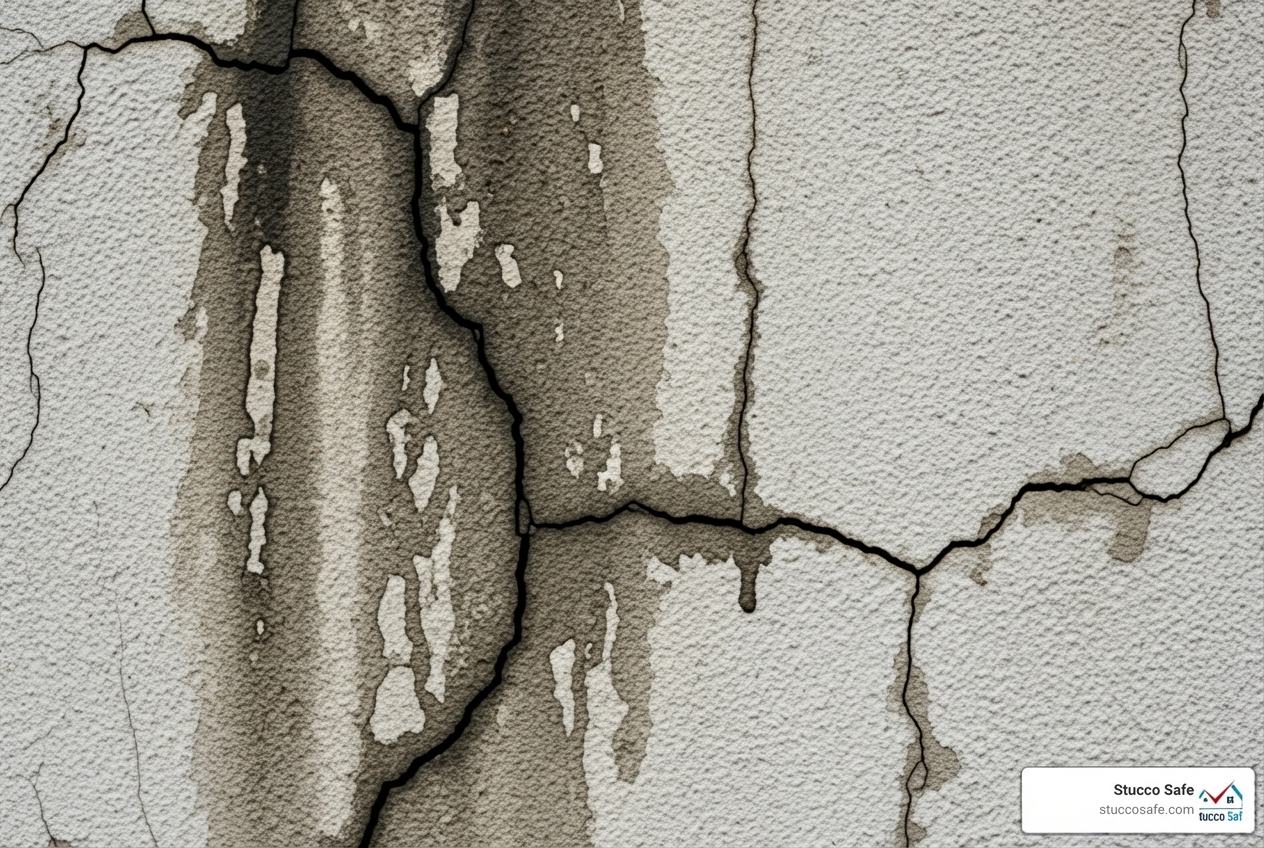
We believe in a thorough, scientific approach to stucco inspections. Our process goes beyond a simple visual scan, employing forensic testing methods to uncover hidden issues that general contractors or standard home inspectors might miss. It’s a bit like being a detective, but for your home’s exterior!
Step 1: Visual and Non-Invasive Assessment
Every comprehensive stucco inspection begins with a meticulous visual and non-invasive assessment. This initial stage allows us to identify potential problem areas and gather crucial information without causing any disturbance to your home.
- Visual Inspection: Our certified inspectors conduct a detailed visual examination of your entire stucco system. We look for any visible signs of distress, such as:
- Cracks, especially those that are larger, irregular, or located around openings.
- Stains or discoloration, particularly dark streaks originating from windows, doors, or rooflines.
- Flashing details around windows, doors, and roof-to-wall intersections. Improperly installed or missing flashing is a common entry point for water.
- Sealant condition, checking for cracks, gaps, or deterioration in caulk joints around penetrations and transitions.
- Window and door transitions, ensuring proper integration with the stucco system.
- Thermal Imaging: We use advanced infrared cameras to perform thermal imaging scans of your stucco walls. This non-invasive technology detects temperature anomalies that can indicate the presence of moisture within the wall cavity. Wet areas cool down differently than dry areas, creating distinct thermal patterns. While thermal imaging is an excellent diagnostic tool for identifying potential moisture, it doesn’t confirm it. Our certified thermography from the Infraspection Institute ensures we interpret these readings accurately.
Step 2: Invasive Moisture Testing
The visual and thermal assessments help us pinpoint areas of concern. To confirm moisture penetration and assess the extent of any damage, we then proceed with invasive moisture testing. This is where we get definitive answers.
- Invasive vs. Non-Invasive Methods: While non-invasive tools like thermal cameras can suggest moisture, only invasive testing can provide precise, quantifiable moisture readings within the wall assembly. This method is crucial to avoid false positives and get an accurate picture of your stucco’s health.
- Drilling Small Holes: We carefully drill pairs of small, inconspicuous holes (typically 3/16th of an inch) into the stucco at strategic locations. These locations are determined by our visual assessment, thermal imaging findings, and knowledge of common stucco failure points.
- Moisture Meter Probes: Through these small holes, we insert specialized moisture meter probes. These probes penetrate the stucco and reach the underlying sheathing and framing, allowing us to measure the moisture content directly. We use state-of-the-art moisture meters, such as Extech moisture meters with hammer probes, which provide accurate readings from 1% to 100%, offering a much more precise assessment than inferior meters. Delmhorst moisture meters are also used, providing precise readings.
- Substrate and Framing Assessment: Beyond just moisture levels, our probes can also help us assess the integrity of the substrate (the material directly behind the stucco) and the framing. This is critical for identifying any hidden rot or deterioration.
- Resistance Testing: In some cases, we may also perform resistance testing, which helps determine the structural health and integrity of the underlying sheathing and framing.
- Sealing Probe Holes with Color-Matched Caulk: Once testing is complete, we carefully fill each small hole with a high-quality, color-matched elastomeric/acrylic caulk. Our goal is to leave the exterior looking as close to its original state as possible, making the test points nearly indiscernible.
Comparing Visual vs. Invasive Stucco Inspections
| Feature | Visual Inspection | Invasive Inspection |
|---|---|---|
| Method | Surface-level observation | Physical probing behind the stucco |
| Tools | Eyes, binoculars, thermal camera | Moisture meter, resistance probe, drill |
| Detects | Visible cracks, stains, sealant failure | Hidden moisture, substrate rot, framing decay |
| Accuracy | Can miss underlying issues | Provides definitive moisture readings |
| Best For | Initial assessment, routine check-ups | Pre-purchase, suspected damage, comprehensive analysis |
Understanding Different Stucco Systems: Traditional vs. EIFS
When we talk about stucco, it’s important to recognize that there isn’t just one type. Your home could be clad with traditional stucco or EIFS, and understanding the differences is key to knowing their specific vulnerabilities and inspection needs. It’s like knowing if your car runs on gas or electricity – both get you around, but their inner workings are quite different!
Traditional Stucco (Hard Coat)
Traditional stucco, often referred to as “hard coat” stucco, is a classic building material with a long history.
- Composition: It’s made from a mixture of Portland cement-based materials, sand, and water. This creates a hard, durable, and breathable finish.
- Application: Typically applied in two or three coats over a lath (a mesh backing), either by hand or machine.
- Durability & Breathability: When installed correctly, traditional stucco is very durable and allows for some moisture vapor to pass through, helping the wall system dry out.
- Common Failure Points: Despite its benefits, traditional stucco is not immune to problems. Issues often arise from improper installation of flashing, inadequate weep screeds (which allow water to exit the wall cavity), and a lack of proper drainage behind the stucco. If water gets trapped, it can still lead to significant damage to the underlying structure.
EIFS (Exterior Insulation and Finish Systems)
EIFS, often called “synthetic stucco,” is a more modern cladding system that gained popularity for its energy efficiency and design flexibility.
- Composition: It’s a multi-layered wall system that includes an insulation board (usually foam) attached to the exterior sheathing, a base coat with fiberglass mesh, and a textured finish coat.
- Superior Energy Efficiency: One of EIFS’s main advantages is its excellent insulating properties, which can lead to significant energy savings.
- Design Flexibility: EIFS allows for a wide range of architectural designs, textures, and colors.
- Specific Moisture-Related Vulnerabilities: While offering benefits, EIFS has a well-documented history of performance issues, especially in humid or wet climates like ours in New Jersey. The system’s impermeable nature means that if water penetrates the outer layer (often through deficient caulk joints, improper abutments, or damaged surfaces), it can get trapped behind the insulation board with nowhere to go. This can lead to severe hidden moisture damage, mold growth, and structural rot. In fact, some homeowners insurance companies may even be hesitant to insure homes with EIFS cladding due to these known performance issues.
Regardless of whether your home features traditional stucco or EIFS, the common denominator for failure is almost always improper installation and inadequate moisture management. This is why specialized inspections are so crucial.
Your Guide to Professional Stucco Inspections Camden
For homeowners in Camden, understanding when to seek a professional stucco inspection and how to choose the right expert is paramount to protecting your most valuable asset.
When to Schedule a Stucco Inspection
Knowing the right time to get a stucco inspection can save you immense stress and expense. We highly recommend scheduling one in these key scenarios:
- Real Estate Transactions (Buying or Selling):
- For buyers: An inspection uncovers hidden problems before purchase, providing peace of mind and negotiation leverage.
- For sellers: A pre-listing inspection helps you address issues proactively, avoid surprises, and potentially increase market value. Certified properties may get higher bids and sell faster.
- After Severe Weather: Heavy rain, high winds, or freeze-thaw cycles can stress stucco systems. It’s wise to have your stucco checked for new damage after significant weather events.
- Before Major Renovations: When replacing windows or doors, inspect the stucco to ensure new installations integrate properly and don’t create new moisture entry points.
- As Regular Maintenance: We recommend an inspection every 5-10 years as a health check-up for your home’s skin. If your home hasn’t been inspected in the last two years, consider getting one.
- When Visible Warning Signs Appear: If you notice cracks, stains, bulging, or mold, don’t delay. These often indicate deeper, hidden problems that need immediate attention.
Choosing a Qualified Inspector for stucco inspections Camden
Choosing the right professional for your stucco inspections Camden is crucial. Here’s what to look for:
- Importance of Third-Party Objectivity: Choose an inspector who only performs inspections, not repairs. This ensures an unbiased assessment without a conflict of interest.
- Look for Specialized Certifications: Stucco inspection requires specialized knowledge. Look for inspectors with certifications from reputable organizations. Our founder, Gabe Kesslick, holds multiple key certifications, including:
- EDI Level 2 Certified Stucco Inspector
- EDI Certified Quality Control Supervisor
- Moisture Free Warranty Corp Certified Inspector
- BESI Level 2 Certified Building Envelope Forensic Inspector
- Certified Mold Investigator
- Certified Mold Spore Microscopy
These credentials signify a deep understanding of building envelope science. You can learn more about these standards through organizations like the Exterior Design Institute (EDI).
- Specialized Building Envelope Experience: An inspector with experience in building envelope science understands how all components of a home’s exterior interact and where vulnerabilities lie.
- Positive Online Reviews and Referrals: Check online reviews and ask for referrals. A company with a strong track record, like Stucco Safe with over 8,000 inspections performed, indicates reliability.
- Comprehensive Sample Reports: Ask to see a sample report. A good report should be detailed, easy to understand, and include photographic evidence.

What to Expect in Your Stucco Inspection Report
After your inspection, we provide a thorough report detailing our findings.
- Detailed Written Summary: An executive summary outlines the stucco’s overall condition and highlights major concerns.
- Photographic Documentation: High-quality, annotated photographs visually illustrate any issues found.
- Map of All Test Locations and Moisture Readings: For invasive inspections, the report includes a diagram of your home’s exterior, showing every test point and its corresponding moisture reading.
- Analysis of Substrate Integrity: We provide an analysis of the underlying sheathing and framing, noting any signs of rot uncovered during testing.
- Clear, Prioritized Recommendations for Maintenance or Repair: The report concludes with clear, actionable, and prioritized recommendations, guiding you on how to address any issues.
Frequently Asked Questions about Stucco Inspections in Camden
We understand that homeowners in Camden often have questions about stucco inspections. Here, we address some of the most common inquiries.
How much do stucco inspections Camden cost?
The cost of stucco inspections Camden typically ranges from $495 for smaller homes to $1,595 or more for very large homes.
Several factors influence the final price:
- Home Size: Larger homes with more stucco surface area require more time to inspect.
- Architectural Complexity: Homes with intricate details, multiple walls, and numerous windows take longer to inspect.
- Type of Inspection: An invasive inspection is more comprehensive and costs more than a purely visual assessment.
- Accessibility: Difficult-to-access areas might affect the cost.
This investment can prevent much larger repair bills, saving you tens of thousands in potential remediation.
Can I tell if my stucco is failing without an inspection?
Not reliably. Visible warning signs like stains or cracks usually indicate a problem has been ongoing for some time and the damage is already significant.
- Most Significant Damage is Hidden: The nature of stucco failure means damage occurs within the wall cavity, invisible to the naked eye until it’s extensive.
- Visible Signs Indicate a Severe Problem: Dark stains, bulging, or mold spots are late-stage symptoms, not early warnings.
- Professional Testing is the Only Way to Know for Sure: Only a certified inspector using forensic methods like thermal imaging and invasive moisture probing can accurately detect hidden moisture and assess your stucco system’s true health.
Are stucco problems covered by homeowner’s insurance?
Coverage is complex and often a point of contention for homeowners.
- Coverage is Often Denied: Insurance companies frequently deny claims, classifying stucco failure as “poor maintenance,” “improper installation,” or “wear and tear,” which are often excluded from standard policies.
- Claims May Be Rejected if Failure is Due to Improper Installation: If damage results from builder error or neglect, insurers are very likely to deny the claim. This is especially true for homes built between 1993-2006.
- A Professional Inspection Report Provides Crucial Documentation: A detailed report from a certified, third-party expert is invaluable if you file a claim. It provides objective documentation of the damage and its likely cause. Our detailed reports have helped homeowners secure insurance payouts, sometimes over $250K with legal help. Without this professional documentation, claims are often denied.
Protect Your Camden Home with a Certified Stucco Inspection
Stucco is undeniably a beautiful and desirable cladding, but as we’ve explored, it can also be a high-risk material, especially in New Jersey’s climate. The allure of its aesthetic can often mask a silent threat: hidden moisture. This unseen enemy can lead to catastrophic damage, including extensive wood rot, dangerous mold growth, compromised structural integrity, and ultimately, staggeringly costly repairs.
The good news is that these risks are not inevitable. A professional, invasive inspection is the only reliable way to uncover these hidden issues before they escalate into financial nightmares. We, at Stucco Safe, are dedicated to providing homeowners and prospective buyers in Camden with peace of mind. Our expert, certified inspectors use cutting-edge forensic methods, from thermal imaging to precise moisture probing, to deliver a truly accurate and comprehensive analysis of your home’s condition.
Don’t let the hidden dangers of stucco compromise your home or your investment. For a thorough evaluation and the peace of mind that comes with knowing your home’s true condition, schedule your professional stucco inspections Camden today.