

Stucco patch: Ultimate Fix 2025
Why Patching Stucco is a Crucial Home Maintenance Task
Stucco patch is a specialized repair material designed to fill cracks, holes, and damaged areas in stucco surfaces, preventing water intrusion and maintaining your home’s structural integrity. Here’s what you need to know:
Quick Answer: What is Stucco Patch?
- Definition: Ready-to-use or mix compound (acrylic, elastomeric, or cement-based) for repairing stucco damage.
- Primary Use: Filling cracks, holes, spalls, and breaks in stucco surfaces.
- Key Benefit: Prevents water from penetrating behind stucco, which can cause severe structural damage.
- Application: Small repairs (cracks under 1/2 inch) to larger patches, applied in layers no thicker than 1/4 inch.
- Typical Cost: DIY materials range from $5-$30 per quart; professional repairs cost $150-$500 for minor damage.
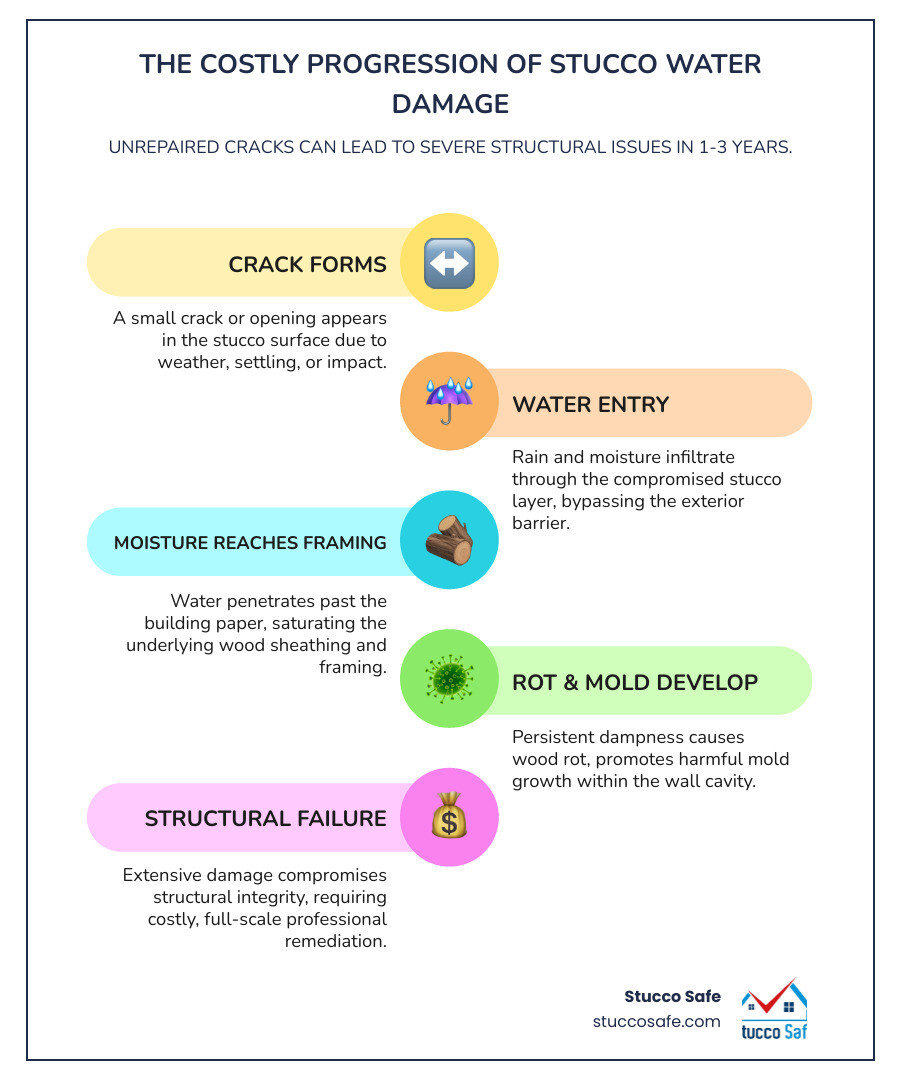
Stucco is a durable siding, but over time, cracks and holes can appear. If left unrepaired, these small openings become gateways for water. Moisture intrusion can lead to wood rot, mold, and structural damage. Fortunately, most minor stucco damage is a straightforward DIY fix. Patching a small crack today can prevent thousands in future repair costs, making it a smart investment in your home’s longevity.
I’m Gabe Kesslick, and I’ve been investigating and repairing stucco issues since 2001. As an EDI Level 2 Certified Stucco Inspector, I’ve seen how a simple stucco patch done correctly can prevent major structural problems, and I’ve also witnessed the costly damage that occurs when minor cracks are ignored.
Stucco patch vocab to learn:
Before You Begin: Gathering Your Tools and Prepping the Surface
Before applying stucco patch, proper preparation is key. Always wear eye protection and gloves, as some products can be alkaline. Keep water nearby to wash off any splashes.
Essential Tools & Materials:
- For Removal & Cleaning: Hammer, cold chisel, wire brush.
- For Application: Putty knife, margin trowel, rubber float, caulk gun (for tube products).
- For Mixing & Cleanup: Bucket, water, cloths.
- Materials: Your chosen stucco patch product, primer, and exterior paint.
Choosing the Right Stucco Patch Product
Selecting the correct stucco patch is crucial for a durable repair. The market offers various types, each with its strengths.
| Stucco Patch Type | Key Features | Best For – Acrylic-Based | – Flexible, easy-to-use, and paintable.
– Good for small cracks and holes.
– Resists shrinking and cracking. | – Small holes and cracks (up to 1/2 inch deep).
– General-purpose aesthetic repairs. |
| Elastomeric | – Very flexible, ideal for recurring cracks that expand and contract.
– Not sandable. | – Recurring cracks (up to 1/4 inch wide) in areas with movement. |
| Cement-Based | – Strong and durable, similar to original stucco.
– Best for deeper holes and structural repairs.
– Can be applied in thicker layers. | – Large, deep repairs (over 1/2 inch) where strength is needed.
– Matches traditional stucco texture well. |
For small, non-structural repairs, a pre-mixed acrylic latex stucco patch like QUIKRETE® Pre-Mixed Stucco Patch (No. 8650) or DAP® All-Purpose Stucco Patch is a great choice. For recurring cracks, an elastomeric compound like DAP® Elastopatch® Pro-Grade Elastomeric Patching Compound offers superior flexibility. For deeper damage, a cement-based option like Rapid Set 25 lbs. Stucco Patch is more appropriate. Always check the product’s instructions for depth limitations.
How to Properly Prepare the Stucco Surface
Proper surface preparation is the foundation of a lasting stucco patch repair. Skimping here will lead to failure.
Here’s how to do it right:
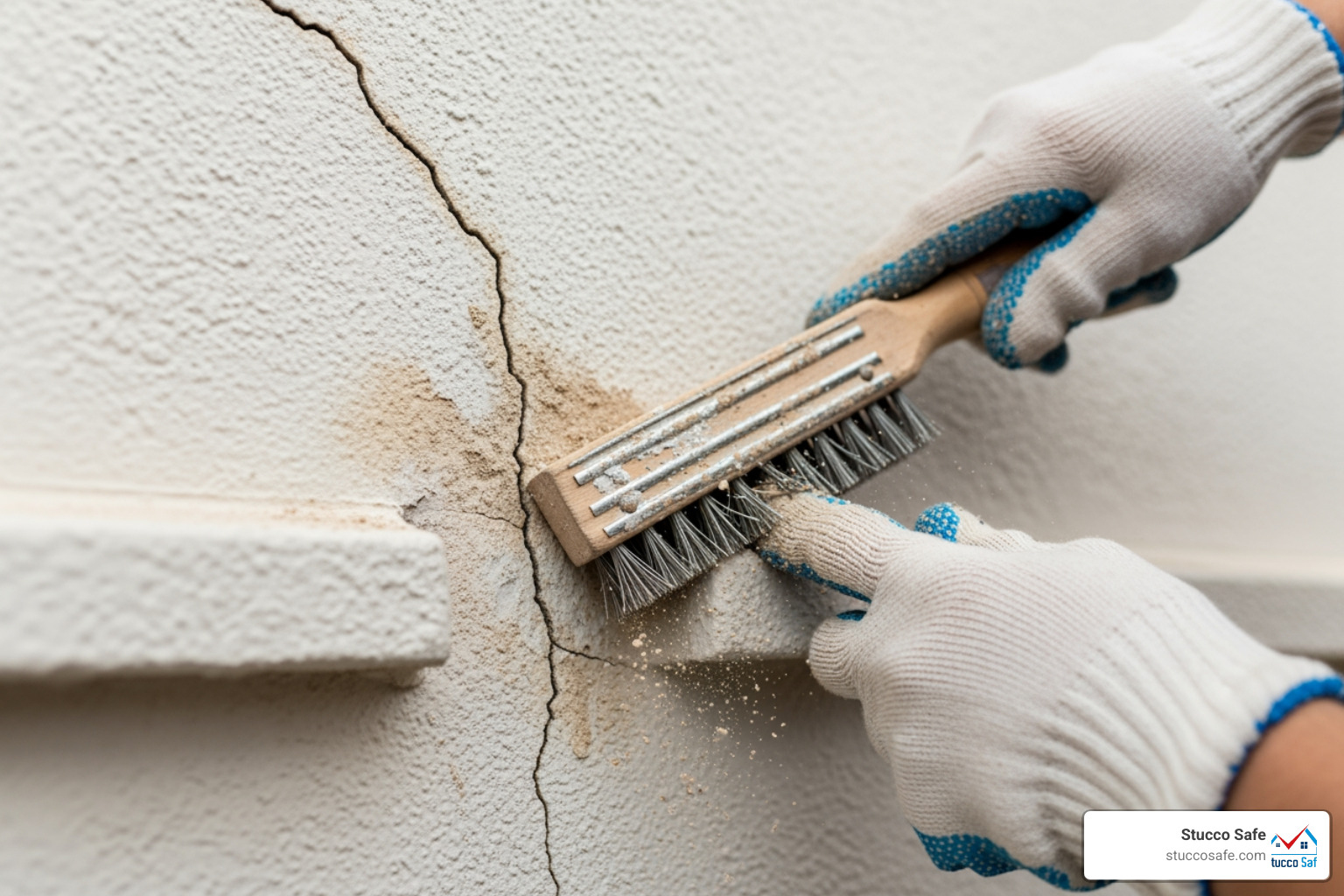
- Remove Loose Material: Use a hammer and chisel to chip away any loose, crumbling stucco until you reach a solid, stable edge. For cracks, widen them to at least 1/4 inch and undercut the edges (creating an inverted ‘V’ shape) to help lock the patch in place.
- Clean the Area: Vigorously scrub the area with a wire brush to remove all dust, dirt, and loose particles. A clean surface is essential for the new patch to adhere properly.
- Check the Substrate: If you expose the underlying lath, ensure it’s clean and stable. Significant damage to the lath may require a more extensive repair involving new builder’s paper and metal lath, which is often a job for a professional.
- Dampen the Surface: Lightly mist the repair area with water. This prevents the old stucco from absorbing moisture from the new stucco patch too quickly, which ensures a stronger bond and helps prevent cracking. The area should be damp, not soaking wet.
Your Complete Guide to Applying Stucco Patch
With the surface prepped, you’re ready to apply the stucco patch. A DIY repair for small cracks is cost-effective, with materials often under $30, compared to professional services which can run $150–$500. However, for widespread damage or signs of moisture, always consult a professional like Stucco Safe. For minor fixes, follow these steps.
Environmental Considerations for Application
Weather is critical for a successful repair. Apply stucco patch under the right conditions to avoid failure.
- Temperature: Apply when the air and surface temperature is above 50°F (10°C).
- Moisture: Do not apply if rain is expected within 24 hours, as it can wash out the uncured patch.
- Sun and Wind: Avoid applying in direct sun or high wind, which can cause the patch to dry too quickly and crack. If you must, work in the shade or cover the patch to slow the drying process.
Step-by-Step: Fixing Small Holes and Hairline Cracks
This method is for minor blemishes like small holes or cracks less than 1/4 inch wide.
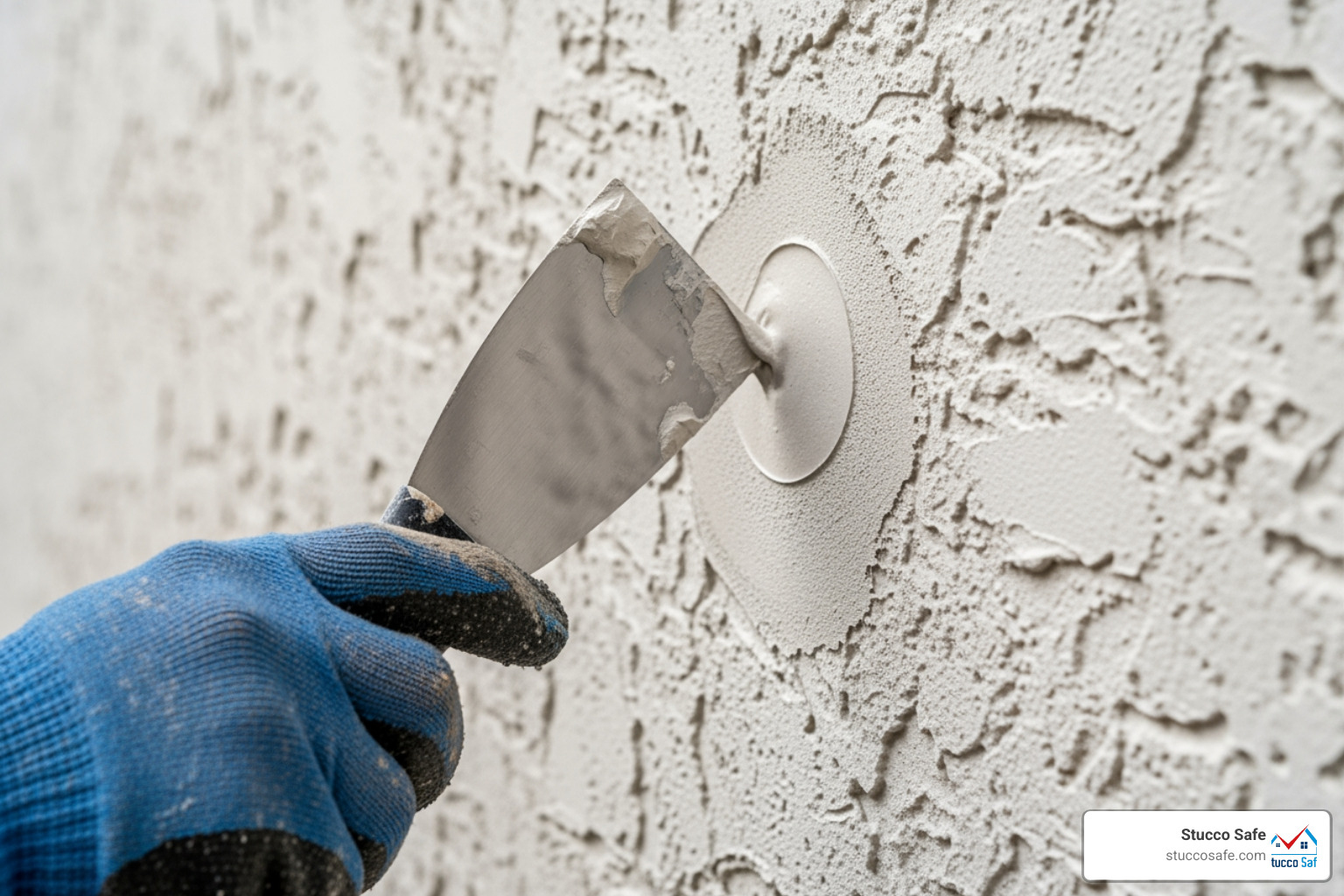
- Prepare and Apply: Stir pre-mixed products thoroughly. For tube-based patches, cut the nozzle to match the crack’s width. Using a putty knife or caulk gun, press the patch firmly into the crack or hole to eliminate air pockets and ensure a strong bond.
- Layer for Depth: For repairs deeper than 1/4 inch, apply the patch in thin layers, allowing each to dry before adding the next. This prevents shrinkage and cracking. Check the product’s depth limitations; some allow for up to 1/2 inch, but layering is still recommended.
- Smooth and Blend: Smooth the final layer with a putty knife or a damp rubber float to blend it with the surrounding stucco.
Step-by-Step: Repairing Larger or Recurring Cracks
For wider or recurring cracks, a flexible elastomeric compound is the best choice to accommodate movement.
- Fill the Crack: Use a putty knife to press the elastomeric stucco patch firmly into the prepped crack. Its flexibility helps prevent the crack from reappearing. These products can typically fill cracks up to 1/4 inch wide and 1/2 inch deep.
- Build Up in Layers: For deeper cracks, apply the patch in 1/4-inch layers, allowing each to partially cure before adding the next.
- Tool for Texture: While the patch is wet, use a putty knife, rubber float, or stiff brush to match the existing stucco texture. Most elastomeric patches cannot be sanded, so texturing must be done before it dries.
Achieving a Professional Finish: Texturing, Curing, and Painting
After applying the stucco patch, the final steps are texturing, curing, and painting to create a seamless, durable repair.
Understanding the difference between drying and curing is key. Drying is when the patch feels firm to the touch (often within hours), while curing is the chemical process where it gains full strength, which can take several days. Curing time is affected by humidity, temperature, and patch thickness. A fully cured patch is essential for durability, so be patient before moving on to the final steps.
How to Match Your Existing Stucco Texture
Matching the existing texture is crucial for a professional-looking repair. Here are a few common techniques to use while the patch is still wet:
- Stippling with a Brush: For a rough texture, gently dab or ‘stipple’ the wet patch with a stiff-bristled brush.
- Using a Rubber Float: For a smoother finish, use a damp rubber float in a circular or sweeping motion over the wet patch.
- Blowing Sand Technique: To create a sandy texture, gently blow sand onto the wet patch so it adheres to the surface.
Pro Tip: Practice your texturing technique on a scrap piece of cardboard before applying it to the wall.
Priming and Painting Your Stucco Patch
Once your stucco patch has fully cured, it’s time to prime and paint. This protects the repair and helps it blend in.
- Prime First: Always prime the patched area after it has fully cured. Primer ensures even paint absorption, improves adhesion, and adds a layer of moisture protection. A quality product like ZINSSER® Bulls Eye 1-2-3® Primer is a good choice.
- Choose the Right Paint: Use a high-quality latex paint or elastomeric paint. Elastomeric paint is thicker and more flexible, making it ideal for bridging hairline cracks and providing a waterproof, yet breathable, barrier. Ensure any coating you choose is alkaline-tolerant and vapor-permeable.
- Wait for the Full Cure: Do not rush to paint. Wait for the patch to fully cure—this can take 24 hours to a week, depending on the product and depth. Painting too soon traps moisture and can cause the paint to fail.
Frequently Asked Questions about Stucco Patching
Here are answers to some of the most common questions we receive about stucco repair.
How long does a stucco patch take to dry?
Drying time varies by product and conditions. A patch may be dry to the touch in under an hour and hard in a few hours. However, full curing, where it gains its final strength, takes much longer—typically 24 to 72 hours, but sometimes up to a week for cement-based products. High humidity and low temperatures will extend these times. Always wait for the patch to fully cure before painting.
Can I apply stucco patch in a thick layer?
No, applying stucco patch too thickly is a common mistake that leads to cracking and a weak repair. Most products should be applied in thin layers, typically no more than 1/4 inch at a time. For deeper holes, build up the patch in multiple layers, allowing each to dry before applying the next. This ensures proper curing and prevents shrinkage. Always check the product’s specific instructions, as some cement-based patches may allow for thicker applications.
What happens if I don’t patch a crack in my stucco?
Ignoring even a small crack in your stucco allows water to penetrate the wall system. This moisture can lead to severe problems, including:
- Wood Rot: Water rots the underlying wood framing and sheathing, compromising your home’s structural integrity.
- Mold Growth: Trapped moisture creates a breeding ground for mold, which can affect your family’s health and indoor air quality.
- Costly Repairs: A simple patch job can turn into a major remediation project costing thousands if the damage spreads. Water can cause stucco to bulge, delaminate, and fail completely.
In areas like Southeastern PA, New Jersey, and Delaware, we frequently see how minor, unaddressed cracks lead to extensive, expensive damage. A timely stucco patch is critical preventative maintenance that protects your home’s structural integrity and your financial investment.
Conclusion: Protecting Your Home’s Exterior
By following the steps for proper preparation, application, and finishing, you can confidently repair minor stucco cracks and holes. Remember to choose the right stucco patch product, apply it in thin layers, and allow it to cure fully before painting. Timely repairs are your best defense against the elements and can save you from significant headaches and expenses down the road.
However, sometimes a simple patch isn’t enough. If you notice any of the following, it’s time to call in the experts:
- Widespread Cracking: A network of cracks across a large area of your stucco.
- Dark Staining: Discoloration on your stucco facade, especially below windows or rooflines, often indicates water intrusion.
- Interior Dampness or Mold: Any signs of moisture or mold on interior walls are red flags.
- Bulging or Delamination: Stucco that appears to be pulling away from the wall or has soft spots.
These are all signs that your home might be experiencing significant moisture intrusion, which can lead to wood rot and structural damage. In such cases, a professional stucco inspection is essential.
At Stucco Safe, we specialize in forensic testing methods and have certified inspectors who can accurately identify hidden moisture and structural issues in homes across Southeastern Pennsylvania, New Jersey, and Delaware. Our stucco inspections vary in cost from $495 to $1595 or more for very large homes, a small price to pay to avoid potentially tens of thousands in unforeseen repair costs.
Don’t let a small problem become a catastrophic one. When a patch isn’t enough, a professional inspection can identify hidden moisture and prevent costly damage. Find out more about stucco repair inspections near you. We’re here to help you keep your home Stucco Safe.