
Beyond the Hype: Unmasking the Digital Mold Detector Myth
What Is a “Digital Mold Detector”?
A digital mold detector doesn’t actually exist in the way most people think. Here’s what you need to know:
What’s Actually Available:
- Moisture meters – Measure water content in materials (not mold itself)
- Indoor air quality monitors – Track humidity, temperature, and VOCs
- DIY test kits – Collect samples but require lab analysis
- None of these devices can detect mold directly
The term “digital mold detector” is a marketing myth. No consumer device can identify mold spores, determine contamination levels, or tell you if you have a health hazard.
What these tools can do is measure the conditions where mold thrives. They detect moisture, humidity, and environmental factors that create mold-friendly environments. Think of them as early warning systems, not diagnostic tools.
The research confirms this reality. Even professional-grade systems like the BioMatrix Mold Monitor focus on moisture detection and risk assessment, not actual mold identification. As one product page candidly states: “No home monitor can detect mold spores directly.”
This matters for homeowners like you because understanding the difference between monitoring moisture and detecting mold can save thousands in unnecessary testing or missed problems. A high moisture reading means you need to investigate further, not that you definitely have mold.
I’m Gabe Kesslick, a certified building envelope forensic inspector with over 20 years of experience investigating moisture intrusion and mold risks. I’ve seen countless homeowners confused by misleading digital mold detector marketing, which is why I’m breaking down what these devices actually do—and what they can’t do.
Digital mold detector basics:
The Real Tools Marketed as “Mold Detectors”
When people search for a “digital mold detector,” they are usually looking for one of three types of devices: moisture meters, indoor air quality (IAQ) monitors, or DIY mold test kits. While these tools can be valuable allies in maintaining a healthy home, none of them directly detect mold in the way a metal detector finds metal. Instead, they provide data about the conditions conducive to mold growth or help collect samples for lab analysis.
These devices vary significantly in price, ranging from around $20 for basic DIY test kits to several hundred dollars for advanced IAQ monitors. Moisture meters typically fall in the $30 to $100+ range, depending on features and professional-grade capabilities.
Moisture Meters: Finding the Fuel for Mold
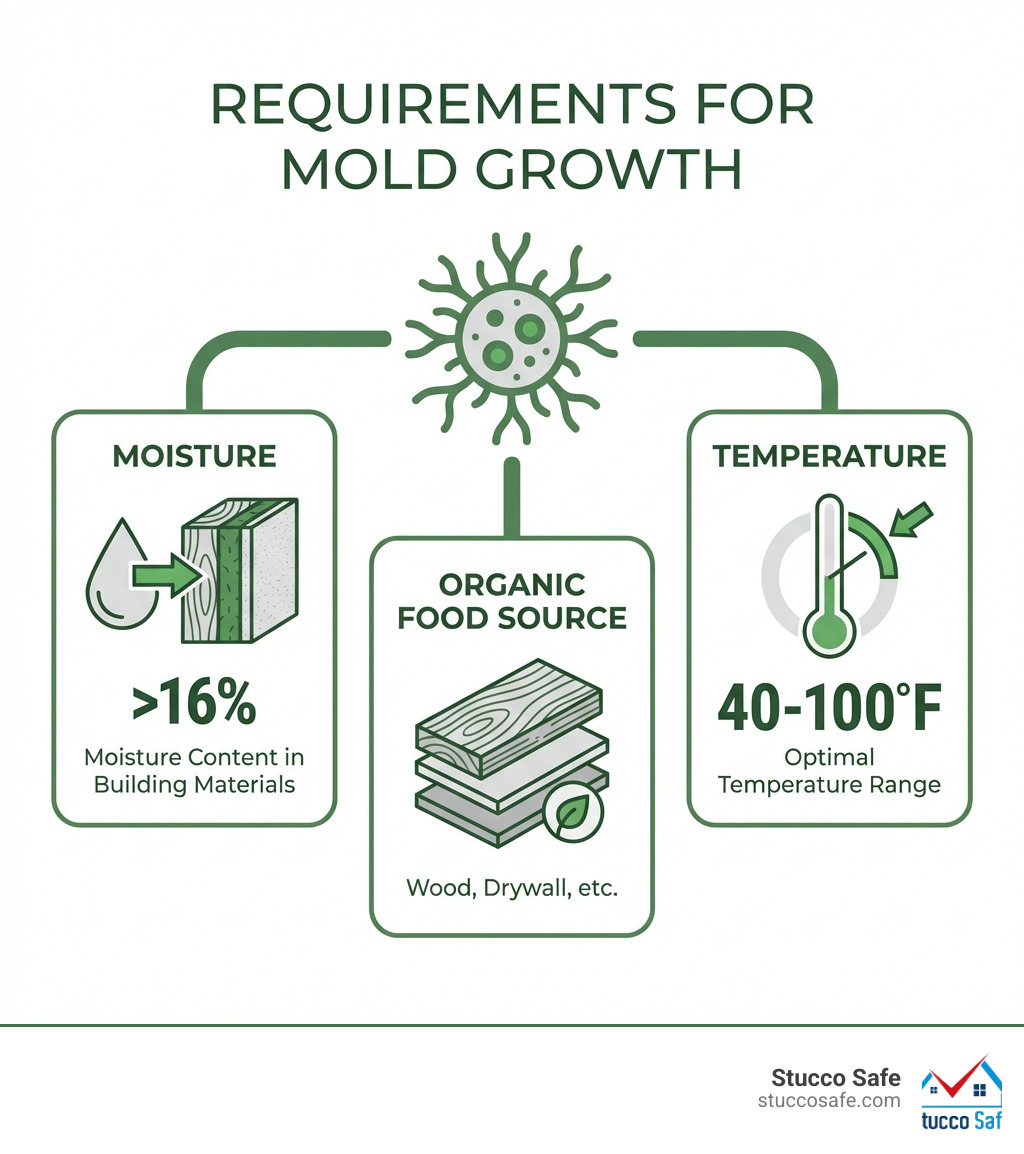
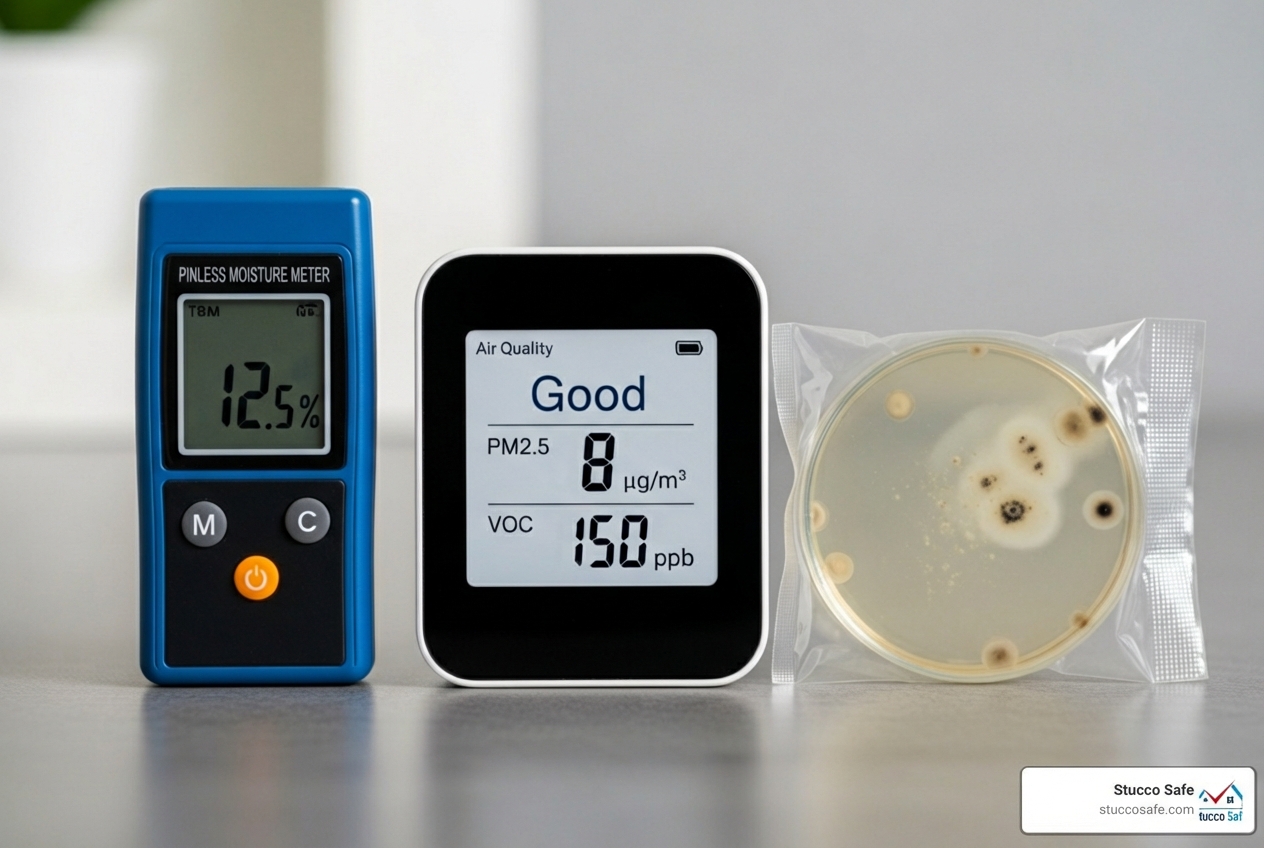
Mold’s number one requirement for growth is moisture. Without it, mold can’t thrive. This is where moisture meters become invaluable. These handheld devices measure the moisture content within building materials like drywall, wood, and concrete. By identifying areas with liftd moisture, you can pinpoint potential or existing water leaks and areas at high risk for mold development.
There are two primary types of moisture meters:
- Pin-type meters: These meters use two small pins that you push into the material. They measure electrical resistance between the pins, which changes based on moisture levels. They offer precise readings but leave small holes. Popular models like the General Tools MMD4E Digital Moisture Meter have garnered over 14,000 reviews, indicating their widespread use.
- Pinless meters: Also known as non-destructive meters, these devices use electromagnetic sensors to scan surfaces without causing damage. They’re great for quickly checking large areas or finished surfaces, detecting moisture up to ¾-inch below the surface. The Klein Tools ET140 Pinless Moisture Meter and Kiprim Pinless Moisture Meter are well-regarded options.
For a deeper dive into these essential tools, explore our guides:
Moisture meters are crucial for early detection of “unseen moisture that can lead to widespread mold growth,” as noted by BioMatrix. They help us identify water leaks and potential mold growth areas before visible mold appears, allowing for proactive intervention.
Indoor Air Quality (IAQ) Monitors: Tracking the Environment
While moisture meters focus on the internal dampness of materials, Indoor Air Quality (IAQ) monitors provide a broader picture of your home’s environment. These devices track various parameters that contribute to overall air quality and, importantly, conditions that encourage mold growth.
Key factors IAQ monitors track include:
- Humidity levels: Mold thrives in high humidity. Keeping indoor humidity below 60% (ideally 30-50%) is critical for prevention.
- Temperature: Mold generally prefers moderate temperatures, usually between 40-100°F.
- Volatile Organic Compounds (VOCs): These are gases emitted from certain solids or liquids. Some VOCs, particularly those with a “musty” smell, can be indicators of microbial growth, including mold. The Spruce article noted that “Volatile Organic Compounds (VOCs) are indicators of potential mold risks.”
- Particulate matter (PM2.5): While not directly mold, high levels of airborne particles can sometimes correlate with liftd mold spore counts, especially after mold has begun to sporulate.
Many modern IAQ monitors integrate with smart home systems, offering continuous monitoring and alerts via smartphone apps. Devices like the Airthings 4200 House Kit (which monitors radon, mold risk, and IAQ) and the Amazon Smart Air Quality Monitor are examples of how technology helps us monitor the conditions that can lead to mold and prevent potential issues.
By continuously tracking these environmental variables, we can identify patterns or spikes that suggest a heightened risk for mold development, allowing us to take preventative action. To learn more about assessing airborne concerns, see our guide on How to check for mold in the air.
How Accurate Are These Devices? The Uncomfortable Truth
It’s easy to get excited about the idea of a digital mold detector providing instant, definitive answers. However, the reality of these devices, while helpful, comes with significant accuracy limitations. They offer insights but are not comprehensive diagnostic tools.
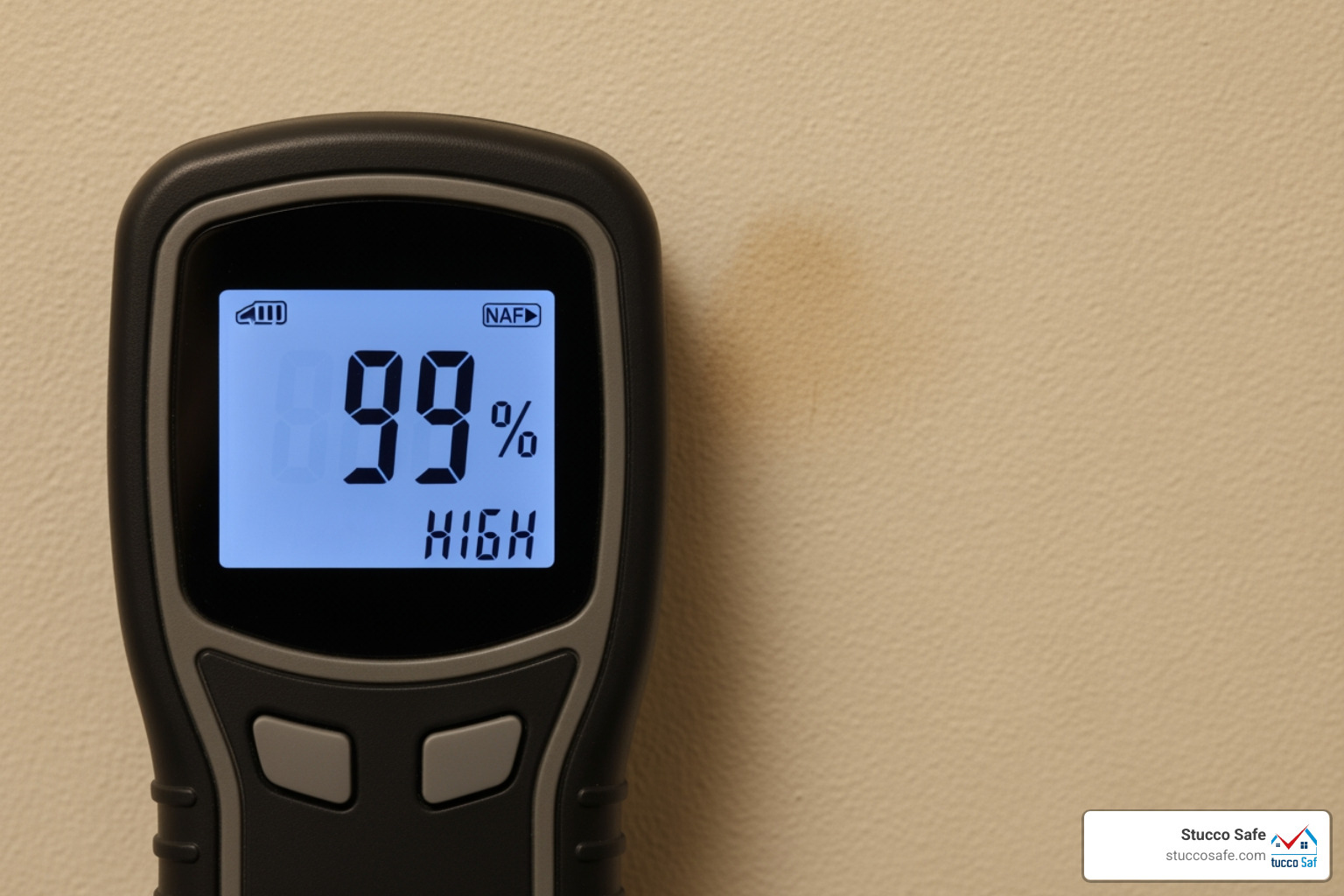
A challenge is user error. Improper use of a moisture meter, incorrect placement of an air quality monitor, or flawed sample collection for a DIY kit can all lead to misleading results. Furthermore, these devices can sometimes lead to false positives (indicating a problem when there isn’t one) or inconclusive results that create more questions than answers. As The Spruce noted, DIY kits “can offer some insight but are not as comprehensive as professional assessments and leave room for user error. Because homes are not sterile, results can be alarming without professional guidance.”
Here’s a quick comparison of what different tools tell you:
| Feature | What a DIY Device Tells You | What a Professional Inspection Reveals |
|---|---|---|
| Mold Presence | Indirectly through moisture or potential VOCs, or requires lab analysis for DIY kits. | Directly through visual confirmation, sampling (air, surface, wall cavity), and lab analysis by AIHA-accredited labs. Identifies hidden mold. |
| Mold Species | Only through lab analysis of DIY samples. | Precisely through lab analysis, identifying common types like Aspergillus, Cladosporium, and Stachybotrys atra (black mold). |
| Contamination Level | Not directly. DIY kits might give “present/absent” or relative spore counts, but difficult to interpret without context. | Quantitatively through spore counts and comparison to outdoor baselines, and qualitatively by assessing the extent of growth and potential health risks. |
| Source of Problem | Indirectly via high moisture readings (moisture meter) but not the cause of the moisture. | Precisely identifies the source of water intrusion (e.g., leaky pipe, roof defect, stucco failure), allowing for proper remediation. This is a key part of our forensic testing methods at Stucco Safe. |
| Remediation Plan | None. Offers no guidance. | Comprehensive. Provides a detailed plan for remediation, including containment, removal, cleaning, and preventative measures. |
| Health Risks | Cannot assess. | Informs about potential health risks based on mold type and concentration, guiding medical consultation if needed. |
| Professional Guidance | None. | Expert advice from certified environmentalists and hygienists who can explain findings, recommend next steps, and provide litigation options if necessary. |
| Legal/Insurance | Not typically accepted. | Accepted for insurance claims, real estate transactions, and legal disputes. |
Why a Digital Mold Detector Can’t Replace an Expert
The fundamental limitation of any digital mold detector or DIY kit is its inability to provide a comprehensive diagnosis. No device, no matter how advanced, can replicate the nuanced assessment of a certified mold inspector. As the Environmental Protection Agency (EPA) states, “If you can see or smell mold, testing may be unnecessary.” This is because the visual presence or distinct musty odor is often enough to confirm a problem, and the next step should be remediation, not further testing.
Here’s what a device can’t do that an expert can:
- Identify mold species: Knowing if it’s Cladosporium, Aspergillus, or Stachybotrys atra (often called “black mold”) requires laboratory analysis. Different molds can have different health implications and growth patterns.
- Determine contamination level: A device can’t tell you if the mold spore count is abnormally high for your indoor environment or if it poses a health risk. This requires comparing indoor samples to outdoor baseline samples and expert interpretation.
- Pinpoint the source of intrusion: Finding moisture is one thing; identifying why that moisture is there (e.g., a hidden pipe leak, a roof defect, or a stucco system failure) is another. Our certified inspectors are trained to find these root causes.
- Assess hidden damage: Mold often grows out of sight, behind walls, under flooring, or in HVAC systems. A digital mold detector might give a high moisture reading, but only an inspector can safely investigate and determine the extent of the hidden damage.
At Stucco Safe, our certified inspectors use forensic testing methods to identify not just the presence of mold, but its type, concentration, and, most importantly, the underlying moisture source. We specialize in inspecting homes, particularly those with stucco or EIFS, across Southeastern Pennsylvania, New Jersey, and Delaware, including areas like Philadelphia, West Chester, and King of Prussia. Our expertise allows us to provide actionable solutions, not just data points.
For more on what a thorough visual inspection entails, read our Visual Mold Inspection: Ultimate Guide.
Interpreting the Results from a Digital Mold Detector
So, you’ve used a moisture meter or an IAQ monitor, and you have some readings. What do they mean? Interpreting these results requires context and a degree of common sense.
- Relative readings: Most digital mold detector devices provide relative readings. For a moisture meter, a higher percentage indicates more moisture. For an IAQ monitor, you’ll see numbers for humidity, temperature, and VOCs. The key is to establish a baseline for your home. What are the normal readings in areas without issues? Any significant deviation should raise a flag.
- High moisture equals high risk: If your moisture meter consistently shows liftd readings in a particular area, it’s a strong indicator of a moisture problem that could lead to mold. The BioMatrix mold monitor is designed to identify “unseen moisture that can lead to widespread mold growth.”
- Liftd VOCs as an indicator: A sudden or consistently high reading of VOCs on your IAQ monitor, especially if accompanied by a musty odor, can signal microbial growth. While not directly identifying mold, it points to an environment where mold could be thriving.
These devices are like smoke detectors: they tell you there might be a problem (smoke/moisture/VOCs), but they don’t tell you the nature or source of that problem (fire/mold). If you get concerning readings, it’s a call to investigate further, not to panic. We can help you understand what these readings might imply and guide you on the next steps.
For guidance on how to approach testing, refer to our article: How Do You Test for Mold in Your Home?.
DIY Device vs. Professional Mold Inspection
Understanding the roles of DIY devices and professional mold inspections is crucial for effective mold management. It’s not necessarily an either/or situation; they serve different purposes in the broader strategy of maintaining a healthy home.
DIY devices, or what people often call a “digital mold detector,” can be valuable as an early warning tool and for proactive monitoring. They empower homeowners to keep an eye on environmental conditions. However, when it comes to actual mold problems, nothing replaces the comprehensive diagnosis, root cause analysis, and expert remediation planning that a professional mold inspector provides.
When to Use a DIY Device
DIY mold detection tools are best used for preventative measures and initial investigations. They can be a cost-effective way to stay vigilant about your home’s health.
Consider using a DIY device in these scenarios:
- Post-water leak checks: After fixing a leaky pipe or a small spill, a moisture meter can help ensure that all affected materials have dried out completely.
- Monitoring high-humidity areas: Basements, bathrooms, and laundry rooms are notorious for high humidity. An IAQ monitor can help you track levels and ensure your dehumidifier or ventilation system is working effectively.
- Routine home health checks: Integrating IAQ monitoring into your smart home system can provide ongoing awareness of your indoor environment, alerting you to potential issues before they become severe.
- Investigating a faint musty smell: If you notice a subtle earthy odor but can’t see any visible mold, a moisture meter might help you narrow down areas of concern.
These tools are about being proactive and catching potential problems early. They can help you identify conditions ripe for mold growth, but they don’t confirm mold presence or its severity.
For more insights on how to proactively identify issues, read our article: How to Detect Mold in Your Home.
When to Call a Professional Inspector
While DIY tools have their place, there are clear situations where a professional mold inspection is not just recommended, but essential. Our certified inspectors at Stucco Safe are equipped to handle these complex scenarios with forensic precision.
You should call a professional inspector if you encounter any of the following:
- Visible mold growth: If you see mold, especially an area larger than a few square feet, it’s time for professional assessment. Don’t just clean it; understand the cause.
- Strong, persistent musty odors: A pervasive musty smell indicates hidden mold, even if you can’t see it. This is a common sign of a significant problem that requires expert investigation.
- After significant flooding or water damage: Even if you think you’ve dried everything out, hidden moisture can persist and lead to mold. A professional can ensure all affected areas are properly assessed.
- Real estate transactions: Whether buying or selling, a professional mold inspection provides peace of mind and can be crucial for negotiations. For stucco homes in our service areas (Southeastern PA, New Jersey, Delaware), this is especially important due to inherent moisture challenges.
- Unexplained allergy-like symptoms: If residents are experiencing persistent respiratory issues, skin irritation, or other allergy-like symptoms indoors, mold could be a contributing factor.
- Concerns about stucco or EIFS homes: These cladding systems are particularly susceptible to moisture intrusion if not properly installed or maintained. Our forensic inspectors specialize in identifying these vulnerabilities and associated mold risks.
Our comprehensive stucco inspections vary in cost from $495 to $1595 or more for very large homes, reflecting the thoroughness and expertise required to protect your property and health. We serve homeowners throughout Southeastern Pennsylvania, New Jersey, and Delaware, including specific areas like Philadelphia, West Chester, Villanova, and King of Prussia.
Learn more about the benefits of a professional assessment: Learn more about professional home mold inspections.
Frequently Asked Questions about Mold Detection
We often hear similar questions from homeowners concerned about mold. Let’s clarify some common misconceptions and provide straightforward answers.
What are the first signs of a hidden mold problem?
Hidden mold can be tricky, but your senses are often your best digital mold detector. Look and smell for:
- Persistent musty smell: This is often the most reliable indicator of hidden mold. “A damp and musty smell can also indicate mold presence,” as highlighted in our research.
- Peeling or bubbling paint: This can indicate moisture behind the wall, creating a perfect environment for mold.
- Wall discoloration or staining: Water stains or unexplained dark spots on walls or ceilings can signal a leak and potential mold growth.
- Warped drywall or floorboards: Moisture causes materials to swell and warp, another strong sign of water damage and potential mold.
- Unexplained chronic allergy symptoms: If residents experience persistent coughs, sneezes, watery eyes, or skin rashes that improve when away from home, mold could be the culprit.
Can these devices find toxic “black mold”?
No, no consumer digital mold detector can specifically identify “toxic black mold” (scientifically known as Stachybotrys atra). These devices, whether moisture meters or IAQ monitors, only detect the conditions (like moisture or high VOCs) that allow any mold to grow.
While Stachybotrys atra is a type of mold that can produce mycotoxins, many other common molds like Aspergillus and Cladosporium are also prevalent in homes, as noted by John Balmes, M.D. The presence of any mold, regardless of its “toxicity,” indicates a moisture problem that needs to be addressed. To identify the specific species of mold and determine if Stachybotrys atra is present, professional lab analysis of samples is required.
Are DIY mold test kits reliable?
DIY mold test kits available at hardware stores or online (like the My Mold Detective Mold Test Kit, Mold Armor Do It Yourself Mold Test Kit, or various “Mold Test Kit for Home” options with review counts ranging from dozens to thousands) are a popular choice, but their reliability is often overstated. The Spruce article cautions that “at-home mold test kits are not made to replace a professional.”
Here’s why we approach them with caution:
- Can be easily contaminated: Collecting samples without proper training and sterile equipment can easily lead to false positives from ubiquitous environmental mold spores, making results misleading.
- Do not provide spore concentration levels: Many kits simply tell you if mold is “present.” But mold spores are ubiquitous, found indoors and outdoors. What matters is the concentration and type of mold indoors compared to outdoors, which DIY kits rarely provide accurately.
- Often require extra lab fees: The initial low price of a kit can be deceptive. Many require you to mail samples to a lab, incurring additional “processing fees” (e.g., $39 per sample for My Mold Detective) and shipping costs, significantly increasing the total expense.
- Can produce alarming but unhelpful results: Without professional interpretation, detecting “some mold” (which is almost always the case) can cause unnecessary alarm without offering clear guidance on the next steps or the actual severity of the problem. Always confirm that any lab you submit samples to is accredited by the American Industrial Hygiene Association (AIHA).
Conclusion: Moving From Detection to a Definitive Solution
The journey to a healthy indoor environment often begins with a suspicion of mold. While the allure of a simple “digital mold detector” is strong, we’ve seen that no single device can provide a complete picture of a mold problem. Instead, what are marketed as digital mold detector devices are actually useful tools for:
- Proactive monitoring: Moisture meters and IAQ monitors help you track environmental conditions, offering early warnings of potential moisture issues before mold becomes visible.
- Initial investigation: They can help you narrow down areas of concern when you suspect a hidden problem.
However, when it comes to actual mold detection, identification, and, most importantly, understanding the root cause and extent of the issue, professional assessment is not just beneficial—it’s essential. Our certified inspectors at Stucco Safe combine advanced tools with forensic testing methods and years of experience to provide accurate, actionable results. We don’t just find mold; we help you understand why it’s there and what needs to be done.
Protect your home and your health. Don’t let the marketing myth of a universal digital mold detector mislead you. When you have concerns about mold, especially in areas we serve like Southeastern Pennsylvania, New Jersey, and Delaware, trust the experts.
For a conclusive and professional evaluation of your property, schedule your certified mold test.