
Does Your Home Insurance Have Your Stucco’s Back?
Understanding Stucco Water Damage Insurance Coverage
Stucco water damage insurance is one of the most confusing and frustrating topics for homeowners. Here’s what you need to know right away:
Quick Answer: Does Insurance Cover Stucco Water Damage?
| Usually Covered | Usually NOT Covered |
|---|---|
| Storm damage to stucco | Faulty installation |
| Fire damage | Gradual moisture intrusion |
| Sudden water from burst pipes | Construction defects |
| Vandalism | Wear and tear |
| Falling objects (trees, debris) | Lack of maintenance |
The reality is simple but hard to hear: Most stucco water damage claims get denied. Insurance companies typically don’t cover damage from poor installation, gradual moisture problems, or construction defects—which are the most common causes of stucco failure.
That’s the bad news.
The good news? Understanding what your policy actually covers—and having solid documentation from a forensic inspection—can make the difference between a $75,000 bill you pay yourself and a covered claim.
This is especially critical if your home was built between 1993 and 2006. Estimates suggest up to 90% of stucco homes from this era have some level of moisture intrusion due to incorrect building codes during that period. Many homeowners have no idea water is destroying their home’s structure until it’s too late.
I’m Gabe Kesslick, and I’ve been investigating stucco water damage insurance claims since 2001 as a certified forensic inspector. I’ve helped hundreds of homeowners throughout Southeastern Pennsylvania, New Jersey, and Delaware steer the complex intersection of hidden moisture damage and insurance policy language.
Stucco water damage insurance word roundup:
- does home insurance cover stucco
- how to get stucco damage covered by homeowners insurance
- do home warranties cover stucco
Why Stucco Fails: From Installation Flaws to Costly Remediation
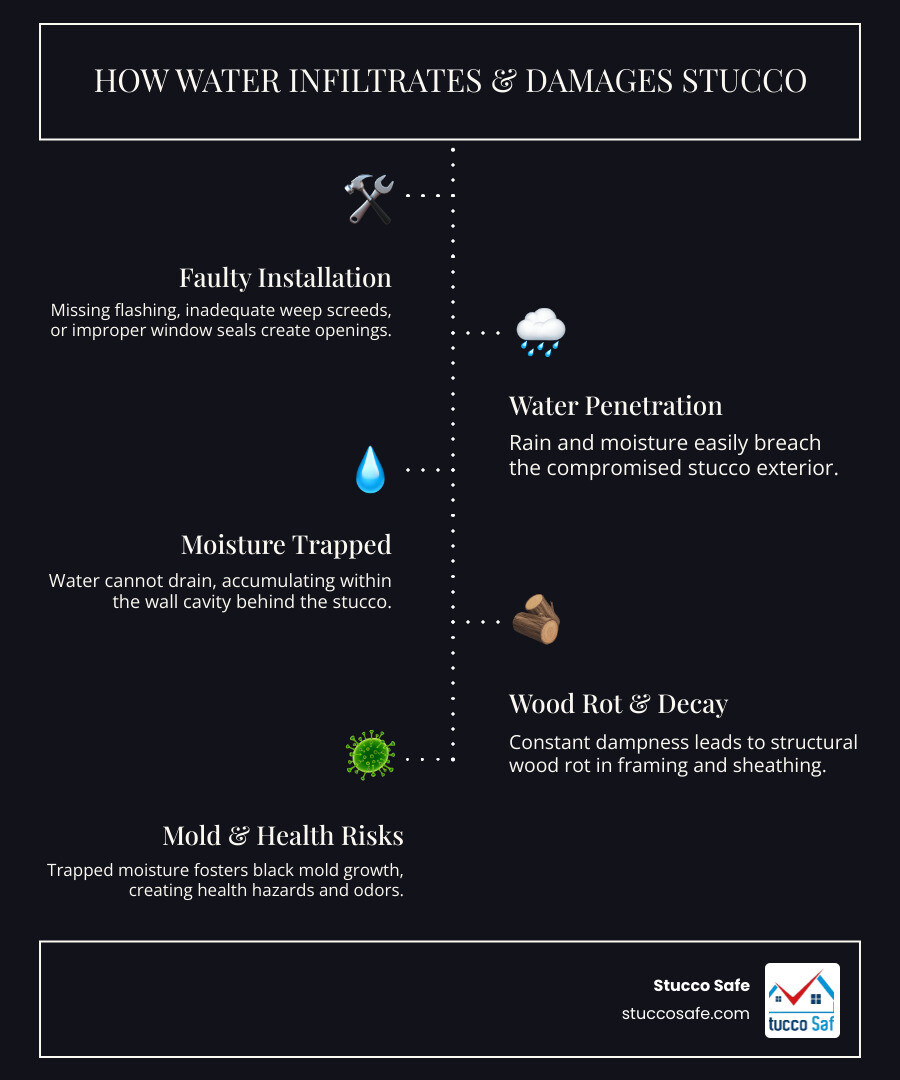
Stucco is a popular exterior for homes in Southeastern Pennsylvania, New Jersey, and Delaware, but its appealing facade can hide a significant vulnerability: water damage. The primary reason stucco fails isn’t the material itself, but improper installation. Poorly installed stucco creates pathways for water to penetrate the building envelope, leading to widespread and costly damage.
Common installation flaws that invite water intrusion include:
- Missing or improper flashing: Flashing directs water away from vulnerable areas like windows and doors. Without it, water seeps directly behind the stucco.
- Inadequate weep screeds: These metal strips at the bottom of a stucco wall allow trapped moisture to escape. If missing or installed incorrectly, water gets trapped.
- No kick-out diverters: These small pieces of flashing divert water away from where a roofline meets a wall, preventing it from running behind the stucco.
- Lack of proper drainage planes and water-resistant barriers (WRBs): Stucco is a “reservoir system,” meaning some water penetration is expected. A proper drainage plane and WRB are essential to manage this water and direct it out.
- Microcracks: While hairline cracks can be normal, larger ones become entry points for water if not properly sealed.
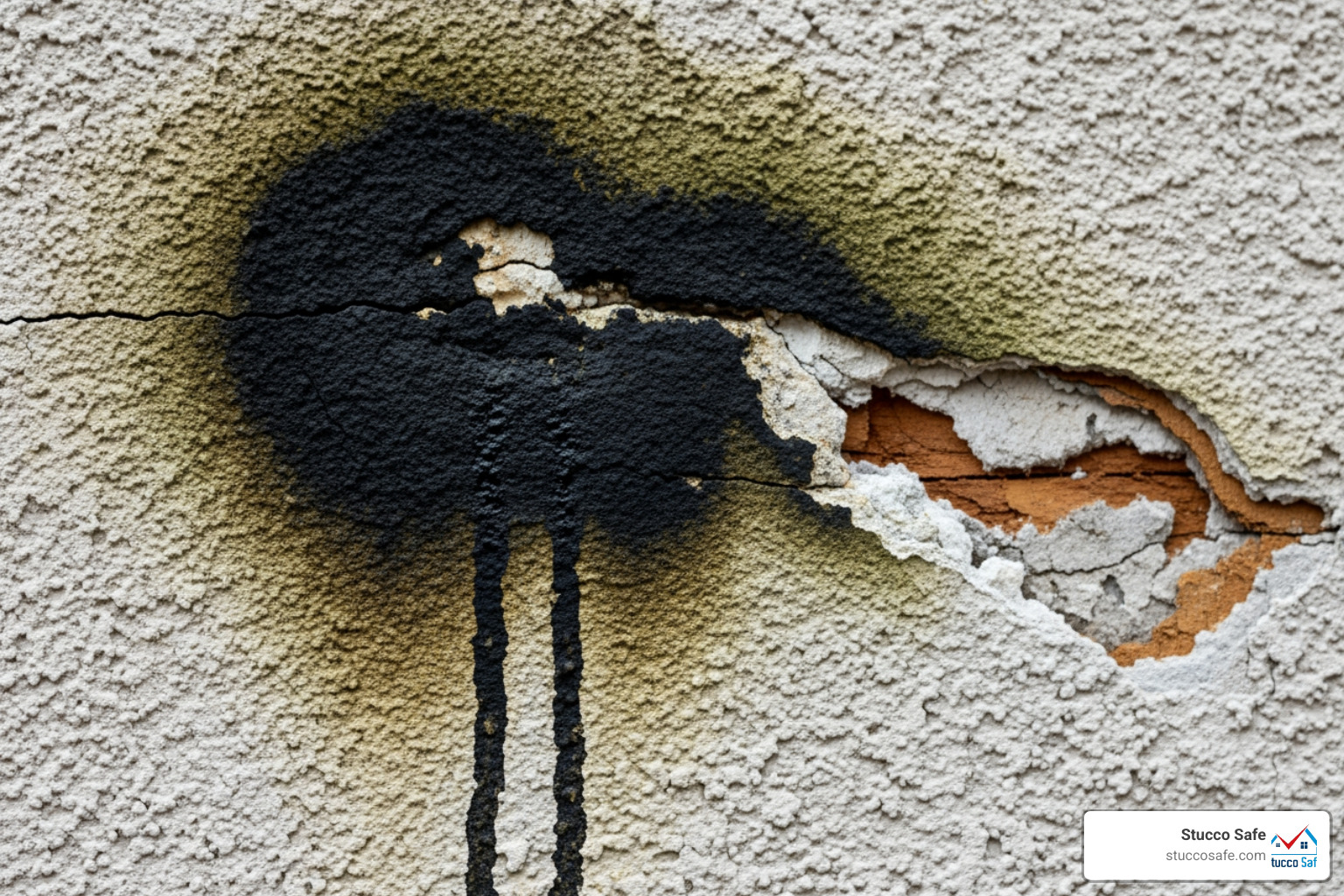
These minor defects can lead to a cascade of problems. Trapped water behind stucco can’t dry out, leading to:
- Wood rot: The home’s structural wood components (sheathing, studs) begin to decay, compromising the building’s integrity.
- Black mold: Trapped moisture creates a breeding ground for mold, which can pose significant health risks.
- Pest infestations: Damp, rotting wood attracts insects like termites, causing further damage.
The financial toll is staggering. Stucco remediation can range from $5,000 for minor repairs to over $200,000 for a full exterior rebuild due to widespread moisture and structural damage. This highlights why understanding stucco water damage insurance is so critical.
Common Signs of Water Damage Behind Stucco
Because stucco problems often lurk unseen, homeowners in Southeastern Pennsylvania, New Jersey, and Delaware should be vigilant for warning signs. Early detection can save tens of thousands in remediation costs.
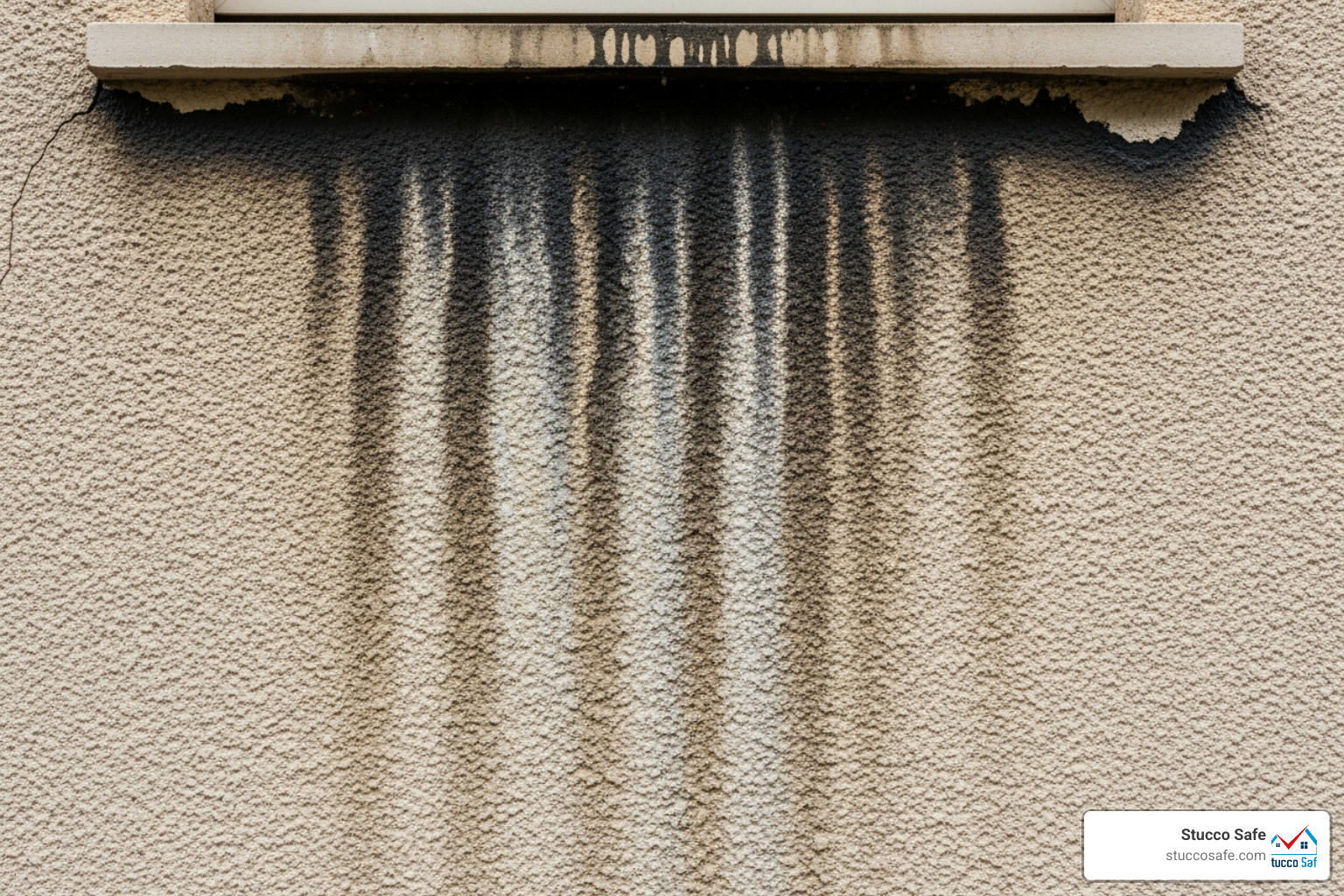
Here are the common signs of water damage behind stucco:
Exterior Signs:
- Stains and discoloration: Look for dark streaks, “stucco tears” (algae growth), or white, powdery residue, especially below windows.
- Cracks wider than 1/8 inch: Larger cracks are significant pathways for water intrusion.
- Bulging or soft spots: Spongy or bulging stucco is a strong indicator of trapped moisture and wood rot.
- Deteriorating caulk: Cracked or missing caulk around windows and doors allows water to get in.
- Pest activity: Termites near stucco walls can be a sign of damp, rotting wood.
Interior Signs:
- Musty odors: A persistent damp smell near exterior walls often points to hidden mold.
- Peeling paint or warped baseboards: These suggest moisture is migrating through the wall.
- Water stains: Unexplained stains on interior walls or ceilings can indicate a stucco-related leak.
- Damp drywall: Drywall that feels damp or is discolored is a clear sign of a water issue.
By the time you see these symptoms, significant damage may have already occurred. This is why proactive inspection is crucial.
The Complex World of Stucco Water Damage Insurance
When you find water damage, your first thought is, “Will my homeowners insurance cover this?” For stucco water damage insurance claims, the answer is almost always “it depends.”
Standard homeowners policies (like an HO-3) are designed to cover unexpected, sudden, and accidental events, or “covered perils,” such as fire, windstorms, hail, and burst pipes. The key principle is that insurance protects against unexpected disasters, not problems that develop slowly or result from poor construction or lack of maintenance.
This is where most stucco claims hit a snag. Policies explicitly exclude damage from:
- Gradual damage: Continuous or repeated water seepage over time.
- Wear and tear: Normal aging and deterioration.
- Lack of maintenance: Damage that routine upkeep could have prevented.
The distinction between sudden damage and gradual issues is the battleground for nearly every stucco claim.
What Determines if Your Stucco Water Damage Insurance Claim is Approved?
Approval for your stucco water damage insurance claim hinges on the cause, timing, and specific language in your policy.
Here’s a comparison of scenarios:
| Covered Scenarios (Usually) | Excluded Scenarios (Usually) |
|---|---|
| Hail Damage: Hail causes dents and holes in stucco. | Faulty Installation: Stucco was never installed correctly. |
| Falling Tree/Debris: A tree branch falls and punctures stucco. | Gradual Leak: Water has slowly seeped behind stucco for years. |
| Sudden Burst Pipe: An interior pipe bursts, causing water to leak through walls and damage stucco. | Construction Defects: Builder error caused moisture intrusion. |
| Fire Damage: Stucco is damaged by a house fire. | Wear and Tear: Cracks from normal aging and settling. |
| Vandalism: Someone intentionally damages your stucco. | Lack of Maintenance: Failed caulk, uncleaned gutters. |
| Windstorm Damage: Wind tears off a section of stucco. | Mold/Mildew: Unless caused by a sudden, covered peril. |
Factors determining approval:
- Policy Type (Named-Peril vs. All-Peril): Named-peril policies only cover listed damages. All-peril (or open peril) policies cover everything except what’s specifically excluded. Most HO-3 policies are all-peril, but exclusions for faulty workmanship are common. You can learn more about what a standard homeowners policy typically covers here.
- Cause of Loss: Was the damage from a “covered peril” (like a storm) or an “excluded peril” (like faulty workmanship)?
- Timing of Damage: Was the damage “sudden and accidental” or “gradual”? Gradual damage is almost always excluded.
- Policy Language: Exclusions for “construction defects,” “faulty workmanship,” “wet rot,” or “gradual water damage” are often used to deny stucco claims.
Common Exclusions and the ‘Ensuing Loss’ Loophole
Understanding what your policy doesn’t cover is critical. Common exclusions that lead to claim denials include:
- Faulty Workmanship/Construction Defects: Insurers argue this isn’t an “accidental” event but a pre-existing defect.
- Lack of Maintenance: Failure to seal cracks or clean gutters can lead to a denial.
- Gradual Deterioration/Wear and Tear: Damage that happens slowly over time is excluded.
- Mold, Fungus, Wet Rot: Many policies have specific exclusions for mold unless it results from a sudden, covered event like a burst pipe.
However, there’s a potential exception: the ‘ensuing loss’ clause.
This clause states that while the initial cause of damage might be excluded (like a construction defect), any subsequent damage from a covered peril might still be covered.
For example, a construction defect might cause a slow leak (not covered). But if a severe storm then allows a sudden rush of water to enter through that weak spot, causing extensive wood rot, the damage from the storm (the ensuing loss) might be covered. This could include the cost to repair the rot and access it by removing the stucco.
It’s a complex concept that insurers may resist applying. This is where expert documentation becomes paramount, as adjusters may wrongfully deny claims by misinterpreting this clause.
When Your Insurer Says No: Builder Liability and Legal Options
If your stucco water damage insurance claim is denied, the road isn’t over. The responsibility may lie with the original builder or contractor.
Builder liability is a key factor in stucco claims. If improper installation caused moisture damage, the builder could be held liable. Major homebuilders like Toll Brothers have faced significant liabilities for faulty stucco work, with some estimates reaching hundreds of millions. If you can prove the builder neglected codes or used inadequate materials, you may have grounds to sue them. Their general liability insurance, or contractor’s insurance, may cover damages from their faulty workmanship.
However, suing a builder requires expert evidence, legal counsel, and adherence to strict timelines.
Understanding Statutes of Repose and Why Timing is Critical
Pursuing legal action against a builder involves Statutes of Repose. It’s vital to understand the difference:
- Statute of Limitations: A time limit for filing a lawsuit after you find the damage.
- Statute of Repose: A stricter, absolute deadline for filing a lawsuit from the date of construction completion, regardless of when you found the damage.
Statutes of Repose vary by state, typically ranging from 4 to 10 years. In Southeastern Pennsylvania, New Jersey, and Delaware, these strict deadlines apply. If your home is older than your state’s Statute of Repose, your right to sue the builder is likely extinguished, even if you just finded the problem.
Acting quickly is crucial to:
- Preserve your legal rights: Missing the deadline means you lose the ability to pursue the builder.
- Preserve evidence: It’s easier to gather clear evidence of construction defects sooner rather than later.
- Mitigate damage: Early action can prevent minor issues from becoming catastrophic.
If you suspect faulty stucco, especially in a newer home, seek professional advice immediately.
Your Action Plan: Proving Your Case and Filing a Claim
If you suspect stucco water damage, a clear action plan is essential for navigating your stucco water damage insurance claim.
Here are the recommended steps:
- Document Everything: This is your most powerful tool. Take dated photos and videos of all visible damage, both exterior and interior. Keep detailed notes and records of all communications.
- Mitigate Further Damage: Take reasonable steps to prevent the problem from worsening, like tarping a leak. However, do not make permanent repairs before your insurer inspects the damage, as this could jeopardize your claim.
- Contact Your Insurer: Notify your insurance company of the potential damage. Be factual and report only what you can observe. Avoid speculating on the cause, as they will be looking for reasons to deny a claim based on exclusions like gradual damage.
The Critical Role of a Forensic Stucco Inspection
A professional, forensic stucco inspection is the single most important step to strengthen your case. This is where our expertise at Stucco Safe becomes invaluable.
Why is a forensic inspection so critical?
- Identifies Hidden Damage: Our certified inspectors use specialized methods like moisture meters, resistance probes, and core samples to find trapped water and assess the integrity of the structure behind the stucco—damage a standard home inspection would miss.
- Pinpoints the Root Cause: Our inspections determine why water is getting in, identifying specific construction defects like missing flashing or a compromised water-resistant barrier (WRB). This is crucial for countering insurance denials and for potential builder liability claims.
- Provides Expert Evidence: We provide a detailed report with photos, moisture readings, and expert analysis. This rock-solid documentation can support your insurance claim, help you negotiate with your insurer, and provide the technical data needed to pursue a case against a negligent builder.
Our inspections in Southeastern Pennsylvania, New Jersey, and Delaware cost between $495 and $1595+, a small investment compared to remediation costs that can exceed $200,000. A professional inspection provides the definitive answers and documentation needed to support your claim.
Frequently Asked Questions About Stucco Homes
Here are answers to common questions from homeowners in Southeastern Pennsylvania, New Jersey, and Delaware about their stucco exteriors.
Is it risky to buy a home with a stucco exterior?
It can be, especially if you don’t perform due diligence. Homes built between 1993 and 2006 are in a “high-risk era,” with up to 90% estimated to have moisture intrusion due to poor building practices.
You can minimize this risk. If you’re considering a stucco home, we strongly recommend:
- Getting a specialized pre-purchase stucco inspection: A standard home inspection isn’t enough. Our forensic inspections uncover hidden moisture and installation errors before you buy.
- Researching the builder’s reputation: Check for a history of stucco issues.
- Checking for previous remediation: Ensure any past work was done correctly and has transferable warranties.
An informed decision can help you avoid a costly mistake.
How can I proactively maintain my stucco?
Proactive maintenance is your best defense against costly damage and can support a future insurance claim.
Our top maintenance tips:
- Regular visual checks: After heavy rain, look for stains, cracks, and deteriorating caulk.
- Seal cracks promptly: Address any cracks wider than a hairline with an appropriate sealant.
- Clean gutters: Ensure they direct water away from stucco walls.
- Check caulk and sealants: Inspect and reseal around all windows, doors, and other penetrations.
- Maintain proper grading: The ground should slope away from your foundation.
- Trim vegetation: Keep plants away from stucco walls to prevent moisture retention.
Maintenance won’t fix underlying construction defects but can prevent minor issues from escalating.
How does EIFS (synthetic stucco) affect my stucco water damage insurance?
EIFS (Exterior Insulation and Finish System), or synthetic stucco, has a controversial history with moisture intrusion. Unlike traditional stucco, which is breathable, early EIFS systems were “face-sealed.” If water got behind this barrier, it became trapped, leading to severe rot.
Insurance Implications for EIFS:
- Higher Moisture Risk: Insurers view homes with EIFS as a higher risk, especially older systems without a drainage plane.
- Common Insurance Exclusions: Many companies have specific exclusions for EIFS or may refuse to cover these homes altogether.
- Higher Premiums: If coverage is offered, it may come with higher premiums or limited coverage.
If your home has EIFS, understanding your policy is crucial. A forensic inspection can determine if your system has a proper drainage plane, which is vital information for any stucco water damage insurance discussions.
Conclusion: Get Certainty with a Professional Stucco Assessment
Navigating stucco water damage insurance is challenging. Standard policies rarely cover the most common causes of stucco failure—improper installation and gradual moisture intrusion—leaving homeowners to face remediation costs that can reach hundreds of thousands of dollars.
Since water damage often hides for years, a proactive approach is essential. While maintenance and vigilance are important, the most crucial step to protect your investment is a professional, forensic stucco assessment.
At Stucco Safe, we specialize in detecting hidden moisture and structural issues in stucco homes across Southeastern Pennsylvania, New Jersey, and Delaware. Our certified inspectors use advanced forensic testing to uncover damage and pinpoint its root cause. We provide the expert documentation needed to strengthen your stucco water damage insurance claim, explore builder liability, and give you the facts to make informed decisions.
Don’t wait for a small crack to become a catastrophe or for your insurer to say “no.” Take control of your home’s health today.
Learn more about insurance coverage for stucco and how our forensic testing methods can protect your biggest investment.