
Re-Anchoring in Stucco: A Guide to Repairing Loose Screws
Why Fixing Loose Anchor Screws Matters
How to fix loose anchor screws in stucco depends on the severity of the failure. The basic approach is to remove the old anchor, clean the hole, fill it with a material like epoxy, and reinstall a proper anchor. Here’s the quick solution:
Quick Fix Methods:
- Epoxy Fill Method (Most Secure) – Inject two-part masonry epoxy into the cleaned hole, let cure 24 hours, re-drill a pilot hole, and install a new anchor.
- Upsize Method (Moderate Hold) – Use a larger diameter anchor (e.g., 1/4″ instead of 3/16″) in the same hole.
- Wood Sliver Trick (Light Duty) – Stuff pressure-treated wood slivers into the hole, then drive the screw through them.
- Always Seal – Apply waterproof silicone caulk around all exterior anchor points to prevent moisture intrusion.
A loose screw in a stucco wall is more than an annoyance; it’s a safety hazard. A wobbly handrail or sagging mailbox compromises function and your stucco’s integrity. Moisture can enter through these compromised points, leading to hidden damage that is far more costly to repair than the screw itself.
Fortunately, most loose anchor screws can be fixed. The key is understanding why the anchor failed. Common causes include an oversized pilot hole, vibrations working the anchor loose, or moisture softening the substrate behind the stucco, causing the entire system to fail.
I’m Gabe Kesslick, an EDI Level 2 Certified Stucco Inspector with over two decades of experience investigating stucco failures in Southeastern Pennsylvania and beyond. I’ve seen countless minor anchor issues turn into major structural repairs. This guide provides my proven methods to restore secure anchoring that lasts.
Why Anchor Screws Loosen in Stucco
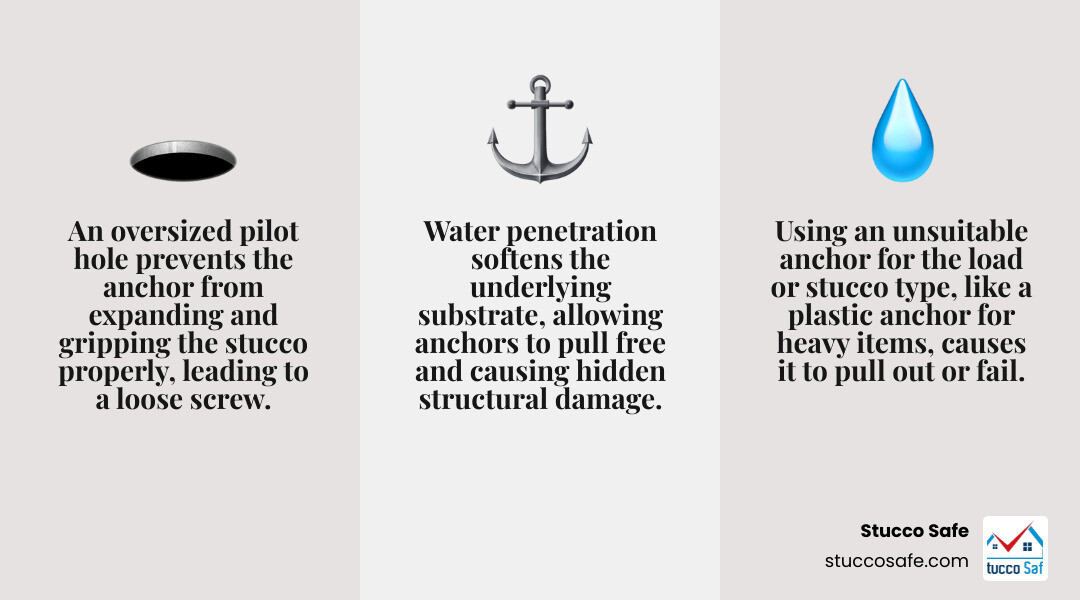
When we encounter loose anchor screws in stucco, it’s rarely due to a single cause. Understanding these reasons is the first step in effectively knowing how to fix loose anchor screws in stucco.
- Improper Installation: Using the wrong drill bit size, not pre-drilling, or overtightening the screw can create a weak hold from day one. A pilot hole that is too large prevents the anchor from gripping the stucco effectively.
- Vibration: Constant movement from items like gate latches or handrails can gradually widen the anchor hole, causing the screw to spin freely.
- Wrong Anchor Type: Plastic anchors are only for light-duty items (under 20 lbs). Using them for heavier objects leads to fatigue and failure. Screwing directly into stucco without an anchor is also ineffective, as stucco lacks the grip for standard screws. See more at More info about hanging items on stucco walls.
- Substrate Issues: The type of stucco and what’s underneath it matters. Synthetic stucco (EIFS) has a foam layer requiring very long fasteners to reach structural sheathing. Traditional stucco over hollow concrete block can also be problematic if an anchor hits a void.
Understanding Anchor and Substrate Failure
Different anchors fail in different ways, often dictated by the material they are gripping.
- Plastic anchor fatigue: Over time, sustained loads or vibration can cause these light-duty anchors to become brittle or deform.
- Metal anchor slippage: Even strong metal anchors can fail if the pilot hole is oversized or the underlying substrate is compromised.
- Crumbling stucco: Using a hammer drill or over-torquing screws can cause the brittle stucco to crumble around the hole, creating an unstable base.
- Rusted hardware: Non-corrosion-resistant screws will rust when exposed to moisture, weakening the connection and staining the stucco.
- EIFS foam layer: The foam in EIFS provides no structural support. Anchors must be long enough to penetrate the foam and secure into the sheathing or framing behind it.
- Wood sheathing rot: This is a severe consequence of moisture intrusion. Rotted wood cannot hold an anchor, leading to complete failure and potential structural damage.
- Hollow block voids: When drilling into stucco over concrete block, hitting a hollow void prevents masonry anchors like Tapcon screws from getting a secure grip.
For a comprehensive look at anchor types, refer to our guide on Stucco Anchor Types.
The Critical Role of Moisture
Moisture is the silent destroyer of stucco systems. A loose or unsealed anchor creates a direct pathway for water penetration into the wall.
Once inside, water causes:
- Freeze-thaw damage: In climates like those in Southeastern PA, New Jersey, and Delaware, trapped water freezes and expands, worsening cracks and damaging the stucco.
- Rusted lath: Moisture can rust the metal lath that holds traditional stucco to the wall, potentially causing large sections to detach.
- Softened substrate: Water leads to rotting wood sheathing or crumbling masonry, leaving nothing for an anchor to grip.
- Hidden damage: The biggest danger is damage you can’t see. By the time you notice Stucco Water Stains, bubbling paint, or soft spots, significant issues like mold and structural rot may have already occurred behind the stucco. Learn more at Moisture Intrusion Stucco and Bubbling Stucco a Guide to Prevention and Repair.
Ignoring a loose anchor is like ignoring a small leak—it will inevitably lead to much larger, more expensive problems.
How to Fix Loose Anchor Screws in Stucco: Step-by-Step Methods
When tackling how to fix loose anchor screws in stucco, the best approach depends on the looseness, the item’s weight, and the stucco’s condition. This guide covers everything from tools to the final seal.
Tools and Safety First
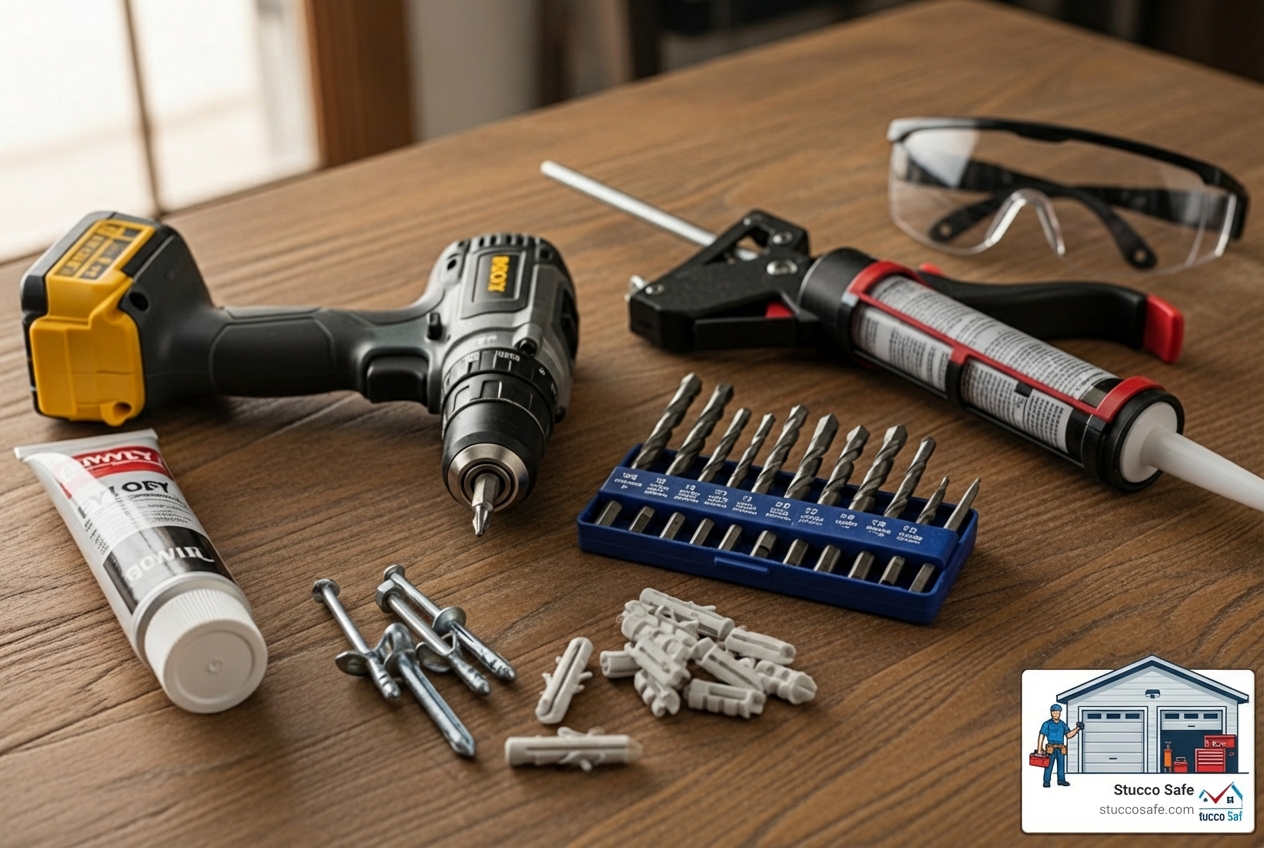
Prioritize safety by gathering the right equipment. Stucco work creates dust, so protective gear is essential.
- Safety gear: Safety goggles, gloves, N95 dust mask.
- Drill and bits: A powerful drill and carbide-tipped masonry drill bits in various sizes. See Drill Bit Stucco.
- Tools: Hammer, caulk gun, shop-vac or compressed air.
- Materials: Two-part masonry epoxy, new anchors, waterproof silicone caulk, textured stucco patch, painter’s tape.
- Quick-fix items: Pressure-treated wood slivers or plastic anchor pieces.
Choosing the Right Method for how to fix loose anchor screws in stucco
Selecting the correct repair method is critical for a lasting fix. Here are three primary approaches.
| Method | Best Use Case | Required Materials | Holding Strength |
|---|---|---|---|
| Epoxy Fill & Re-Drill | Significantly oversized hole, heavy loads, structural items, hollow voids in masonry | Two-part masonry epoxy, new masonry drill bit (smaller than original), new anchor, cleaning tools | Heavy |
| Upsize Method | Slightly enlarged hole, moderately loose screw, light to medium loads | Larger diameter anchor (e.g., 1/4″ instead of 3/16″), corresponding masonry drill bit, new screw | Medium |
| Wood Sliver / Plastic Piece Trick | Light-duty items, temporary fix, very slightly loose screw, non-critical items | Pressure-treated wood slivers, half of a soft fluted plastic anchor, golf tees, or electrical wire strands, new screw | Light |
Method 1: The Epoxy Fill & Re-Drill (Most Secure)
This is our top recommendation for a robust, permanent repair, especially for oversized holes or heavy items. It creates a new, solid base for your anchor.
- Remove Old Hardware: Extract the loose screw and any remnants of the old anchor.
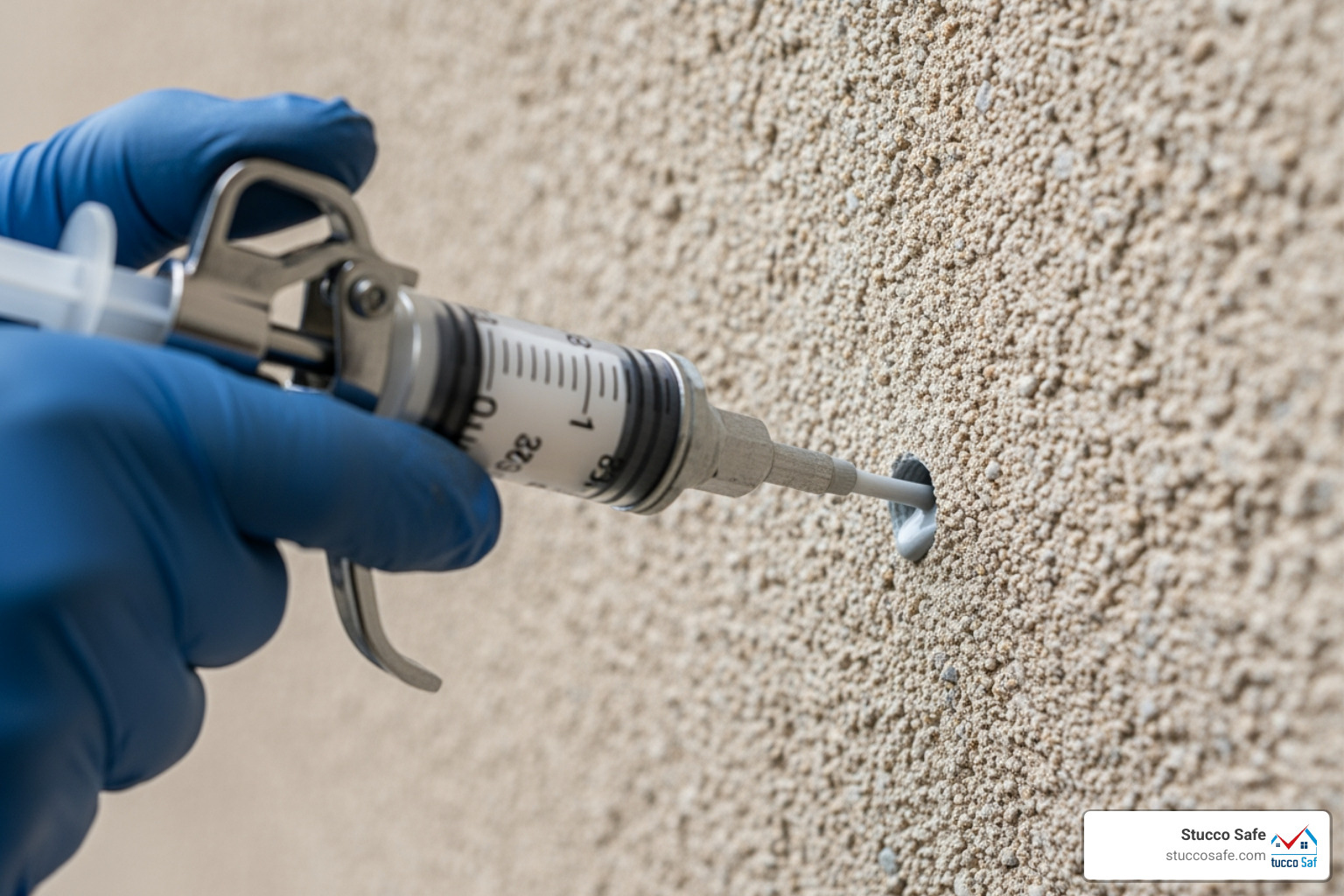
- Clean the Hole: Use a shop-vac or compressed air to remove all dust and debris. A clean hole is crucial for epoxy adhesion.
- Inject Epoxy: Mix and inject two-part masonry epoxy, filling the hole completely.
- Cure: Let the epoxy cure fully (typically 24 hours) per the manufacturer’s instructions.
- Re-Drill: Drill a new pilot hole into the center of the cured epoxy plug using a masonry bit sized for your new anchor.
- Install New Anchor: Insert a new, appropriate stucco anchor. Find options in our guide to the Best Anchors for Stucco.
- Drive Screw and Seal: Drive the screw, being careful not to overtighten. Apply a bead of waterproof silicone caulk around the screw head and hardware to block moisture.
Method 2: Quick Fixes for Lighter Loads
For lighter items or slightly loose anchors, these temporary or light-duty solutions can be effective.
- Wood sliver trick: For slightly enlarged holes, stuff a small, dry pressure-treated wood sliver into the hole. The wood provides extra friction for the screw threads.
- Plastic anchor pieces: For a loose Tapcon screw, stuff half of a soft, fluted plastic anchor into the hole before driving the screw to provide extra grip.
- Golf tee method: A wooden golf tee can be trimmed and tapped into the hole to fill the void before driving the screw.
These methods are best for light-duty items. For anything heavy, use the epoxy method. For more ideas, see A comprehensive guide to hanging items on stucco walls.
Repairing and Sealing the Stucco Finish
After securing the anchor, repair any cosmetic damage and seal the area to prevent moisture intrusion.
- Apply Stucco Patch: Use a textured stucco patch (like Sika 1 Qt Ready Mix Stucco Patch) to fill any holes or gaps around the anchor.
- Blend the Texture: While the patch is wet, gently wipe it with a wet paintbrush to blend the repair with the existing wall texture, making it less visible.
- Prime and Paint: Once cured, prime and paint the patch to match your stucco color.
- Apply Waterproof Sealant: This is a mandatory final step for any exterior penetration. Apply a continuous bead of waterproof silicone caulk around the base of the screw head and any hardware touching the stucco to form a critical water barrier.
For more detailed guidance, visit our guide on How to Repair Stucco.
Proactive Prevention and Maintenance
Preventing loose anchor screws is far easier than repairing them. The key is proper installation and regular maintenance.
- Choose the Right Anchor: Match the anchor’s weight rating to the item. Use plastic anchors only for light-duty items (under 20 lbs) and metal anchors for heavier loads.
- Use Corrosion-Resistant Hardware: For outdoor applications, always use corrosion-resistant screws (like stainless steel) to prevent rust.
- Seal All Penetrations: Every exterior screw point must be sealed with waterproof silicone caulk to block moisture. Re-apply every few years or as needed.
- Inspect Regularly: Periodically check all anchor points for looseness, cracking, rust, or deteriorating caulk. Early detection prevents major issues. See our Stucco Wall Maintenance guide for more tips.
Best Practices for New Installations
When installing new anchors, follow these steps to ensure a secure, long-lasting hold:
- Drill the Correct Pilot Hole: Use a masonry bit that exactly matches the anchor’s specifications. A hole that’s too large will result in a loose fit.
- Avoid the Hammer Drill Function: Use the regular rotary setting on your drill. The hammer function can chip and crack stucco.
- Don’t Over-tighten: Stop tightening the screw as soon as it’s snug. Over-tightening can strip the anchor or crack the stucco.
- Use Painter’s Tape: Apply tape over the drill spot to help prevent the stucco surface from chipping.
For a full tutorial, see How to Drill into Stucco.
How to prevent future issues after you fix loose anchor screws in stucco
After a repair, maintain the secure hold with these checks:
- Annual Inspection: Each year, gently tug on fixtures and visually inspect the area around each anchor.
- Check Caulk Seals: Look for any cracking or peeling. Reapply fresh silicone caulk where needed.
- Look for Rust Stains: Rust indicates moisture is getting in and hardware is failing. Replace rusted screws with stainless steel and reseal.
- Address Cracks: Promptly repair any Stucco Cracks near anchor points to prevent water intrusion.
When to Call a Professional
While many loose anchor issues are DIY-friendly, some situations require an expert to prevent costly mistakes and ensure your home’s integrity. Call a professional if you see:
- Widespread or Recurring Failure: Multiple loose anchors or screws that keep coming loose may signal a systemic problem with the stucco or substrate.
- Major Stucco Damage: Large cracks, soft or bulging stucco are critical warning signs of moisture damage or delamination. Do not attempt to drill into these areas.
- Signs of Moisture Intrusion: Water stains, bubbling paint, or mold near anchor points indicate a problem behind the stucco that requires professional diagnosis.
- Heavy Structural Items: Always consult a professional for anchoring heavy items like deck ledgers or large awnings, where failure could cause injury or major property damage.
Ignoring these signs can lead to falling objects, structural risks, and remediation costs that can exceed $50,000. Our certified inspectors at Stucco Safe use forensic testing to find hidden moisture and structural issues in homes across Southeastern Pennsylvania, New Jersey, and Delaware. An inspection, typically costing $495 to $1595, is a small investment compared to major repairs. If you see signs of trouble, see our resources on Stucco Exterior Wall Problems or find a local expert at Stucco Repair Near Me.
Frequently Asked Questions about Fixing Stucco Anchors
Can I just use a bigger screw in the same hole?
For a slightly loose screw, a larger diameter screw can sometimes work. However, if the underlying material is crumbled, it won’t hold. A more robust repair like an epoxy fill is necessary in that case.
What’s the best filler for a stripped screw hole in stucco?
A two-part masonry epoxy is the strongest and most durable solution. For light-duty, non-structural fixes, stuffing the hole with pressure-treated wood slivers can be a temporary option.
How do I know if the problem is more than just a loose screw?
Look for warning signs like large cracks, soft or spongy spots in the stucco, water stains, or bubbling paint. These indicate a deeper moisture problem that requires a professional stucco inspection.
Conclusion
Successfully learning how to fix loose anchor screws in stucco is a valuable skill for any homeowner. By understanding why anchors fail, choosing the right repair method, and applying proper sealing techniques, you can restore security to your fixtures and protect your home from potential water damage. This DIY repair not only provides lasting security but also contributes significantly to protecting your home’s exterior integrity and value.
However, it’s crucial to remember that a loose anchor screw can sometimes be a symptom of a larger, more serious underlying problem. If your loose anchors are accompanied by other signs of distress like cracking, soft spots, or water stains, it may indicate a hidden issue that requires professional attention. A professional evaluation can provide a definitive diagnosis and peace of mind. For a complete overview of best practices, explore our Stucco Anchoring Ultimate Guide.