

Mold Meter Mania: Finding the Best Device to Keep Your Home Dry
Why Moisture Detection Matters Before Mold Takes Hold
A moisture meter for mold detection is an indirect tool that measures moisture content in building materials to identify conditions where mold is likely to grow, rather than detecting mold directly. Here’s what you need to know:
Quick Answer: Top Moisture Meters for Mold Detection
| Meter Type | Best For | Key Advantage | Limitation |
|---|---|---|---|
| Pin-Type | Precise readings in wood, drywall | Deep-tissue measurements | Leaves small holes |
| Pinless | Quick scanning of large areas | Non-destructive | Less precise depth reading |
| Combination | Professional inspections | Versatility across materials | Higher cost |
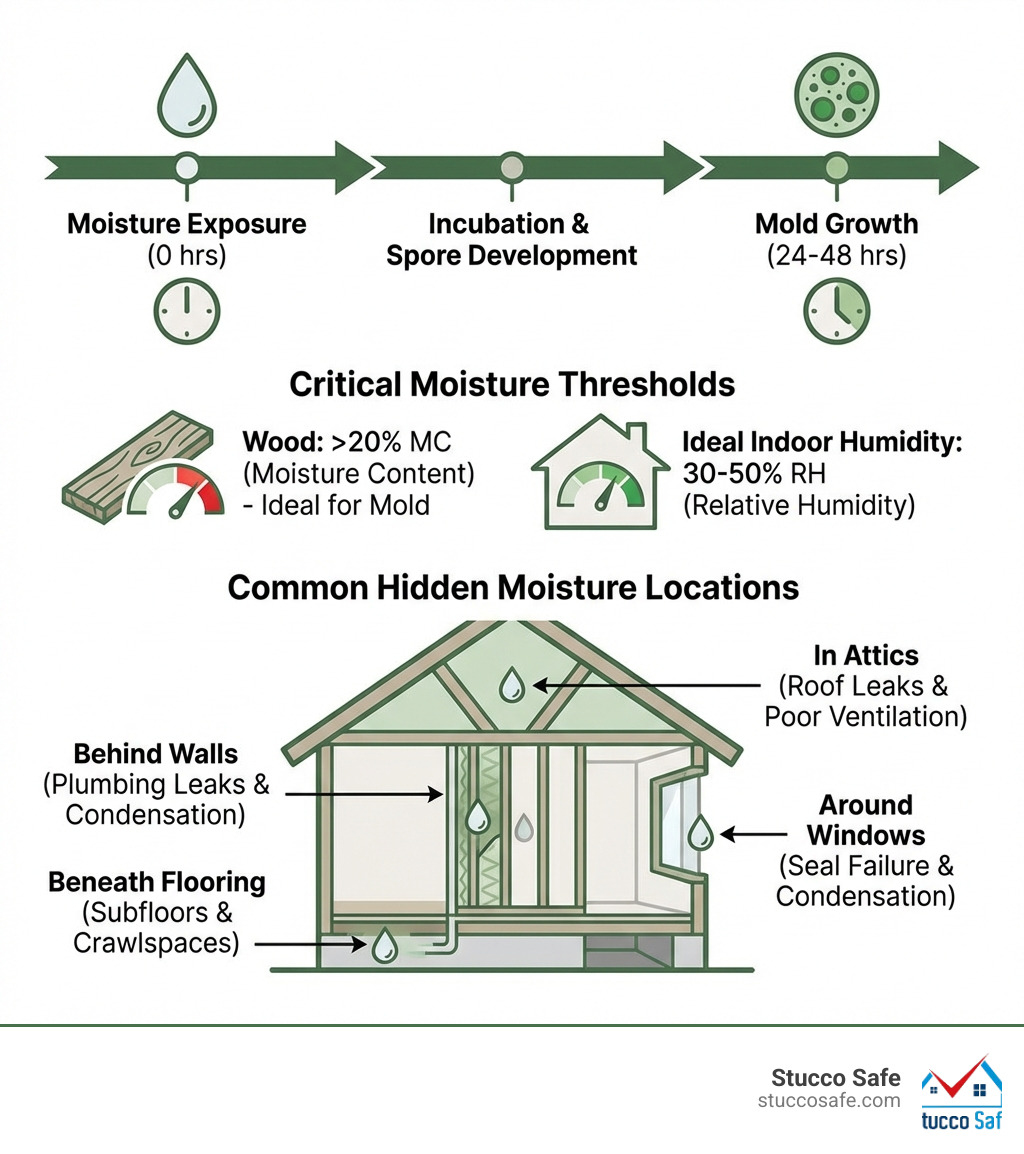
The stakes are higher than most homeowners realize. Mold can start growing in just 24-48 hours after moisture exposure, and wood surfaces with moisture content above 20% create ideal conditions for mold spores to develop. As the EPA notes, “there is no practical way to eliminate all mold and mold spores in the indoor environment; the way to control indoor mold growth is to control moisture.”
This is where moisture meters become your first line of defense. These devices don’t detect mold itself—they reveal the hidden moisture pockets that provide the perfect breeding ground for microbial growth. Think of them as early warning systems that catch problems before they become expensive disasters.
Whether you’re worried about that water stain on your ceiling, planning to sell your home, or just want peace of mind after a heavy rain, understanding moisture meters helps you protect both your property and your family’s health. The right device lets you scan behind walls, under floors, and in other hidden areas where moisture lurks undetected.
I’m Gabe Kesslick, and since 2001 I’ve used moisture meters for mold detection as a certified building envelope inspector and stucco specialist, conducting thousands of moisture investigations in homes across Pennsylvania. My experience has shown that early detection with the right moisture meter for mold detection prevents the majority of costly mold remediation projects.
Basic moisture meter for mold detection vocab:
How a Moisture Meter for Mold Detection Works
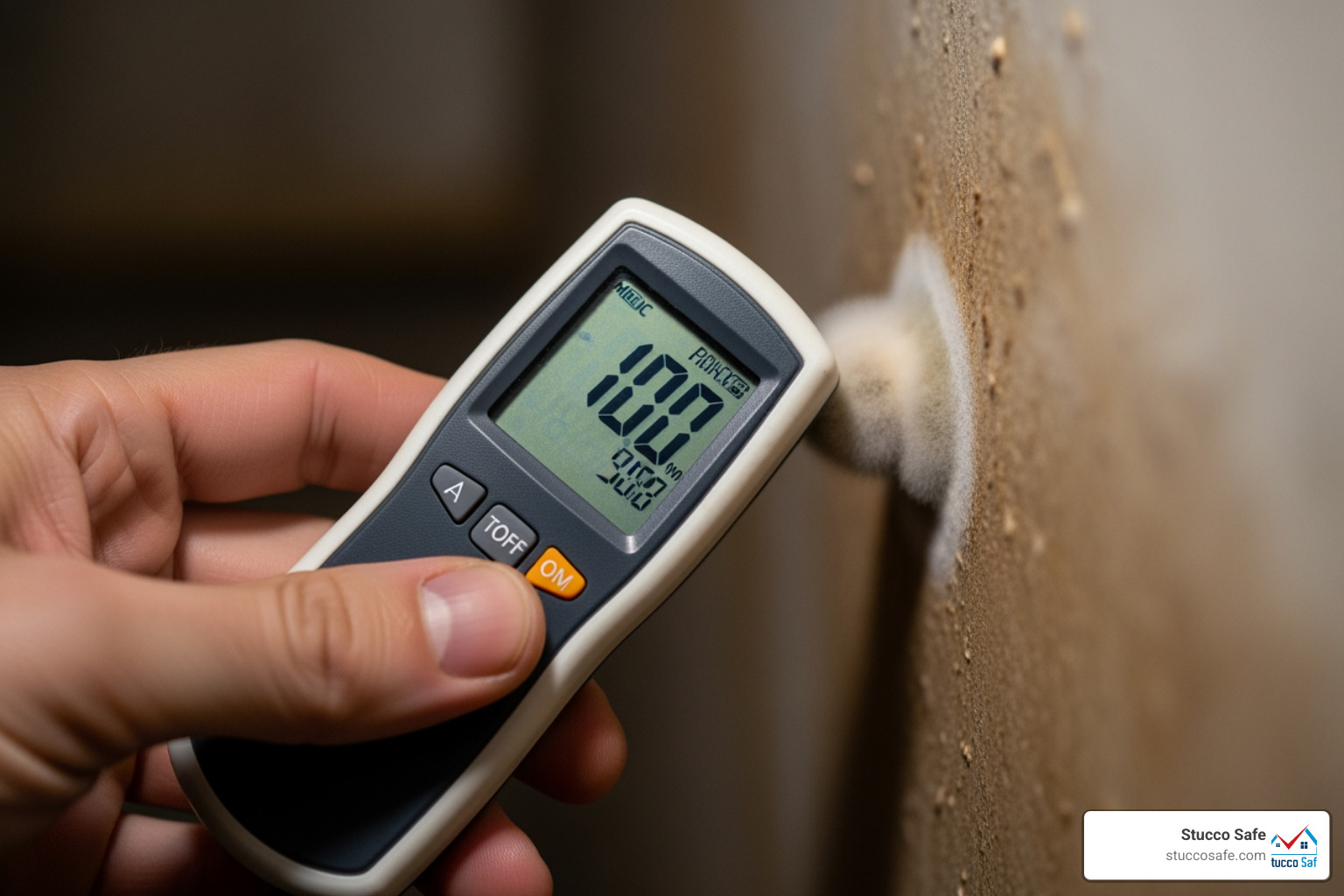
It is a common misconception that you can buy a handheld device that “beeps” when it finds mold. In reality, noted by the EPA When it comes to determining mold risk, moisture meters are one of the most useful and important tools a mold remediation expert can have. These tools work through indirect detection. Instead of looking for the biological organism itself, they look for the fuel: water.
By identifying high moisture and humidity levels, we can create what professionals call a “moisture map.” This is a visual or data-driven representation of where water is hiding behind your surfaces. For instance, if we scan a wall in your living room in West Chester and find a pocket of high moisture despite the surface looking dry, we know that microbial growth is likely occurring or imminent.
More info about how to detect mold in house reveals that mold requires three things: food (organic material like drywall or wood), the right temperature, and moisture. Since we can’t easily change the temperature or remove the wood from our homes, controlling moisture is the only way to prevent a colony from forming. Moisture meters allow for non-destructive testing, meaning we can check for these risks without tearing down your walls first.
Choosing the Best Moisture Meter for Mold Detection
When shopping for a device, you will encounter two primary technologies: pin-type and pinless.
- Pin-Type Meters: These use electrical resistance. You push two sharp pins into the material, and the device measures how easily electricity flows between them. Since water conducts electricity, a higher flow equals a higher moisture reading. These are incredibly accurate for measuring moisture at specific depths but do leave tiny “vampire” marks on your walls or wood.
- Pinless Meters: These use radio frequency signals to scan the material without any damage. They are the go-to for non-invasive moisture detection because they can scan large areas of tile, drywall, or flooring in seconds.
More info about pin vs pinless meters suggests that professionals often use a combination. We scan with a pinless meter to find the “hot spots” and then follow up with a pin-type meter to get a precise reading of the material density and moisture depth.
When to Use a Moisture Meter for Mold Detection
Timing is everything. noted by the EPA, “there is no practical way to eliminate all mold and mold spores in the indoor environment; the way to control indoor mold growth is to control moisture.” You should reach for your meter in several scenarios:
- Post-Flood or Leak: If a pipe bursts in your Villanova basement, the clock starts ticking. You have 24-48 hours to dry everything out before mold takes hold.
- Pre-Purchase Inspections: Before buying a home in King of Prussia or Cherry Hill, a moisture meter can reveal if that “freshly painted” wall is actually hiding a leaky window.
- Routine Maintenance: Especially in high-humidity climates like the Jersey Shore or Philadelphia, checking window sills and basement corners seasonally can prevent minor leaks from becoming structural nightmares.
- Leak Investigation: If you smell something musty but don’t see anything, moisture intrusion detection helps you follow the “scent” of the water to its source.
Pin vs. Pinless: Comparing Device Applications
Choosing between a pin and pinless meter is a bit like choosing between a scalpel and a flashlight. Both are useful, but they serve different purposes.
| Feature | Pin-Type | Pinless |
|---|---|---|
| Surface Damage | Leaves small holes | None (Non-destructive) |
| Speed | Slow (point-by-point) | Very fast (continuous scanning) |
| Best For | Wood, deep drywall checks | Tile, flooring, large wall areas |
| Accuracy | High at the pin tips | High for surface/near-surface |
| Application | Finding exact moisture depth | Identifying “hidden” pockets |
For homeowners in places like Toms River or Edison, a pinless meter is often the best “first step.” It allows you to sweep the device across a wall or floor to see if the numbers jump. If you find a high reading, that’s when the more invasive pin-type testing might be necessary to see how deep the water has soaked into the studs or subflooring.
Interpreting the Numbers: What Moisture Levels Mean for Your Home
A moisture meter is only as good as your ability to read it. Most digital meters will give you a percentage or a relative scale. research from Oregon State University on indoor humidity highlights that the environment plays a huge role in these numbers.
- Wood Moisture Content (MC): Readings above 20% are the danger zone. This is the saturation point where mold spores can begin to germinate. Ideally, wood in your home should be between 6% and 12%.
- Drywall Thresholds: Drywall is very thirsty. A reading over 1% on a moisture-sensitive scale is often cause for concern, as drywall loses its structural integrity quickly when wet.
- Relative Humidity (RH): The EPA recommends keeping your indoor RH between 30-50%. Anything higher than 50% turns your home into a tropical rainforest for mold.
When we perform moisture inspection services, we look for “equilibrium moisture content.” This is the level where the material is neither gaining nor losing water. If one part of your wall is at 8% and the corner is at 18%, you have a moisture intrusion problem, even if it hasn’t started smelling yet.
Where to Scan: Uncovering Hidden Mold Risks
Moisture meters can reveal potential mold risks to property owners before a minor problem turns into a significant safety hazard. But where should you look? Mold is shy; it loves dark, stagnant areas.
If you have a stucco home in West Chester or Newtown Square, you need to be especially vigilant. Moisture problems with stucco often start at “transition points”—where the stucco meets a window, a door, or a roofline.
Common Hidden Spots to Scan:
- Beneath Tile and Wood Flooring: Water can sit in a subfloor for weeks before it warps the surface.
- Behind Baseboards: Leaks often travel down the back of the drywall and pool at the floorboards.
- Attic Insulation: Roof leaks often soak insulation, which acts like a sponge, keeping the ceiling below damp for long periods.
- Basement Corners: Especially in older homes in Philadelphia or Camden, hydrostatic pressure can push moisture through concrete walls.
- Plumbing Voids: The space behind your shower or under the kitchen sink is a prime candidate for “slow-motion” leaks.
Beyond the Meter: When to Call a Professional
While a DIY moisture meter for mold detection is a great tool, it has its limits. If your meter is screaming red but you can’t find the leak, or if you see visible mold larger than a few square feet, it’s time to bring in the experts.
Home mold inspections go beyond just checking for wet spots. At Stucco Safe, we use forensic testing methods to understand why the moisture is there. Is it a flashing failure? A grading issue? Or a ventilation problem?
Warning Signs You Need Professional Help:
- Musty Odors: If it smells like a wet basement even when the dehumidifier is running, mold is likely present.
- Visible Staining: Yellow, brown, or black spots on walls or ceilings.
- Health Symptoms: Unexplained allergies, respiratory issues, or headaches that improve when you leave the house.
- Structural Decay: If the wood feels soft or the stucco is crumbling.
In these cases, we may recommend mold air testing to determine the concentration of spores in your living space. Our moisture detection experts serve all of Southeastern PA, NJ, and Delaware, ensuring that you don’t just find the mold, but you stop the water that caused it.
Frequently Asked Questions about Moisture Meters for Mold Detection
Can a moisture meter see mold through walls?
No. A moisture meter detects the water that allows mold to grow. It cannot “see” the mold itself. However, if a meter shows high moisture levels inside a wall cavity, there is a very high probability that mold is growing there, especially if the moisture has been present for more than 48 hours.
What is a “safe” reading on a moisture meter for drywall?
Drywall should generally be very dry. Most meters will show a “green” or “safe” zone below 0.5% to 1% moisture content. Anything above 1% indicates that the drywall is absorbing moisture and should be investigated immediately.
Do I need a professional mold test if my meter shows high moisture?
Not necessarily, but it is recommended if you have health concerns or if the moisture has been present for a long time. High moisture is the risk of mold. A mold test confirms the presence and type of mold. If you catch the moisture early and dry it out within 24 hours, you may avoid the need for a mold test entirely.
Conclusion
A moisture meter for mold detection is perhaps the most cost-effective insurance policy a homeowner can own. By catching liftd moisture levels before they cross that 20% wood moisture threshold, you can save yourself thousands of dollars in remediation costs.
However, a tool is only as effective as the person using it. For complex structures—especially stucco homes where moisture can hide deep within the wall assembly—a professional touch is required. Stucco Safe provides certified moisture testing that uses forensic methods to protect your investment.
Whether you are in Wilmington, Delaware, or Toms River, New Jersey, we are here to help. Stucco inspections typically range from $495 to $1595, a small price to pay for the peace of mind that comes with knowing your home is dry, safe, and mold-free. Don’t wait for the musty smell to start—grab a meter or give us a call today.