
Don’t Get Stuck-o: Your Guide to Drilling Stucco
Why the Right Stucco Drill Bit Matters
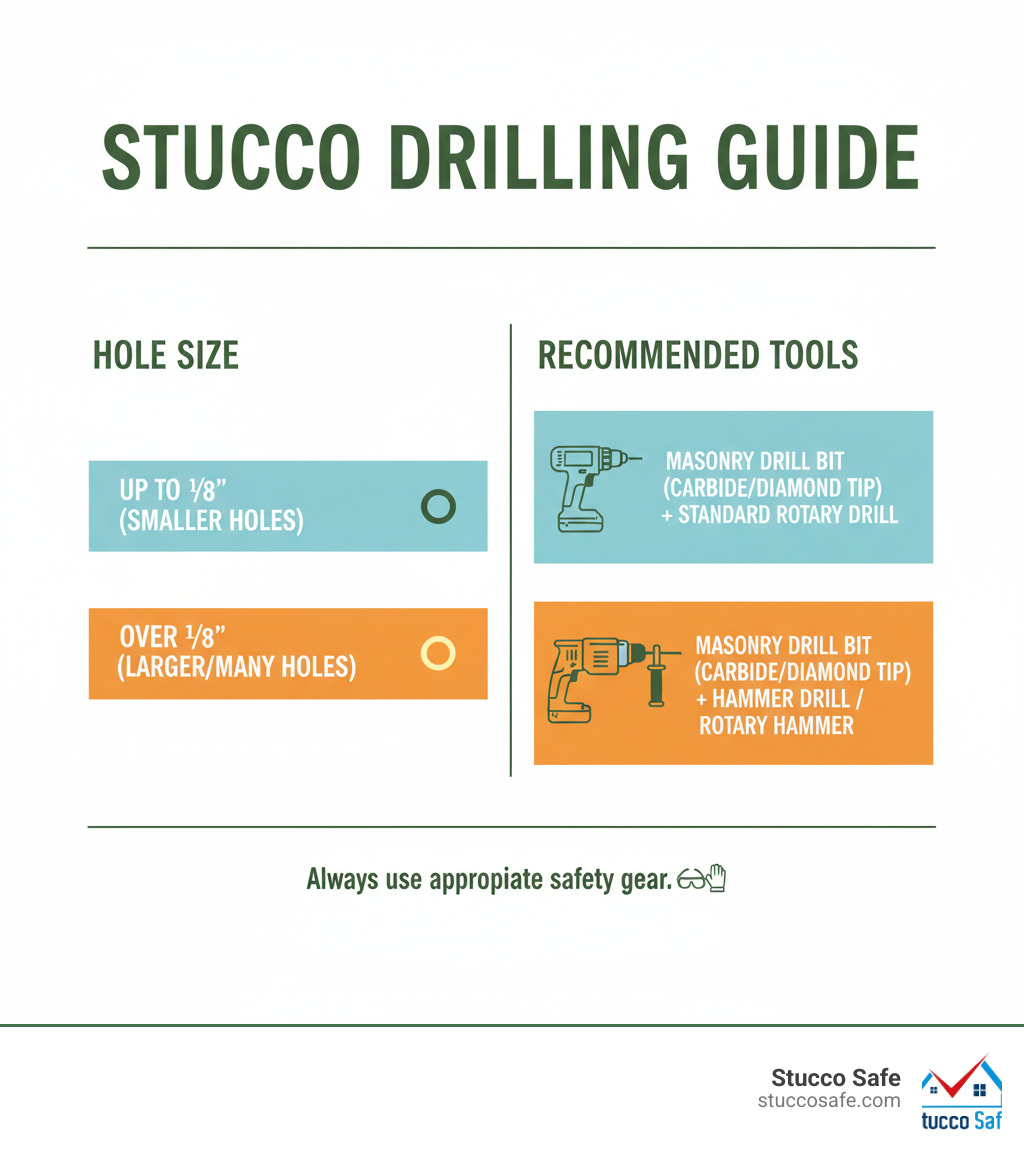
For drilling into stucco, you need:
- Masonry drill bits
- Carbide or diamond tips
- For smaller holes (up to ⅜”), a standard drill is often enough.
- For larger or many holes, a hammer drill or rotary hammer is highly recommended.
When you need to hang something on your home’s exterior, finding the right stucco drill bit is key. Many homeowners feel hesitant about drilling into stucco. They worry it might be too hard to drill through, or that it could lead to leaks and damage. Choosing the wrong drill bit or method can indeed crack your walls and cause expensive moisture problems. This guide will help you understand how to drill into stucco safely and effectively, protecting your home’s value.
I’m Gabe Kesslick, and for over two decades, I’ve seen how crucial the right stucco drill bit is for maintaining home integrity. My work as an EDI Certified Stucco Inspector has taught me the importance of precise drilling to prevent costly issues.
Choosing the Right Tools: The Best Stucco Drill Bit and Drill
Ever tried to drill into stucco with a regular drill bit? If so, you probably quickly learned it’s not like drilling into wood or drywall. Stucco is a tough cookie! It’s a durable exterior material, mostly made of cement, sand, lime, and water. Once it’s cured, it becomes incredibly dense and brittle – almost like concrete. This tough, abrasive nature means your everyday drill bits, designed for softer stuff, will quickly get dull, overheat, and just won’t cut it. Trying to force a standard bit through stucco can lead to frustrating chipping, cracking, and a lot of wasted effort.
That’s why choosing the right stucco drill bit is absolutely vital. We need tools specifically designed to handle such a hard, unforgiving material. These specialized bits feature super-hard tips that can stand up to the challenge of masonry.
What is the best stucco drill bit?
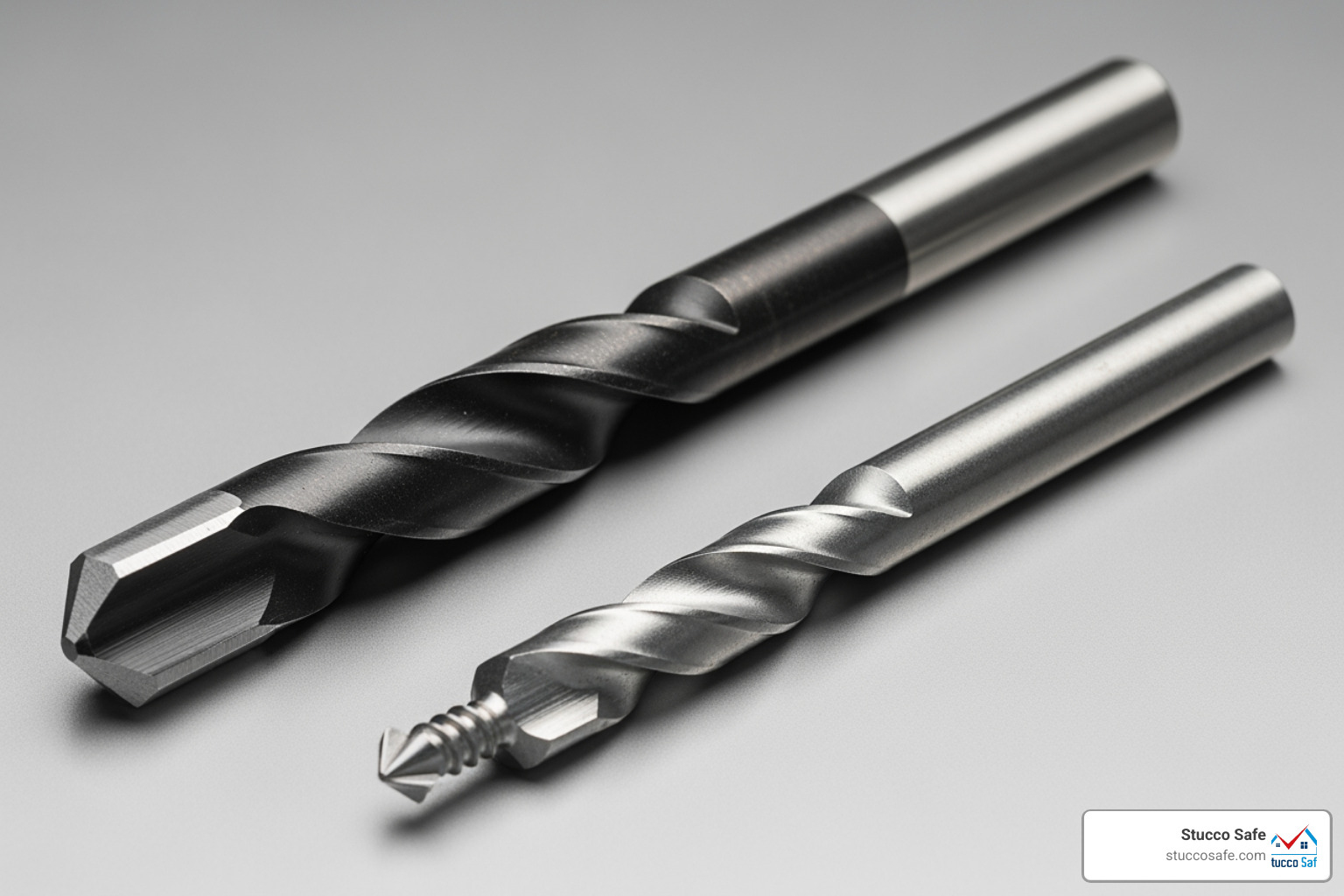
When we talk about the “best” stucco drill bit, we’re definitely talking about a masonry drill bit. These champions are built to slice through tough materials like concrete, brick, stone, and yes, your home’s stucco. Their secret? A super-strong design and those specialized tips.
The most effective masonry bits boast tips made from carbide or even diamond. Carbide-tipped drill bits are incredibly hard, allowing them to grind through stucco’s cement-like material with ease. Diamond-tipped bits, while a bit pricier, offer best hardness and resistance to wear. They’re perfect for the densest stucco or when you have a lot of holes to drill. You might also see “multi-material bits” which can work, but true masonry bits with carbide or diamond tips are usually superior for stucco due to its specific abrasive nature.
Also, pay attention to the bit’s flute design. These are the spiral grooves running up the bit’s shaft. They’re super important for quickly clearing away the dust and debris that builds up while drilling. Good debris removal means your bit won’t get stuck, and it helps keep it from overheating. This boosts both how well your bit performs and how long it lasts! For top performance and longevity, choosing bits with good heat resistance is key. Many highly-rated sets, like the TITGGI Professional Masonry Drill Bit Set or the DEWALT Masonry Drill Bit Set, include these features and are popular among DIYers tackling tough projects.
Standard Drill vs. Hammer Drill: What’s the Difference?
The drill you choose is just as important as your stucco drill bit. Let’s explore your options, as each one shines in different situations:
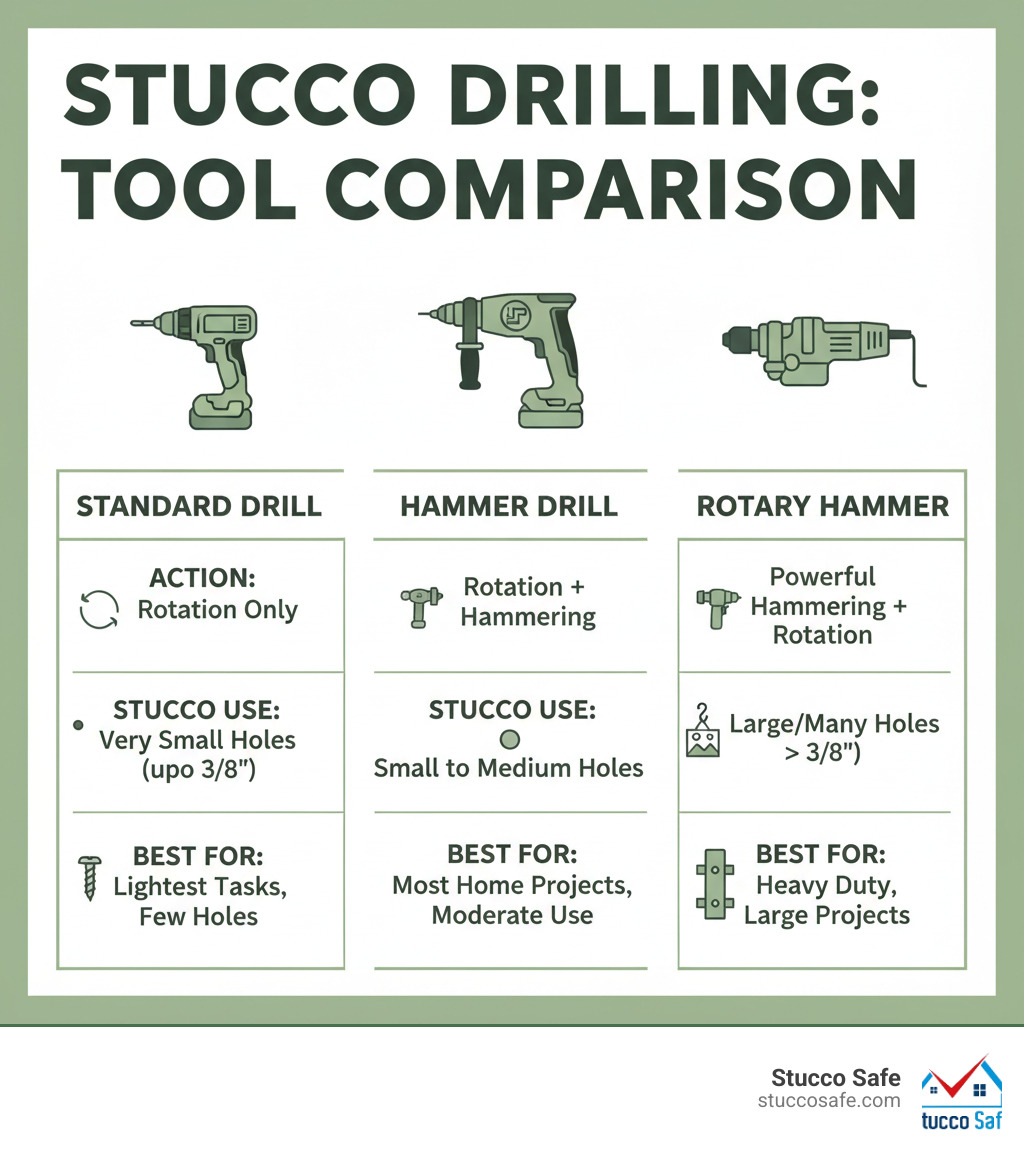
Standard Drill: This is likely the drill you already own, great for everyday jobs like putting up shelves or drilling into wood. It simply spins the drill bit. For stucco, a standard drill can work, but only for the tiniest holes. Think small pilot holes or openings up to about ⅜ of an inch. If you just need one or two of these, it’ll do. But for anything bigger or more frequent, expect it to struggle, overheat, and make for a very slow, frustrating job.
Hammer Drill: As its name suggests, this drill adds a “punch” to its spin! It combines the rotating action of a standard drill with a super-fast, percussive hammering motion. This hammering action pushes the stucco drill bit forward, effectively breaking up the brittle stucco, while the rotation sweeps away the debris. This clever combo makes drilling into stucco much faster and easier than with a standard drill. For most homeowners tackling projects like mounting a hose reel or hanging outdoor decorations, a hammer drill is usually the smarter and more effective choice.
Rotary Hammer Drill: Now we’re talking about the heavy-duty champion of masonry work! Rotary hammers are bigger and much more powerful than hammer drills, delivering a far more forceful hammering action. They use a special chuck system, often called an SDS connection. This allows the bit to move back and forth freely from the chuck, really maximizing the impact energy. For larger holes (think anything bigger than ⅜ of an inch) or big projects with many holes, a rotary hammer makes quick work of stucco. These machines are built for serious demolition and drilling into dense concrete and stone, making stucco feel almost effortless in comparison.
Deciding which drill is right for you simply comes down to the size and number of holes you plan to make.
Choosing the Right Size and Type of Stucco Drill Bit
Picking the right size and type of stucco drill bit is super important for a successful project. A golden rule: the drill bit size must always match the anchor you plan to use. If your hole is too small, your anchor won’t fit. If it’s too big, the anchor won’t grip, leading to a wobbly, insecure fastening. Sometimes, especially with larger anchors, you might start with a smaller stucco drill bit to create a pilot hole. This helps guide the main bit and prevents it from ‘walking’ across the stucco surface.
For most common household tasks, like hanging outdoor lights, mailboxes, or even small railings on your stucco, you’ll typically reach for common bit sizes like 3/16″, 1/4″, and 5/16″. These sizes are perfect for standard wall anchors you’ll find at any hardware store.
When you’re tackling larger holes, especially anything ½” or bigger, you’ll likely run into a different kind of drill bit connection: SDS. These larger bits often have an SDS shank, made specifically for rotary hammer drills. While you can find adapters to use SDS bits in standard chucks, for the best performance with these bigger bits, a rotary hammer is highly recommended. The SDS system ensures fantastic power transfer and impact absorption, which is exactly what you need when drilling large holes into really hard materials.
No matter the size, always remember to choose a stucco drill bit with a carbide or diamond tip. These materials provide the essential hardness and abrasion resistance needed to cut through that tough stucco surface without quickly dulling your bit.
Preparation and Safety: Before You Drill
Before we even think about touching a stucco drill bit to our home’s exterior, thorough preparation and adherence to safety protocols are paramount. We want to avoid accidents and costly damage.
Our safety should always come first. When drilling into stucco, we’ll generate a significant amount of fine dust, which can contain silica. Inhaling this dust is not good for our lungs. Therefore, we must always wear:
- Eye Protection: Safety goggles are non-negotiable to shield our eyes from flying debris and dust.
- Dust Mask: A good quality dust mask (N95 or better) will protect our lungs from silica particles.
- Hearing Protection: If we’re using a hammer drill or rotary hammer, the noise can be substantial, so earplugs or earmuffs are a wise choice.
- Gloves: Protect our hands from scrapes and potential splinters from the stucco.
Next, we need to consider what’s behind the stucco. Our homes have electrical wires, plumbing pipes, and sometimes even gas lines running within the walls. Drilling into these can be extremely dangerous and expensive. We should use a stud finder or a specialized wall scanner that can detect metal and electrical current to check the area thoroughly before drilling. This is particularly important in our service areas of Southeastern Pennsylvania, New Jersey, and Delaware, where older homes may have varying construction methods.
Once we’ve ensured the area is clear and we’re geared up for safety, we can mark the precise spot where we intend to drill. A pencil or marker works well. To help prevent the stucco surface from chipping or cracking when we start drilling, a neat trick is to apply a piece of painter’s tape over the marked spot. This provides a little extra stability to the surface. For an even cleaner start, we can use a nail set or a punch to create a small indentation at the mark. This pilot point will prevent the stucco drill bit from “walking” or skittering across the smooth surface when we begin drilling.
How to Drill Into Stucco: A Step-by-Step Guide
Now that we have the right tools and have taken all necessary safety precautions, we’re ready to make our holes. Here’s our clear, actionable process for drilling into stucco without causing damage:
Step 1: Mark Your Spot and Create a Pilot Point
First things first, we measure precisely where our item will hang and mark that spot clearly with a pencil or marker. As mentioned, we apply a small piece of painter’s tape over this mark. This tape acts as a shield, helping to prevent the stucco from chipping around the edges of our hole as we begin. Then, using a nail set or a sharp punch, we gently tap to create a small indentation at the center of our mark. This tiny dimple will guide our stucco drill bit and stop it from wandering across the stucco surface, ensuring our hole starts exactly where we want it.
Step 2: Start Drilling Slowly and Straight
With our pilot point ready, we attach the appropriate carbide-tipped masonry stucco drill bit to our hammer drill (or standard drill for very small holes). We set our drill to a low speed, especially if it’s a hammer drill, and gently place the tip of the bit into the pilot indentation. It’s crucial to hold the drill absolutely perpendicular to the wall. This ensures a straight hole and minimizes the risk of chipping the stucco. We start drilling slowly, applying gentle, consistent pressure. Some drills have a built-in bubble level, or we can use a small external level or even a drill guide block to help maintain that perfect 90-degree angle.
Step 3: Increase Speed and Clear Debris
Once the bit has firmly engaged the stucco and created a shallow indentation, we can increase the drill’s speed. We continue to apply steady pressure, letting the drill and stucco drill bit do the work. It’s important to avoid excessive force; pushing too hard can cause the bit to bind, overheat, or even crack the stucco. If we’re using a hammer drill, we engage the hammer function at this point.
As we drill, dust and debris will accumulate in the hole. To prevent the bit from getting clogged and to keep it cool, we periodically pull the bit almost entirely out of the hole. This allows the flutes to clear the debris. For long drilling sessions or multiple holes, we can mist the stucco drill bit with water from a spray bottle to keep it cool and extend its life. This technique significantly improves performance and longevity.
Step 4: Insert the Anchor and Fastener
Once we’ve drilled to the required depth (which should be the length of our anchor plus about ¼ inch for good measure), we remove the drill bit. The hole will be full of dust. We need to clean it thoroughly for the anchor to seat properly. A blower bulb or compressed air is perfect for this, ensuring all loose debris is expelled.
Next, we take our chosen plastic or metal wall anchor and gently insert it into the clean hole. Stucco is brittle and won’t hold a screw’s threads on its own; almost always, we will need an anchor. If it doesn’t go in easily, we can gently tap it flush with a hammer. Finally, we drive our screw into the anchor. We tighten it until the item we’re mounting is secure, but we are careful not to overtighten, as this can strip the anchor or crack the stucco around the hole.
After the Drill: Sealing and Maintenance
We’ve successfully drilled our holes and mounted our items. But our job isn’t quite done. The most critical step now is to protect our home from moisture intrusion.
Why You Must Seal Every Hole in Stucco
Stucco is a reservoir system, meaning it’s designed to absorb and then release water. However, every hole we drill penetrates the home’s moisture barrier, which is typically a house wrap or building paper behind the stucco. If these penetrations aren’t properly sealed, water can seep behind the stucco, leading to serious issues like mold growth, wood rot in the framing and sheathing, and costly structural damage. This is especially true in the humid climates common in our service areas of Southeastern PA, New Jersey, and Delaware.
To prevent these problems, we must apply exterior-grade caulk or sealant. After inserting the anchor and before driving the screw, we inject caulk into the hole. Then, once the item is mounted, we apply a final, thin bead of caulk around the perimeter of the mounted fixture where it meets the stucco. This creates a watertight seal, protecting our home from the elements.
Considerations for Larger or Multiple Holes
When our projects involve larger holes or many holes, we need to be extra mindful. As we discussed earlier, for these tasks, a hammer drill is not just recommended, it’s often a necessity. The percussive action significantly reduces the effort and time required. For truly heavy-duty work, like creating penetrations for pipes or extensive anchor drilling, the benefits of a rotary hammer become undeniable. It makes these tasks feel almost effortless, reducing the potential for user fatigue and improving efficiency.
When drilling multiple holes, especially close together, we must consider the potential for cracking. Stucco, being brittle, can be susceptible to this. We should allow adequate spacing between holes whenever possible to maintain the structural integrity of the stucco surface. If we notice any minor cracks forming during drilling, we can use exterior stucco caulk or pre-mixed stucco patch to repair them.
Improving Drill Bit Performance and Longevity
Our stucco drill bit works hard, and we want it to last. Overheating and dulling are common issues that reduce a bit’s effectiveness and lifespan. Here’s how we can keep our bits in top shape:
- Cooling with Water: This is a simple yet highly effective trick. We keep a spray bottle filled with water handy and mist the stucco drill bit and the drilling area periodically. This keeps the bit cool, especially when drilling many holes or through dense stucco, preventing premature dulling and breakage.
- Intermittent Drilling: Instead of drilling continuously, we adopt an intermittent technique. We drill for a few seconds, then pull the bit back slightly to clear debris and allow it to cool, then continue. This also helps prevent the bit from getting stuck.
- Steady Pressure, Not Force: We let the tool do the work. Applying excessive force only generates more heat and can dull or break the bit.
- Proper Storage: After use, we clean our bits and store them in a dry place, ideally in their original case or a dedicated bit organizer, to prevent rust and damage to the tips.
Frequently Asked Questions about Drilling Stucco
We know drilling into your home’s exterior can feel a bit daunting, so let’s tackle some of the most common questions we hear about working with stucco.
Can I use a regular drill bit for stucco?
The short answer? No, absolutely not. We understand the temptation—after all, you might already have a set of regular drill bits in your toolbox. But here’s what will happen: you might scratch through the very top surface of the stucco, but the moment that bit hits the cement layer underneath, it’s game over. The bit will dull almost instantly, start smoking from the heat, and you’ll be left standing there with a barely-visible divot in your wall and a ruined drill bit.
Regular drill bits are designed to shave through softer materials like wood, plastic, or even metal. They’re not built to pulverize hard, abrasive materials like the cementitious base of stucco. Trying to force a regular bit through will only lead to frustration, potential damage to your stucco surface, and wasted time. We always need to use carbide-tipped or diamond-tipped masonry stucco drill bits for this job. It’s not just a recommendation—it’s essential for getting the job done right.
How deep should I drill into stucco?
This is a great question because drilling too shallow means your anchor won’t hold, and drilling too deep can cause unnecessary problems. The depth we need is primarily determined by the length of the anchor we’re planning to use. Here’s our general rule: the drill bit depth should equal the anchor length plus about ¼ inch.
That extra quarter-inch isn’t arbitrary. It provides clearance for any dust or debris that settles at the bottom of the hole, ensuring our anchor can be fully seated and sits flush against the stucco surface. When we’re drilling, we also need to think about what’s behind the stucco. We’re aiming for the sheathing layer, which provides a solid backing for our anchor to grip. We want to avoid drilling excessively deep into wall studs unless we’re specifically mounting something very heavy that requires that extra structural support.
What if I hit the metal lath when drilling?
Don’t be surprised if, partway through drilling, you suddenly feel increased resistance or hear a distinctive scraping or grinding sound. You’ve likely encountered the metal lath—a wire mesh that sits beneath the scratch coat in many stucco walls, especially older ones. This mesh provides reinforcement for the stucco system.
Here’s the good news: you don’t need to stop. A sharp, high-quality carbide-tipped masonry stucco drill bit is designed to push through this metal layer. We just continue drilling with firm, steady pressure. The key is to maintain that perpendicular angle we established at the start and not try to force the bit at an awkward angle, which could cause it to bind or deflect.
You might notice some minor cracking around the hole when you hit the lath—this is normal with stucco’s brittle nature. After we’ve installed our anchor and fastener, we’ll seal around the penetration with exterior-grade caulk, which will address any small surface cracks and, more importantly, prevent moisture from getting behind the stucco. If you’re concerned about the condition of your stucco or notice more significant cracking, it’s worth having a professional take a look before continuing with your project.
Conclusion: Drill with Confidence and Protect Your Home
Well, you’ve made it! Drilling into stucco might have felt like a daunting task at first glance. But with the right knowledge and a little confidence, you’re now equipped to tackle those home improvement projects safely and effectively. We’ve walked through everything, from picking the perfect stucco drill bit (remember those carbide tips!) and the right drill for the job, to putting safety first, and following each step with care.
But the journey doesn’t end when the screw is in. Perhaps the most crucial lesson we’ve learned is the absolute necessity of sealing every single hole. Your stucco isn’t just a pretty face; it’s your home’s shield against moisture. Leaving even a tiny hole unsealed is like inviting trouble in – think mold, wood rot, and really expensive damage down the line. By being diligent with your sealing, you’re not just hanging a planter; you’re actively protecting your home’s value and its structural health for years to come. It’s a small step that makes a huge difference.
Now, if you’re looking at your stucco and noticing some existing cracks, soft spots, or perhaps you’re just unsure about its overall condition before you even pick up a drill, it’s always a smart move to get a professional assessment. Understanding your stucco’s health before you start a project can save you a lot of headaches – and money – in the long run. Stucco Safe is here to help homeowners in Southeastern Pennsylvania, New Jersey, and Delaware with expert stucco inspection services. These comprehensive inspections, which can range from $495 to $1595 or more for very large homes, ensure your home’s exterior is sound, giving you true peace of mind.
So go ahead, drill with confidence, knowing you’re doing it the right way and keeping your stucco safe!