

Leak Detectors: Catching Water Woes Before They Start
Why Water Damage Prevention Matters for Your Home
A leak detector is a device that alerts you to water presence before damage occurs. Modern leak detectors range from simple battery-powered alarms that sound when they touch water, to smart WiFi systems that send alerts to your phone, to professional-grade acoustic and infrared tools that pinpoint hidden leaks behind walls or underground.
Quick Comparison of Leak Detector Types:
| Detector Type | Best For | Price Range | Key Feature |
|---|---|---|---|
| Battery Alarm | Single-room monitoring | $10-$50 | Loud 100-120dB alert |
| Smart WiFi Sensor | Whole-home coverage | $50-$200 | Remote app notifications |
| Moisture Meter | Finding hidden dampness | $30-$100 | Pinpoints wet spots in walls |
| Professional Acoustic | Underground pipes | $1,000-$7,000 | Detects subsurface leaks |
Water damage silently destroys homes every day. According to EPA data, easy-to-fix leaks waste nearly 1 trillion gallons of water annually in U.S. homes, with the average household losing 10,000 gallons per year. Beyond wasted water, undetected leaks lead to mold growth, structural damage, and repair bills that quickly escalate into thousands of dollars.
The good news? Today’s leak detectors catch problems early, often before you see any visible damage. From $20 battery-operated alarms that sit under your sink to $6,000 professional systems that locate breaks in underground pipes, there’s a detection solution for every situation and budget.
For homeowners with stucco exteriors in Southeastern Pennsylvania, New Jersey, and Delaware, moisture intrusion poses unique risks. Water that penetrates stucco facades can rot wall framing and cause extensive hidden damage long before you notice interior signs. While indoor leak detectors catch plumbing failures, they won’t identify moisture seeping through exterior walls—a problem that requires specialized forensic testing.
I’m Gabe Kesslick, and I’ve been detecting and repairing leaks in stucco homes since 2001. As a BESI Level 2 Certified Building Envelope Forensic Inspector, I’ve seen how the right leak detector—whether it’s a simple water alarm or professional moisture scanning equipment—can save homeowners from catastrophic damage by catching problems in their earliest stages.
Handy leak detector terms:
- home moisture testing
- how to find a water leak underground
- moisture detection experts
Choosing the Right Leak Detector for Your Property
Selecting the right leak detector depends entirely on what you are trying to protect. Are you worried about a water heater failing in the basement, or are you a professional plumber trying to find a pinhole leak under a concrete slab? The technology used varies wildly across these scenarios.
For general home use, most people start with simple water sensors. These devices use metal probes that complete an electrical circuit when touched by water, triggering an alarm. However, if you are dealing with structural concerns, especially in regions like West Chester, Villanova, or King of Prussia where stucco homes are common, you may need a more advanced moisture-detector-complete-guide.
Different Technologies at Play:
- Acoustic Technology: This is the gold standard for finding leaks in pressurized pipes. High-sensitivity microphones and sound intensifiers “listen” for the hiss or thud of water escaping a pipe.
- Infrared Sensors: Often found in thermal imaging cameras, these detect temperature differences. Since evaporating water cools surfaces, an infrared leak detector can show “cold spots” behind a wall where moisture is hiding.
- Heated Diode & Corona Discharge: These are specialized for HVAC systems. They are designed to sniff out refrigerant gases (like Freon) rather than water.
- Ultrasonic Detectors: These convert high-frequency sounds from turbulent leaks into audible frequencies. Some models are so sensitive they can practically “hear the blink of an eye.”
For a deeper dive into the technical definitions of these devices, you can explore the Wikipedia entry on leak detectors.
Smart WiFi Water Leak Detector Systems
In the age of the smart home, the traditional “beeping” alarm is being replaced by systems that talk to your smartphone. Brands like YoLink and GoveeLife have popularized these kits, which often include a central hub and multiple sensors.
One of the most significant advancements in this space is LoRa (Long Range) technology. Unlike standard WiFi, which might struggle to reach from your living room to a far corner of the basement, LoRa can have an open-air range of up to 1/4 mile. This makes it ideal for large properties in Chester County or sprawling estates in Villanova.
Key Benefits of Smart Systems:
- Remote Monitoring: Receive a push notification, email, or SMS the second moisture is detected, even if you’re on vacation.
- App Integration: Many systems work with Alexa, IFTTT, and Home Assistant, allowing you to create “routines”—like turning your smart lights red if the basement floods.
- Automatic Shut-off: Some high-end systems, like those from Moen or YoLink, can actually trigger a motorized valve to shut off your main water line automatically when a leak is sensed.
Professional Subsurface Leak Detector Tools
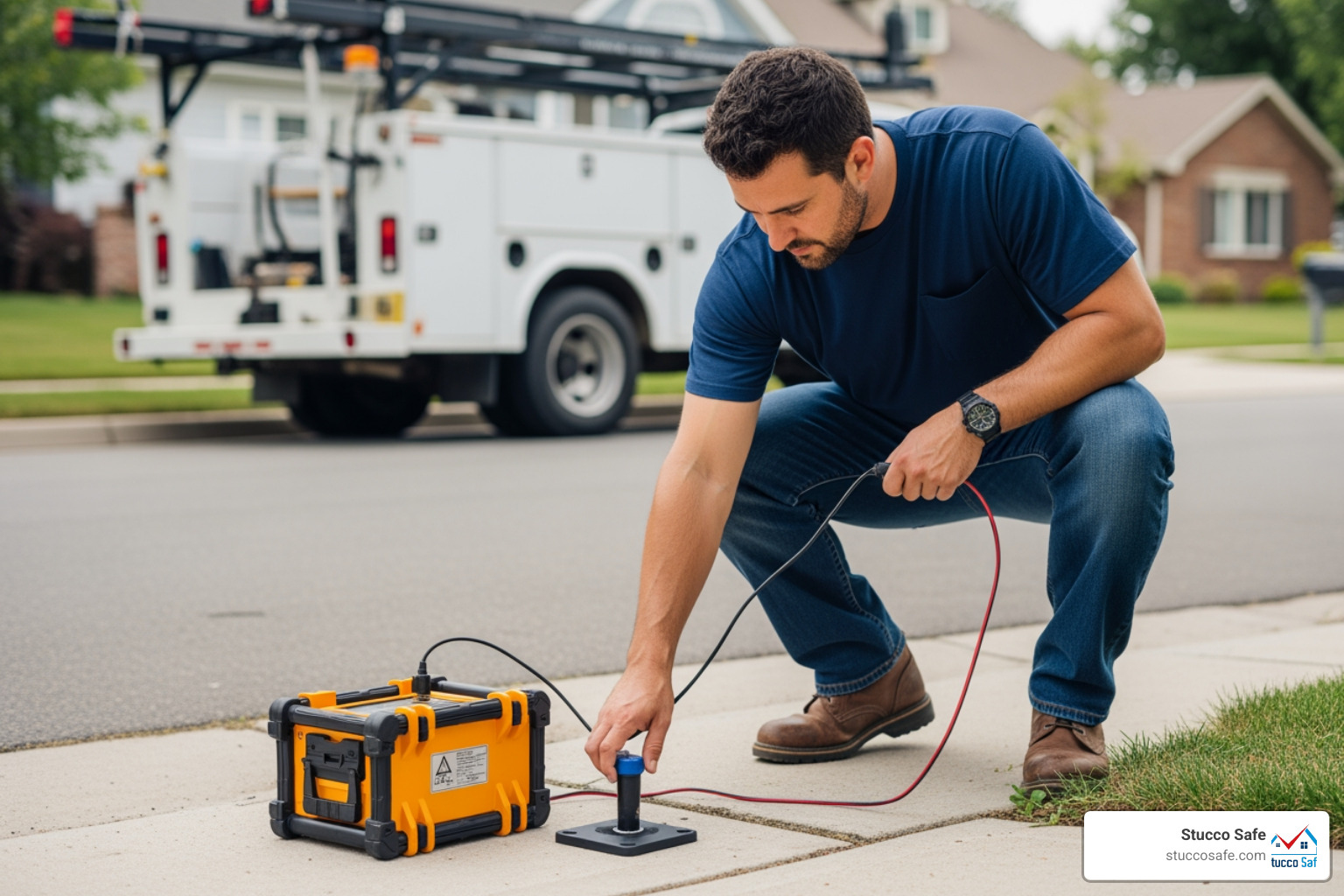
When a leak isn’t visible on the floor, it’s likely underground or behind a wall. This is where professional-grade equipment comes in. Utility workers and plumbers often use subsurface tools like the Pipehorn LD-20 or LeakTronics systems.
These tools are built for the “utility truck environment”—meaning they are rugged, waterproof, and designed for daily abuse. They use advanced ground microphones to pinpoint the exact location of a leak under soil, landscaping, or concrete. This prevents the “guess and check” method of digging up a whole yard just to find one broken pipe. If you’re wondering about the logistics of this process, check out our guide on how-to-find-a-water-leak-underground.
Essential Features for Effective Detection
Not all leak detectors are created equal. When we evaluate equipment for our clients in Southeastern PA and New Jersey, we look for several critical specifications.
Sensitivity Levels
A high-quality leak detector should be able to sense as little as 1/32″ of water. In HVAC, professional refrigerant detectors can sense leaks as small as 0.03 oz per year. For water, the goal is to catch the “drip” before it becomes a “flood.”
Alarm Volume
If a device isn’t “smart” (meaning it doesn’t send phone alerts), it needs to be loud. Most standard water alarms, like the Basement Watchdog, feature a 110dB to 120dB siren. To put that in perspective, that’s as loud as a rock concert—loud enough to wake you up through a floor of the house.
Power Sources
Most residential sensors are battery-operated. While this makes them easy to place anywhere, it also means they require maintenance. We recommend looking for devices with a 5-year battery life or those that send “low battery” alerts to your phone. Professional units are often rechargeable to ensure they don’t die in the middle of a job site.
Comparison: WiFi Sensors vs. Traditional Alarms
| Feature | WiFi/Smart Sensor | Traditional Battery Alarm |
|---|---|---|
| Alert Method | Smartphone + Audible | Audible Only |
| Range | Global (via internet) | Within earshot |
| Installation | Requires Hub/App | Drop and go |
| Price | Mid-range ($50-$200) | Budget (<$50) |
| Reliability | Depends on WiFi/Power | Depends on Battery |
For those specifically looking into HVAC maintenance, refrigerant leak detector technology uses specialized sensors like heated diodes to identify gases that a standard water sensor would miss entirely.
Residential vs. Professional Application Scenarios
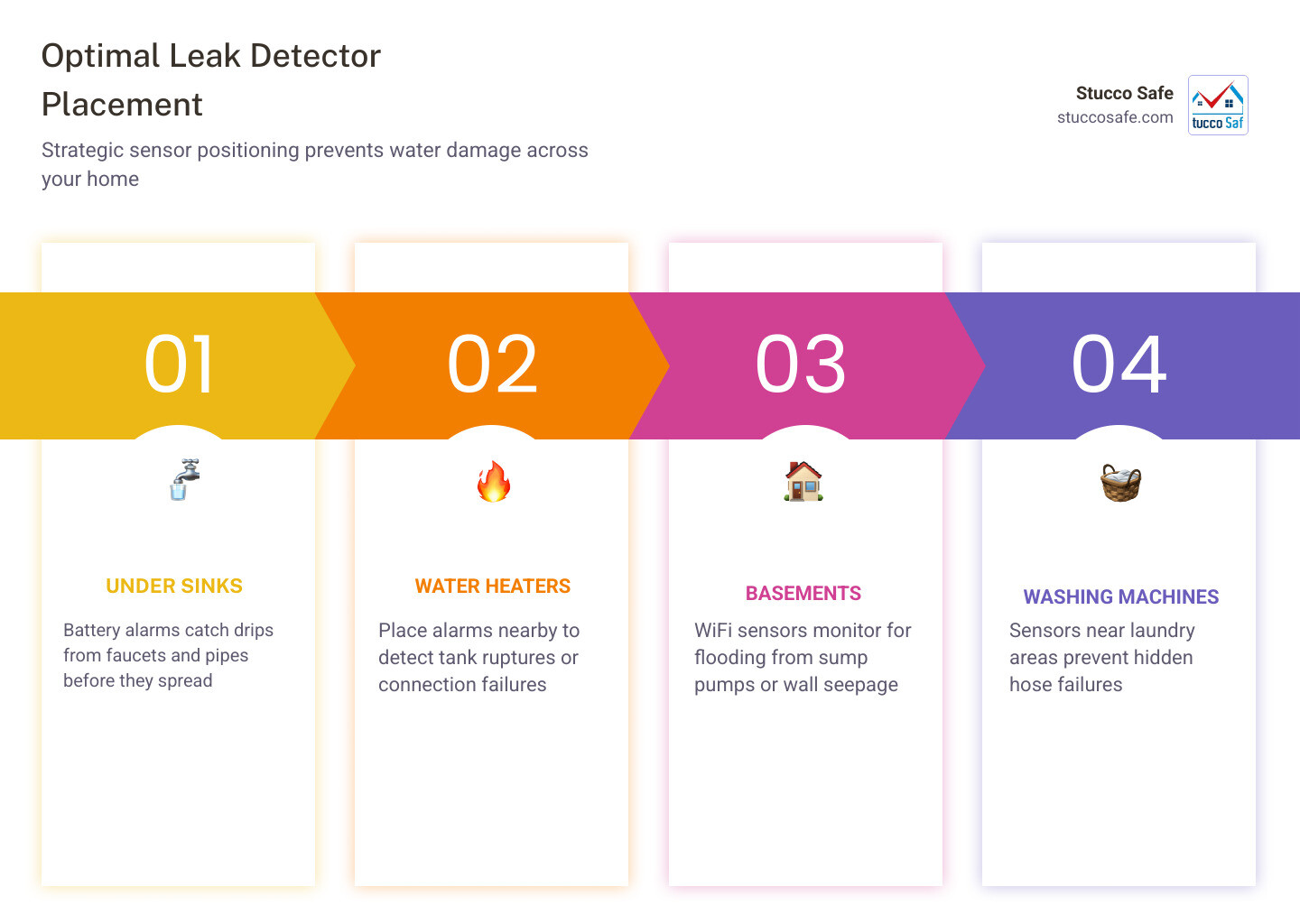
Where you place your leak detector is just as important as which one you buy.
Common Residential Spots:
- Under Sinks: The most common site for slow, destructive drips.
- Near Water Heaters: These often fail catastrophically as they age.
- Basements: Ideal for monitoring sump pump failures or foundation seepage.
- Laundry Rooms: Washing machine hoses are notorious for bursting under pressure.
Professional and Specialized Scenarios:
Professionals often deal with “hidden” water. For instance, in the automotive world, technicians use leak detection lamps and fluorescent dyes to find pinhole leaks in A/C systems.
In our line of work at Stucco Safe, we deal with the most complex scenario: stucco moisture intrusion. A standard water alarm sitting on your basement floor won’t tell you if water is rotting the OSB sheathing behind your stucco in Cherry Hill or Middletown. This requires stucco-leak-detection using moisture probes and thermal imaging. We use forensic methods to “see” into the walls, identifying structural risks that consumer-grade sensors simply cannot reach.
Installation and Maintenance for Longevity
Buying a leak detector is only the first step. Proper setup ensures that the device actually works when the “big one” happens.
Placement Strategy
Water follows the path of least resistance. Place your sensors at the lowest point of the floor or inside the “drip pan” of appliances like water heaters and AC air handlers. For smart sensors, ensure they are within range of your WiFi router or LoRa hub.
The 10-Minute Detective Challenge
The EPA suggests a “Fix a Leak Week” challenge for homeowners. You can use their WaterSense checklist to hunt for leaks. A quick tip: check your water meter, wait two hours without using any water, and check it again. If the number moved, you have a leak.
Regular Maintenance:
- Test Monthly: Most sensors have a “test” button. Press it to ensure the siren and WiFi alerts are still functioning.
- Clean the Probes: Dust and dirt can insulate the metal contacts on a leak detector, preventing it from sensing water. Wipe them down with a dry cloth occasionally.
- Battery Replacement: Don’t wait for the “chirp.” Replace batteries annually, or use high-quality lithium batteries for longer life.
- Calibration: Professional tools, especially those used for HVAC or subsurface detection, may require periodic calibration to maintain their sensitivity.
Frequently Asked Questions about Leak Detection
How effective are smart sensors at preventing floods?
Smart sensors are incredibly effective at alerting you to a flood, but they only prevent one if they are paired with an automatic shut-off valve. If you are in Newark, DE, and your sensor goes off while you are at work in Philadelphia, the sensor has done its job—but unless someone is home to turn off the water, damage will still occur. This is why we recommend systems that can automatically close the main water valve.
What is the difference between a moisture meter and a leak alarm?
A leak alarm is a passive device; it sits and waits for water to touch it. A moisture meter is an active tool. You use it to scan surfaces like drywall or wood to see how much moisture is trapped inside. We use professional-grade moisture meters during our stucco inspections to find dampness that hasn’t yet turned into a visible leak.
How much do professional-grade detectors cost?
While a basic Govee or YoLink sensor might cost $15-$30, professional equipment is a major investment. Subsurface acoustic detectors used by water departments can cost between $1,000 and $7,000. For homeowners, a professional stucco inspection—which utilizes these high-end forensic tools—typically varies in cost from $495 to $1,595 or more for very large homes.
Conclusion
Whether you are protecting a small apartment in Bayonne or a large estate in Villanova, a leak detector is one of the smartest investments you can make. From $20 battery alarms to sophisticated smart home systems, these devices provide a critical early warning against the “trillion-gallon” problem of household water waste.
However, indoor plumbing is only half the story. If you live in a stucco home in Southeastern Pennsylvania, New Jersey, or Delaware, the most dangerous leaks are often the ones you can’t see—the ones hiding behind your walls. At Stucco Safe, we provide the professional forensic testing and certified inspection services you need to catch structural moisture issues before they become catastrophic.
Don’t wait for the puddles to appear. Be proactive, install your sensors, and if you have concerns about your home’s exterior, reach out to the moisture-detection-experts for a comprehensive evaluation.
Stucco Safe proudly serves:
- Southeastern PA: Philadelphia, West Chester, Villanova, King of Prussia, Phoenixville, Berwyn, Paoli, and all of Chester County.
- New Jersey: Newark, Jersey City, Paterson, Elizabeth, Edison, Woodbridge, Lakewood, Toms River, Hamilton, Trenton, Camden, Cherry Hill, and more.
- Delaware: Wilmington, Newark, and surrounding areas.