
A Solid Grip on Stucco Screws and Anchors
Why Choosing the Right Screw for Stucco Can Save You From Costly Damage
The best screw for stucco depends on what you’re mounting and where. Here’s a quick answer:
| Load Type | Best Fastener |
|---|---|
| Lightweight items | Plastic expansion anchors + pan head screws |
| Medium loads | Buildex stucco anchors (3/16″ x 1-1/2″) |
| Heavy loads (50+ lbs) | Tapcon screws or 3″ screws into wall studs |
| Delaminated stucco repair | Helical stainless steel anchors (Stucco-Tie) |
Key rules to follow:
- Always use corrosion-resistant screws (stainless steel or dacromet-coated)
- Always seal every drilled hole with silicone or polyurethane caulk
- Never use standard wood or drywall screws in stucco
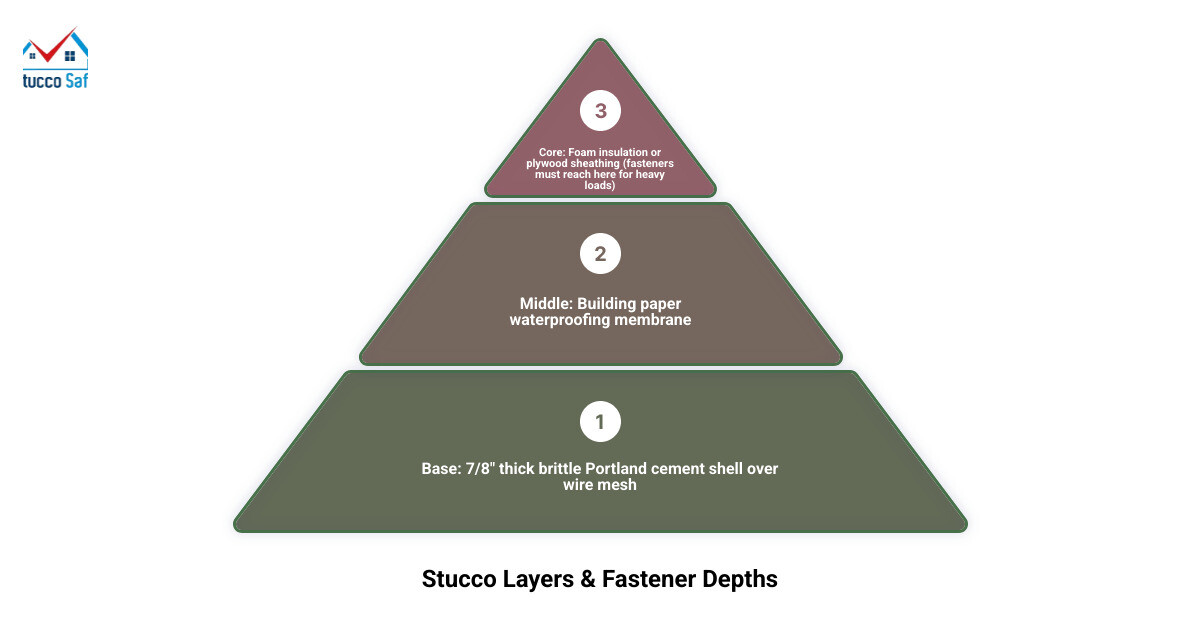
Stucco looks tough. But it’s actually a brittle shell — roughly 7/8 inches thick in a standard 3-coat system — applied over wire mesh and building paper. Drive the wrong fastener into it and you risk cracking the finish, letting water in, or pulling the whole mount out of the wall.
Water intrusion is the real danger here. Every hole you drill punches through the waterproofing membrane behind the stucco. Homes built between 1993 and 2006 already have a stucco failure rate estimated as high as 90%, often because of inadequate fastening and poor moisture management. One poorly sealed screw hole can quietly funnel water into your wall framing for years before you notice any visible damage.
This guide walks you through exactly how to choose and install the right fastener — without cracking your stucco or compromising your wall’s moisture barrier.
I’m Gabe Kesslick, an EDI Level 2 Certified Stucco Inspector and Building Envelope Forensic Inspector with over two decades of experience investigating stucco failures — many of which started with something as simple as an improperly installed screw for stucco. Understanding how fasteners interact with stucco’s layers is central to everything we do at Stucco Safe.
Screw for stucco terms to remember:
Understanding the Best Screw for Stucco and How They Work
When we talk about a screw for stucco, we aren’t just talking about any piece of hardware from the bottom of your toolbox. Stucco is a Portland cement-based plaster. It is hard, abrasive, and brittle. Because it’s applied over a wire mesh (lath) and a weather-resistive barrier (WRB), the physics of how a screw “grips” is entirely different than in wood or drywall.
Standard wood screws have thin shafts and shallow threads designed to compress wood fibers. If you try to use these in stucco, the abrasive cement will grind the threads down before they even bite, and the lack of a pilot hole will likely cause a spiderweb of cracks across your beautiful exterior.
| Feature | Standard Wood Screw | Dedicated Stucco/Masonry Screw |
|---|---|---|
| Material | Often Zinc or Black Phosphate | Stainless Steel or Dacromet Coated |
| Thread Design | Fine/Coarse for wood fibers | Deep, wide threads for cement grip |
| Corrosion Resistance | Low (will rust and streak) | High (designed for exterior wet use) |
| Point Style | Sharp for wood piercing | Often blunt or specialized for pilot holes |
In a traditional 3-coat system, the stucco is about 7/8-inch thick. In newer “one-coat” foam systems, the decorative layer might only be 1/4-inch thick over 1 to 1.5 inches of rigid foam. This distinction is vital because a standard anchor that works in 3-coat stucco will simply spin and fall out of a foam-based system. For more on these differences, check out our guide on stucco-anchor-types and stucco-screw-anchors.
Choosing the Right Screw for Stucco Projects
For most residential projects, you’ll encounter three main types of fasteners:
- Buildex Stucco Anchors: These are specifically engineered for stucco. They often come in 3/16-inch diameters and lengths around 1-1/2 inches. They are designed to “key” into the cement and the metal lath matrix.
- Tapcon Screws: These are the “blue screws” you see at the hardware store. They are excellent for heavy loads because they thread directly into the masonry. However, they require a very precise pilot hole; if the hole is too small, you’ll snap the head off the screw.
- Stucco-Tie (Helical Anchors): These are professional-grade anchors used primarily for repairing delaminated stucco (where the stucco has pulled away from the wall). Made from 304 or 316 stainless steel, these helical anchors provide a mechanical connection to the backup material without the need for expansion, which prevents further cracking.
When selecting your hardware, always look for stainless steel or dacromet coating. Stucco is a “reservoir system,” meaning it holds moisture. Non-coated screws will rust within a year, leading to ugly orange streaks on your walls and, eventually, structural failure of the fastener. For those interested in the broader context of how professionals share these technical standards, you can Learn more about technical community standards.
Sizing and Load Capacities for Stucco Fasteners
Weight matters. A common mistake is hanging a heavy hose reel or a large planter using a simple plastic plug.
- Light Duty (Under 10 lbs): Plastic expansion anchors with pan head sheet metal screws are usually sufficient for address numbers or small decorative items.
- Medium Duty (10–50 lbs): Buildex or similar stucco-specific anchors. For example, a 3/16″ x 1-1/2″ Buildex anchor can provide an ultimate shear load of up to 1169 lbs in pure shear—though we always recommend a high safety factor in real-world applications.
- Heavy Duty (50+ lbs): You must anchor into the structural members (studs) or the masonry backup. This requires 3-inch or longer screws to pass through the 1-inch stucco, the drainage plane, and into at least 1.5 inches of solid wood. If you are dealing with a hollow cavity and cannot find a stud, heavy-duty-toggle-bolts are the only reliable option, though they require larger holes that must be meticulously sealed.
Essential Tools and Step-by-Step Installation
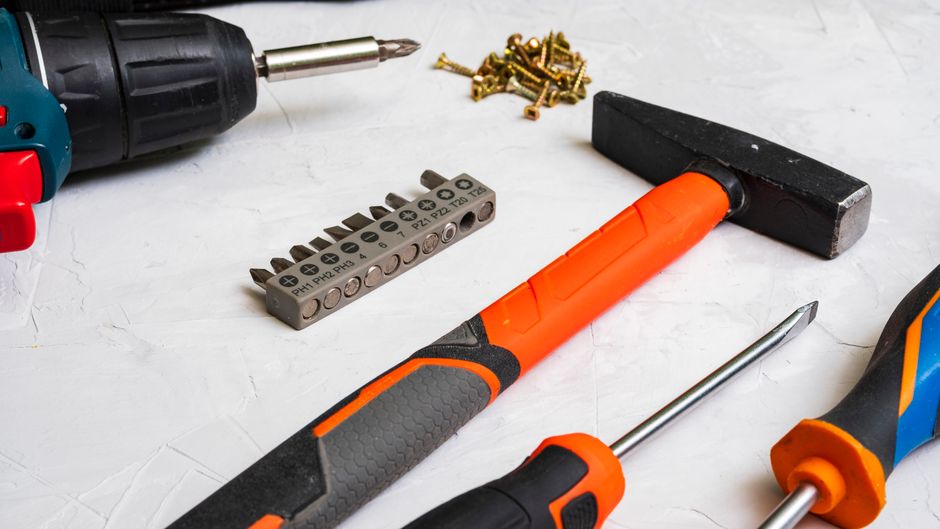
To install a screw for stucco correctly, you need the right kit. Using a standard metal drill bit on stucco is a recipe for frustration; the cement will dull the bit in seconds.
The Tool List:
- Power drill (A hammer drill is helpful but not strictly necessary for small holes in stucco)
- Carbide-tipped masonry bits
- Compressed air (or a straw to blow out dust)
- Painter’s tape
- ASTM C920 compliant silicone or polyurethane sealant
- The appropriate screw for stucco
Step 1: Mark and Prep
Mark your hole location. A pro tip is to place a piece of painter’s tape over the mark. This helps prevent the drill bit from “walking” or dancing across the textured surface, which can cause unsightly scratches.
Step 2: Drilling the Pilot Hole
Using a masonry bit slightly smaller than your screw or anchor, begin drilling at a slow speed with steady pressure. If you hit the metal lath (wire mesh), you might feel the drill bounce or catch. Don’t force it—maintain steady pressure until you’re through. For a deeper dive into this process, see our drill-into-stucco-complete-guide.
Step 3: Clear the Debris
Once the hole is drilled, use compressed air to clear out the dust. If dust remains in the hole, it can mix with your sealant or prevent the anchor from seating properly, compromising the “grip.”
Step 4: Seal and Install
This is the most important step for the health of your home. Before inserting the anchor or screw, inject a generous amount of sealant into the hole. As you drive the screw, the sealant will coat the threads and the back of the screw head, creating a “gasket” that prevents water from reaching the wood sheathing. Learn more about this in our guide on how-to-install-anchors-in-stucco.
Finding Studs and Managing Weight Limits for a Screw for Stucco
Finding a stud through an inch of cement and wire mesh is harder than finding one through drywall. Most electronic stud finders struggle with the density of stucco.
- The Tapping Method: Tap the wall with a rubber mallet or your knuckle. A “hollow” sound indicates the space between studs, while a “thud” or more solid sound usually indicates a stud.
- Measurement: Studs are typically 16 inches apart. If you can find one (often near a window or door frame), you can measure out to find the others.
- Magnetic Finders: High-strength magnets can sometimes locate the nails or staples used to attach the metal lath to the studs.
If you cannot find a stud and are mounting something heavy, you may need to use hollow-wall-anchors-how-to-use techniques, ensuring the anchor expands behind the lath for a mechanical hold.
Proper Technique to Prevent Cracking and Stripping
Cracking usually happens because of excess heat or vibration. This is why we recommend a regular drill over a hammer drill for the first 1/2 inch of the process. Once you are through the hard outer “crust,” you can engage the hammer function if you are drilling into a concrete block backup.
Over-tightening is the second biggest killer of stucco mounts. Because stucco is brittle, the threads in the cement can “strip” easily. Once they strip, the screw will just spin, and you’ve lost your structural integrity. Use a hand screwdriver for the final few turns to ensure a snug fit without crushing the stucco surface. If you do strip a hole, you’ll need to move the mount or use a larger anchor. Check our best-anchors-for-stucco guide for recovery options.
Waterproofing and Avoiding Common Installation Mistakes
At Stucco Safe, we see the aftermath of “simple” DIY projects every day. In Southeastern Pennsylvania and New Jersey, our climate involves heavy rains and freeze-thaw cycles. If water gets behind your stucco through an unsealed screw hole, it gets trapped. Stucco is a “reservoir,” meaning it absorbs moisture and then dries out. But if the water reaches the plywood sheathing, the wood will rot long before the stucco shows a single crack.
The 90% Failure Rate: This statistic for homes built between 1993 and 2006 isn’t a fluke. It’s largely due to missing drainage planes and poor sealant at “penetrations”—which is exactly what a screw hole is.
The Gasket Effect: When you apply sealant, don’t just put it on the outside. Inject it into the hole. You want the sealant to act as a gasket between the fixture you are mounting and the wall itself. This prevents water from “wicking” behind the fixture and sitting against the stucco. We recommend an ASTM C920 compliant sealant, which remains flexible over time. To understand how we share this professional knowledge with the wider community, Learn more about professional knowledge sharing. For a complete breakdown of these risks, see our stucco-anchoring-ultimate-guide.
Pros, Cons, and Alternatives to Stucco Fasteners
Sometimes, the best screw for stucco is no screw at all.
Alternatives to Drilling:
- Adhesive Hooks: For very light items like holiday wreaths or string lights, outdoor-rated adhesive hooks are great. They require a perfectly clean surface (cleaned with rubbing alcohol), but they involve zero risk of water intrusion.
- Construction Adhesive: For mounting small decorative plaques, a high-quality polyurethane construction adhesive can bond directly to the stucco.
- Mortar Embedding: If you are mounting a junction box, some pros prefer to use a thin-set mortar patch to “glue” the box to the wall, adding a few protrusions to the back of the box for the mortar to grab.
Pros of Screws:
- Highest weight capacity.
- Permanent and secure.
- Reliable in all weather conditions if sealed.
Cons of Screws:
- Permanent damage to the WRB (waterproofing).
- Risk of cracking during installation.
- Difficult to “undo” without leaving a visible patch.
If you are dealing with loose screws from a previous installation, you might need to look into re-anchoring-in-stucco-a-guide-to-repairing-loose-screws to fix the issue properly.
Frequently Asked Questions about Stucco Mounting
Can I use a regular drill for stucco?
Yes, a regular drill is actually preferred for the initial pilot hole to prevent the excessive vibration that causes cracking. Use a sharp masonry bit. If your stucco has a concrete block (CMU) backup, you will eventually need a hammer drill to get into the block, but for the stucco layer itself, a standard drill is safer. Be careful of the wire mesh; it can catch the bit and cause the drill to kick.
How do I mount a light plastic box on exterior stucco?
For items like coax junctions or small electrical boxes:
- Clean the area.
- Use small plastic expansion anchors.
- Inject silicone into the holes.
- Use stainless steel pan-head screws.
- Apply a bead of sealant around the top and sides of the box where it meets the stucco, leaving the bottom open so any moisture that does get in can drain out.
What is the best way to waterproof a hole in stucco?
The “inject and coat” method is best. Fill the hole with sealant, then put a small dab on the back of the screw head. Once the screw is tight, wipe away the excess. If you are filling a hole you no longer use, use a color-matched caulk or a small amount of stucco patch compound to ensure the drainage plane is protected.
Conclusion
Mounting items on your home shouldn’t be a source of anxiety, but it does require respect for the material. Stucco is a complex system designed to keep your home dry, and every screw for stucco you install is a potential breach in that defense. By using the right tools, choosing corrosion-resistant hardware, and never skipping the sealant, you can enjoy your outdoor fixtures without worrying about hidden rot.
If you’re worried about existing penetrations or suspect your stucco might be failing, Stucco Safe is here to help. We provide forensic stucco testing and certified inspections across Southeastern Pennsylvania, New Jersey, and Delaware. Whether you’re in West Chester, Cherry Hill, or Wilmington, our team uses advanced moisture detection to ensure your home’s envelope is secure. For more information on maintaining your home’s exterior, visit our stucco-wall-anchors-complete-guide.