

Secure Your Stucco: A Roundup of Reliable Anchors
Why Your Stucco Wall Needs a Special Kind of Anchor
Anchor bolts for stucco are specialized fasteners designed to securely attach items to stucco walls without causing damage. Here are the main types:
- Light-duty (0-25 lbs): Plastic or nylon sleeve anchors for decorations, house numbers
- Medium-duty (25-75 lbs): Concrete screws (like Tapcon) for shelving, mailboxes
- Heavy-duty (75+ lbs): Sleeve or wedge anchors for awnings, railings, structural items
Stucco presents unique challenges regular wall anchors can’t handle. This cement-based plaster creates a hard, brittle surface that will crack if you use standard drywall anchors. Its composition—cement, sand, and water over metal lath—requires fasteners that distribute loads evenly.
Stucco anchors are specifically designed to prevent damage to stucco surfaces and are made of materials like plastic, nylon, or hardened steel. Unlike ordinary screws, stucco’s concrete-like hardness demands specialized threading and installation techniques.
Improper anchoring can lead to unsightly cracks, water intrusion, and expensive repairs. A home can even show no external signs of failure while having catastrophic substrate damage lurking beneath the surface.
I’m Gabe Kesslick, an EDI Level 2 Certified Stucco Inspector with over 20 years of experience in leak detection and stucco systems. In my career, I’ve seen countless cases where improper anchor bolts for stucco installation led to wall damage and water intrusion.
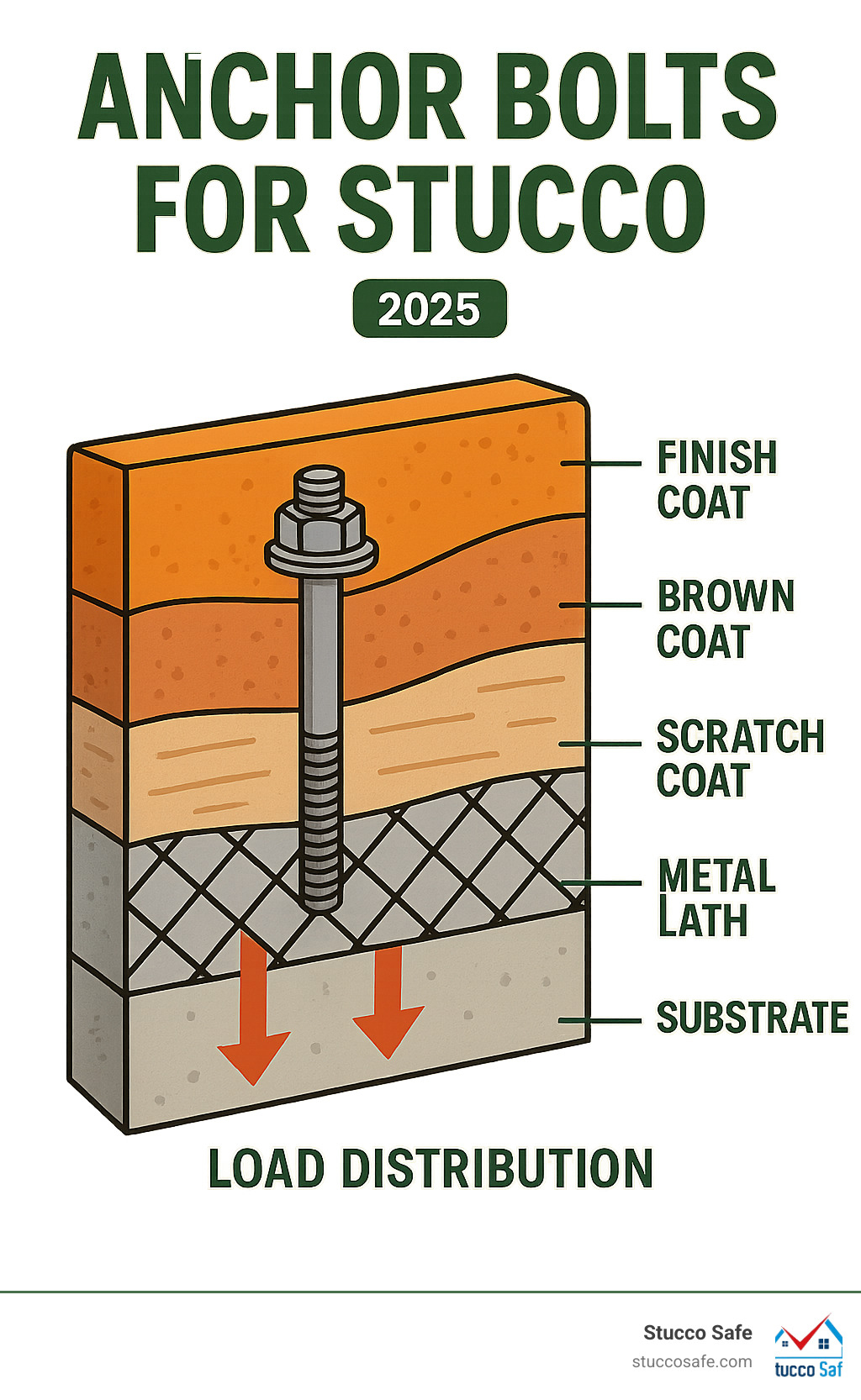
A Roundup of the Best Anchors for Stucco
Choosing the right anchor bolts for stucco is crucial. Stucco is a tough but brittle cement-based finish that requires fasteners that won’t cause it to chip or crack. We break down anchors into three weight categories to make selection simple.
- Light-duty anchors handle up to 25 pounds for house numbers and decorations.
- Medium-duty options tackle 25-75 pounds for mailboxes and lightweight shelving.
- Heavy-duty anchors support 75+ pounds for awnings and railings.
Always consider your item’s total weight first to avoid overloading an anchor. You can find quality options at hardware stores like The Home Depot or get more guidance from our comprehensive guide on the Best Anchors for Stucco.
Light-Duty: Plastic & Nylon Sleeve Anchors
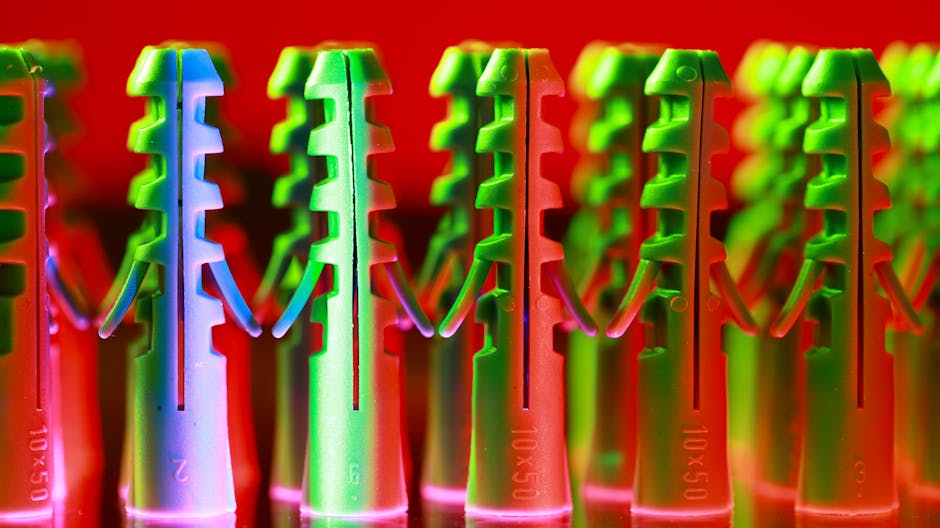
For light items like house numbers or small decorations, plastic and nylon sleeve anchors are ideal. They feature a ribbed design that expands as a screw is driven in, creating a snug fit inside a pre-drilled hole. These anchors distribute weight evenly, preventing stress and cracks.
The expansion anchor design provides a firm grip for lightweight items without being aggressive. They are known for easy installation, are cost-effective, and are typically made from weather-resistant materials. Their main limitation is a low weight capacity (under 25 pounds), making them unsuitable for structural applications.
Medium-Duty: Concrete & Masonry Screws
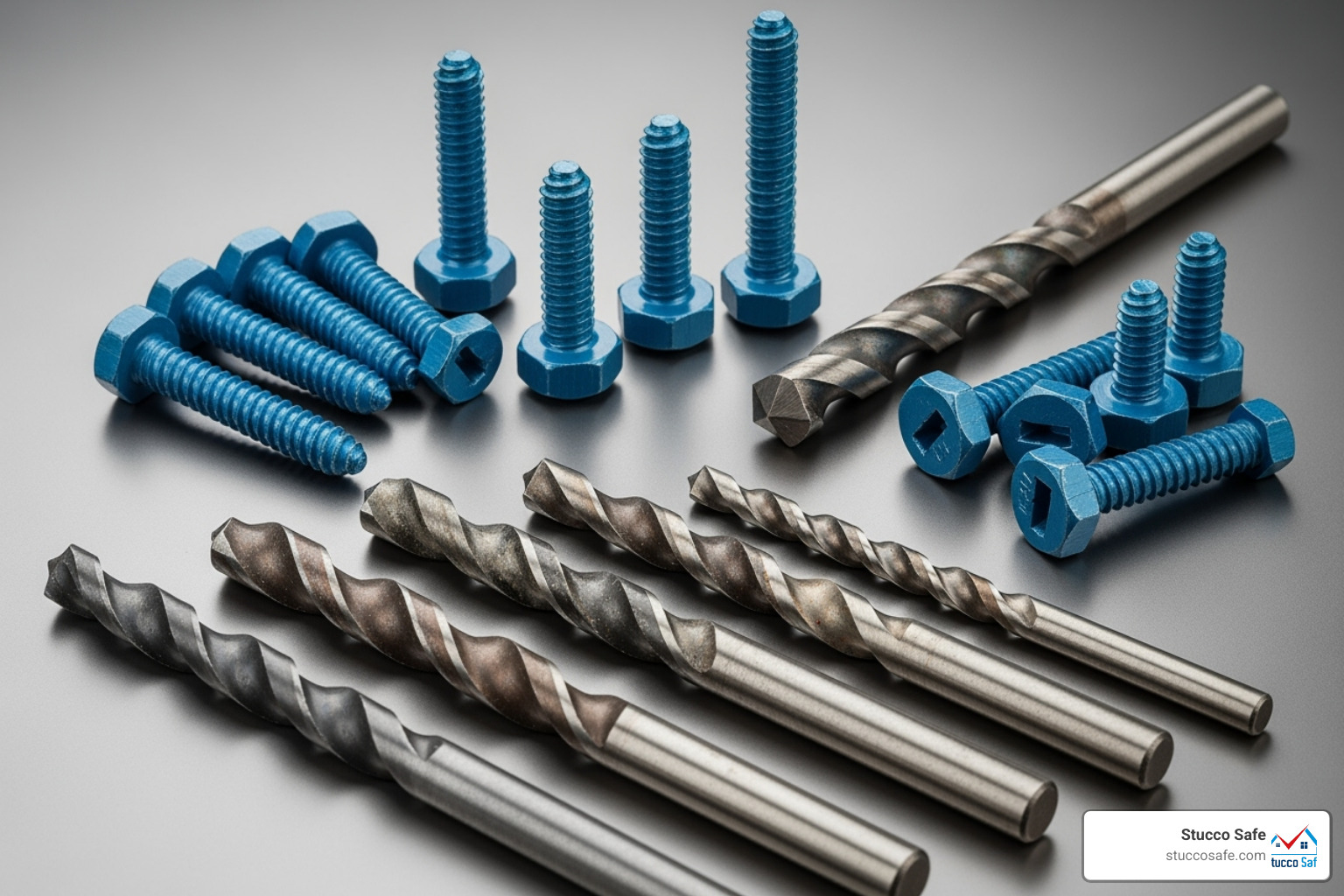
For projects needing more strength (25-75 lbs), like shelving, hose reels, or a mailbox, use concrete and masonry screws. These hardened steel fasteners are built for the job. Often blue, they have a corrosion-resistant coating and aggressive self-tapping threads that cut into masonry, creating a secure connection without a separate sleeve.
These versatile medium-weight fasteners work well in concrete, brick, and block substrates under stucco. For standard 3-coat stucco, a 1½” screw is often sufficient. For systems with foam insulation, a longer screw (e.g., 2⅛”) is needed to reach the underlying structure. Always measure your stucco thickness first. Avoid overtightening, which can strip threads or crack stucco. Use the correct masonry bit for the pilot hole to ensure a strong connection. For more information, explore our guide on Stucco Screw Anchors.
Heavy-Duty Anchor Bolts for Stucco: Sleeve & Wedge Anchors
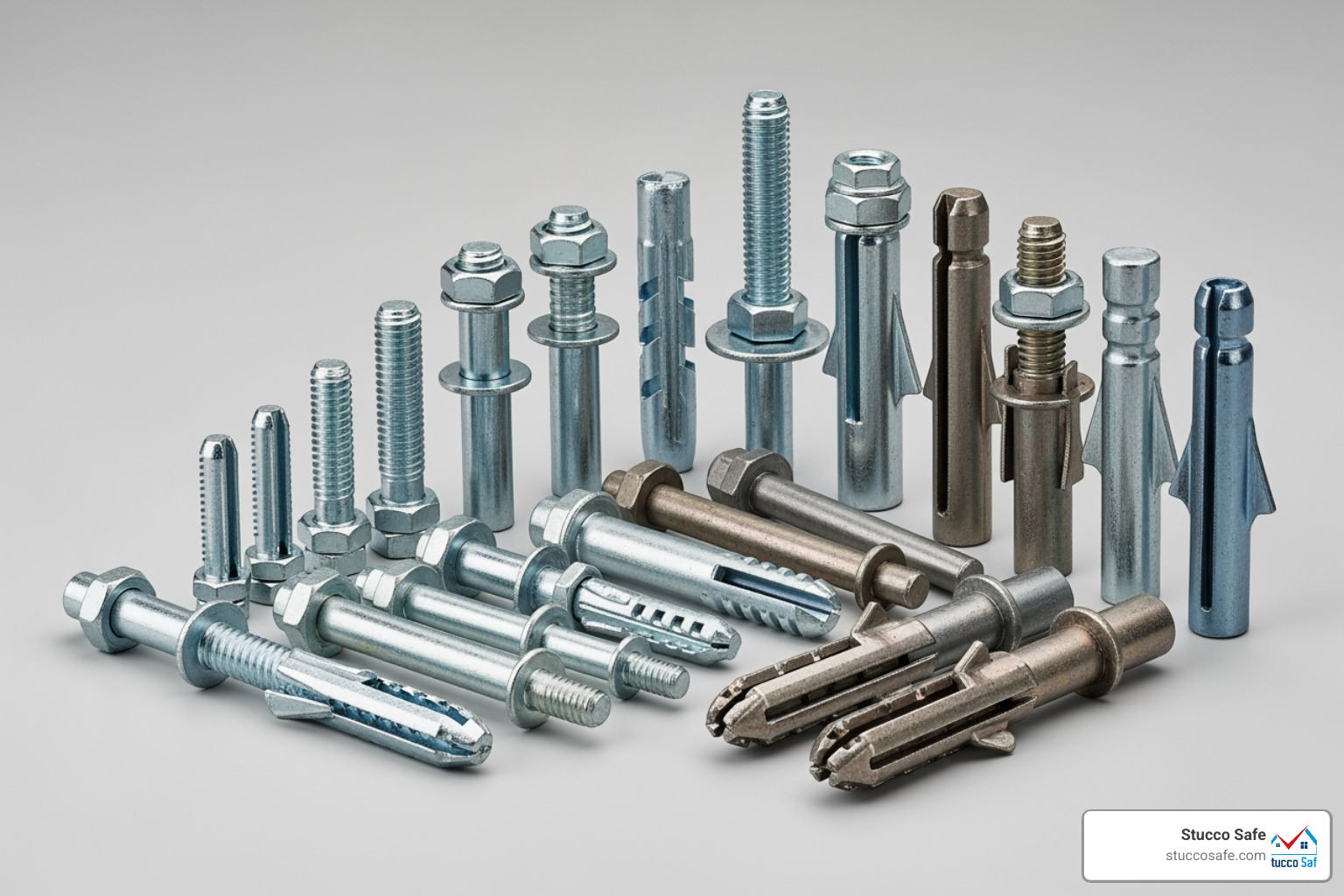
For heavy items like awnings, railings, or structural attachments, you need sleeve anchors or wedge anchors. They provide maximum holding power for critical applications.
Sleeve anchors consist of a threaded bolt, nut, washer, and a metal sleeve that expands as you tighten the nut, creating a strong hold for loads from 75-150 pounds. Wedge anchors are for the heaviest loads (150+ lbs), using a wedge that expands a clip to lock against the masonry.
Sleeve anchors expand along the hole’s length, while wedge anchors use a deeper wedging action, ideal for solid concrete. Both offer superior holding power and are made from corrosion-resistant metals. The trade-off is complexity; they require precise drilling and installation into a solid substrate like concrete or block, not just the stucco layer. For more guidance, resources like this guide on hanging heavy items can help.
The Ultimate Guide to Installing Anchor Bolts for Stucco
Installing anchor bolts for stucco can be straightforward with the right approach. The key is to work carefully and respect the brittle nature of stucco, as rushing can lead to cracks. Understanding the process, which involves preparation, patience, and safety, leads to confident installation.
Tools and Materials You’ll Need
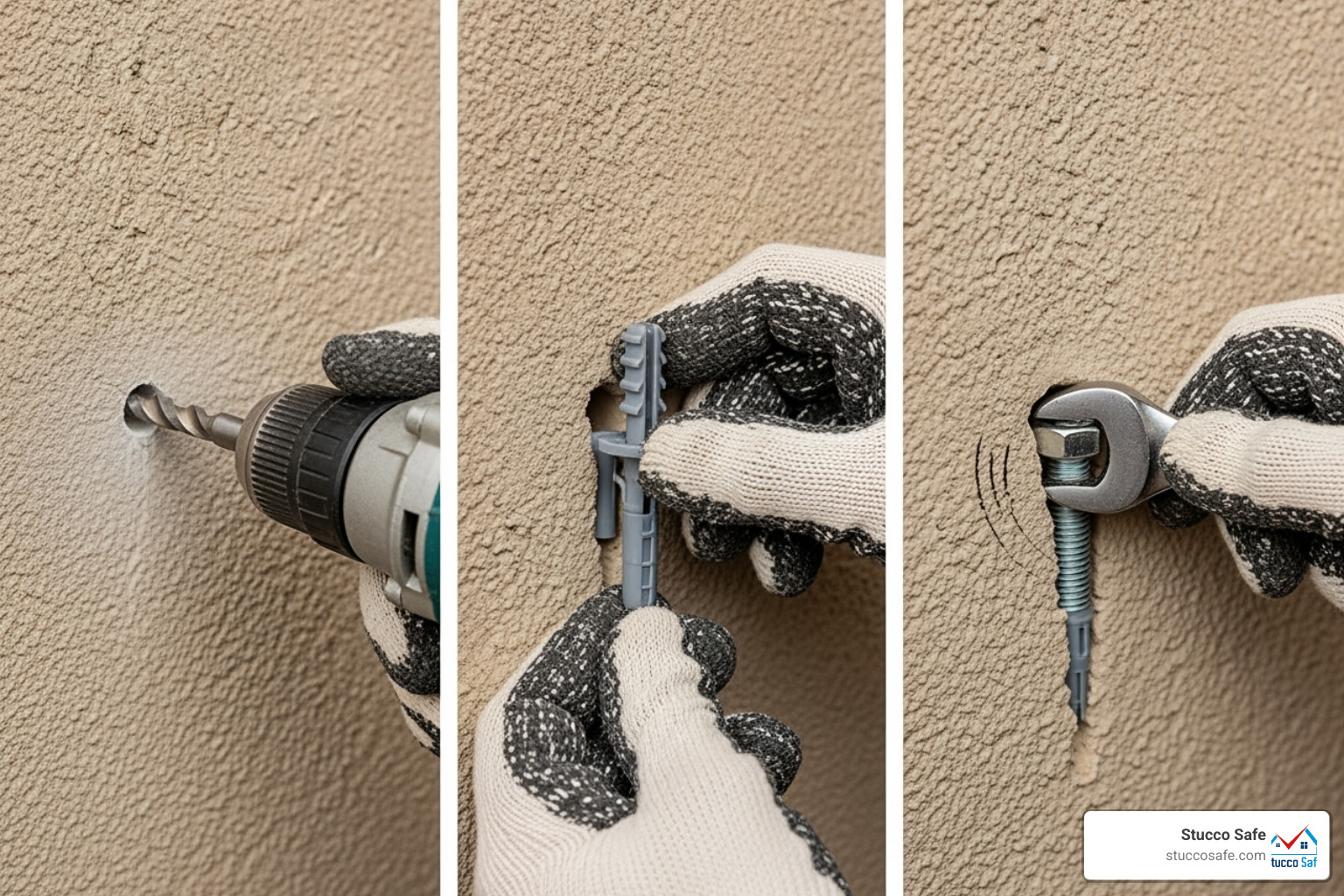
Having the right tools is essential for a safe and successful installation. You will need a hammer drill, as a regular drill will struggle with stucco’s hardness. Use masonry drill bits that exactly match the anchor’s specifications. Safety goggles and gloves are non-negotiable. Other essential tools include measuring tools (tape measure, pencil, level), a vacuum or brush for cleaning holes, and a stud finder for heavy items. Finally, you’ll need your chosen anchor bolts for stucco, screwdrivers, and a caulking gun with high-quality exterior sealant (ASTM C920 compliant). Our guide on Masonry Drill Bit for Concrete can help you select the right bit.
Step-by-Step Installation Process
1. Prepare and Mark: Clean the stucco surface. Use a tape measure and level to mark anchor locations precisely. For heavy items, use a stud finder to locate solid backing.
2. Drill the Pilot Hole: Attach the correct masonry bit to your hammer drill. Drill slowly with steady pressure to the depth specified by the anchor manufacturer. Avoid pushing too hard to prevent cracks. For more tips, see our guide on How to Drill into Stucco.
3. Clean the Hole: Thoroughly remove all dust and debris from the hole using a vacuum, compressed air, or a brush. A clean hole is critical for the anchor to grip properly.
4. Insert the Anchor: Carefully insert the anchor into the clean hole. It should fit snugly. Plastic anchors may need a gentle tap with a hammer to sit flush.
5. Set the Anchor: Tighten the anchor according to the manufacturer’s instructions. For sleeve and wedge anchors, tighten the nut gradually to expand the anchor and create a secure hold.
6. Fasten the Item: Mount your item and tighten the fasteners until secure. Do not overtighten, as this can damage the anchor, strip threads, or crack the stucco.
7. Seal the Penetration: Apply a bead of high-quality exterior sealant around the base of the mounted item. This creates a watertight barrier to prevent moisture intrusion, which is crucial for protecting your wall system.
Best Practices to Avoid Damaging Your Stucco
Installing anchor bolts for stucco requires care. While durable, stucco is brittle and can crack easily if not handled properly. Following best practices is the key to a successful installation and avoiding costly repairs. A stucco wall is a complex system protecting your home, and poor anchoring can compromise its integrity. Respecting these principles is vital for maintaining a healthy Stucco House.
Choosing the Right Size and Type of Anchor Bolts for Stucco
Selecting the right anchor bolts for stucco is critical to prevent a failed mount, cracks, and water damage. Consider the total loaded weight, not just the item’s empty weight, and add a safety margin. Stucco thickness varies; systems with foam insulation are thicker and require longer anchors to reach the solid substrate. The substrate material determines the best anchor type. Wood studs work for medium-weight items, while concrete block is best for heavy-duty anchors. Use the exact anchor length, diameter, and drill bit size specified by the manufacturer to ensure a secure fit without damaging the stucco.
Preventing Cracks and Water Damage
Stucco cracks allow water to enter your home’s structure, so proper installation is vital. Do not overtighten, as the extra torque can create stress fractures. Always drill a pilot hole using the exact drill bit size specified by the anchor manufacturer. Seal every penetration with a high-quality, exterior-grade sealant (ASTM C920 compliant) to create a watertight barrier. For large items like awnings, proper flashing may be required by building codes. Check local building code requirements before starting.
Anchor Maintenance and Replacement
Even well-installed anchor bolts for stucco require maintenance. Inspect anchors regularly for rust stains or any movement in the mounted item, which indicates loosening. Address loosening immediately to prevent further damage. A loose anchor might just need retightening. Remove old anchors carefully to avoid cracking the stucco, and patch the hole properly to prevent water intrusion. For significant repairs or if you suspect broader wall issues, contact a qualified Stucco Repair Near Me service.
Frequently Asked Questions about Stucco Anchors
Homeowners often have questions about safely hanging items on stucco. While sturdy, stucco has unique properties that can be confusing. Here are answers to the most common questions about anchor bolts for stucco.
Can I use regular drywall anchors in stucco?
No, absolutely not. Regular drywall anchors should never be used in stucco. Drywall anchors are designed for soft, hollow gypsum board. Stucco is a hard, brittle, solid material like concrete. Drywall anchors cannot grip it properly and will likely crack the stucco upon insertion. Always use masonry-specific anchors engineered for stucco’s concrete-like properties to avoid damage.
How much weight can a stucco anchor hold?
The weight an anchor can hold depends on several factors. Anchor type and size are primary: light-duty plastic anchors hold up to 25 pounds, medium-duty concrete screws handle 25 to 75 pounds, and heavy-duty sleeve or wedge anchors support 75+ pounds. However, installation quality and the substrate material are also critical. A poorly installed anchor or one in a weak substrate will fail. Always check the manufacturer’s specifications and choose an anchor rated higher than your expected load for a margin of safety.
Do I need to drill into a stud behind the stucco?
The short answer is: for heavy items, yes. For lighter items, it’s not always necessary. For anything with significant weight (awnings, railings), the anchor must be secured into solid structural support like a wood stud or concrete block. Locating studs through stucco can be done with a masonry-specific stud finder. For lightweight items, a quality stucco anchor can often provide enough support by gripping the stucco and its underlying sheathing, distributing the weight effectively. When in doubt, anchor into a stud for security and peace of mind.
Conclusion: Anchor with Confidence
You now have the knowledge to confidently install anchor bolts for stucco. The keys are matching the anchor to the weight, drilling precisely, and sealing all penetrations to prevent water intrusion. Choosing the right anchor preserves your stucco’s integrity, preventing cracks and water damage.
However, the condition of your stucco wall is as important as the anchor. A strong anchor will fail in a compromised wall. Hidden moisture can weaken the substrate, causing soft spots or structural damage not visible from the outside.
This is where a professional eye helps. At Stucco Safe, our EDI Level 2 Certified inspectors use forensic testing to find hidden problems before they become costly disasters. A professional Stucco Inspection identifies moisture intrusion and substrate issues that could compromise an anchoring project. The cost ($495-$1595+) is a small investment compared to potential repairs.
Before drilling, consider a professional evaluation, especially on older homes or if you see warning signs. We serve homeowners in Southeastern Pennsylvania, New Jersey, and Delaware.
For more details, see our guide on the Best Anchors for Stucco. With proper preparation and confidence in your wall’s condition, you can achieve a secure and lasting installation.