
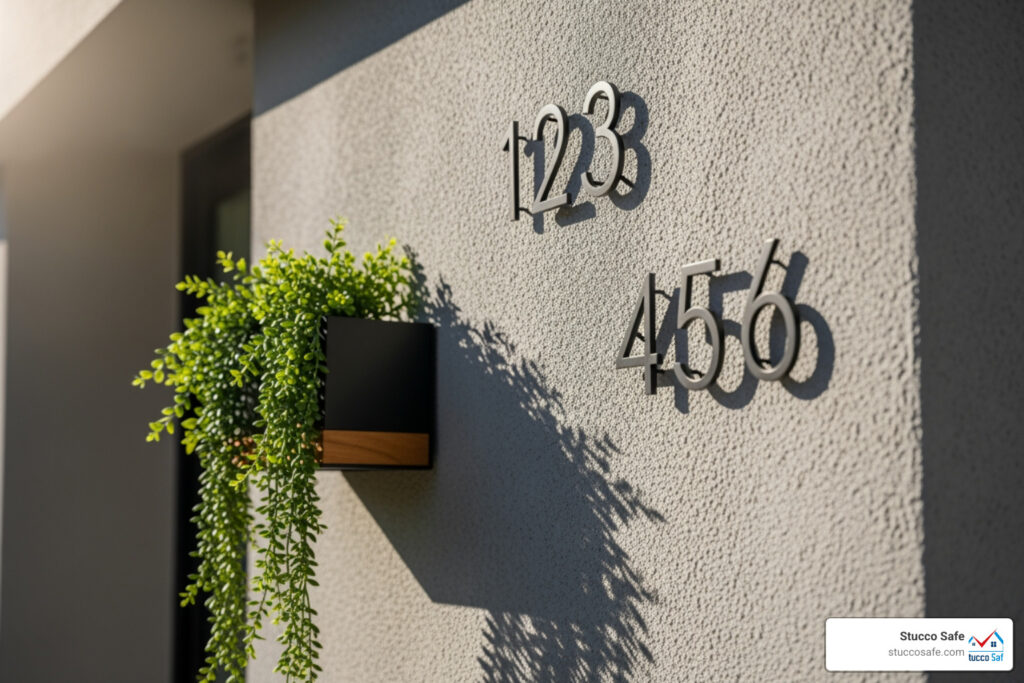
Anchors into Stucco: Safe 2025 Guide
Why Getting Anchors into Stucco Right Matters
Anchors into stucco require special care because stucco is a brittle, cement-based material that cracks easily when drilled incorrectly. Unlike drywall, stucco is a “reservoir system” that absorbs water. Improper drilling can create pathways for moisture intrusion, leading to costly hidden damage behind your walls.
Quick Answer: Installing Anchors into Stucco
- Use the right drill bit – Always use a sharp masonry bit with a carbide or diamond tip.
- Choose the correct anchor – Plastic sleeve anchors for light items, masonry screws for medium loads, and sleeve/wedge anchors for heavy items.
- Apply painter’s tape – Place tape over the drilling area to prevent chipping.
- Drill slowly – Use steady pressure at a perpendicular angle; avoid hammer drill mode on the stucco surface.
- Seal the hole – Apply waterproof silicone caulk before inserting the anchor to prevent water intrusion.
- Tap gently – Insert the anchor flush with the wall using light hammer taps.
Common mistakes to avoid:
- Using standard wood screws without anchors.
- Drilling too fast or with excessive pressure.
- Skipping the waterproof sealant step.
- Overtightening screws, which can crack the stucco.
The difference between success and failure is understanding that stucco isn’t strong enough to hold fasteners on its own. Many homeowners learn this when a mailbox pulls away from the wall. Worse, drilling without proper sealing can allow water to seep behind the facade, damaging wood sheathing and framing—problems that remain invisible until they become expensive.
I’m Gabe Kesslick, an EDI Level 2 Certified Stucco Inspector with over 20 years of experience. I’ve seen how improper installation of anchors into stucco leads to significant moisture and structural damage. This guide will show you how to mount items securely while protecting your home’s exterior.

Why Stucco Demands Special Anchors
Stucco is a popular choice for homes in Southeastern Pennsylvania, New Jersey, and Delaware, but it isn’t like other wall surfaces. You can’t just use any screw to hang items on it.
The reason lies in stucco’s composition. It’s a cement plaster made from cement, sand, and lime. While tough, it’s also brittle and prone to cracking when you force a standard screw into it or drill improperly.
An even bigger concern is water. Stucco is a “reservoir system”—it’s designed to absorb moisture and then dry out. A poorly drilled and unsealed hole becomes a direct path for water to get behind the stucco and into the wood sheathing and framing. This can lead to rot, mold, and structural damage.
This is why standard screws fail in stucco. They don’t distribute weight properly and create entry points for water. Specialized Stucco Anchor Types are engineered to spread the load and provide a secure, weatherproof installation.
Understanding Your Stucco Wall
Before drilling, it’s important to know what’s behind your stucco.
Traditional stucco (hard-coat stucco) is a multi-layer system of cement, sand, and lime over a metal lath and weather-resistant barrier. It’s rigid and typically three-quarters of an inch thick or more.
EIFS (Exterior Insulation and Finish Systems), or synthetic stucco, looks similar but often includes a foam insulation board. EIFS requires special care, and we recommend consulting a professional before drilling. This guide focuses on traditional stucco.
The underlying substrate is also critical. Most wood-framed homes have wood sheathing (plywood or OSB) over wood studs. Some construction may have concrete block (CMU) behind the stucco. A stud finder can help locate studs, but the metal lath in stucco can sometimes interfere with its readings.
The Importance of the Right Anchor
When we install anchors into stucco, we’re protecting the home’s exterior. The right anchor provides even load distribution, spreading the weight across a wider area to prevent cracking. It also prevents cracks during installation by minimizing stress on the brittle material. Finally, quality anchors offer weather resistance to prevent rust and corrosion, ensuring a secure mounting that lasts. For a comprehensive look at which anchors work best, see our guide on the Best Anchors for Stucco.
Choosing the Right Anchor for Your Project
Selecting the correct anchor is critical. The type of anchors into stucco you need depends on the item’s weight and the wall’s composition. Using the wrong anchor risks the item falling and can crack your stucco or create pathways for water intrusion. The Spruce offers excellent tips on hanging items on stucco walls.
Here’s a quick overview of common anchor types for stucco:
| Anchor Type | Item Weight | Ease of Installation | Typical Use Cases |
|---|---|---|---|
| Plastic or Nylon Sleeve | Light (up to 25 lbs) | Easy | House numbers, small signs, lightweight decor |
| Masonry Screws (e.g., Tapcon) | Medium (25-75 lbs) | Moderate | Mailboxes, small light fixtures, hose reels |
| Sleeve / Wedge Anchors | Heavy (75+ lbs) | More Complex, Professional | Railings, awnings, structural attachments, large planters |
Plastic or Nylon Sleeve Anchors
These are the go-to for lightweight items like house numbers or small decorative plaques. They work on an expansion principle: as you drive a screw in, the sleeve expands within the pre-drilled hole for a snug fit. These anchors distribute the load evenly, preventing stress cracks. They are easy to install and perfect for quick DIY projects. The included screws work well because they don’t contact the stucco directly. Learn more in our Stucco Screw Anchors guide.
Masonry Screws
For medium-weight items like a mailbox or hose reel, masonry screws provide more holding power. These specialized screws have sharp, self-tapping threads that cut into the stucco and grip the underlying substrate. Always choose screws with a corrosion-resistant coating, which is essential in the humid climate of Southeastern Pennsylvania, New Jersey, and Delaware. This prevents rust stains on your stucco. Find out more in our Anchor Screw Into Stucco article.
Heavy-Duty Mechanical Anchors (Sleeve & Wedge)
For heavy items like railings or awnings that require structural support, you need heavy-duty mechanical anchors like sleeve or wedge anchors. These steel anchors provide exceptional holding power by expanding deep into the substrate behind the stucco, such as concrete block or wood framing.
Installing these heavy-duty anchors into stucco requires more expertise. The stakes are higher, as incorrect installation can cause significant damage. If you’re uncertain about the load, wall composition, or your skill level, this is the time to call a professional. The cost of a professional is far less than repairing water or structural damage.
Step-by-Step Guide to Installing Anchors into Stucco
Now that you know which anchor to use, let’s walk through the installation. With patience and the right technique, you can mount items securely without damaging your stucco.

First, gather your tools. You’ll need a power drill, a sharp masonry drill bit matching your anchor’s diameter, painter’s tape, a measuring tape and pencil, a level, and exterior-grade waterproof silicone caulk with a caulk gun. Don’t forget safety glasses. A stud finder is also handy for locating support behind the stucco. For help choosing a bit, see our guide on the Best Drill Bit for Stucco.
Step 1: Select and Mark the Location
Getting the location right is key. Use a stud finder to locate solid backing, especially for heavier items. Before marking, check for hidden utilities like electrical wires or plumbing. If you’re not certain what’s behind the wall, call a professional.
Once the area is confirmed safe, measure and mark your drill spots with a pencil. Use a level to ensure your marks are perfectly aligned.
Step 2: Drill the Pilot Hole
Proper technique here prevents cracks.

Place painter’s tape over your mark to prevent the stucco from chipping. Using your sharp masonry bit, position the drill perpendicular to the wall and begin drilling slowly with steady pressure. Let the drill bit do the work. Rushing or pushing too hard can cause cracks.
Important: Avoid using the hammer function on your drill when penetrating the stucco layer, as the hammering action can crack it. If you hit a concrete block behind the stucco, you can then switch to hammer mode. Drill to the correct depth for your anchor. For more details, visit our guide on How to Drill Into Stucco.
Step 3: Clean, Seal, and Insert the Anchor
This final step is critical for preventing water damage.
Clean any dust or debris from the hole using a vacuum or compressed air. Now, for the most important part: sealing. Inject a generous amount of exterior-grade silicone caulk into the hole, filling it completely. This creates a waterproof barrier.

With the hole filled, gently tap the anchor into place with a hammer until it sits flush with the stucco. Wipe away any excess caulk that squeezes out.
Finally, drive your screw into the anchor. Tighten it firmly, but do not overtighten, as this can crack the stucco or strip the anchor. Your item should be secure, and your stucco protected.
Maintenance, Removal, and When to Call a Professional
Proper installation is the first step. Over time, anchors into stucco require maintenance to ensure they remain secure and don’t damage your home’s exterior.
Maintaining and Removing Stucco Anchors
Periodically inspect your installed anchors. Look for signs of rust on metal parts or any signs of loosening. A wobbly mailbox or loose house numbers should be addressed immediately to prevent the problem from worsening. Also, watch for new cracks forming around the anchor, as these can become pathways for moisture.
When removing anchors, be patient. Forcibly yanking an anchor will damage the stucco. First, remove the screw, then gently wiggle the anchor while pulling it out. If a plastic anchor is stuck, it’s often better to cut it flush with a utility knife than to risk damaging the wall.
After removing an anchor, the hole must be sealed. Clean out any debris, then fill the hole completely with exterior-grade silicone caulk. Once cured, you can patch the area with a stucco patching compound to match the texture and then paint it.
When to Hire a Professional for Anchors into Stucco
While many projects are DIY-friendly, some situations require a professional.
Heavy or structural loads are at the top of the list. If you’re mounting an awning, a safety handrail, or anything over 75 pounds, bring in a professional. These applications require specialized anchors secured into the structural framing, and getting it wrong is a safety concern.
Uncertainty about wall composition is another reason to seek help. Traditional stucco and EIFS (synthetic stucco) require different approaches, and the substrate behind them (wood, concrete block, etc.) affects anchor choice. A professional can identify your wall system and recommend the correct solution.
If you see signs of pre-existing damage like staining, bulging, or cracks, do not drill. These are red flags indicating an existing problem with your stucco system. Drilling into a compromised area will only make it worse.
If you’re unsure about your wall’s condition, a professional inspection from a certified specialist like Stucco Safe can identify underlying moisture issues before you drill, preventing costly damage. Our stucco inspections typically cost between $495 and $1595, a worthwhile investment compared to the tens of thousands of dollars it can cost to repair undetected moisture damage.
We serve homeowners throughout Southeastern Pennsylvania, New Jersey, and Delaware. Our EDI-certified inspectors can help you protect your home’s exterior before problems develop. Sometimes the best DIY decision is knowing when to call an expert.
Frequently Asked Questions about Anchoring into Stucco
How do you drill into stucco without it cracking?
The key to drilling anchors into stucco without cracking it involves using the right tools and techniques.
First, always use a sharp masonry drill bit with a carbide or diamond tip. Apply painter’s tape over the drill site to prevent chipping. When drilling, use a slow, steady speed with gentle, consistent pressure. Crucially, avoid using your drill’s hammer function on the stucco surface itself. The percussive action can cause cracks. If you hit a concrete block substrate, you can then engage the hammer function to get through it. For more guidance, see our article on How to Drill Into Stucco.
What are the best screws to use in stucco?
This depends on the application. For driving screws directly into stucco for medium-weight items, use corrosion-resistant masonry screws. Their self-tapping threads are designed to grip the dense material, and the coating is vital for preventing rust in climates like ours in Southeastern Pennsylvania.
If you are using plastic screw anchors for lighter items, the screws included in the package are usually sufficient. They don’t contact the stucco directly; instead, they expand the anchor, which grips the wall and distributes the load.
Can you hang heavy items on a stucco wall?
Yes, but it must be done correctly. Stucco itself is not strong enough to support heavy loads.
For items over 75 pounds (railings, awnings, etc.), you must use heavy-duty anchors like sleeve or wedge anchors. These anchors must extend through the stucco and fasten securely into a structural element behind it, like a wood stud or concrete block. The anchor’s weight rating must significantly exceed the item’s weight for a safe margin.
The real question is what’s behind your stucco and if it’s strong enough. If you’re uncertain about the substrate or the proper anchor to use, I strongly recommend consulting a professional. At Stucco Safe, we often see damage from improperly mounted heavy items. A professional inspection can identify the underlying structure and any pre-existing issues before you drill. Our inspections range from $495 to $1595, a small price compared to potential repairs for structural failure or water damage.
Conclusion
Successfully installing anchors into stucco requires a thoughtful approach. Understanding stucco’s brittle nature and its need for proper waterproofing is key to success. Choosing the right anchor for the job, from a simple plastic sleeve to a heavy-duty wedge anchor, is the difference between a secure installation and a costly repair.
The best results come from combining the right materials with proper technique: drilling slowly with a masonry bit, using painter’s tape to prevent chipping, and sealing every hole with waterproof caulk. These steps protect your home from moisture intrusion and keep your items securely mounted.
Don’t hesitate to call for professional help for heavy loads, uncertainty about your wall’s composition, or signs of pre-existing damage. At Stucco Safe, we’ve seen how small moisture problems can become major issues. Our inspections, typically costing between $495 and $1595, are a wise investment to protect your home’s integrity.
With this knowledge, you can tackle your next project with confidence, improving your home’s exterior while keeping it safe and sound. For a complete overview of your options, explore our Stucco Wall Anchors Complete Guide.