

Bit Masonry: Master Drilling Like a Pro 2025
Why Choosing the Right Masonry Drill Bit Matters
Bit masonry refers to the specialized drill bits designed for hard materials like concrete, brick, and stone. Choosing the right one prevents frustration, saves money, and ensures your anchors hold properly. The wrong bit can overheat, break, or create oversized holes that compromise fastener strength.
Quick Guide to Choosing Masonry Drill Bits:
- Light-Duty Projects (small anchors): Use standard straight-shank carbide-tipped bits.
- Medium-Duty Work (shelves, electrical boxes): Choose hex-shank or SDS-Plus bits with 2-cutter heads.
- Heavy-Duty Applications (large anchors, rebar): Select SDS-Plus or SDS-Max bits with 4-cutter heads.
- Match the Diameter: Use bits that match your anchor specifications exactly.
- Consider the Material: Harder concrete requires more aggressive bits than softer brick.
The confusion around bit masonry stems from the variety of shanks, tips, and lengths available. Without knowing what these features mean for your project, it’s easy to waste money on the wrong tool.
The stakes are higher than you might think. Using an incorrect bit on exterior materials like stucco can create pathways for moisture intrusion, leading to hidden water damage and costly repairs.
I’m Gabe Kesslick, and I’ve inspected building envelopes since 2001. Through my work with Stucco Safe, I’ve seen countless moisture problems caused by improper drilling. I help homeowners understand how proper techniques protect their homes from water intrusion.
Understanding Bit Masonry: The Fundamentals
Bit masonry tools are specialized for drilling into tough materials like concrete and brick. Unlike standard bits, they combine rotation with percussion to get the job done.
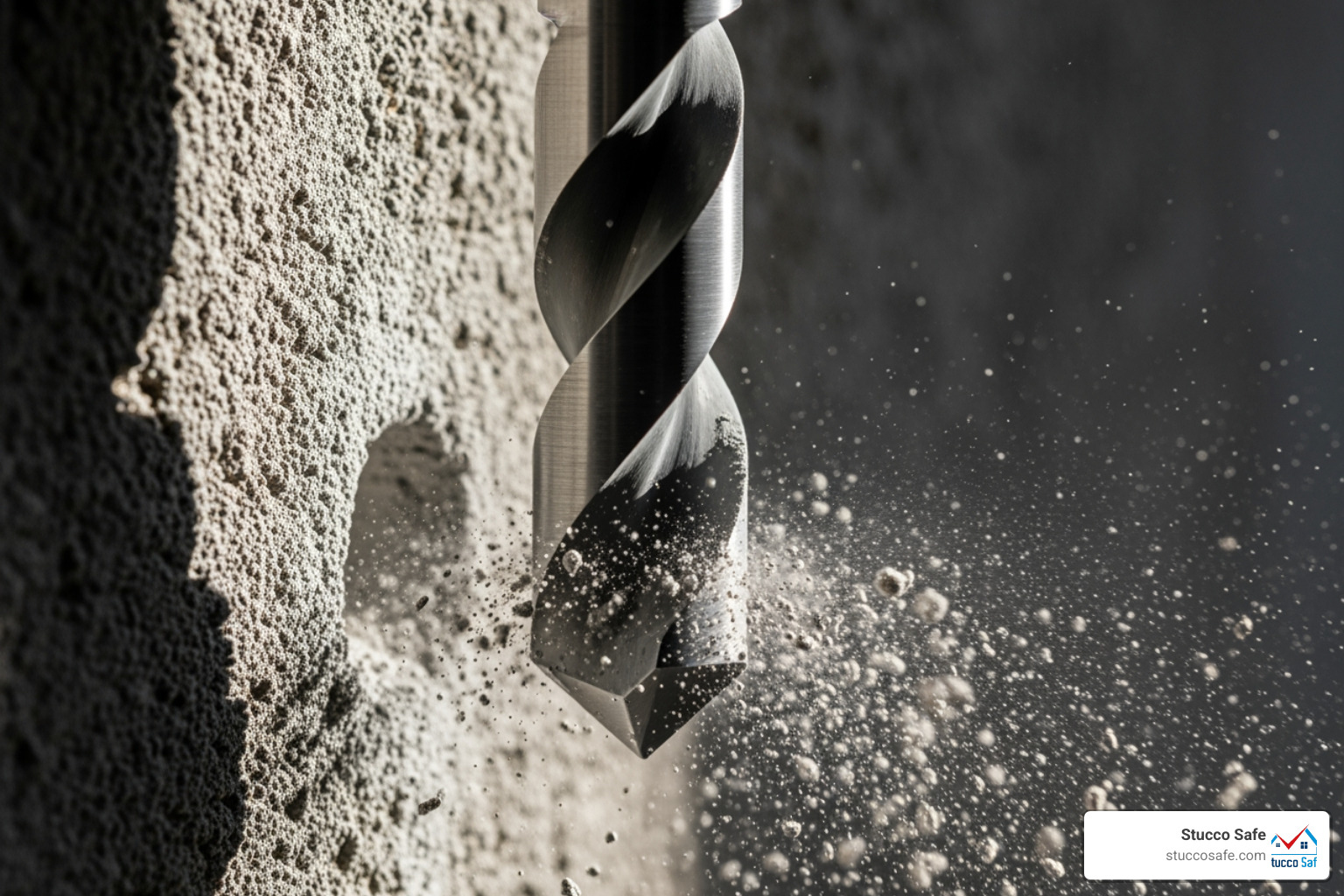
The secret is percussion drilling. Masonry bits deliver thousands of rapid hammer blows per minute, shattering the hard material as the bit rotates. This action creates clean holes in surfaces that would destroy ordinary drill bits.
What Are Masonry Drill Bits?
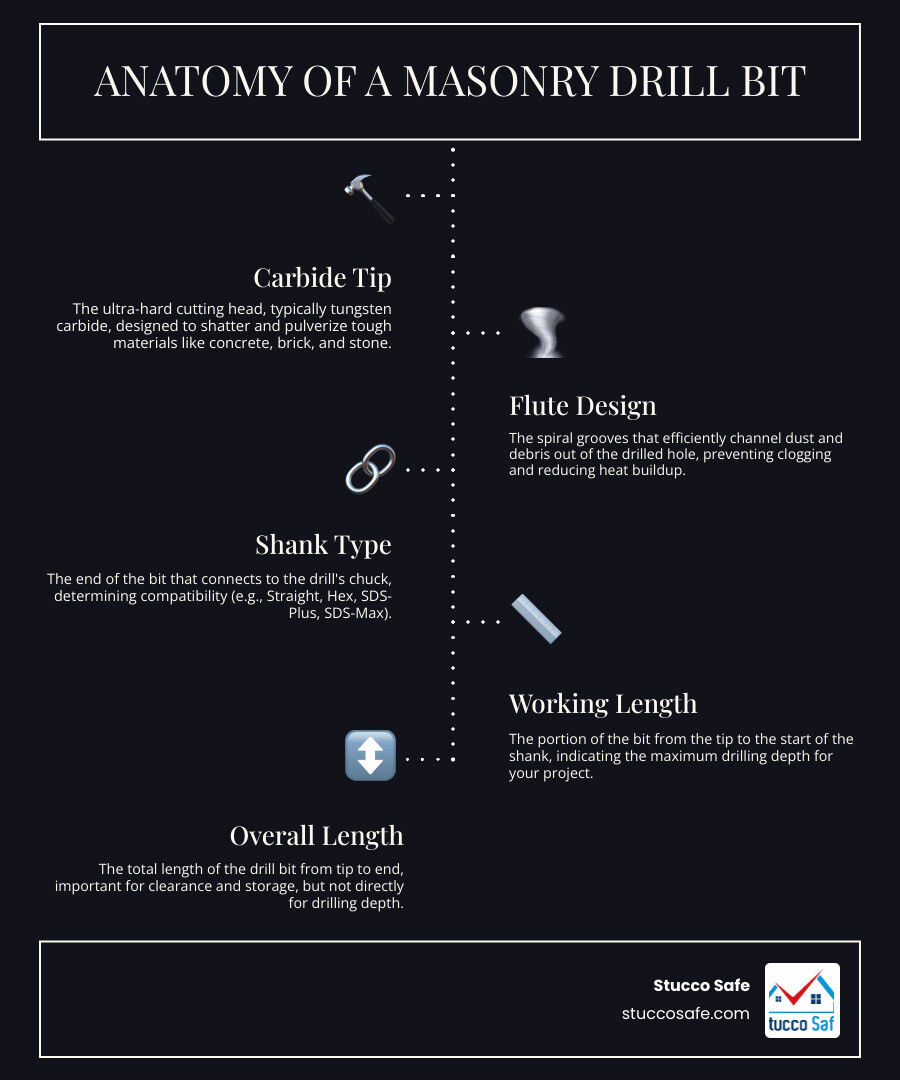
At the heart of every masonry bit is a tungsten carbide tip, an extremely hard material brazed onto a steel shaft. This tip pulverizes concrete and stone without dulling quickly. As the bit spins and hammers, the carbide tip chips away material, and spiral flutes carry the dust out of the hole to prevent clogging.
These bits are designed to be paired with a hammer drill or rotary hammer. The drill provides the hammering force, and the bit’s carbide tip does the cutting. Using a masonry bit in a regular drill is inefficient for hard materials because it lacks the necessary percussion action.
What Materials Can They Drill?
Masonry bits excel at drilling hard surfaces like concrete, brick, mortar, cinder block, and stone. They can handle everything from concrete slabs to brick walls and natural stone like granite. For detailed advice on various stone types, see our guide on Drill Bit for Stone.
They are also used for ceramic and porcelain tile and, importantly, stucco. When drilling into stucco to mount fixtures, you need a bit that can penetrate the stucco and the substrate beneath. Proper technique is critical to prevent moisture intrusion, a common issue we see at Stucco Safe. Every hole is a potential water entry point if not drilled and sealed correctly. Our article on Drill Bit Stucco explains the best practices to avoid costly water damage. For more on drilling cement-based materials, see our Cement Drill Bit resource.
Types of Masonry Drill Bits Explained
Not all bit masonry tools are the same. The two most important features are the shank style, which connects to your drill, and the tip design, which does the cutting. Matching the bit to your drill and material is crucial for performance.
Shank Styles and Drill Compatibility
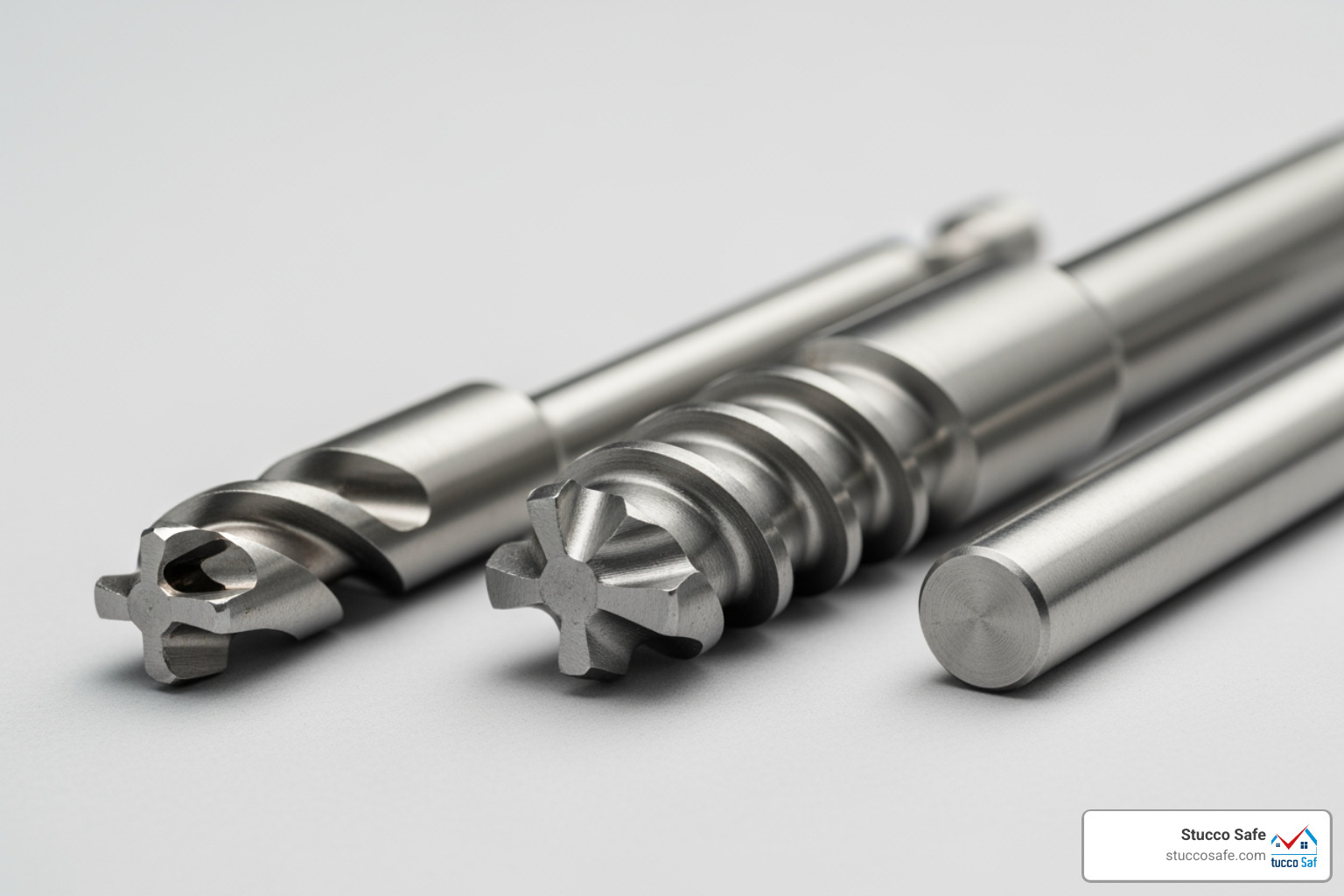
The shank is the end of the bit that fits into your drill. A proper fit is essential for safety and efficiency.
- Straight shanks fit standard drill chucks but can slip under heavy load, especially with the hammer function.
- Hex shanks have a six-sided design that provides a better grip in impact drivers and hammer drills, preventing slippage.
- SDS-Plus shanks lock into SDS-Plus rotary hammers. This system allows the bit to move back and forth, dramatically improving impact energy transfer for faster, less tiring drilling.
- SDS-Max shanks are larger and designed for industrial-grade rotary hammers, used for drilling large holes in the hardest materials.
| Shank Style | Compatible Drill | Typical Application |
|---|---|---|
| Straight | Standard Drill Chuck (with hammer function) | Light-duty masonry, general purpose |
| Hex (1/4″ or 1/2″) | Impact Driver, Hammer Drill | Medium-duty masonry, prevents slippage |
| SDS-Plus | SDS-Plus Rotary Hammer | Medium to heavy-duty masonry, efficient impact transfer |
| SDS-Max | SDS-Max Rotary Hammer | Heavy-duty and industrial masonry, large diameter holes |
Tip and Cutter Design
The tip design determines how the bit cuts. Carbide-tipped bits are the standard, as the tungsten carbide is hard enough to pulverize concrete and brick.
- Two-cutter heads are the most common design, with two cutting edges. They are great for general-purpose drilling in brick, block, and standard concrete. Most DIY projects can be handled with a quality 2-cutter bit.
- Four-cutter heads have four cutting edges, which improves performance in demanding applications like reinforced concrete. The extra edges help prevent the bit from getting stuck on rebar and lead to faster drilling and longer bit life.
- Full-carbide heads, where the entire tip is solid carbide, offer maximum durability for extremely abrasive materials or frequent rebar encounters.
For basic DIY work, a 2-cutter bit is sufficient. For professional jobs or drilling into reinforced concrete, a 4-cutter bit is a worthwhile investment.
How to Choose the Right Masonry Bit for Your Project
Choosing the right bit masonry tool prevents oversized holes, compromised anchors, and burnt-out bits. The two key factors are the size requirements for your fasteners and the material you’re drilling.
Selecting the Correct Diameter and Length
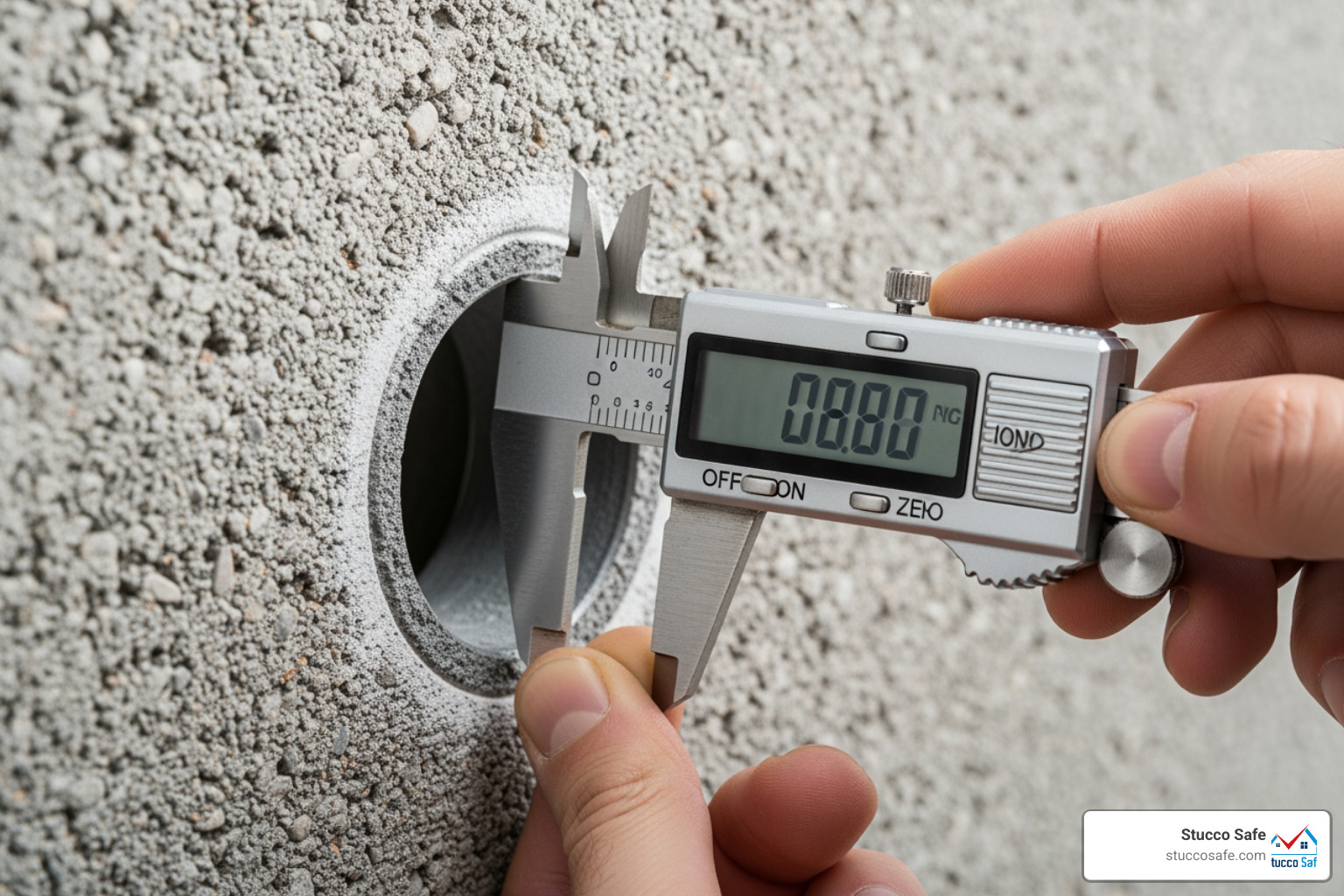
Diameter is critical. Always use the pilot hole size specified by the anchor manufacturer. A hole that is too large will result in a loose anchor with no holding power, while one that is too small can cause the anchor or material to crack. For best results, use matched tolerance carbide-tipped bits, which are manufactured to tighter specifications for consistent hole sizes.
Length is also important. The bit’s working length must be deep enough for your anchor, plus a little extra for dust. For most home projects, standard lengths of 4 to 6 inches are sufficient, but longer bits are available for drilling through thick walls.
Choosing the Right Bit Masonry for Concrete vs. Brick
Concrete and brick require different approaches.
Concrete is hard, abrasive, and often contains steel rebar. For anything beyond light-duty work, use an SDS-Plus or SDS-Max bit in a rotary hammer. A 4-cutter head design is highly recommended for concrete, as it handles rebar encounters better and lasts longer. For more details, see our guide on the Masonry Drill Bit for Concrete.
Brick is generally softer and less abrasive. A standard 2-cutter carbide-tipped bit in a hammer drill usually works well. The main challenge is preventing cracks or breakout around the hole, which can be avoided with a steady hand and proper drill speed.
Abrasiveness wears down bits quickly, especially in concrete. Investing in higher quality bits with advanced carbide pays for itself in longevity and performance. For more on this, check out our article on the Cement Drill Bit. The bottom line is to match your bit to the material: aggressive bits for hard concrete, and standard bits for softer brick and block.
Advanced Features and Common Applications
Modern bit masonry tools include smart innovations that make drilling faster and more efficient, meaning less time fighting with stubborn concrete.
Innovations in Bit Design
Modern masonry bits feature several key improvements:
- Advanced Flute Designs: Spiral grooves are optimized to evacuate dust faster, which keeps the bit cool, prevents clogging, and extends its life.
- Speed Tips: Aggressive tip geometries can penetrate surfaces up to twice as fast as older designs.
- Centering Tips: These specialized tips prevent “bit walking” by grabbing the surface immediately for precise, accurate starts.
- Cordless Efficiency: Newer bits are designed to be more efficient, delivering significantly more holes per battery charge, a major benefit for professionals.
Common Uses in Construction and DIY
Bit masonry tools are essential for many common tasks:
- Installing shelves and cabinets on brick or concrete walls.
- Mounting exterior fixtures like lighting, mailboxes, and security cameras. This is especially critical on stucco, where improper drilling can lead to moisture intrusion.
- Running conduit and wiring through masonry walls.
- Setting anchors for railings, heavy equipment, or structural elements, where hole accuracy is vital for safety.
- Creating pilot holes to prevent material damage before driving larger fasteners.
When drilling into exterior claddings, extra care is needed to prevent future moisture problems. Our guide on How to Drill into Stucco provides step-by-step instructions to avoid costly water damage. For large-scale projects, professionals may use tools like Building Information Modeling for Masonry (BIM-M) to pre-plan drilling for maximum efficiency.
Durability, Maintenance, and Cost
Knowing how to maintain your bit masonry tools and understanding their cost helps you get the most value from your investment.
Durability and How to Extend Bit Life
Heat from friction is the number one enemy of masonry bits, as it can quickly ruin the carbide tip. To extend your bit’s life, follow these simple rules:
- Cool the Bit: Periodically dip the bit in water, especially when drilling deep holes or hard materials, to prevent overheating.
- Use Proper Speed: Slower drill speeds generate less friction and allow the bit to chip away material effectively.
- Engage Hammer Mode: Always use your drill’s hammer function. Masonry bits are designed for this percussive action.
- Clear Debris: Withdraw the bit from the hole every few seconds to clear dust from the flutes. This reduces friction and prevents clogging.
After use, clean your bits and store them in a protective case to prevent the carbide tips from chipping. For more tips on drilling exterior surfaces, see our guide on What Drill Bits Can I Use for Stucco?.
Price Range and The Value of Sets
Individual masonry bits range from under $10 for basic bits to over $50 for heavy-duty SDS-Max bits. Specialized bits, like a matched-tolerance anchor bit, can also be more expensive but are critical for structural integrity.
Drill bit sets often provide better value, with basic sets costing $20-$30 and professional collections costing $100 or more. These typically include common sizes like 1/4″, 3/8″, and 1/2″.
While budget bits are fine for occasional, light-duty work, premium bits offer significant advantages in speed and longevity. For serious DIYers or professionals, investing in quality bits pays off through time saved and fewer replacements.
Frequently Asked Questions about Masonry Drill Bits
Here are answers to some of the most common questions about bit masonry.
Can I use a masonry bit in a regular drill?
Yes, but it’s not recommended for hard materials. A masonry bit will fit in a regular drill, but without the hammering action of a hammer drill, progress will be extremely slow. This generates excessive heat, which can quickly ruin the bit’s carbide tip and potentially burn out your drill’s motor. For anything other than soft brick, a hammer drill is the right tool for the job.
What is the difference between a 2-cutter and a 4-cutter bit?
The number refers to the carbide cutting edges on the bit’s tip.
- A 2-cutter bit is the standard for general-purpose drilling in brick, block, and unreinforced concrete. It’s ideal for most DIY projects.
- A 4-cutter bit is designed for heavy-duty work, especially in reinforced concrete. The four cutting edges provide better performance when hitting rebar, reducing the chance of the bit binding or breaking. They also drill faster and last longer in tough conditions.
How do I know when my masonry bit is dull?
A dull bit is inefficient and can damage your workpiece and drill. It’s time for a replacement if you notice these signs:
- Slow drilling speed: A hole takes much longer to drill than it used to.
- Excessive heat: The bit and workpiece become unusually hot.
- High-pitched squeal: The bit makes a squealing noise instead of a grinding sound.
- Rounded or chipped tip: The cutting edges on the carbide tip are no longer sharp and defined.
- Need for excessive force: You have to push much harder on the drill to make progress.
Conclusion
Choosing the right bit masonry tool is about more than convenience—it’s about safety, effectiveness, and protecting your home. By matching the shank to your drill, the diameter to your anchor, and the tip design to the material, you set yourself up for a successful project.
This is especially critical when drilling into exterior surfaces like stucco. A poorly drilled hole can create a pathway for moisture to get behind your walls, leading to hidden damage that we frequently uncover during our inspections in Southeastern Pennsylvania, New Jersey, and Delaware. A simple project can become a costly repair if the wrong tools or techniques are used.
You are now equipped to avoid these pitfalls. You understand that quality bits, proper cooling, and using your drill’s hammer mode are essential for good results. Whether you’re doing a small DIY task or a larger renovation, always take the time to do it right.
For specialized tasks like drilling into exterior claddings, understanding the underlying structure is crucial. If you’re working on a stucco project, we have comprehensive guidance to help you protect your home’s integrity. Find the best drill bit for your stucco project and get the job done right the first time.