

Black Stucco House: 4 Bold Statement Designs
The Bold Appeal of Black Stucco Exteriors
A black stucco house creates a dramatic architectural statement that combines modern sophistication with timeless elegance. Here’s what you need to know:
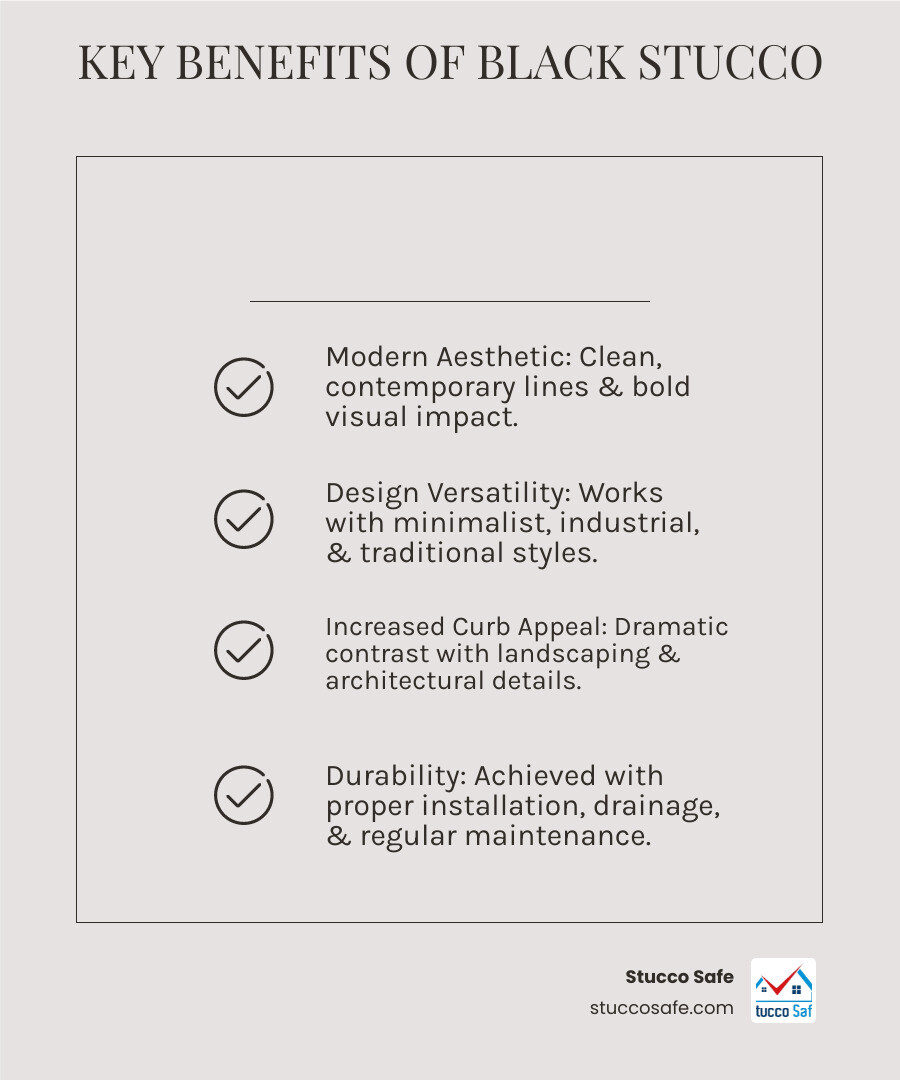
- Modern Aesthetic: Black stucco delivers clean, contemporary curb appeal that stands out in any neighborhood
- Design Versatility: Works with multiple architectural styles from minimalist to industrial chic to updated traditional homes
- Improved Contrast: Makes landscaping, trim, and accent materials pop with striking visual depth
- Durability Considerations: Requires proper installation and maintenance to prevent moisture issues, especially important given stucco’s porous nature
Black exteriors are trending in residential design, with homeowners increasingly choosing this bold color to transform their homes into striking visual statements. The research shows that black stucco can redefine curb appeal through impressive textures and high-contrast pairings with materials like natural wood, white trim, or copper accents.
But beauty must be built on a solid foundation. Stucco’s porous cement composition means water can wick through to the underlying substrate if not properly installed—a concern that’s especially critical for homes built between 1993 and 2006, which saw failure rates as high as 90% due to building code issues.
Whether you’re considering a full black stucco change or simply exploring bold exterior ideas, understanding both the aesthetic possibilities and structural realities will help you make informed decisions that protect your investment.
I’m Gabe Kesslick, and I’ve been detecting and repairing building envelope issues since 2001, including countless inspections of black stucco houses where hidden moisture problems lurked behind beautiful facades. My experience as an EDI Level 2 Certified Stucco Inspector has shown me that the most stunning exteriors require proper installation and ongoing maintenance to truly last.
Glossary for black stucco house:
The Allure of the Dark Side: Why Choose a Black Stucco House?
Choosing a black stucco house is more than just selecting a color; it’s embracing a design philosophy. The depth and richness of black stucco create an immediate sense of sophistication and drama that few other exterior finishes can match. We’ve seen how a bold black exterior can transform an ordinary home in Philadelphia, West Chester, or even a traditional neighborhood in New Jersey, into a standout architectural masterpiece.
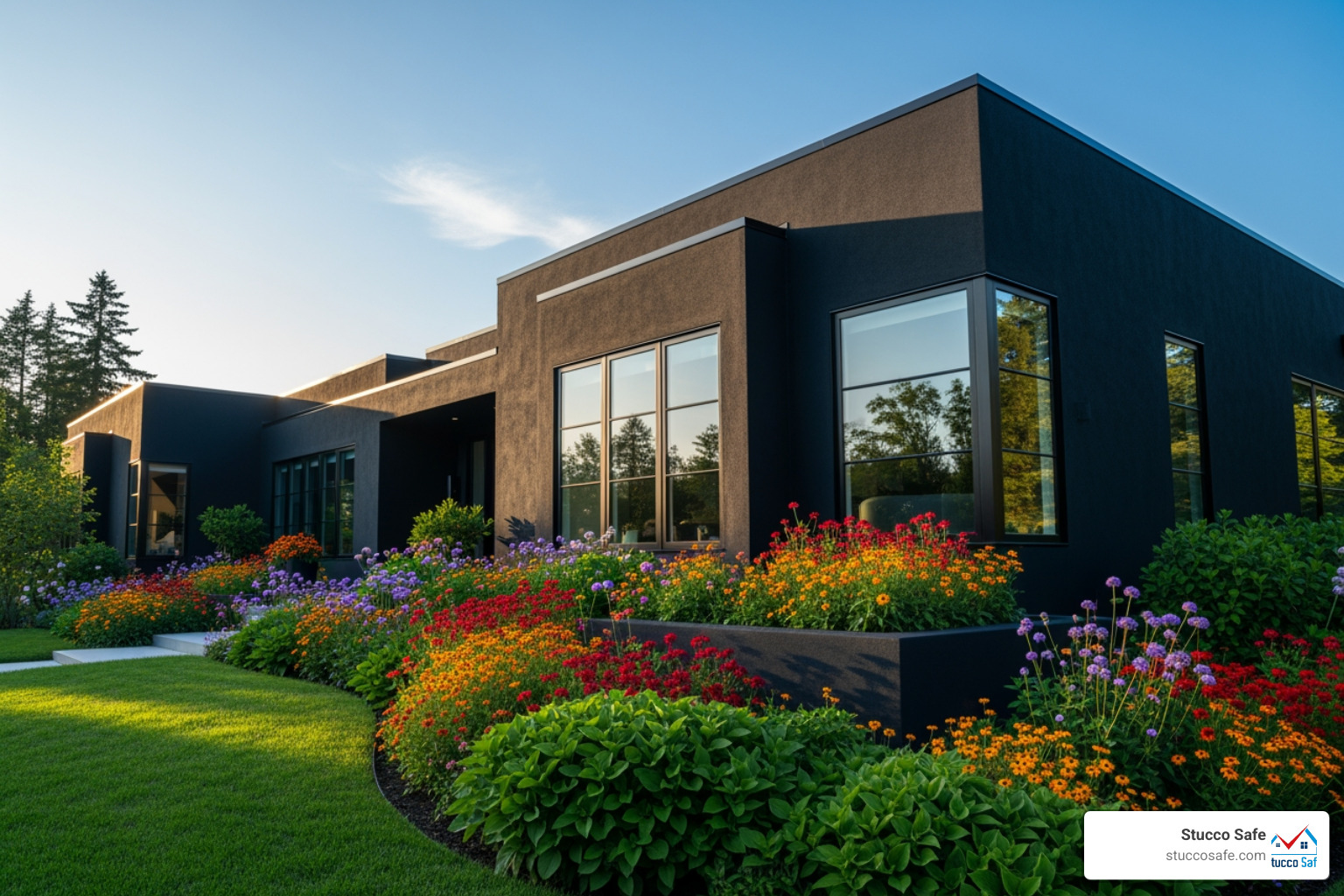
One of the primary benefits is the dramatic contrast it provides. Imagine a deep, matte black stucco facade against vibrant green landscaping or colorful seasonal flowers—the dark backdrop makes every other element pop, giving your home a gallery-like presentation. This visual depth is often cited by homeowners as a key reason for their choice; it allows natural elements and architectural details to truly shine. As one homeowner noted, the black stucco made the colors in her garden “POP.”
Black stucco also offers incredible design versatility. While often associated with modern or minimalist aesthetics, its timeless elegance allows it to complement a surprisingly wide range of architectural styles. From the sleek lines of a contemporary home in King of Prussia to an updated traditional colonial in Villanova, black stucco provides a sophisticated canvas. It can be combined with various other materials, including wood, brick, or metal, to create unique and compelling architectural narratives. This versatility means that whether your goal is bold modern minimalism or a more urban contemporary vibe, a black stucco house can achieve it, instantly elevating your home’s curb appeal and making a memorable statement.
Inspiring Black Stucco House Ideas for a Bold Exterior
The beauty of a black stucco house lies in its adaptability. It’s not a one-size-fits-all solution but a versatile material that can be custom to various design visions. We’ve compiled some inspiring ideas to showcase how black stucco can be integrated into different architectural styles, creating striking and sophisticated exteriors across Southeastern Pennsylvania, New Jersey, and Delaware.
1. The Modern Minimalist
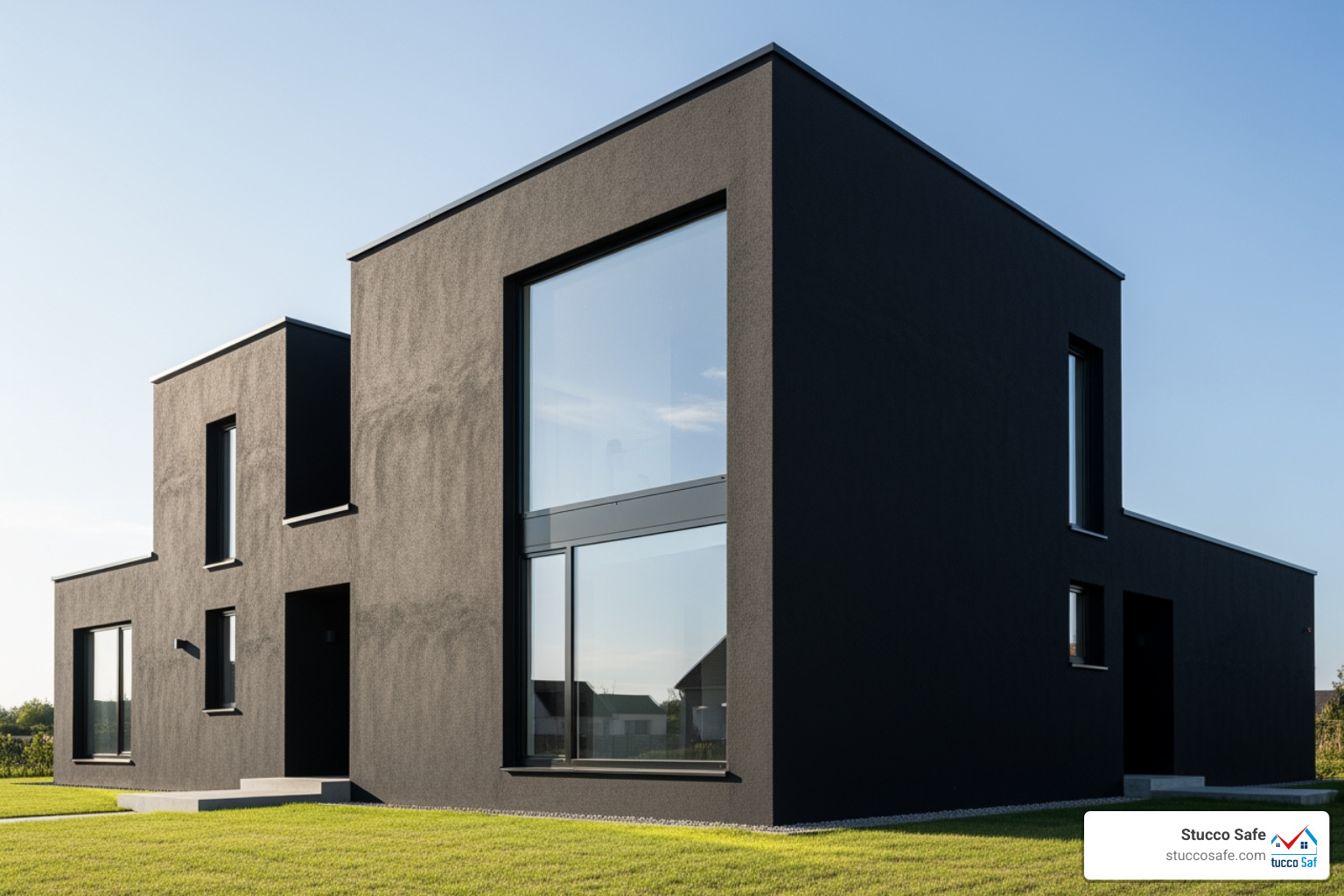
For those who appreciate clean lines, geometric forms, and an uncluttered aesthetic, the modern minimalist black stucco house is a perfect choice. This style often features smooth, untextured black stucco surfaces, creating a monolithic appearance. Large, black-framed windows blend seamlessly into the dark walls, emphasizing the home’s striking silhouette. We often see this approach in contemporary builds in areas like Phoenixville or Edison, where the goal is to create a sleek, sculptural statement that feels both grounded and expansive. The monochromatic palette allows the form and structure of the house to take center stage, making it a true architectural gem.
2. Industrial Chic with Mixed Materials
Embracing the raw urban energy of industrial design, a black stucco house can be dramatically improved by pairing it with metal accents. Think exposed steel beams, corrugated metal siding, or even Corten steel planters that develop a rich, earthy patina over time. This approach creates compelling textural contrast, where the smooth, deep black of the stucco plays against the ruggedness of metal. We’ve seen this style successfully implemented in urban areas like Camden or Jersey City, where the industrial past of the city can be subtly echoed in modern residential design. Metal roofing, often in a standing seam profile, can further emphasize this aesthetic, contributing to a striking and durable exterior.
3. Warmth and Contrast: Black Stucco with Natural Wood
To balance the inherent coolness of black stucco, integrating natural wood elements is a popular and highly effective design strategy. This combination introduces organic texture and warmth, creating a sophisticated yet inviting exterior. Imagine a black stucco house with a warm cedar wood garage door, cypress soffits, or an neat oak front door. These wood accents provide a visually appealing contrast that softens the dark facade and adds a layer of natural beauty. Whether it’s a home in Paoli or Brick, this pairing creates a harmonious blend of modern and natural, making the home feel both cutting-edge and welcoming. The natural grain of the wood adds a tactile quality that complements the smooth finish of the stucco, preventing the exterior from feeling too stark.
4. Updating a Classic: The Traditional Black Stucco House
Who says black stucco is only for modern homes? We’ve seen a growing trend in updating classic architectural styles with this bold exterior. For a Craftsman or Colonial home in areas like Berwyn or Hamilton Township, black stucco can offer a fresh, contemporary twist while respecting the home’s historical roots. The key here is often high-contrast white trim around windows, doors, and eaves, which makes the traditional architectural details pop against the dark backdrop. This blending of classic and contemporary elements creates a unique aesthetic that is both respectful of the past and forward-looking. The deep black allows the intricate details of cornices, columns, and window casings to be highlighted, giving traditional homes a dramatic and updated presence. It’s a testament to black stucco’s versatility that it can redefine a classic without erasing its charm.
Practical Considerations Before Committing to Black Stucco
While the aesthetic appeal of a black stucco house is undeniable, it’s crucial to look beyond the surface and understand the practical implications. Our experience inspecting homes across Southeastern PA, New Jersey, and Delaware has taught us that beauty must be matched with functionality and durability.
The Impact on Energy and Temperature
One of the most common questions we hear about dark exteriors, especially in our region which experiences varied temperatures, is about heat absorption. It’s true that black surfaces absorb more solar radiation than lighter colors. This means a black stucco house can potentially absorb more heat from the sun.
The Light Reflective Value (LRV) of a color indicates how much light it reflects. Black has a very low LRV, meaning it absorbs a significant amount of heat. In warmer climates or during hot summer months in areas like Toms River or Franklin Township, this increased heat absorption can lead to higher interior temperatures and, consequently, increased cooling costs.
However, modern building practices and materials can mitigate this. Proper insulation within the wall assembly, effective ventilation, and energy-efficient windows are all critical components that work together to maintain comfortable indoor temperatures regardless of exterior color. For homes in our service areas, considering these factors during design and construction is paramount to ensure energy efficiency isn’t compromised by the aesthetic choice of a black exterior. We always recommend discussing these aspects with your architect and builder to ensure your home is designed to perform optimally.
Choosing the Right Shade and Finish
Black isn’t just one color; it encompasses a spectrum of shades, from deep charcoal and off-black to intense jet black. Each shade, combined with different finishes, can dramatically alter the perception and character of your black stucco house.
- Shades of Black: A softer off-black might appear less stark, while a true jet black offers maximum drama. The underlying pigments and the way they interact with natural light are crucial. Some blacks have cool blue undertones, while others lean warmer with brown or red hints. The “Raccoon Fur” by Benjamin Moore, for example, is described as a chameleon-like color that can appear dark gray or slate, depending on the light.
- Finish Textures: Stucco itself comes in various textures—smooth, sand, coarse, or even a dash finish. A smooth finish lends itself to a modern, sleek aesthetic, highlighting the monolithic quality of black. A sand or coarse finish adds depth and subtle variations, capturing light and shadow differently throughout the day. The texture choice significantly impacts how light reflects (or absorbs) and how the color is perceived.
- Paint vs. Integral Color Stucco: You can achieve a black stucco exterior either by painting existing stucco or by using integral color stucco, where the pigment is mixed into the stucco material itself. Integral color offers a deeper, more consistent color that won’t chip or peel, but it can be more expensive. Painting provides flexibility for future color changes and can be a good option if the underlying stucco is in excellent condition. However, as we often caution, painting over compromised stucco can trap moisture and worsen underlying issues.
The right combination of shade and finish will depend on your home’s architectural style, your personal aesthetic preferences, and how you want your black stucco house to interact with its surroundings.
The Importance of Proper Installation and Maintenance for a Black Stucco House
The bold statement of a black stucco house is only as strong as its foundation. Stucco, while durable and aesthetically pleasing, is a porous cement product. This inherent porosity means that, if not properly installed, rain and moisture can wick through the material and into the underlying substrate, leading to significant and costly damage.
Our inspections in areas like Chester County and Middlesex County consistently reveal that stucco problems often stem from application failures, inadequate materials, or, critically, a lack of proper drainage systems. Homes built between 1993 and 2006, in particular, suffered from building code issues that led to an estimated failure rate as high as 90% for stucco exteriors. These homes often lack essential components like weep screeds, proper flashing around windows and doors, and adequate drainage planes, all of which are vital for managing moisture.
For a black stucco house, proper installation is non-negotiable. This includes:
- Correct Flashing: Ensuring all penetrations, such as windows, doors, and utility lines, are properly flashed to direct water away from the wall assembly.
- Weep Screeds: Installing weep screeds at the base of the stucco to allow any trapped moisture to escape.
- Expansion Joints: Implementing expansion joints to accommodate movement and prevent cracking.
- Drainage Plane: Ensuring a continuous drainage plane behind the stucco to channel water downwards.
Even with perfect installation, maintenance is key. Routine cleaning is necessary to remove dirt, mildew, and pollutants that can accumulate on any exterior. A simple annual visual inspection of your black stucco house can go a long way. Look for:
- Hairline Cracks: These should be repaired promptly to prevent water intrusion.
- Stains: Dark staining can be an early indicator of moisture issues.
- Caulking: Check the integrity of caulking around windows, doors, and other transitions. Deteriorated caulk should be replaced immediately.
The truth is, painting stucco is generally a good idea for aesthetic appeal and protection, but only if the stucco is in good condition. Painting over damaged or incorrectly installed stucco will seal in moisture, exacerbating underlying problems and potentially leading to structural damage. If you’re considering a black stucco exterior, or already have one and are concerned about its condition, a professional stucco inspection is the most crucial step you can take. We specialize in forensic testing to identify hidden moisture and structural issues before they become catastrophic.
Frequently Asked Questions about Black Stucco
We often encounter common questions from homeowners in Southeastern PA, New Jersey, and Delaware who are either considering or already own a black stucco house. Here, we address some of the most pressing concerns.
Does black stucco fade more than other colors?
Any exterior color, regardless of shade, will experience some degree of fading over time due to UV exposure and environmental factors. However, the perception of fading can sometimes be more pronounced with darker colors. The good news is that modern stucco systems and exterior paints are formulated with advanced UV-resistant pigments and acrylic formulas designed to minimize fading.
The quality of the pigments used, whether in integral color stucco or in the paint applied to it, plays a significant role. High-quality products from reputable manufacturers are engineered for longevity and color stability. While a black stucco house might show dust or pollen more readily than a lighter one, actual color degradation due to sun exposure is much less of a concern with today’s materials than it might have been in the past. If fading does occur after many years, repainting remains an option, provided the underlying stucco is sound.
What maintenance does a black stucco exterior require?
Maintaining a black stucco house is similar to maintaining any stucco exterior, with a few specific considerations for the dark color.
- Routine Cleaning: Black surfaces can show dirt, dust, pollen, and mildew more noticeably. A gentle power wash (at low pressure to avoid damaging the stucco) or a soft scrub with a mild detergent and water can keep your black stucco looking fresh. We recommend cleaning annually or as needed.
- Annual Visual Inspection: Walk around your home at least once a year, paying close attention to the stucco. Look for hairline cracks, areas of discoloration (which could indicate moisture), and any signs of efflorescence (white powdery deposits).
- Check Caulking and Sealants: Inspect the caulking around windows, doors, utility penetrations, and at material transitions. Deteriorated or cracked caulk should be promptly removed and replaced to prevent water intrusion.
- Repair Hairline Cracks: Small hairline cracks are common in stucco. Address these promptly with appropriate stucco caulk or repair materials to prevent water from entering the wall assembly. Larger cracks warrant a professional assessment.
- Professional Stucco Inspection: We strongly recommend a professional stucco inspection every 2 years, particularly for homes in our service areas. Our forensic testing methods can detect hidden moisture issues that are invisible to the naked eye, preventing minor problems from escalating into major structural damage. This is especially vital for a black stucco house as the dark color can sometimes mask subtle visual cues of distress.
Is a black stucco house more expensive?
The cost of a black stucco house can be influenced by several factors, but the color black itself doesn’t inherently make it significantly more expensive than other colors.
- Installation Cost: The average cost to install stucco siding ranges from $7–$15 per square foot. This price depends on the type of stucco (traditional vs. synthetic), the complexity of your home’s design (e.g., more corners, architectural details), and the region. While stucco is generally more expensive than vinyl siding (which can be 10-40% cheaper), it offers superior durability and aesthetic appeal.
- Material Cost (Integral Color vs. Paint): If you opt for integral color stucco, where the pigment is mixed throughout the material, the cost might be slightly higher than for standard stucco that will be painted. However, the difference is often marginal compared to the overall installation cost. If you’re painting existing stucco black, the cost will be similar to painting it any other color, depending on the quality of the paint.
- Long-Term Value: While the initial outlay for stucco may be higher than some other materials, its durability, low maintenance (when properly installed), and improved curb appeal can offer a strong return on investment. Homes with well-maintained and updated exteriors can see an ROI of up to 10-15% upon resale.
Here’s a simplified comparison:
| Feature | Stucco | Vinyl Siding |
|---|---|---|
| Average Cost/Sq Ft | $7-$15 (installation) | $3-$8 (installation) |
| Durability | Excellent; resistant to rot, insects, fire | Good; can crack in cold, less impact resistance |
| Aesthetic Appeal | Highly customizable, seamless, premium look | Uniform, can appear less substantial, visible seams |
| Maintenance | Low (if properly installed); requires cleaning & crack repair | Low; occasional cleaning |
| Energy Efficiency | Good insulation properties (especially EIFS) | Moderate; often requires additional insulation |
| Repair Complexity | Requires skilled professionals for seamless repairs | Easier for small sections; color matching can be an issue |
The choice to have a black stucco house is an investment in both aesthetics and the long-term value of your property. We believe that the unique visual impact and durability of stucco, when properly installed and maintained, justify the investment.
Conclusion: Make a Lasting Statement with Confidence
A black stucco house is undoubtedly a bold choice, one that transforms an ordinary residence into a striking architectural statement. We’ve explored the myriad benefits, from its modern aesthetic and design versatility to its dramatic ability to make surrounding elements pop. From minimalist cubes in King of Prussia to updated colonial homes in Villanova, black stucco offers a sophisticated canvas for diverse architectural visions.
However, the pursuit of beauty must always be underpinned by a solid foundation. As experts in stucco inspection and testing across Southeastern PA, New Jersey, and Delaware, we cannot overstate the importance of a healthy building envelope. Stucco’s porous nature means that proper installation, including critical elements like correct flashing, weep screeds, and drainage planes, is paramount to prevent hidden moisture and structural damage. This is particularly true for homes built during the period of 1993-2006, which faced significant stucco failure rates due to flawed building codes.
For peace of mind, a professional stucco inspection by a certified expert like Stucco Safe can identify these hidden issues before they escalate into costly problems. Our forensic testing methods go beyond superficial visual checks, probing for moisture content and structural integrity where it matters most. Stucco inspections vary in cost from $495 to $1595 or more for very large homes, a small investment compared to the potential cost of undetected water damage.
Accept the dramatic appeal of a black stucco house, but do so with confidence, knowing that your investment is protected by a solid, well-maintained exterior.