

Chester County stucco inspections: Expert Safety 2025
Why Chester County Stucco Inspections Are Critical for Your Home’s Health
Chester County stucco inspections are professional assessments designed to detect hidden moisture intrusion and structural damage behind stucco facades. Given that an estimated 90% of stucco applications in the Northeast within the past 15-20 years are defective or improperly installed, these inspections are essential for protecting your investment.
What You Need to Know:
- Who Needs One: Homebuyers, current homeowners (especially if no inspection in 2+ years), and sellers preparing to list
- Cost Range: $495 to $1,595 for most homes (far less than the $100,000+ average remediation cost)
- What’s Tested: Visual inspection, infrared thermal imaging, invasive moisture testing with probes
- Why It Matters: Over 50,000 homes in Southeastern Pennsylvania need stucco remediation; damage often remains hidden for years
- Red Flags: “Stucco tears” (staining below windows), cracking, bulging, or deterioration at ground level
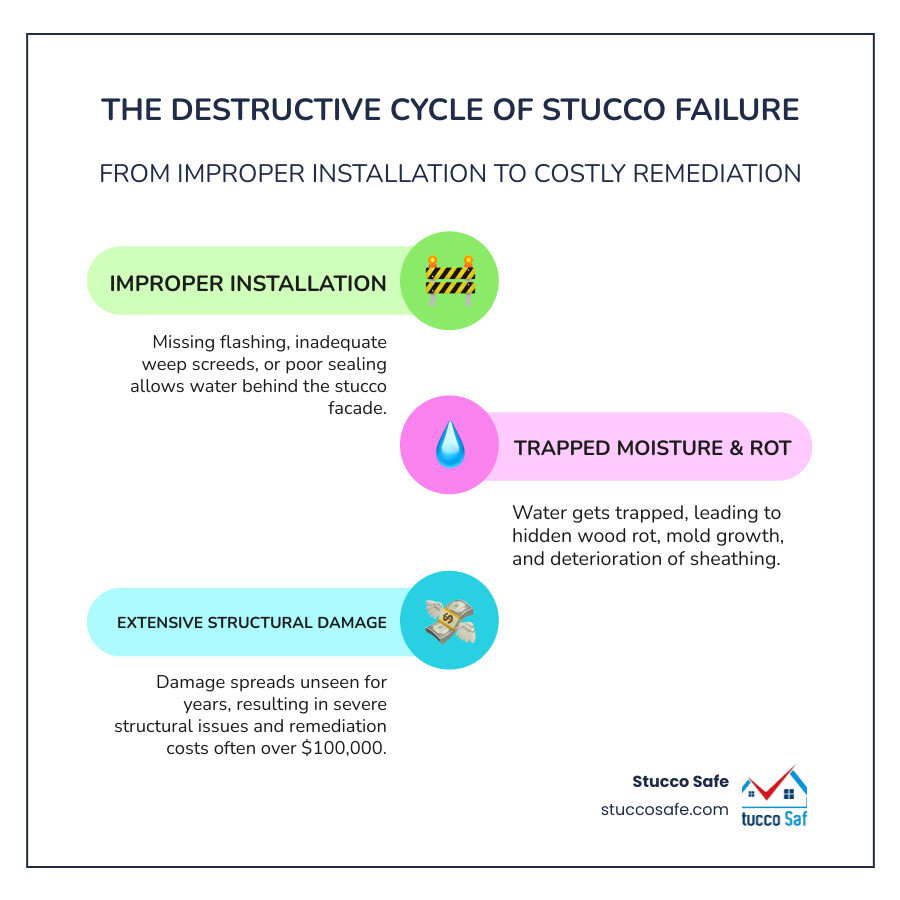
Chester County sits at the epicenter of a stucco crisis. Thousands of families who purchased homes during the 2000s housing boom have finded costly moisture damage—sometimes reaching $300,000 to remediate on high-end properties. The problem isn’t the stucco material itself, but rather shoddy workmanship: missing flashing, inadequate weep screeds, and shortcuts that trap moisture behind the facade, leading to wood rot, mold, and structural compromise.
The hidden nature of stucco damage makes professional inspection crucial. What appears as minor surface staining can mask severe deterioration of the wood sheathing and framing behind the stucco. Without specialized tools like moisture meters and thermal imaging cameras, these issues remain undetected until they become catastrophically expensive.
I’m Gabe Kesslick, and I’ve specialized in leak detection and stucco forensics since 2001, conducting hundreds of Chester County stucco inspections as an EDI Level 2 Certified Stucco Inspector and BESI Level 2 Certified Building Envelope Forensic Inspector. My team at Stucco Safe uses forensic testing methods to provide unbiased assessments—we don’t offer repairs, ensuring our findings remain objective.
The Stucco Crisis in Chester County: Why Your Home is at Risk
Chester County, Pennsylvania, with its rich history and beautiful architecture, has unfortunately become a focal point for widespread stucco issues. Many of the homes and commercial buildings in boroughs like West Chester and Phoenixville are in dire need of stucco repair or remediation. Over the last few decades, a significant number of Chester County homeowners have faced severe complications with their stucco exteriors, often due to improper installation.
The root of this crisis isn’t the stucco material itself, but rather shoddy workmanship and a failure to adhere to manufacturer’s installation guidelines. During the housing boom of the 2000s, shortcuts were often taken, leading to critical flaws in stucco applications. This means that instead of protecting your home, the stucco can inadvertently trap moisture, leading to extensive damage. We’ve seen how missing flashing around windows, inadequate sealant between stucco ends and window frames, and the absence of proper weep screeds can turn a beautiful facade into a ticking time bomb. This moisture intrusion often remains hidden for years, silently causing wood rot, mold growth, and structural damage to the home’s framing and sheathing.
The alarming rate at which stucco homes in Chester County are failing, and the costly fixes required, underscores the critical need for professional Chester County stucco inspections. For more insights into this regional problem, you can read about how Stucco homes in Chester County failing at alarming rate, and the fix is costly. Understanding The Importance of Stucco Testing in PA is the first step in safeguarding your investment.
Common Stucco Issues Found in Chester County Homes
When we perform our Chester County stucco inspections, we look for a range of common issues that are telltale signs of underlying moisture problems. These aren’t just cosmetic flaws; they are often indicators of significant damage lurking beneath the surface.
Here are some of the most frequent stucco issues we encounter:
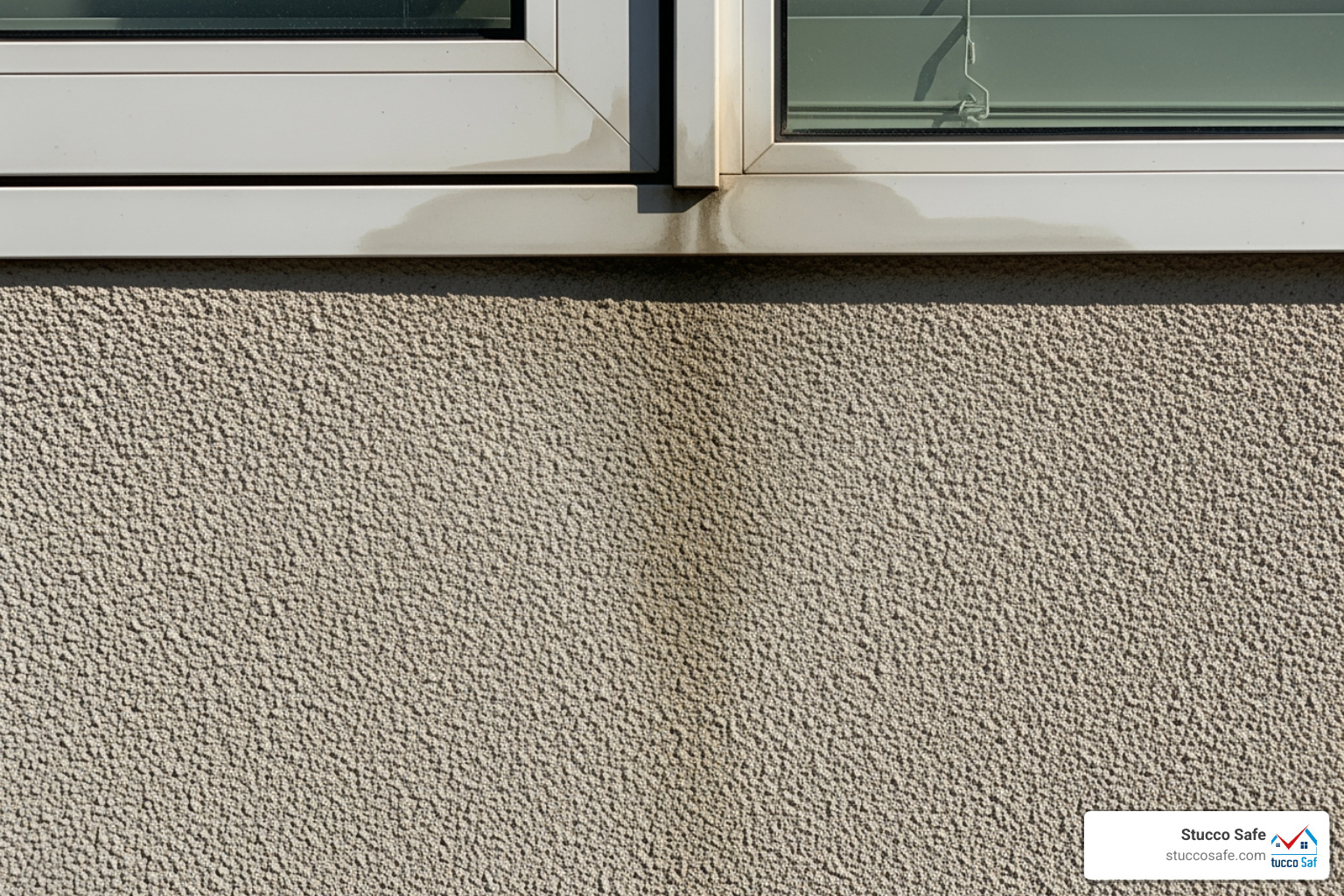
- “Stucco Tears”: These are distinct stain marks that appear directly below the corners of windows or the shoulders of chimneys. They indicate that water is getting behind the stucco and leaching out, carrying dissolved minerals that leave a visible streak. This is a classic sign of concealed damage.
- Cracking: While minor hairline cracks can be normal, we pay close attention to cracks that fan out from the corners of windows and doors, or those that appear at the transition to the foundation. These often signal structural movement or significant moisture retention.
- Buckling or Bulging Walls: If sections of your stucco appear to be pushing outwards or have an uneven, wavy appearance, it’s a strong indicator of moisture trapped behind the cladding, causing the substrate to swell or detach.
- Efflorescence: This is a white, powdery mineral deposit that forms on the surface of the stucco. It’s caused by moisture pushing through the backside of the concrete, carrying salts to the surface as it evaporates. Efflorescence is a clear sign that water is present where it shouldn’t be.
- Deterioration at Ground Level: Stucco that extends too close to the ground, or is in direct contact with soil or landscaping, is highly susceptible to moisture wicking up into the system. This often leads to crumbling, softening, or discoloration of the stucco at the base of the wall.
Identifying these signs early can save homeowners from catastrophic repairs. For more detailed information on local issues, check out our guide on Stucco Inspection West Chester PA.
The Alarming Statistics Behind Stucco Failure
The stucco crisis in Southeastern Pennsylvania, and particularly in Chester County, isn’t just anecdotal; it’s backed by sobering statistics that highlight the urgency of professional inspections.
Consider these facts:
- Widespread Defectiveness: It is estimated that a staggering 90% of all stucco applications in the Northeast within the past 15 to 20 years are defective or improperly installed. This means a vast majority of stucco homes built during this period are at risk.
- Thousands of Homes at Risk: Some estimates indicate that more than 50,000 homes in Southeastern Pennsylvania alone are in need of stucco remediation. This isn’t a niche problem; it’s a regional epidemic.
- Universal Remediation Needed: We often hear the stark assessment that “every house built in the last 20 years that has stucco will need a stucco remediation job.” This speaks to the systemic nature of the installation failures.
- Exorbitant Remediation Costs: The financial burden of these issues is immense. We’ve seen that a normal price for stucco remediation can easily be $100,000. In extreme cases, a stucco remediation on a $2.2 million house cost $300,000. It’s not uncommon to see houses that are only seven or eight years old requiring $100,000 to rip off the stucco and put on new siding.
- “Rotting From Within”: As reported in “Rotting From Within” by The Inquirer, thousands of families in Southeastern Pennsylvania who bought homes since the start of the 2000s housing boom have experienced damage from moisture intrusion, often leaving them with hefty price tags. You can read more about this pervasive issue here: “Rotting From Within”.
These statistics paint a clear picture: for homeowners in Chester County, proactive stucco inspections are not a luxury, but a necessity to protect their most significant investment.
The Anatomy of Professional Chester County Stucco Inspections
When we conduct Chester County stucco inspections, we employ a multi-faceted approach that goes far beyond a simple visual once-over. Our methods are designed to uncover hidden problems that could otherwise go undetected for years, leading to devastating damage. We combine visual assessments with cutting-edge technology and, when necessary, invasive testing, to provide a comprehensive understanding of your stucco’s health.
Our process typically includes:
- Visual Inspection: We start with a thorough visual examination of the entire stucco facade. We’re looking for visible signs of distress, such as the “stucco tears” we mentioned earlier, cracks, bulges, efflorescence, and any areas of deterioration. We also assess the overall condition of the stucco, looking for signs of improper installation details like inadequate clearances from the ground or rooflines.
- Non-Invasive Methods (Infrared Thermal Imaging): This is where technology really helps us become “stucco sleuths.” We use infrared (thermal imaging) cameras to scan the stucco surface. These cameras detect temperature differences that can indicate the presence of moisture behind the stucco. Since water holds heat differently than dry materials, wet areas often appear distinct on the thermal image, allowing us to pinpoint potential problem spots without touching the wall.
- Forensic Approach: Our entire inspection philosophy is rooted in a forensic approach. This means we’re not just identifying symptoms; we’re investigating the causes. We analyze how water might be entering the system, tracing potential pathways from rooflines, windows, doors, and other penetrations. This holistic view helps us understand the full scope of the issue.
This combination of techniques allows us to precisely identify areas of concern. For a deeper dive into our comprehensive approach, explore our services at Stucco Inspection and Testing Chester County PA.

The Role of Invasive Testing in Stucco Inspections
While visual and infrared inspections are invaluable for identifying potential problem areas, they can’t tell us definitively if moisture is present, how much, or what condition the underlying wood is in. That’s where invasive testing comes in – it’s the gold standard for Chester County stucco inspections when it comes to confirming moisture intrusion.
Invasive testing involves:
- Drilling Small Test Holes: We carefully drill small, discreet holes (typically 1/4 inch in diameter) in specific locations identified during the visual and thermal scans, or in areas known to be vulnerable to moisture intrusion. These locations are strategically chosen to minimize impact on your home’s appearance.
- Moisture Probe Meters: Through these small holes, we insert a specialized moisture probe meter. This tool directly measures the moisture content of the wood sheathing and framing behind the stucco. This provides us with definitive, quantifiable data on the presence and severity of moisture.
- Substrate Integrity Check: Beyond just moisture levels, the invasive process allows us to assess the integrity of the materials behind the stucco. We can often detect if wood rot has begun, if the sheathing is compromised, or if mold is present.
- Identifying Hidden Moisture: This is the primary purpose. Moisture intrusion behind stucco often leaves no outward signs until significant damage has occurred. Invasive testing reveals this hidden moisture, giving us a true picture of your home’s health.
- Mapping Moisture Patterns: By taking multiple readings at various points, we can map out the extent and pattern of moisture intrusion, helping to determine the source of the leak and the scope of necessary repairs.
- Sealing Test Holes: Once the readings are taken, we carefully seal each test hole with a color-matched caulk or stucco patch, ensuring the integrity and appearance of your stucco is maintained.
Invasive testing is a critical step for an accurate assessment, especially when buying or selling a home with stucco. It provides concrete evidence of moisture issues, which is vital for informed decision-making. Learn more about our detailed testing process at Stucco Inspection Testing in Chester Springs.
What a Certified Inspector Looks For
During our Chester County stucco inspections, our certified inspectors are trained to look for a multitude of details that indicate either proper installation and performance or potential points of failure. We follow the rigorous Exterior Design Institute (EDI) Standards of Practice to ensure a thorough and consistent assessment.
Here’s a checklist of what our expert eyes are scanning for:
- Proper Installation of Kick-Out Flashing: This is a crucial component at roof-to-wall intersections. Kick-out flashing directs water away from the wall and into the gutter. Its absence or improper installation is a major cause of moisture intrusion.
- Adequacy of Window and Door Sealant: We carefully examine the caulking and sealing around all windows, doors, and other penetrations (like utility lines or vents). Gaps, cracks, or deteriorated sealant are direct pathways for water to enter behind the stucco.
- Presence and Function of a Weep Screed: A weep screed is a vital component installed at the bottom of a stucco wall, typically where it meets the foundation. Its purpose is twofold: it provides a break in the stucco to prevent water from “wicking up” from the ground, and it allows any moisture that gets behind the stucco to drain out. Without a functional Weep Screed, water can get trapped.
- Stucco Thickness: We assess the thickness of the stucco application. Ideally, stucco should be between 3/4 to 1 inch thick for optimal performance and durability. Inconsistent or insufficient thickness can indicate a compromised system.
- Expansion Joints: These are designed to accommodate movement in the building and prevent cracking. We check for properly installed and maintained expansion joints where stucco meets dissimilar materials or at large wall sections.
- Signs of Water Management Failure: Beyond individual components, we look for overarching patterns that suggest a failure in the overall water management system. This includes areas of discoloration, biological growth (mold, algae), or efflorescence that point to persistent moisture issues.
- Overall Workmanship: Our inspectors evaluate the quality of the stucco application itself, noting any areas of poor adhesion, inconsistent texture, or signs that the initial installation was rushed or performed incorrectly.
Our comprehensive approach ensures that no stone (or stucco!) is left unturned, providing you with a complete picture of your home’s stucco health.
Decoding the Findings: Your Stucco Report and Next Steps
After our thorough Chester County stucco inspections, we don’t just leave you with a few notes. We provide you with a comprehensive, easy-to-understand stucco inspection report that details all our findings. This report is your roadmap to understanding the condition of your stucco and making informed decisions.
Our detailed reports include:
- Detailed Written Report: A narrative summary of our observations, including an explanation of any issues found, their potential causes, and their implications.
- Photographic Evidence: High-resolution photos, often including thermal images, to visually document all areas of concern. This visual proof helps you understand the issues clearly.
- Moisture Level Readings: Specific moisture content percentages for all areas where invasive testing was performed, providing quantifiable data on water intrusion.
- Location Map of High Readings: A diagram or map of your home’s exterior, clearly indicating the precise locations where liftd moisture levels were detected.
- Summary of Findings: A concise overview of the most critical issues, making it easy to grasp the overall health of your stucco.
- Recommendations for Repair or Remediation: Crucially, our reports include actionable recommendations for what steps should be taken next, whether it’s minor repairs or full-scale stucco remediation.
This custom stucco inspection report is designed to be a transparent and objective assessment of your property. For further guidance on interpreting these reports, refer to our Stucco Inspection Chester County Tips.
How Findings Impact Homebuyers and Sellers
The findings from our Chester County stucco inspections carry significant weight, especially in real estate transactions. Whether you’re looking to buy your dream home or sell your current property, a professional stucco inspection report can profoundly influence decisions and negotiations.
For Homebuyers:
- Negotiation Tool: If our inspection uncovers hidden moisture damage or installation deficiencies, it provides you with powerful leverage during negotiations. You can request repairs from the seller, a reduction in the sale price, or even choose to walk away from a potentially costly purchase.
- Informed Decisions: The report empowers you to make an informed decision about one of the largest investments of your life. You’ll know exactly what you’re buying, avoiding unpleasant and expensive surprises down the road.
- Avoiding Future Financial Burdens: Understanding potential remediation costs upfront helps you budget and plan, preventing you from inheriting a problem that could cost tens or even hundreds of thousands of dollars to fix.
For Sellers:
- Requirement for Disclosure: In Pennsylvania, sellers are often required to disclose known material defects. A stucco inspection can help you understand the condition of your stucco and fulfill these disclosure requirements proactively.
- Proactive Problem Solving: Identifying and addressing stucco issues before listing your home can streamline the selling process, prevent last-minute deal breakers, and potentially increase your home’s value.
- Building Buyer Confidence: Presenting a clean stucco inspection report, or a report detailing remediated issues, instills confidence in potential buyers, making your home more attractive in a competitive market.
A stucco inspection serves as a critical due diligence step for both parties, ensuring transparency and fair dealings. Learn more about how these inspections can benefit you at Stucco Inspection in Chester County PA.
Finding a Qualified Inspector for Chester County Stucco Inspections
Given the complexity and potential costs associated with stucco issues, finding a truly qualified inspector for Chester County stucco inspections is paramount. Not all inspectors are created equal, and specialized expertise is essential.
Here’s what to look for when choosing your stucco inspector:
- EDI Certification: Ensure your inspector is certified by the Exterior Design Institute (EDI). This certification signifies specialized training and adherence to industry-leading standards for stucco and exterior cladding inspections. Our team members are EDI Level 2 Certified Stucco Inspectors.
- ASHI Membership: Membership in professional organizations like the American Society of Home Inspectors (ASHI) indicates a commitment to ethical practices and ongoing education.
- Unbiased Reporting (No Repairs Offered): This is a critical distinction. A truly qualified and ethical stucco inspector, like us at Stucco Safe, should not offer remediation or repair services. This ensures that our findings are completely objective and unbiased, with no conflict of interest. Our sole focus is accurate assessment, not selling you a repair job.
- Experience in Building Forensics: Look for inspectors with a background in building forensics. This means they’re skilled in investigating and diagnosing complex building envelope failures, not just performing routine checks. Our owner, Gabe Kesslick, has specialized in leak detection and stucco forensics since 2001.
- Verifiable Credentials: Don’t hesitate to ask for an inspector’s certifications and credentials. A reputable inspector will be proud to share their qualifications, including specialized training like Moisture Free Warranty Corp Certified Inspector or BESI Level 2 Certified Building Envelope Forensic Inspector.
- Following Industry Standards: A qualified inspector will explicitly state that they follow recognized industry standards, such as the Exterior Design Institute (EDI) Standards of Practice.
Choosing the right expert can mean the difference between uncovering hidden damage and missing critical issues that could cost you dearly.
Frequently Asked Questions about Stucco Inspections
We understand that homeowners in Chester County often have many questions about stucco inspections. Here are some of the most common inquiries we receive:
What is the typical cost of a stucco inspection in Chester County?
The cost of Chester County stucco inspections can vary depending on several factors, primarily the size and complexity of your home. Generally, our stucco inspections range from $495 to $1595 or more for very large homes. While this might seem like a significant investment upfront, it’s a small fraction of the potential costs of remediation.
Consider this: we’ve seen normal stucco remediation jobs cost around $100,000. In some cases, remediation on a $2.2 million house cost $300,000. Houses that are only seven or eight years old are already requiring $100,000 to rip off stucco and replace siding. When you weigh an inspection’s cost against the tens or hundreds of thousands of dollars in potential repair costs, it becomes clear that a professional stucco inspection is an invaluable investment in your peace of mind and the long-term health of your property.
How long does a stucco inspection take?
A thorough stucco inspection, especially one that includes invasive testing, typically takes two to three hours for an average-sized home. However, the exact duration can vary based on several factors:
- Size of the Home: Larger homes naturally require more time to inspect.
- Complexity of the Stucco Facade: Homes with intricate architectural details, multiple levels, or challenging access points may extend the inspection time.
- Extent of Issues Found: If our initial visual and thermal scans reveal numerous areas of concern, we’ll spend more time investigating these spots with invasive testing.
Our priority is always thoroughness over speed. We ensure every critical area is carefully examined to provide you with the most accurate assessment possible.
Can’t a general home inspector check the stucco?
While a general home inspector will conduct a visual assessment of your home’s exterior, including the stucco, they typically do not have the specialized training, experience, or equipment required for a comprehensive stucco inspection.
Here’s why a general home inspector isn’t sufficient for stucco:
- Lack of Specific Tools: General home inspectors usually don’t carry specialized tools like high-end moisture meters or infrared thermal imaging cameras, which are crucial for detecting hidden moisture behind stucco.
- Limited Expertise: Stucco systems, and their common failure points, are complex. A general home inspector might overlook subtle signs of distress or misinterpret the implications of certain visible issues. They are trained to identify a broad range of issues across many home systems, not to be a forensic expert in one specific cladding.
- Need for Certified Stucco Expertise: Our certified stucco inspectors undergo specific training and hold certifications (like EDI and BESI) that focus exclusively on building envelope forensics and stucco systems. This specialized knowledge is critical for accurately diagnosing stucco problems.
- Recommendation for Specialists: Often, if a general home inspector identifies any potential stucco concerns, their recommendation will be to consult a specialized stucco inspector.
For these reasons, if your home has a stucco facade, it’s always best to engage a certified stucco inspection specialist.
Conclusion: Safeguarding Your Chester County Home
The evidence is clear: for homeowners in Chester County, proactive Chester County stucco inspections are not merely a recommendation but a critical necessity. The widespread issues stemming from improper stucco installation have created a stucco crisis in our region, leading to significant financial and structural risks for countless properties. Neglecting these issues can result in devastating damage, ranging from wood rot and mold to severe structural compromise, often requiring remediation costs that can run into the hundreds of thousands of dollars.
At Stucco Safe, we are committed to being your trusted “stucco sleuths.” Our mission is to provide unbiased, forensic testing to uncover hidden problems before they escalate. We stand by our commitment to objective reporting, ensuring that our findings are solely focused on the health of your home, without any conflict of interest from repair services. Our certified inspectors bring years of specialized experience and cutting-edge technology to every inspection, providing you with a clear, detailed understanding of your stucco’s condition.
Don’t let hidden moisture intrusion compromise your investment or your family’s health. Take the first step to protect your property and gain invaluable peace of mind.
Ready to ensure the health and longevity of your home? Schedule your comprehensive stucco inspection near me today.