

Does Stucco Make a Good Anchor? Top 3 Risky Mistakes
Understanding Stucco as an Anchoring Surface
Does stucco make a good anchor? The short answer is no. Stucco itself is a brittle cement layer that is not a reliable anchor point. However, with the right anchors and techniques, you can safely secure items to stucco walls by anchoring into the structure behind them.
Quick Answer Summary:
- Stucco alone: Poor anchor that cracks and crumbles under load.
- With proper anchors: A good system when anchors reach the solid substrate (studs, masonry, sheathing).
- Key factor: The substrate provides the holding power, not the stucco.
- Weight limits: 5-200+ lbs, depending on the anchor and substrate.
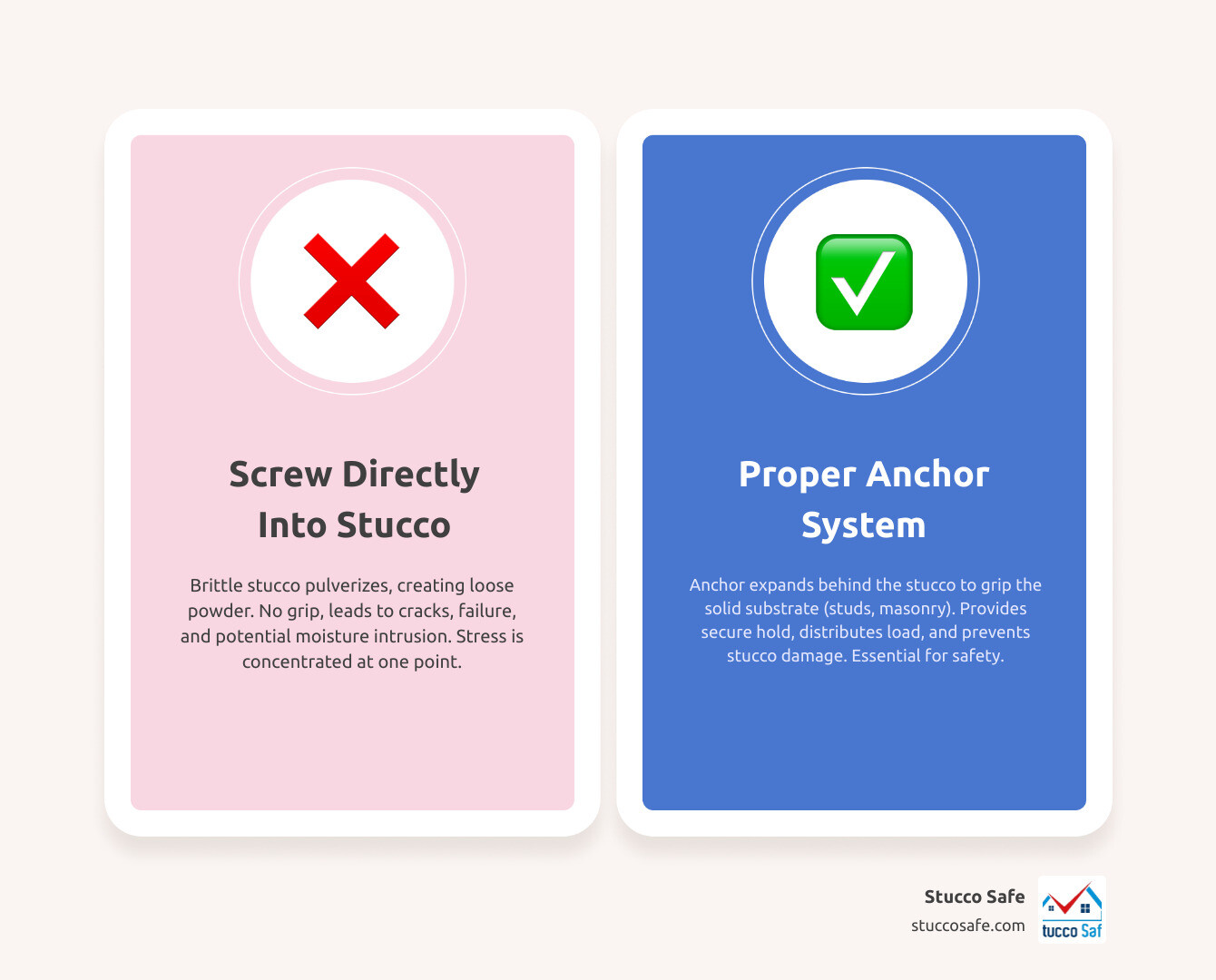
Driving a screw directly into stucco creates stress concentration, focusing all the weight on one tiny point. The brittle cement pulverizes instead of forming threads, leading to failure. This is why items fall, leaving cracked stucco and creating moisture entry points. The key to success is to bypass the stucco and anchor into the solid material behind it.
As an EDI Level 2 Certified Stucco Inspector with over 20 years of experience, I’ve seen countless anchor failures lead to thousands of dollars in hidden moisture damage. Understanding the proper technique is crucial for protecting your home.
Why Stucco Itself is a Poor Anchor Point
To understand why does stucco make a good anchor, you must first understand its composition. Traditional stucco is a mix of cement, sand, and water applied over a wire lath. While it cures to a hard, concrete-like finish, this hardness creates a problem: extreme brittleness.
Unlike flexible materials, stucco cracks or crumbles under focused pressure. When you drive a screw directly into it, the material doesn’t form threads for the screw to grip. Instead, it pulverizes into dust or develops cracks that spread from the hole. This is because the screw creates stress concentration, focusing the entire load on a small, weak point.
These cracks are more than cosmetic; they are significant moisture intrusion risks. Water can travel through these openings and get behind the stucco, leading to hidden rot, mold, and expensive repairs. This is a primary reason why stucco has problems. Following a comprehensive guide to stucco anchors is not just about securing an item, but about protecting your walls from water damage.
Stucco alone is a terrible anchor, but the solid structure behind it provides all the strength you need.
The Key to Safe Anchoring: Understanding Your Stucco System and Substrate
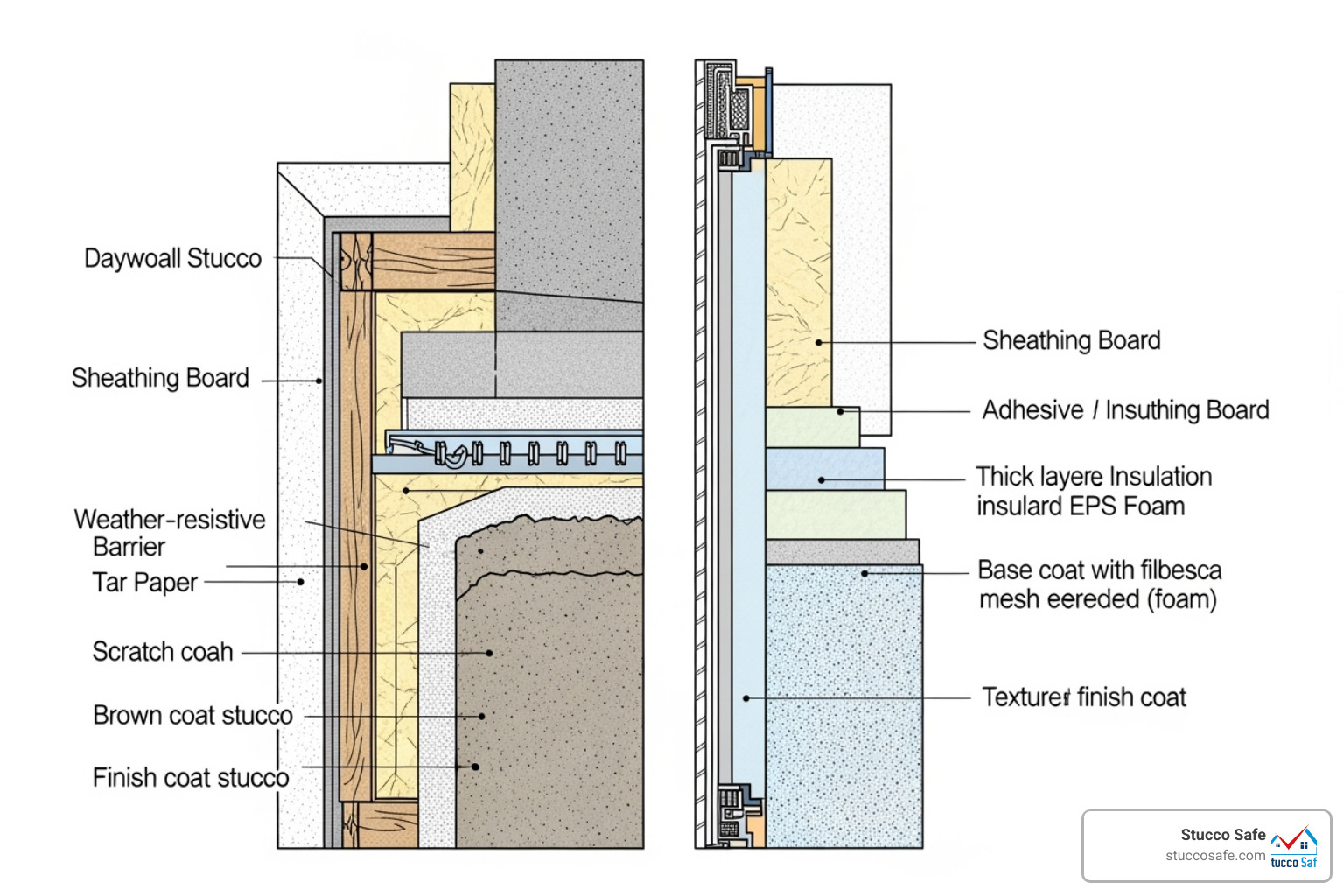
The real question isn’t does stucco make a good anchor, but what’s behind your stucco? The stucco is just a finish; the true holding power comes from the underlying wall structure, or “substrate.” This could be wood sheathing and studs or solid masonry. Before drilling, you must identify this substrate. For heavy items, locating studs is critical. A quality professional stud finder is essential for finding these structural supports.
Traditional Hard Coat Stucco (3-Coat System)
Traditional stucco is a cement-based system applied in three coats over wire mesh lath, often called chicken wire stucco. This creates a strong, solid finish. The anchoring method depends on the substrate behind the stucco.
- Over Solid Masonry: If your stucco covers concrete block or brick, you can use any masonry-rated anchor. The wall itself provides excellent support.
- Over Wood Sheathing: More common in homes, this system has plywood or OSB behind the stucco. Light items can anchor into the sheathing, but heavy loads require long fasteners that penetrate at least one inch into the wood studs.
Synthetic Stucco (EIFS)
Synthetic stucco, or EIFS (Exterior Insulation Finishing System), consists of a thin coating over foam board insulation. This foam offers great insulation but has zero anchoring strength. The hollow sound when tapped is a key indicator. With EIFS, every anchor must pass through the foam and secure into the structural framing behind it. Attempting to anchor to the foam is a common cause of artificial stucco problems.
How to Identify Your Stucco Type
Identifying your stucco is crucial for choosing the right anchor. Misidentification can lead to anchor failure or unnecessary damage, contributing to hard coat stucco problems.
- Tap Test: Knock on the wall. Traditional stucco sounds solid and dense. EIFS often sounds hollow.
- Visual Inspection: Traditional stucco may have visible control joints to manage cracking. EIFS tends to look smoother and more uniform, especially around windows.
Choosing the Best Anchors and Fasteners for Stucco
Since the answer to does stucco make a good anchor depends on the substrate, choosing the right hardware is critical. The anchor’s job is to transfer the load from your item to the solid structure behind the stucco. Using the wrong anchor for the load or substrate will lead to failure. Our guide on the best anchors for stucco offers more detail.
| Anchor Type | Typical Load Capacity (per anchor) | Best Use Cases | Required Substrate |
|---|---|---|---|
| Plastic Sleeve Anchor | 5-25 lbs | Lightweight items: house numbers, small signs, string lights, small decorations | Stucco over sheathing or solid masonry (not EIFS foam) |
| Metal Expansion Anchor | 25-75 lbs | Medium loads: hose reels, medium-sized fixtures, mailboxes, handrails | Stucco over sheathing or solid masonry |
| Masonry Screw (Tapcon) | 20-80 lbs | Medium loads: attaching wood to stucco, conduit clips | Stucco over solid masonry or dense sheathing (not hollow) |
| Wedge Anchor | 50-200+ lbs | Heavy loads: structural supports, large awnings, satellite dishes | Solid masonry (concrete, brick) behind stucco |
| Lag Bolt (into stud) | 100-200+ lbs | Very heavy loads: deck ledger boards, large pergolas, AC condenser brackets | Wood studs behind stucco (requires proper length) |
For Light Loads (Under 15 lbs)
For items like house numbers and string lights, use plastic sleeve anchors or nylon expansion anchors. These expand within the drill hole to grip the substrate. They are forgiving on stucco and ideal for light duties. Always choose an outdoor-rated wall anchor to prevent corrosion.
For Medium Loads (15-50 lbs)
For heavier items like hose reels and handrails, you need more strength. Metal expansion anchors and masonry screws (like Tapcons) are excellent choices. Metal anchors expand behind the wall for a strong mechanical grip, while masonry screws cut their own threads into the substrate. Learn more about stucco screw anchors.
For Heavy Loads (Over 50 lbs)
For awnings, pergolas, and other heavy installations, you must use the strongest methods. Use wedge anchors for masonry substrates or lag bolts driven directly into wood studs. A critical tip is to distribute the weight across multiple anchor points. For lag bolts, ensure they penetrate at least 1 inch into the wood stud for a secure hold.
The Proper Procedure: How to Drill and Anchor into Stucco
With the right anchor and an understanding of your wall system, you can drill into stucco safely. A precise, methodical approach is key to creating a secure mounting point without causing damage.
Step 1: Gather Your Tools and Materials
Having the right equipment prevents costly mistakes. You will need:
- Hammer drill: Essential for drilling into cement-based stucco.
- Carbide-tipped masonry bits: Standard bits will dull quickly. See our guide on the best drill bit for stucco.
- Stud finder: Critical for locating structural supports for heavy loads.
- Exterior-grade silicone caulk and caulk gun: Non-negotiable for waterproofing the hole.
- Safety glasses: Protect your eyes from dust and debris.
Step 2: Locate, Mark, and Drill the Pilot Hole
Precision in this step is crucial. Use a stud finder to locate studs or other structural elements, especially for heavy items. Mark your drilling location carefully.
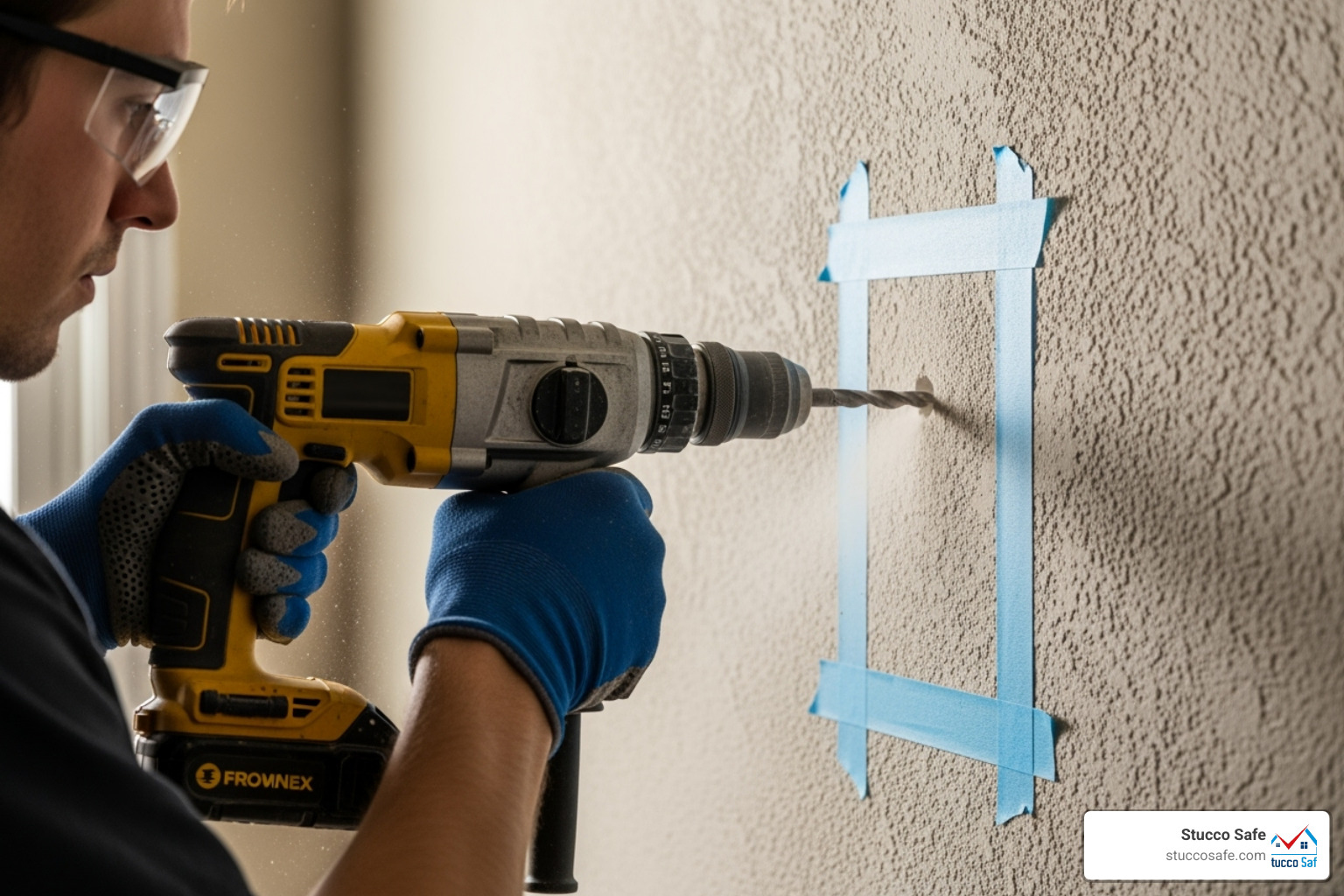
A key professional tip is to apply painter’s tape over the mark before drilling. This prevents the bit from wandering and reduces chipping on the stucco surface.
Drill slowly and steadily to create a clean hole. For more tips, see how to drill into stucco. After drilling, clean all dust and debris from the hole using compressed air or a brush. A clean hole ensures the anchor can grip properly.
Step 3: Seal, Insert, and Fasten
This final step ensures a professional, waterproof installation. Waterproofing is essential to prevent future problems.
Before inserting the anchor, apply a bead of exterior-grade silicone caulk into the drilled hole. This creates a watertight seal. This simple action can prevent thousands of dollars in water damage.
Insert the anchor until it is flush with the stucco surface, tapping gently if needed. The fit should be snug. Drive a corrosion-resistant fastener (like stainless steel) slowly until it is snug. Do not overtighten, as this can crack the stucco or strip the anchor.
Part of good stucco wall maintenance is to check these anchor points periodically for any signs of loosening or water intrusion.
So, Does Stucco Make a Good Anchor? Risks and Best Practices
So, does stucco make a good anchor? No, but a stucco wall system provides excellent anchoring when done correctly. The stucco is just a decorative layer; the real strength comes from the substrate behind it. Success depends on using the right anchor, reaching a solid substrate, and sealing the penetration.
The Top 3 Risks of Improper Anchoring
Improper anchoring leads to three main problems I see in my inspections:
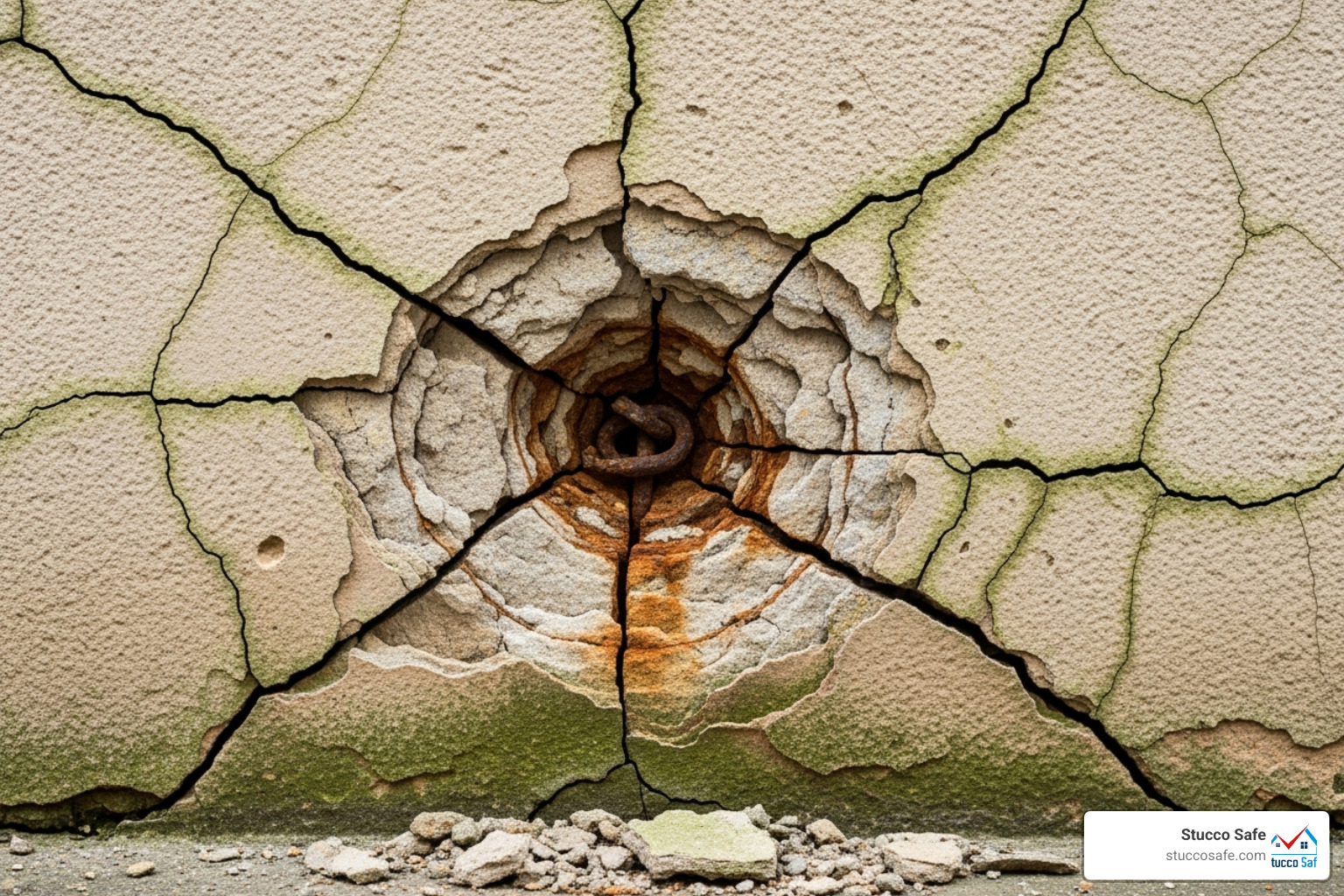
- Stucco Cracking: Using too much force or no anchor creates stucco cracks around the screw. These are not just cosmetic; they are entry points for water.
- Moisture Intrusion: Water entering through unsealed holes or cracks causes hidden rot and mold in the wall structure. This can lead to serious issues like bubbling stucco: a guide to prevention and repair and costly remediation.
- Anchor Failure and Property Damage: An improperly secured item can tear away from the wall, damaging the stucco, the item itself, and anything below it.
Are there alternatives to drilling into stucco?
For very lightweight items (under 5 lbs) like holiday decorations, adhesive hooks can be an alternative. Success requires careful surface preparation: clean the area thoroughly with a degreaser, rinse, dry, and wipe with rubbing alcohol before applying the hook. Be mindful of the weight limitations and only use them for temporary, light-duty applications. Here are a few good examples of outdoor-rated adhesives.
When does stucco make a good anchor system?
A stucco wall is an excellent anchor system when you remember that the system works, not the stucco itself. The goal is to penetrate the stucco and grip the solid substrate behind it, whether that’s a wood stud or masonry block. The stucco’s role is simply to be a sealed passageway for the fastener. By identifying your substrate, choosing the right anchor, and sealing the hole, you can mount items securely.
Frequently Asked Questions about Stucco Anchoring
Here are answers to common questions about whether stucco makes a good anchor and how to hang items on stucco walls.
How much weight can a stucco wall hold with anchors?
The weight capacity depends entirely on the anchor type and the substrate it’s fastened to. The stucco itself holds no weight. Refer to the table in Section 3 for specific load capacities, but here is a general guide:
- Light Loads (5-25 lbs): Plastic sleeve anchors into sheathing or masonry.
- Medium Loads (25-75 lbs): Metal expansion anchors or masonry screws into sheathing or masonry.
- Heavy Loads (100-200+ lbs): Lag bolts into wood studs or wedge anchors into solid masonry.
For any load over 100 lbs, always distribute the weight across multiple anchor points.
Can you screw directly into stucco without an anchor?
No. Stucco is too brittle to hold a screw’s threads. Driving a screw directly into stucco will pulverize the cement, creating a weak connection that will fail. It also creates cracks that allow for moisture intrusion. Even specialty screws for this purpose are not a substitute for a proper anchor system. Always use an anchor appropriate for the substrate.
How do you fix a hole in stucco after removing an anchor?
Patching an anchor hole is a straightforward process. For detailed instructions, see our guide on patching a hole in stucco.
- Clean: Remove the old anchor and clean all loose debris from the hole.
- Fill: Apply an exterior-grade stucco patch compound, overfilling the hole slightly.
- Texture: While the patch is wet, use a sponge or brush to match the surrounding stucco texture.
- Cure: Allow the patch to cure completely as per the manufacturer’s instructions.
- Paint: Prime and paint the patch to match the wall color.
If you need to learn more about how to repair stucco in general or how to repair exterior stucco cracks, we have resources for that as well. If you’re unsure about the condition of your wall, a professional inspection can identify underlying issues before you begin repairs. Our inspections range from $495 to $1595 depending on the home’s size.
Conclusion: Anchor with Confidence or Call a Professional
So, does stucco make a good anchor? No, but a stucco wall system can be an excellent anchoring surface. The key is to bypass the brittle stucco layer and secure your anchor into the solid substrate behind it, such as wood studs or masonry.
Successful anchoring relies on these critical steps:
- Identify your stucco system and the substrate behind it.
- Choose an anchor that matches the item’s weight and the substrate material.
- Use proper drilling techniques to create a clean hole.
- Seal every penetration with exterior-grade silicone caulk to prevent moisture intrusion.
Following these principles allows you to hang items on your stucco walls safely and securely. However, calling a professional is the smartest move if you are mounting very heavy items, are unsure of your wall’s construction, or see existing signs of damage like cracks or stains.
Improper anchoring can lead to significant hidden water damage. At Stucco Safe, our certified inspectors use forensic testing to find moisture and structural issues before they become costly problems. We serve homeowners in Southeastern Pennsylvania, New Jersey, and Delaware. A professional inspection, costing between $495 and $1595, is a small investment for the peace of mind that your home’s exterior is sound.
Whether you tackle the project yourself or seek professional guidance, understanding how to anchor correctly puts you in control. Learn more about the best anchors for your stucco system and ensure your home’s integrity.