
Exploring the Role of an EIFS Inspector: What You Need to Know
What Is an EIFS Inspector and Do You Need One?
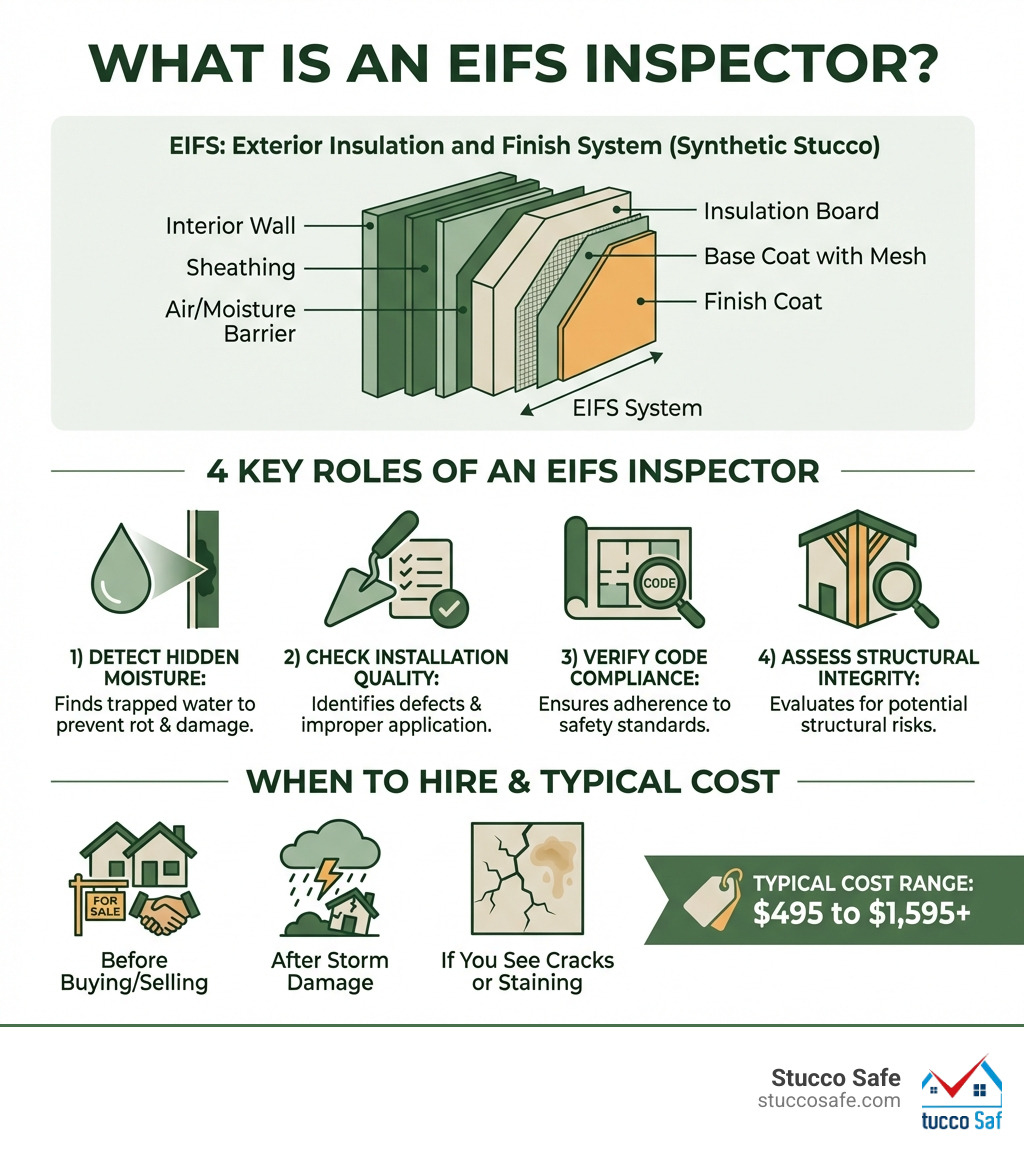
An EIFS inspector is a certified professional who examines Exterior Insulation and Finish Systems (synthetic stucco) on homes and buildings to detect moisture intrusion, structural damage, and installation defects.
Quick answers:
- What does an EIFS inspector do? Tests your synthetic stucco cladding for hidden moisture, cracks, and code compliance issues
- Who needs one? Homeowners, buyers, and sellers with EIFS (synthetic stucco) on their property
- When do you need one? Before buying or selling a home, after visible damage, or if you suspect water intrusion
- What does it cost? Typically $495 to $1,595 or more depending on home size
EIFS looks great on the outside. But hidden moisture trapped behind it can silently rot your walls, damage insulation, and lead to very expensive repairs.
That’s why getting a qualified EIFS inspector matters — especially if you’re planning to sell your home or suspect something isn’t right beneath the surface.
I’m Gabe Kesslick, founder of Stucco Safe, and I’ve been inspecting and investigating leak and moisture issues since 2001, earning multiple EIFS and building envelope certifications including the AWCI EIFS Inspector Certification — which means I know exactly what to look for as an EIFS inspector. In the sections below, I’ll walk you through everything you need to know to protect your home.
Related content about eifs inspector:
Understanding EIFS
Exterior Insulation and Finish Systems, or EIFS, is often referred to as “synthetic stucco.” While it looks very similar to traditional hard-coat stucco, the two materials are quite different in their composition and performance. EIFS is a multi-layered exterior wall cladding that provides both insulation and a waterproof finish. It is highly valued for its energy efficiency, as the foam insulation board (EPS) wraps the building in a continuous thermal blanket, significantly reducing heating and cooling costs by eliminating thermal bridging.
Architecturally, EIFS offers incredible flexibility. Because the foam can be cut and shaped easily, we see it used for intricate cornices, decorative window surrounds, and varied textures that would be difficult or expensive to achieve with traditional masonry. However, because EIFS is a proprietary system, it must be installed according to very specific manufacturer instructions to prevent water from getting trapped behind the foam.
There are two primary types of EIFS: barrier systems and drainage systems. Barrier systems rely entirely on the outer surface to keep water out. If a crack forms or a sealant joint fails, water enters and has no way to escape. Drainage systems, which became the industry standard for residential construction in the late 1990s, include a water-resistive barrier (WRB) and a drainage plane that allows moisture to exit the wall assembly. Understanding which system your home uses is a critical part of what we do during an inspection, as the risk profiles for each system differ significantly.
The Role of an EIFS Inspector
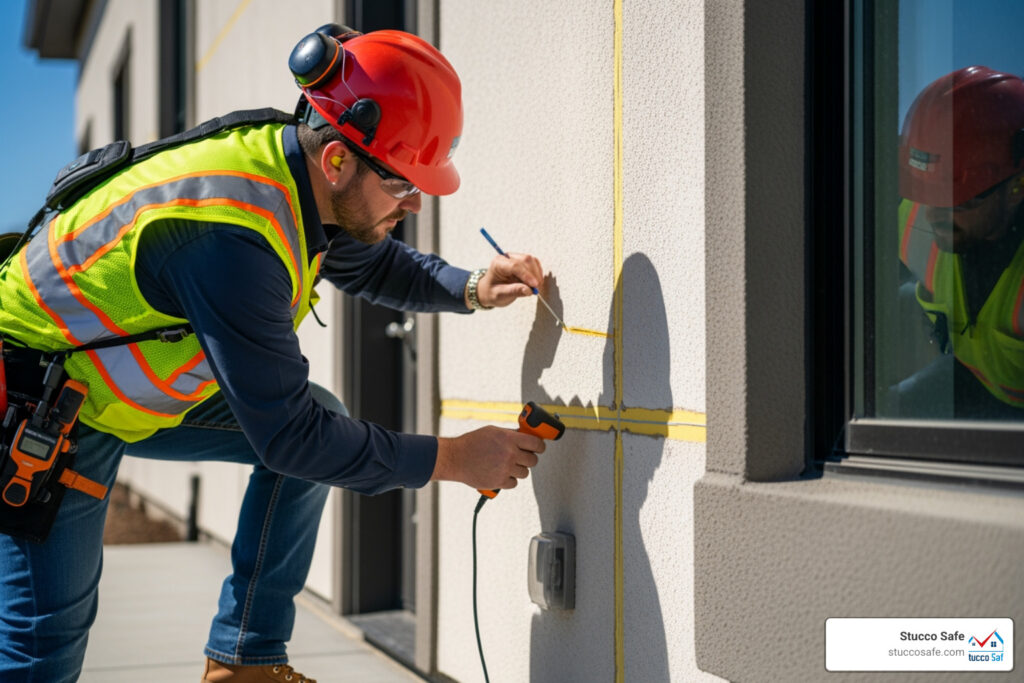
When we step onto a property as an eifs inspector, our primary goal is to verify that the system is functioning as intended and protecting the underlying structure. The inspection process is much more than a simple walk-around; it is a forensic evaluation of the building envelope. We are looking for “red flags” that indicate the system might be failing, even if the exterior looks pristine.
Our work involves checking for compliance with building codes and manufacturer specifications. We focus heavily on moisture detection because EIFS is non-breathable; if water gets behind the system through a failed sealant joint or improper flashing, it has no way to evaporate. This can compromise the structural integrity of the wooden sheathing and framing underneath, leading to wood rot and mold growth.
We look at critical junctions like roof-to-wall transitions, where “kick-out” flashing is often missing or improperly installed. We also examine window sills, door frames, and where the EIFS meets the ground or other materials like stone or brick. A professional inspector knows that the most beautiful EIFS job can be a disaster if the hidden flashing details were ignored during construction. We also evaluate the expansion joints, which are necessary to allow the building to move without cracking the brittle finish coat.
EIFS Inspector Certification and Training
Not every home inspector is qualified to evaluate synthetic stucco. A true eifs inspector undergoes rigorous training and certification from industry-leading organizations. The most recognized certifications come from the Association of the Wall and Ceiling Industry (AWCI) and the Exterior Design Institute (EDI).
These programs require inspectors to understand the chemistry of the materials, the physics of moisture movement, and the specific installation requirements for various EIFS brands like Dryvit, Sto, and Master Builders Solutions. Certification isn’t just about passing a one-time test; it involves understanding the evolution of building codes and the history of EIFS litigation, which shaped how these systems are installed today.
Ongoing certification requirements ensure that we stay up to date with the latest building codes and forensic techniques. When you hire us, you are hiring someone who has invested years into mastering this specific niche of building science. We understand the nuances of ASTM standards and how they apply to the specific climate challenges found in the Mid-Atlantic region, from the humid summers in Philadelphia to the coastal winds of the Jersey Shore.
Inspection Techniques and Tools
To see what is happening behind the walls, we use a combination of specialized tools and techniques that go far beyond the naked eye:
- Infrared Thermography: We use high-resolution thermal imaging cameras to detect temperature differences on the wall surface. Since wet insulation holds heat differently than dry insulation (thermal mass), this can point us toward potential problem areas without touching the wall. This is particularly effective during the “golden hour” after sunset when the walls are cooling down.
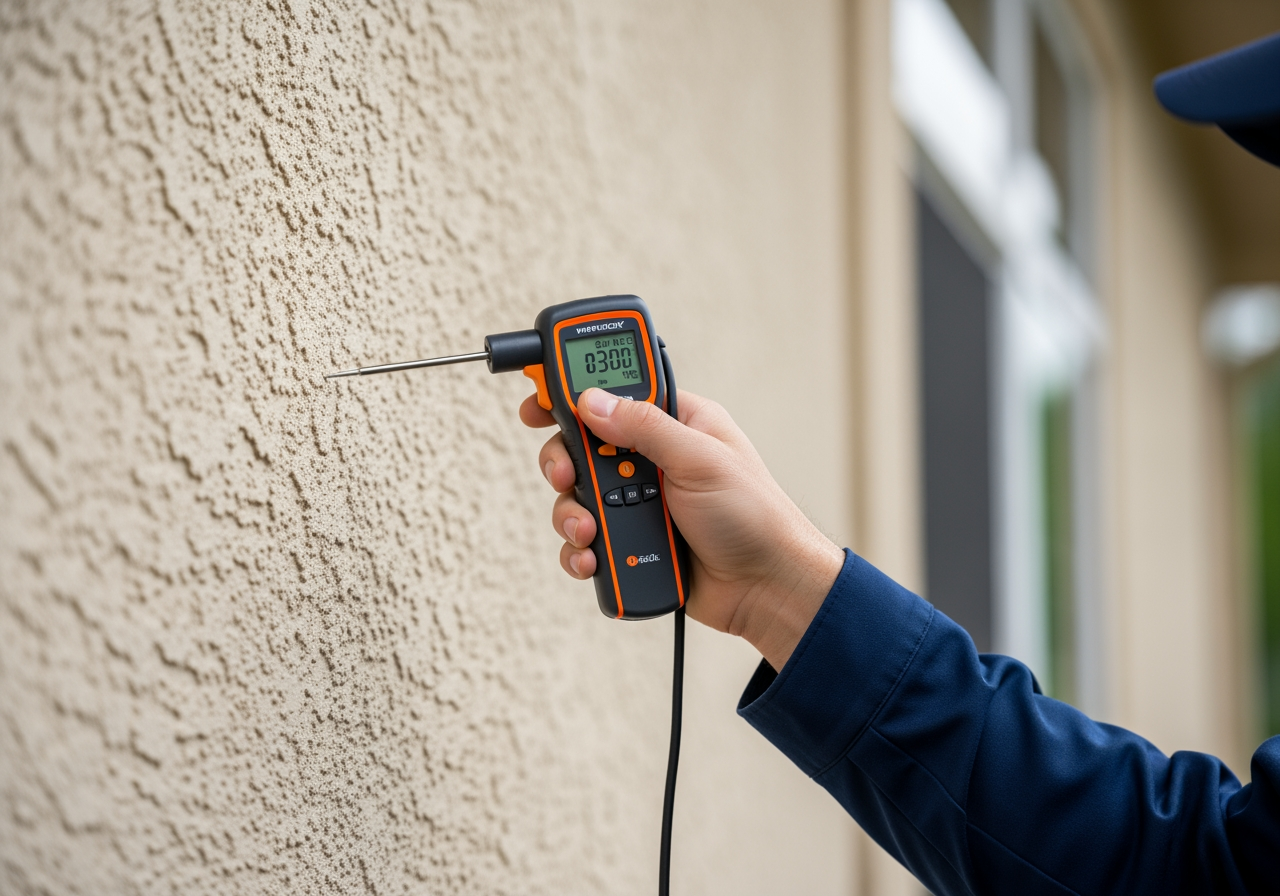
- Moisture Meters: We use both non-invasive (surface) meters and invasive (probe) meters. Non-invasive meters use radio frequency to scan for moisture, while invasive meters provide the definitive data needed for a professional report.
- Invasive Testing: This is the “gold standard” for EIFS. We insert small, thin probes through the finish in inconspicuous areas (like under a window or at a floor line) to measure the actual moisture content of the wood sheathing. We measure the percentage of moisture and the “feel” of the wood (firm vs. soft). Don’t worry—we seal these tiny holes with professional-grade sealant that matches your finish color, ensuring the system remains watertight.
- Visual Analysis: We look for “tell-tale” signs like cracking at corners, bulging, or staining that suggests water is traveling behind the finish. We also check for the presence of mesh at the bottom of the walls, which is required for proper back-wrapping.
Frequently Asked Questions about EIFS Inspectors
What is an EIFS inspection?
An EIFS inspection is a specialized evaluation of the building’s exterior cladding. Unlike a general home inspection, it focuses specifically on the integrity of the insulation system, the quality of the seals around windows and doors, and the condition of the roofing transitions. We check the entire “envelope” of the property to ensure no water is penetrating the walls. We provide a detailed report that includes moisture readings, photos of problem areas, and recommendations for repairs if necessary.
How much does an EIFS inspection cost?
The cost of hiring an eifs inspector varies based on the size and complexity of the home. For most residential properties in our service area—including Southeastern PA, New Jersey, and Delaware—stucco inspections vary in cost from $495 to $1595 or more for very large homes. Factors like complex architectural designs, multiple stories, and travel time to specific locations like West Chester, Cherry Hill, or Newark can influence the final price. We provide transparent pricing based on the square footage of the EIFS surface area.
How to get EIFS certified?
The certification process typically involves completing comprehensive coursework through organizations like InterNACHI, EDI, or AWCI. Candidates must pass exams that cover moisture drainage systems, barrier systems, and repair protocols. Continuing education is also a requirement to maintain these credentials and stay current with evolving building standards and new product releases from manufacturers.
Can EIFS be repaired if moisture is found?
Yes, EIFS is highly repairable. If an eifs inspector finds high moisture, it doesn’t necessarily mean the entire system needs to be replaced. Often, localized repairs to flashings or sealants, combined with replacing small sections of damaged sheathing, can restore the system’s integrity. The key is catching the issue early before the rot spreads to the structural framing.
How long does an EIFS inspection take?
A typical residential EIFS inspection takes between 2 to 4 hours on-site, depending on the size of the home and the number of windows and doors that need to be probed. We take our time to ensure every critical junction is tested, as rushing an inspection can lead to missing a hidden leak that could cost thousands later.
Conclusion
Protecting your investment starts with understanding the health of your home’s exterior. At Stucco Safe, we pride ourselves on being the experts you can trust. Our team utilizes forensic testing methods and certified inspectors to provide the most accurate data possible. Whether you are in Philadelphia, Newark, West Chester, Villanova, or anywhere across Southeastern Pennsylvania, New Jersey, and Delaware, our mission is to give you peace of mind.
We serve a wide range of communities, including King of Prussia, Phoenixville, Berwyn, Paoli, and throughout Chester County. In New Jersey, our inspectors are active in Jersey City, Edison, Woodbridge, Lakewood, Toms River, Hamilton Township, and Trenton. We also provide expert services in Camden, Cherry Hill, Passaic, Union City, and Franklin Township.
If you are buying or selling a home with synthetic stucco, don’t leave it to chance—ensure your property is evaluated by a professional eifs inspector. Our detailed reports provide the leverage you need during real estate negotiations and the roadmap you need for proper home maintenance. Contact Stucco Safe today to schedule your comprehensive evaluation.