
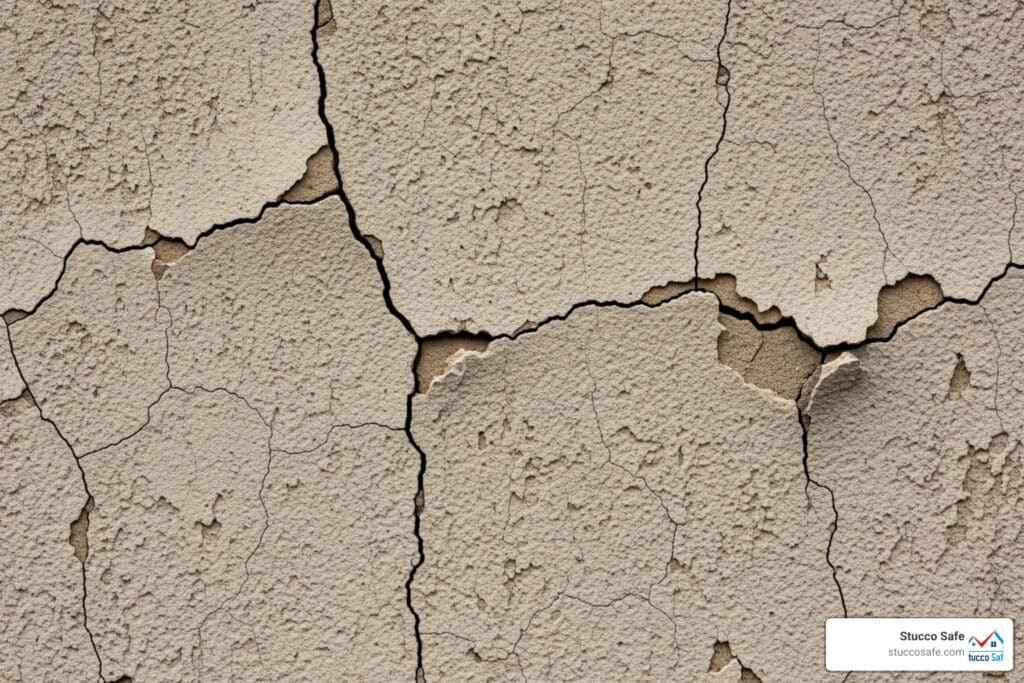
How to fix cracked exterior stucco: 3 Flawless Steps
Why Timely Stucco Crack Repair Protects Your Home
How to fix cracked exterior stucco depends on the crack size. Here’s a quick guide:
- Hairline cracks (under 1/16″): Fill with elastomeric caulk, smooth, and paint.
- Small to medium cracks (1/16″ to 1/4″): Apply premixed stucco patch in layers, match texture, and let cure.
- Large cracks (over 1/4″): Use a bonding agent, fiberglass mesh, and a three-coat stucco system.
- Widespread or structural cracks: Call a certified stucco inspector immediately.
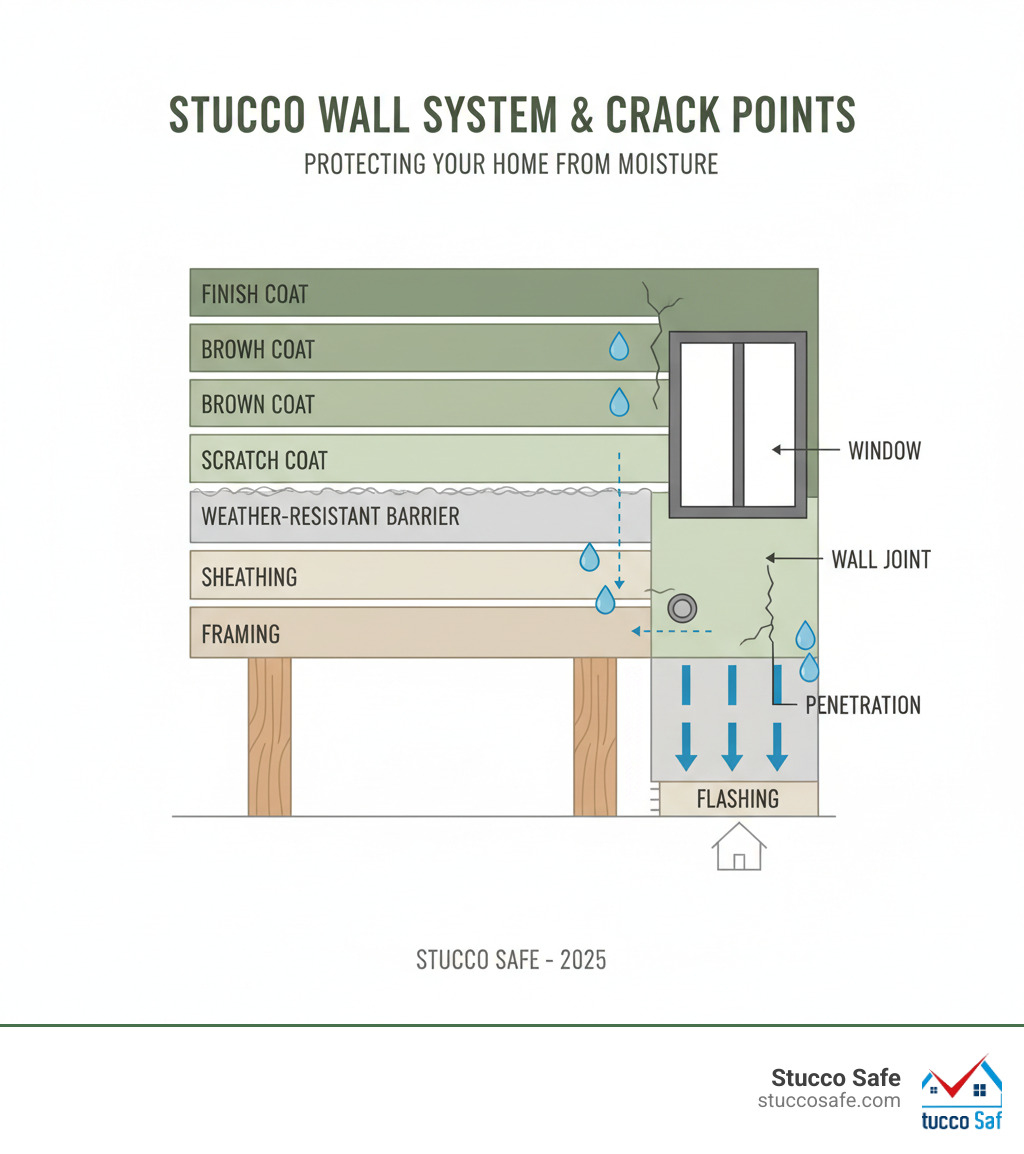
Stucco is a durable finish, but its rigid nature means it will eventually crack. These cracks aren’t just cosmetic; they allow water to get behind the stucco, attacking the sheathing and framing. This hidden damage can lead to serious deterioration before you see signs like staining or mold.
The good news is most cracks can be fixed before they become expensive problems. The key is using the right repair method and knowing when to call a professional.
I’m Gabe Kesslick, founder of Stucco Safe and an EDI Level 2 Certified Stucco Inspector. Since 2001, I’ve helped homeowners learn how to fix cracked exterior stucco and prevent hidden structural damage. My forensic approach focuses on finding problems early—when they’re still manageable.
Understanding Stucco Cracks: Types and Causes
Not all cracks are equal. Understanding the difference helps you choose the right repair and prevent future issues.
Stucco is durable but rigid. It can’t flex with house settling, temperature swings, or moisture changes, so it cracks instead. Once a crack appears, it’s a doorway for water, leading to rot, mold, and hidden structural damage. Identifying the crack type is the first step to knowing how to fix cracked exterior stucco effectively.
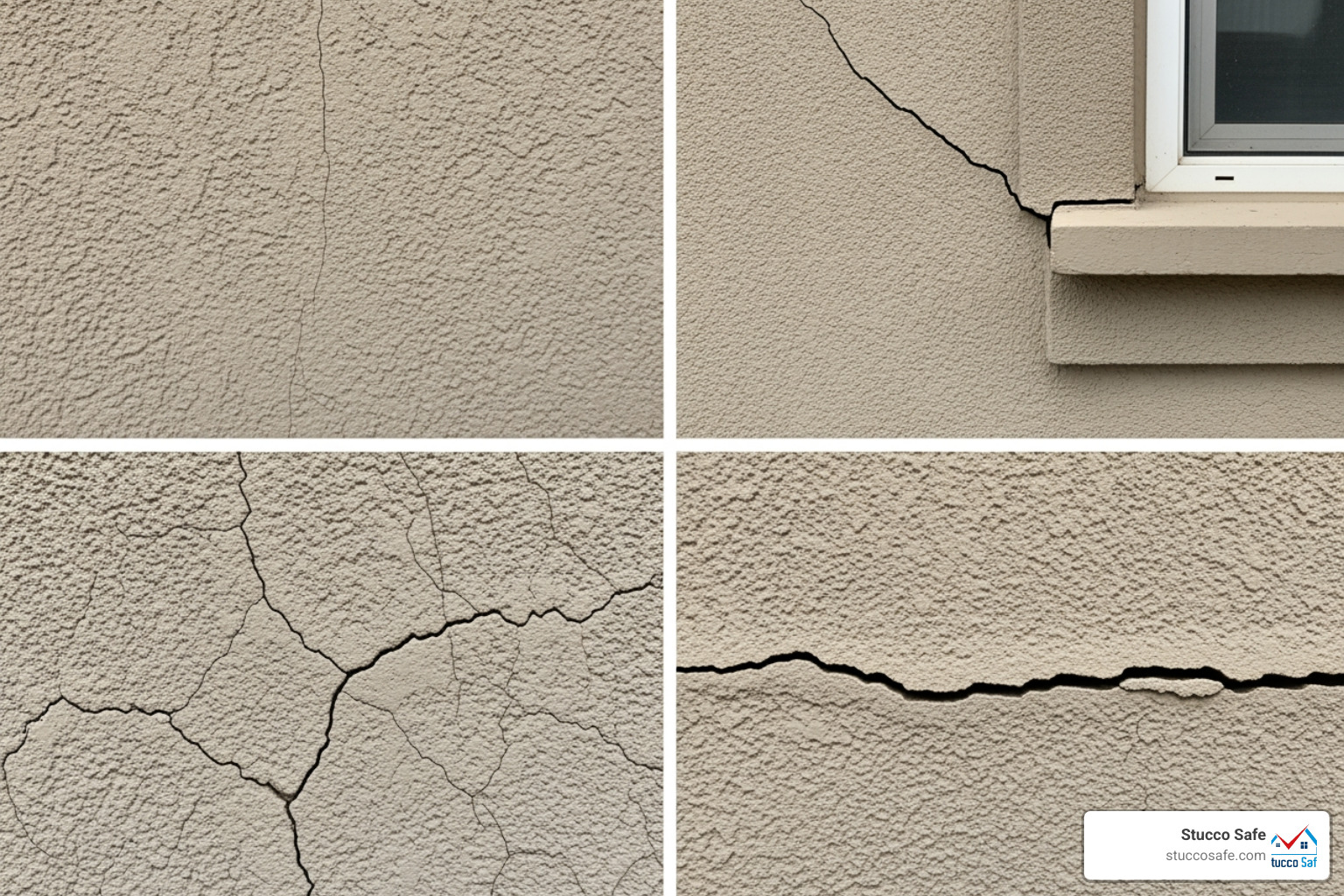
- Hairline cracks are less than 1/16 inch wide. Caused by quick drying or minor settling, they can still allow moisture intrusion.
- Spider cracks are networks of tiny, surface-level cracks, usually from shrinkage. They are mostly cosmetic but should still be addressed.
- Diagonal cracks, often near windows and doors, indicate concentrated stress from structural movement or improper framing and require close attention.
- Structural cracks are wider than 1/4 inch and may signal major foundation or structural shifts. If you see these, especially if they’re widening, call a professional inspector.
The causes of these cracks often work in combination:
- House settling: Minor settling causes hairline cracks, while major foundation movement can create large structural cracks.
- Temperature changes: In areas like Southeastern Pennsylvania, New Jersey, and Delaware, the constant expansion and contraction from hot summers and freezing winters inevitably leads to cracks.
- Moisture intrusion: Water getting behind stucco from failed flashing or existing cracks causes the wood underneath to swell and shrink, stressing the stucco. Frozen water expands, creating even more pressure.
- Improper installation: This is a major cause, from incorrect mixing to skipping critical elements like weep screeds. Homes built between 1993 and 2006 are particularly at risk, with an estimated 90% failure rate for stucco systems from that era.
- Impact damage: A thrown rock or a slipped ladder can easily create a crack or hole that needs immediate attention.
Essential Tools and Materials for Stucco Repair
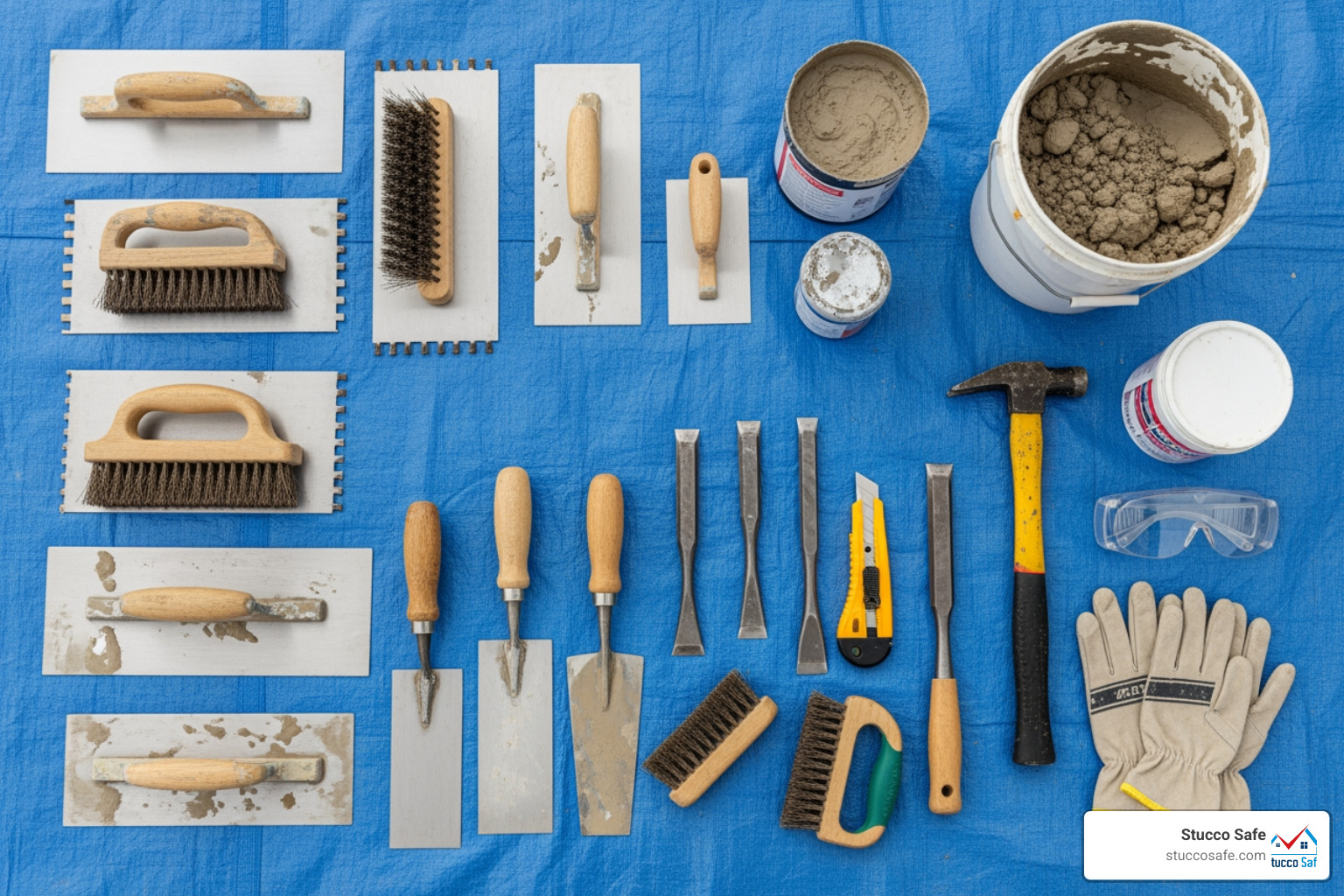
Before you learn how to fix cracked exterior stucco, you need the right gear. Most items are available at your local hardware store.
Safety First
Always wear safety glasses to protect from flying debris and heavy-duty gloves to guard against chemical burns from wet cement. Keep water handy for rinsing.
The Tool Kit
- Wire brush: For cleaning out loose debris.
- Chisel and hammer or utility knife: For widening cracks into a “V” shape for better adhesion.
- Putty knife and trowel: For applying repair materials.
- Rubber float and sponge: For smoothing and texturing patches.
- Caulk gun: For applying elastomeric caulk.
- 5-gallon bucket, stir stick, and tarp: For mixing and cleanup.
The Materials
- Elastomeric caulk: Your go-to for hairline cracks. It’s flexible and paintable.
- Premixed stucco patch: Convenient for small to medium cracks. Use acrylic-based patches for synthetic stucco (EIFS).
- Stucco mix: For larger repairs, you’ll need a traditional mix of Portland cement, sand, and hydrated lime.
- Bonding agent: Crucial for helping new stucco adhere to old stucco.
- Fiberglass mesh tape: Reinforces larger cracks to prevent them from returning.
- Grade-D builder’s paper and galvanized metal lath: For large repairs where the underlying layers are damaged.
- Primer: A good primer like ZINSSER® Bulls Eye 1-2-3® Primer ensures your final paint job matches.
With these tools and materials, you’re prepared to tackle cracks with confidence.
How to Fix Cracked Exterior Stucco: A Step-by-Step Guide
The method to fix cracked exterior stucco depends on the crack’s size. Proper preparation is the key to a lasting repair, regardless of the method.
Surface Preparation:
- Clean the area with a wire brush to remove all loose stucco, dirt, and debris. A clean surface is essential for proper bonding.
- Widen cracks narrower than 1/4 inch using a painter’s tool or chisel. Create an inverted ‘V’ shape to give the patch material something to grip. Always wear safety glasses.
- Dampen the area by lightly misting it with water before applying any patch. This prevents the old stucco from drawing moisture out of the new patch too quickly, which can cause new cracks.
Now, let’s choose the right method:
| Repair Method | Crack Size | Cost (DIY) | Difficulty | Longevity |
|---|---|---|---|---|
| Caulking | Hairline (< 1/16 inch) | Low | Easy | Varies; can be a temporary fix if underlying issues persist. Elastomeric caulk offers better flexibility and durability. |
| Patching (Premixed) | Small to Medium (1/16-1/4 inch) | Moderate | Medium | Good for non-structural cracks. Expected repair rate of about 70-80% for preventing reappearance. Can last many years if properly applied and cured. |
| Multi-Layer Repair | Large (> 1/4 inch) / Structural Damage | High | High | Best possible way to achieve a durable, long-lasting repair, especially when reinforced with mesh. Offers the highest success rate in preventing cracks from reappearing, often exceeding 80%. Recoating the entire wall provides the best aesthetic match and crack prevention for widespread issues. |
The Best Method for How to Fix Cracked Exterior Stucco with Hairline Fractures (Under 1/16-inch)
For these common cracks, painting over them is ineffective. Use elastomeric caulk, which is designed to flex with temperature changes.
After cleaning and dampening the crack, apply a steady bead of caulk with a caulk gun, forcing it deep into the void. Immediately smooth the bead with a wet finger or putty knife, feathering the edges to blend with the surrounding stucco. Wipe away any excess.
Allow the caulk to cure per the manufacturer’s instructions (usually 24 hours) before painting. For more details on techniques, this resource from Family Handyman is helpful.
How to Fix Cracked Exterior Stucco with Small to Medium Gaps (1/16 to 1/4-inch)
For wider cracks, use a premixed stucco patch. After prepping the surface (clean, widen, dampen), you’re ready to patch.
If using a powdered mix, combine it with water to a peanut butter-like consistency. Only mix what you can use in 15-20 minutes.
Apply the patch in thin layers (no more than 1/4 inch thick at a time), allowing each layer to partially dry before adding the next. Build up layers until the patch is flush with the wall.
Before the final coat dries, match the texture using a damp sponge, stiff brush, or rubber float to replicate your existing finish.
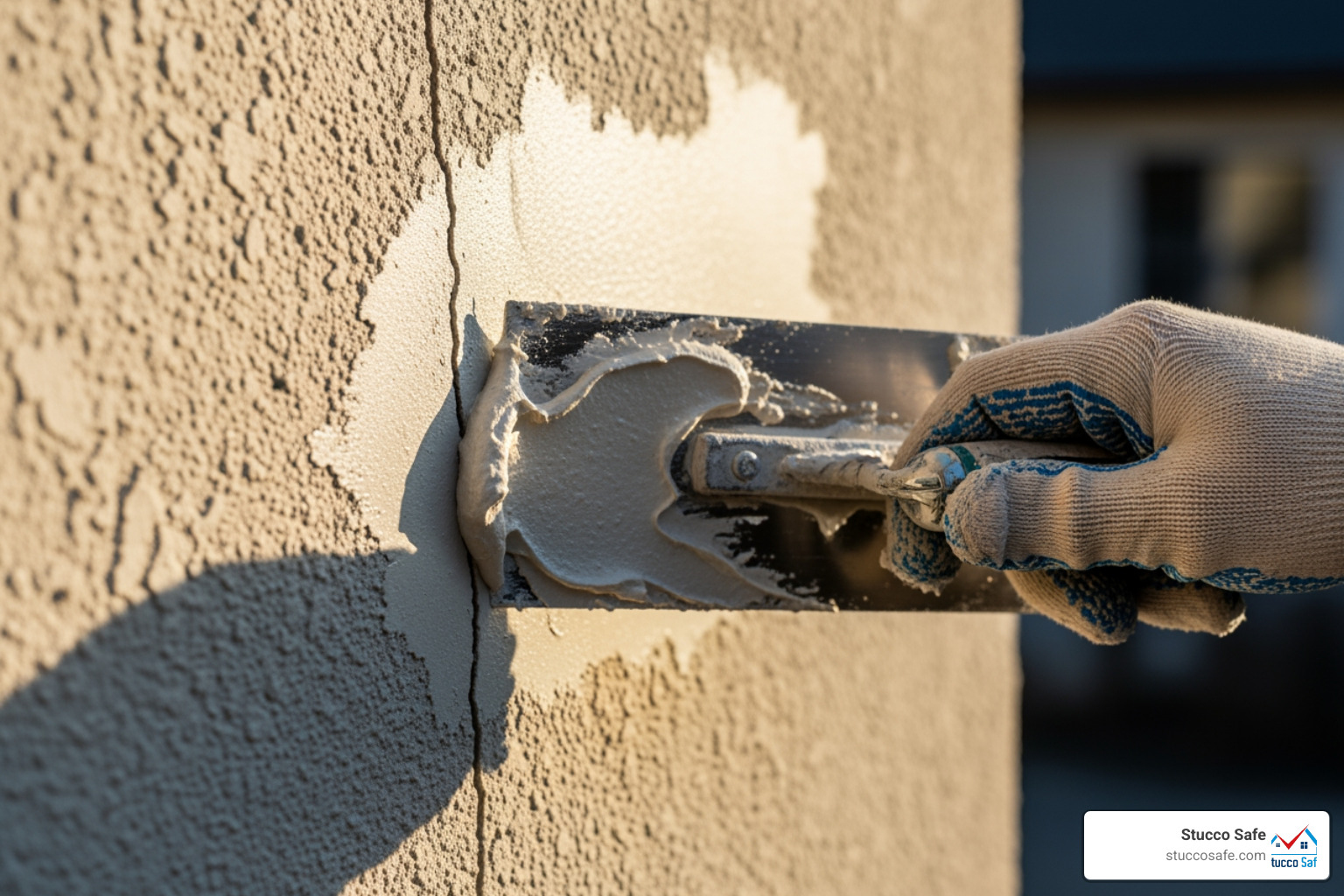
Allow the patch to cure for 24-48 hours, misting it occasionally in hot weather to slow the drying process. Once cured, prime with ZINSSER® Bulls Eye 1-2-3® Primer before painting.
Repairing Large Cracks and Structural Damage (Over 1/4-inch)
Large cracks require rebuilding a section of the stucco using the three-coat process. This is a more involved repair that may warrant a professional.
- Remove all damaged stucco with a hammer and chisel down to solid material. Inspect the underlying layers. Replace damaged metal lath and repair torn builder’s paper.
- Apply a bonding agent to the edges of the old stucco.
- Reinforce the crack with fiberglass mesh tape, extending it several inches on both sides. This adds strength and prevents the crack from returning.
- Apply the scratch coat: Mix traditional stucco and apply a 1/4-inch layer, covering the mesh. Score horizontal lines into it before it dries. Let it cure for 24-48 hours, keeping it damp.
- Apply the brown coat: Add a 3/8-inch layer to build up the area, keeping it just below the existing stucco surface. Let this cure for 5-7 days, misting daily.
- Apply the finish coat: This final, thin layer is used to match the existing texture. Let it cure for about a week before painting the entire wall for a uniform look.
This multi-layer method offers the highest success rate. For a visual guide, this Quikrete video is a great resource.
DIY vs. Professional Repair: When to Call an Expert
While DIY repairs can be satisfying, it’s crucial to know when to call an expert. Attempting to fix cracked exterior stucco on your own can sometimes mask a deeper issue.
When You Can Tackle It Yourself
You’re in DIY territory with cosmetic hairline cracks or small, non-structural cracks under 1/4 inch wide. Sealing these with elastomeric caulk or a premixed patch is great preventative maintenance, stopping water before it can cause serious trouble.
When It’s Time to Call in the Professionals
Some cracks are symptoms of bigger problems. Call a professional if you see:
- Cracks wider than 1/4 inch
- Recurring diagonal cracks near windows and doors
- Widespread cracking across a large area
These often indicate significant structural movement or systemic installation problems that a simple patch can’t solve.
The biggest red flag is signs of moisture intrusion. Dark staining, blistering paint, white powdery deposits (efflorescence), or interior dampness and mold mean water is already behind your stucco. Patching the crack won’t fix the hidden damage.
At Stucco Safe, our EDI Level 2 Certified inspectors perform forensic stucco inspections. Using advanced moisture meters, we go beyond the surface to find out why cracks are appearing and identify hidden damage to your home’s sheathing and framing.

A professional inspection costs between $495 and $1595, a fraction of the tens of thousands that hidden water damage can cost to repair. This is especially critical for homes built between 1993 and 2006, a period known for high stucco failure rates.
We serve homeowners in Southeastern Pennsylvania, New Jersey, and Delaware. If you’re uncertain about your stucco, give us a call. We can provide peace of mind or catch a disaster before it happens.
Frequently Asked Questions about Stucco Repair
Here are answers to the most common questions we get about stucco repair.
Can I just paint over hairline cracks in stucco?
No. While tempting, painting over hairline cracks is a temporary cosmetic fix that doesn’t actually seal them. Water can still penetrate the paint film and get behind the stucco, causing damage.
The best practice is to fill hairline cracks with elastomeric caulk first. Once the caulk cures, then you can paint. Using a high-quality elastomeric paint provides an extra layer of flexible protection.
How can I prevent stucco from cracking in the future?
While you can’t eliminate all cracking, you can minimize it with these preventative measures:
- Proper Installation: Ensure control joints are used to give stucco room to move.
- Seal Penetrations: Regularly inspect and maintain the caulk around windows, doors, and vents.
- Regular Inspections: Catch and repair small cracks before they become big problems.
- Gutter Maintenance: Keep gutters clean and directing water away from your walls to prevent saturation.
- Quality Paint: Use elastomeric paint to add a flexible, protective layer.
- Prompt Repairs: Address any damage as soon as you see it.
What is the expected success rate of a DIY stucco repair?
The success of a DIY repair depends on the method and the underlying cause. A realistic expectation for preventing cracks from reappearing is a 70-80% success rate.
- Caulking is effective for hairline cracks but can be a temporary solution if there’s underlying movement.
- Patching is more durable for small to medium cracks and can last for years if done correctly.
- Multi-layer repairs with mesh offer the highest success rate, often over 80%, because they reinforce the damaged area.
- Recoating an entire wall is the best way to get a uniform finish and address widespread cracking.
However, if the crack is caused by ongoing structural movement or unaddressed moisture intrusion, it will likely return no matter how well it’s repaired. This is why a professional inspection is crucial for persistent or worrying cracks.
Maintain Your Home’s Value with Proper Stucco Care
We’ve covered how to fix cracked exterior stucco, from minor fractures to major repairs. Proper stucco care is about protecting your home’s value and structural integrity.
Your stucco is a protective shell. A small crack today is a manageable, inexpensive fix. Left unattended, it can become a gateway for moisture, leading to rotted sheathing, mold, and repair bills in the tens of thousands.
Proactive maintenance is your best defense. Regular inspections, clean gutters, and prompt repairs are simple habits that protect your investment and provide peace of mind.
For minor repairs, the DIY methods we’ve covered are effective. But for widespread cracking, signs of moisture, or structural concerns, professional expertise is invaluable. At Stucco Safe, our forensic approach uncovers the root cause of stucco problems, preventing catastrophic damage. A sound, well-maintained building envelope improves energy efficiency, air quality, and the long-term durability of your home.
If you’re in Southeastern Pennsylvania, New Jersey, or Delaware and have concerns about your stucco, we’re here to help. Whether you need DIY advice or a comprehensive forensic inspection, our certified inspectors are ready to assist.
Don’t let small cracks become big problems. Take action today to protect your home for years to come.
Learn more about professional stucco repair and painting services