
Moisture Inspection: Top 5 Essential Tips to Avoid Damage
Why Your Home’s Hidden Enemy Could Be Costing You Thousands
A moisture inspection is a professional assessment that uses specialized tools and techniques to detect hidden water intrusion in your home’s walls, floors, and structural components before it causes serious damage. Here’s what you need to know:
Key Facts About Moisture Inspections:
- What it detects: Hidden moisture behind walls, under floors, in attics, basements, and around windows/doors
- Why it matters: Prevents mold growth, wood rot, structural damage, and costly repairs
- When you need one: Before buying/selling a home, if you notice musty odors, water stains, or own a stucco home
- What it includes: Visual assessment, moisture meter readings, thermal imaging, and detailed reporting
- Cost range: $495 to $1,595+ depending on home size
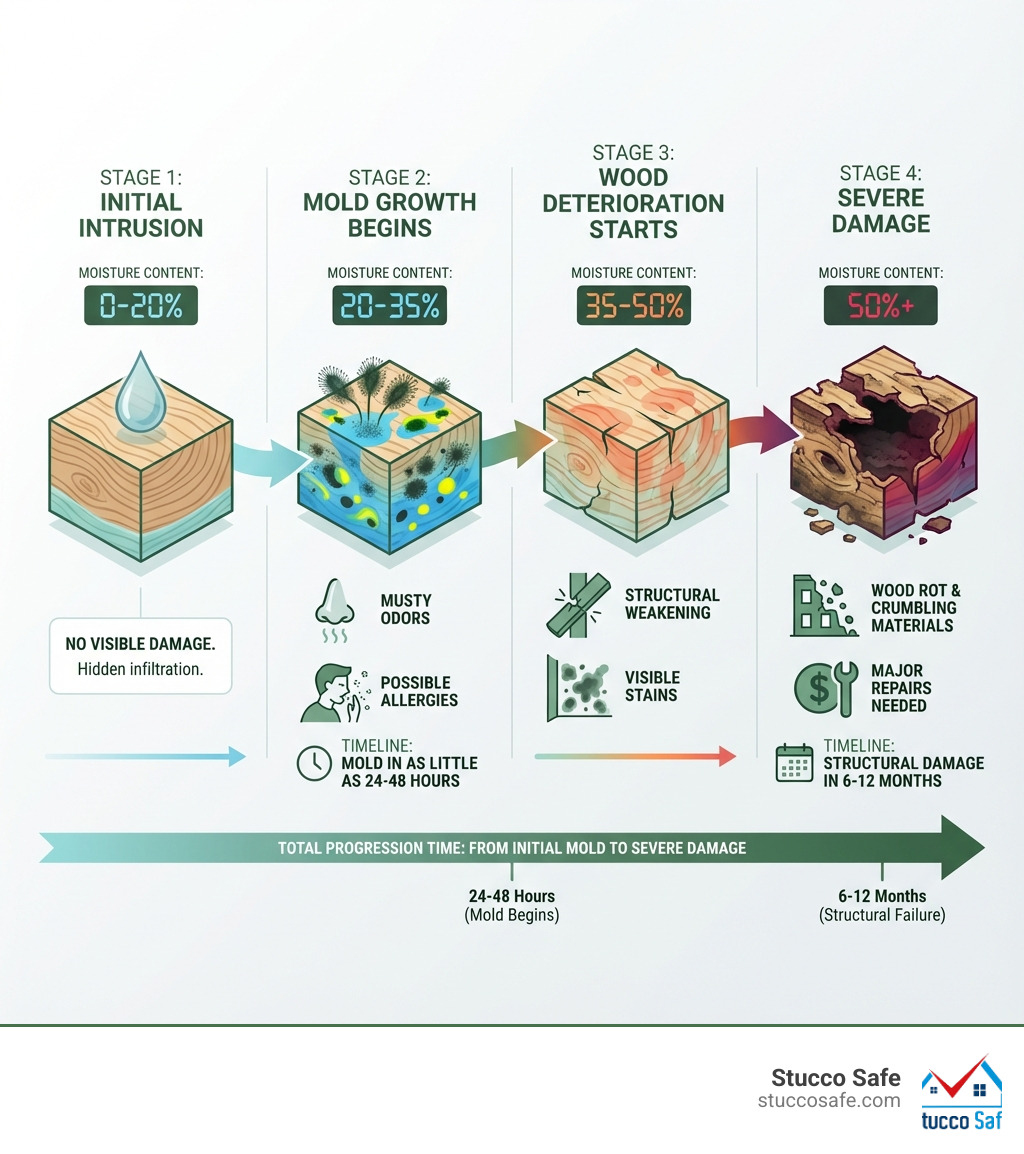
- Critical thresholds: Mold begins at 20% moisture; wood rot starts at 35-50% moisture content
For most homeowners, their house is one of the most important purchases they’ll ever make. Yet moisture is the primary cause of structural deterioration in buildings—and it’s often impossible to detect until the damage becomes excessive and visible. By that time, you’re looking at thousands of dollars in repairs.
The problem is that standard home inspections rely on visual assessments alone. They can’t see behind your walls or underneath your floors where moisture silently wreaks havoc. This is especially true for stucco homes in the Northeastern United States, where it’s estimated that more than 90% of all stucco applications from the past 15-20 years are improperly installed—creating a perfect storm for hidden water intrusion.
Think moisture is just a minor inconvenience? Consider this: when moisture content reaches approximately 20%, mold begins to accumulate. When wood moisture hits 35-50%, it starts to rot and becomes susceptible to complete structural failure. The longer these problems remain hidden, the more frustrating and costlier they become.
I’m Gabe Kesslick, and I’ve been specializing in moisture inspection and leak detection since 2001, with certifications including EDI Level 2 Certified Stucco Inspector and BESI Level 2 Certified Building Envelope Forensic Inspector. Over the past two decades, I’ve helped thousands of homeowners uncover moisture problems before they turned into devastating—and expensive—disasters.
Simple guide to moisture inspection terms:
Why Moisture Matters: The Hidden Dangers in Your Property
Moisture is a silent, insidious enemy to any property. It doesn’t just make things damp; it actively works to dismantle the very structure of your home and compromise the health of its inhabitants. The primary cause of structural deterioration, moisture can lead to a cascade of problems that are both expensive and hazardous.
When water infiltrates your property, it saturates building materials, leading to various forms of structural damage. Wood, a common structural component, is particularly vulnerable. When its moisture content reaches 35% to 50%, it begins to rot, losing its strength and integrity. This wood rot can compromise the stability of walls, floors, and roofs, potentially leading to catastrophic failures. Beyond wood, prolonged moisture exposure can weaken concrete, leading to foundation cracks and instability. Our forensic testing methods are designed to uncover these hidden vulnerabilities before they escalate.
Perhaps the most well-known consequence of unchecked moisture is mold growth. Mold will begin to accumulate on surfaces that contain approximately 20% moisture. Once established, mold, mildew, and other bacteria thrive in damp environments, spreading rapidly and often out of sight—behind walls, under flooring, or in poorly ventilated areas.
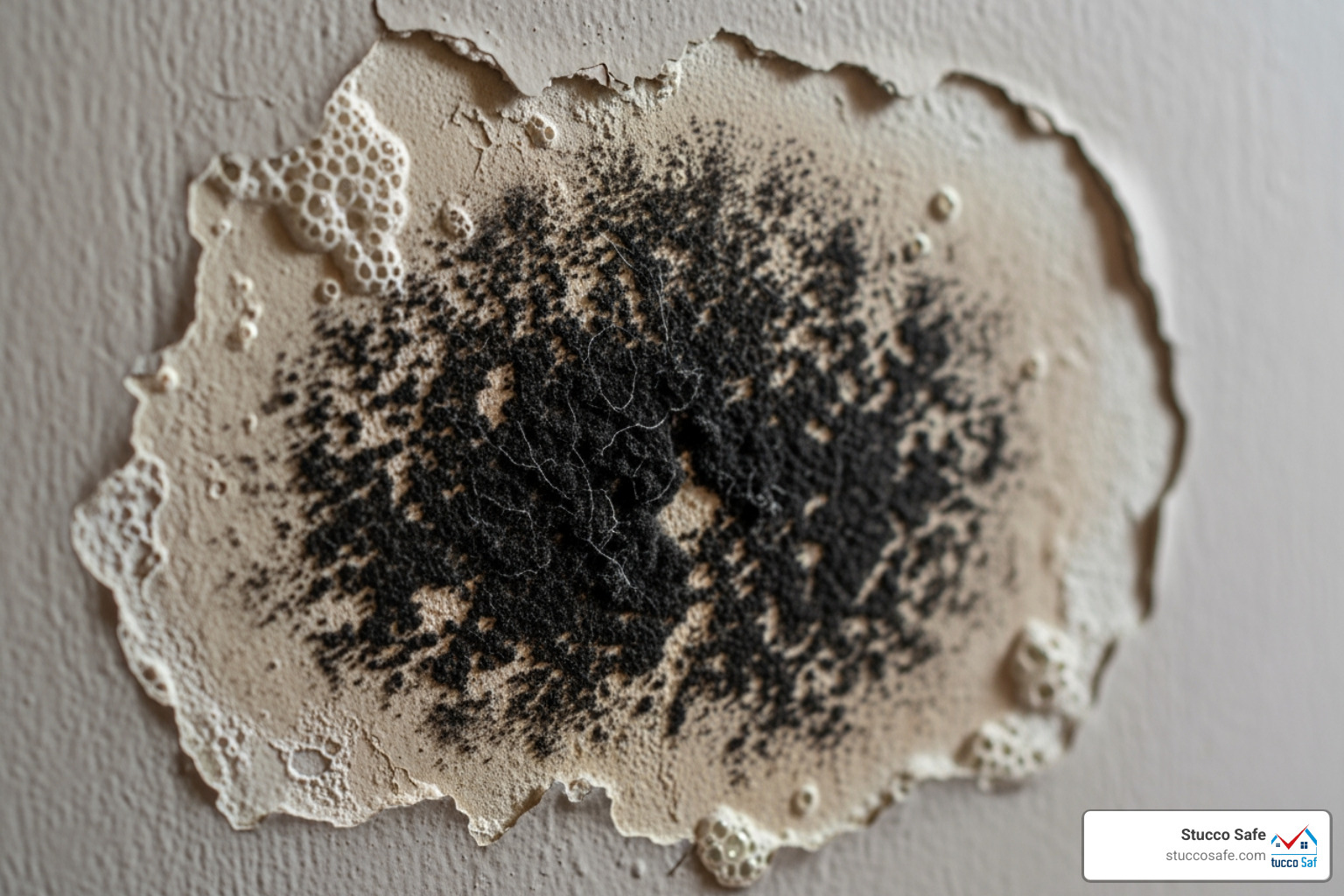
This isn’t just an aesthetic issue; it’s a serious health concern. Mold spores released into the air can significantly degrade indoor air quality, triggering a range of health issues for occupants. These can include allergic reactions, respiratory problems, exacerbation of asthma, chronic sinusitis, and other respiratory illnesses. We believe that a healthy home is a safe home, and detecting moisture is the first step in ensuring that.
Finally, the presence of undetected moisture and its resulting damage can drastically reduce your property value. Buyers are increasingly aware of these risks, and a history of moisture problems or visible damage can deter potential purchasers or lead to significant price reductions. A professional moisture inspection safeguards your investment and helps maintain your home’s market appeal.
The High Cost of Undetected Water Intrusion
The problem property owners face is often “unseen” moisture behind walls, windows, ceilings, and under floors. This hidden moisture can lead to impossible-to-detect damage until it becomes excessive and visible. By then, the financial loss can be substantial. What might have been a minor leak that could have been fixed for a few hundred dollars can quickly turn into thousands in costly repairs for structural remediation, mold removal, and material replacement.
Early detection through a comprehensive moisture inspection is key to preventing these escalating costs. It can also help maintain energy efficiency, as damp insulation loses its effectiveness, leading to higher heating and cooling bills. In some cases, proper moisture assessment is even an insurance requirement, especially after a water damage event. Investing in a professional moisture inspection provides invaluable peace of mind, knowing that your home is structurally sound and healthy.
From Dampness to Damage: How Quickly Problems Escalate
The progression from a small damp spot to significant damage can be surprisingly swift. It’s a race against time where moisture is constantly winning if left unchecked.
As little as 24-48 hours of dampness can initiate mold accumulation. As we noted, mold will begin to accumulate on surfaces that contain approximately 20% moisture. This seemingly low threshold is why even minor, intermittent leaks can quickly become a significant problem.
When moisture content in wood reaches 35% to 50%, it starts to rot and is highly susceptible to mold. This is where wood rot takes hold, weakening the material from the inside out. Once wood starts to decay, its structural integrity is compromised. If this occurs in critical load-bearing elements, it can lead to structural failure, posing a severe risk to the safety of the building.
Beyond structural compromise, damp environments are also a magnet for pest infestation. Termites, carpenter ants, and other wood-destroying insects are drawn to moist wood, accelerating the damage and introducing another layer of costly remediation. This rapid escalation underscores why a proactive moisture inspection is not just a recommendation but a necessity.
The Anatomy of a Professional Moisture Inspection
A professional moisture inspection goes far beyond a simple visual walkthrough. We employ forensic testing methods and advanced technology to precisely locate, quantify, and diagnose moisture issues, even those hidden deep within your home’s structure. Our certified inspectors are trained to identify, analyze, and document moisture conditions using a structured investigative approach.
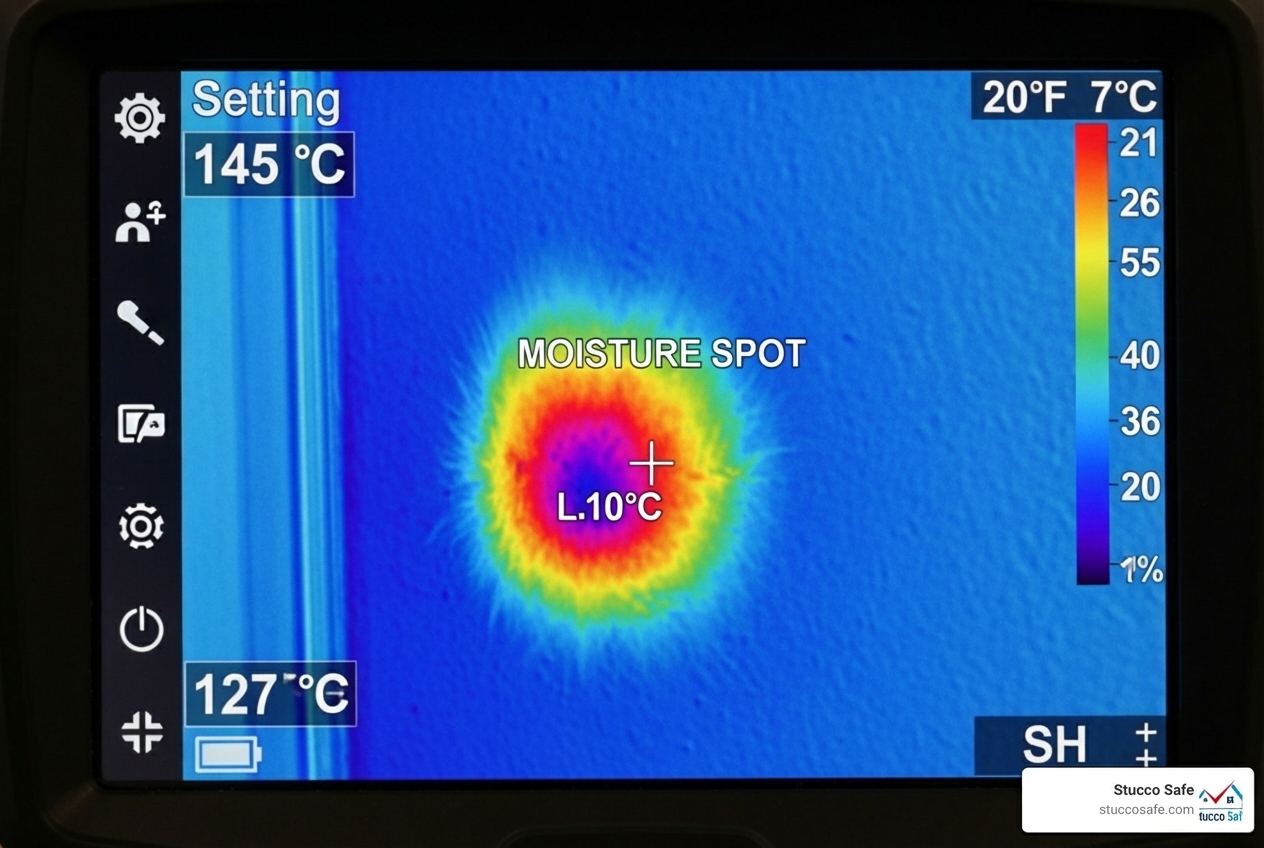
A key aspect of our approach is non-destructive testing. Whenever possible, we aim to assess moisture levels without causing damage to your building materials. This is where tools like thermal imaging and pinless moisture meters shine, allowing us to scan large areas and detect anomalies without invasive procedures.
Our stepwise methodology ensures a thorough and systematic assessment:
- Building history review: We start by gathering information about your property’s construction, past repairs, and any known water-related incidents.
- Walk-through assessment: A comprehensive visual inspection helps us identify potential areas of concern and signs of moisture.
- Hypothesis development: Based on initial observations and building history, we develop theories about potential moisture intrusion points and patterns.
- Moisture testing: We then use specialized instruments to test our hypotheses, taking precise readings to confirm the presence and extent of moisture. This often includes moisture mapping, which visually represents moisture distribution within a building.
- Reporting: Finally, we produce detailed, well-documented reports with clear findings, actionable recommendations, and photographic evidence, giving you a complete picture of your home’s moisture health.
Essential Tools for a Thorough Moisture Inspection
To conduct a comprehensive moisture inspection, we rely on a suite of specialized tools that allow us to “see” beyond the surface.
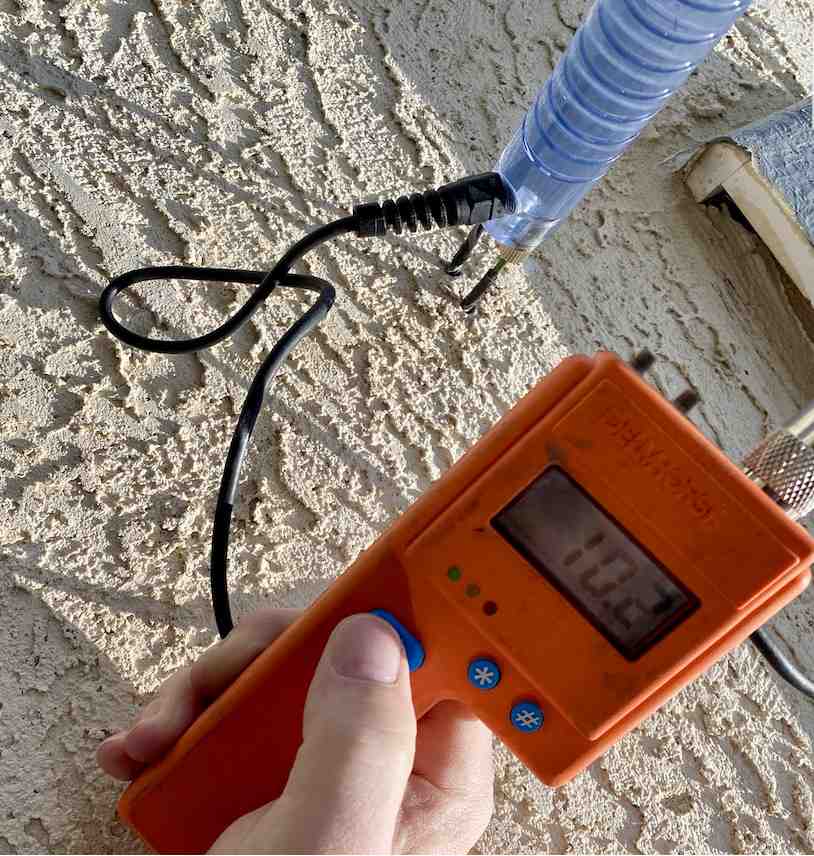
The cornerstone of any moisture inspection is the moisture meter. These devices measure the percentage of water in various building materials like wood, drywall, concrete, and stucco. We use both pin-type and pinless meters, each suited for different applications (more on this below).
Thermal imaging cameras, also known as infrared cameras, are incredibly powerful. They detect temperature differences on surfaces, which can indicate hidden moisture. Since water has a different thermal mass than dry materials, damp areas often appear cooler or warmer on an infrared image, allowing us to quickly identify potential problem spots behind walls or under floors without physical intrusion. However, interpreting these images requires skilled professionals to avoid misdiagnosis.
Hygrometers measure relative humidity (RH) and temperature in the air. These are crucial for understanding the environmental conditions that contribute to moisture problems, such as high indoor humidity or condensation risk.
For those hard-to-reach or inaccessible areas, borescopes (or inspection cameras) come in handy. These flexible probes with tiny cameras allow us to peer into wall cavities, ducts, or other confined spaces through small access holes, providing visual confirmation of moisture or damage.
Together, these tools enable us to conduct a precise, data-driven moisture inspection, offering insights that a visual inspection alone simply cannot. For more detailed information on these vital tools, you can explore more info about moisture testing.
Pin-Type vs. Pinless Moisture Meters
When it comes to measuring moisture content in building materials, moisture meters are indispensable. However, not all meters are created equal, and understanding the differences between pin-type and pinless meters is crucial for effective moisture inspection. We often use both types to provide the most comprehensive assessment.
Pin-type meters measure moisture by electrical conductivity. They have two small pins that penetrate the surface of the material. The electrical resistance between these pins changes based on the amount of moisture present, allowing the meter to calculate the moisture content. The more moisture, the lower the resistance.
Pinless meters, also known as non-invasive or search mode meters, operate differently. They emit electromagnetic waves or radio frequencies into the material. The presence of moisture affects these waves, and the meter measures the impedance or changes in the returned emissions to estimate the average moisture content within a certain depth (typically 1/2-inch to 3/4-inch).
Here’s a comparison to illustrate their differences:
| Feature | Pin-Type Moisture Meter | Pinless Moisture Meter |
|---|---|---|
| Operation | Measures electrical resistance/conductivity between pins. | Emits electromagnetic waves; measures impedance changes. |
| Application | Measures moisture at the surface or specific depths. | Scans for moisture beneath the surface. |
| Invasiveness | Leaves small holes where pins penetrate the material. | Non-destructive; no surface damage. |
| Best Use Cases | Confirming specific wet spots, material-specific readings (e.g., wood MC), assessing depth of moisture. | Scanning large areas quickly, initial detection, behind wall/floor coverings (drywall, tile, vinyl). |
We often use pinless meters for an initial, quick scan over large areas, such as a wall or floor. If the pinless meter indicates liftd moisture, we then use a pin-type meter to confirm the exact moisture content at specific points and, if necessary, to determine the depth of the moisture intrusion. This dual approach provides both broad coverage and precise detail, ensuring no hidden moisture goes undetected.
Professional Tips for Accurate Measurements
Conducting an accurate moisture inspection requires more than just owning the right tools; it demands a practiced hand and a deep understanding of how moisture behaves in different building materials. Our certified inspectors adhere to strict protocols to ensure reliable results.
One of the most important steps is establishing a baseline. Before you even suspect a problem, it’s helpful to measure a known dry section of the same building material. This “dry standard” provides a reference point, making it easier to identify liftd moisture levels. For example, if normal wood moisture content in the Northeast ranges from about 7% in winter to 12% in summer, a reading of 25% would clearly indicate a problem.
We must also be vigilant about checking for false positives. Pinless meters, while excellent for non-invasive scanning, can be fooled by metallic objects (like studs, pipes, or wiring) behind a surface, which can cause falsely high readings. If a reading seems unusually high in an area where metal might be present, we’ll trace the suspected metal outline or use a pin-type meter to confirm the reading in an adjacent, metal-free spot.
Understanding material properties is critical. Different materials absorb and retain moisture differently. Wood, drywall, and concrete all have unique moisture content thresholds that indicate normal, liftd, or damaging levels. For instance, gypsum-based sheathing has a much lower “dry” range (0.1-0.6%) compared to wood-based sheathing (6-19%). Knowing these specifics ensures we interpret the readings correctly.
Furthermore, we always consider ambient conditions. The relative humidity and temperature of the surrounding air can influence surface moisture and condensation. High indoor humidity, often caused by outdoor climate, indoor activities (showering, cooking), or poor ventilation, can contribute to moisture problems. Measuring ambient humidity helps us understand the full picture.
Finally, documenting readings with photos is an essential practice. We capture images of the meter displaying its reading alongside a photo of the affected area. This provides irrefutable evidence of our findings, which is invaluable for reports, remediation planning, and communication with homeowners or real estate professionals. This meticulous approach ensures that our moisture inspection is not only accurate but also actionable.
Where to Look: Common Hotspots for Hidden Moisture
Moisture can be elusive, often hiding in plain sight or deep within your home’s structure. A thorough moisture inspection focuses on areas known to be vulnerable to water intrusion. We systematically check these common hotspots to ensure no problem goes undetected.
Basements and crawlspaces are ground zero for moisture issues. Their below-grade nature makes them susceptible to water seepage through porous concrete, hydrostatic pressure, and poor exterior drainage. We look for dampness, musty odors, efflorescence (white powdery residue), and visible water stains on walls and floors.
Attics are often overlooked but are prime locations for moisture. Faulty seals around chimneys, vents, ducts, and roof penetrations are common culprits. Condensation, especially in poorly ventilated attics, can lead to damp insulation and wood rot in rafters.
Areas around windows and doors are frequent entry points for water. Deficient caulk joints, improper flashing, or compromised seals can allow rainwater to seep into wall cavities, leading to hidden damage and mold growth. This is particularly critical for stucco homes, where improper detailing around openings is a common issue.
Exterior walls, especially those clad in EIFS/Stucco, demand meticulous attention. As we’ve mentioned, improperly installed stucco is a widespread problem in our service areas (Southeastern PA, New Jersey, and Delaware). We inspect for cracks, poor ground clearance (stucco should be 6-8 inches above grade), and inadequate flashing, which are all pathways for water intrusion. Our specialized stucco inspection services are designed to address these specific vulnerabilities.
Under flooring is another common hiding spot. Leaks from plumbing, condensation, or subfloor issues can lead to moisture trapped beneath carpets, hardwood, or tile, causing swelling, discoloration, or a musty smell. We use pinless meters to scan large floor areas non-invasively.
Beyond these well-known areas, we pay close attention to several overlooked spots that can harbor significant moisture problems:
- Around plumbing fixtures: Slow leaks from sinks, toilets, and showers can go unnoticed for extended periods, causing damage to cabinets, subfloors, and adjacent walls.
- Behind appliances: Dishwashers, refrigerators with ice makers, and washing machines are notorious for slow, hidden leaks from hoses or drain lines.
- Baseboards: These often absorb and release moisture from nearby materials, making them excellent indicators of moisture in walls or floors. Liftd moisture in baseboards merits further testing.
- Near HVAC units: Condensation from air conditioning units or leaky ductwork can create damp spots in ceilings, walls, or drip pans.
By systematically inspecting these vulnerable areas, both obvious and subtle, we maximize our chances of detecting and diagnosing any hidden moisture issues within your property.
Understanding the Results: What Do the Numbers Mean?
A crucial part of any professional moisture inspection is translating the raw data from our tools into actionable insights. We provide quantitative readings that tell us exactly how much moisture is present in various materials. These numbers, such as percentage moisture content (%MC) or Wood Moisture Equivalent (WME), along with relative humidity (RH) and dew point, are then interpreted against established industry standards to determine the severity and source of the problem.
Interpreting data involves more than just looking at a number; it requires an understanding of the material being tested, its typical moisture range, and the environmental conditions. For instance, a 15% moisture content might be acceptable for wood in some contexts, but highly problematic in others. Our goal is to not just report the numbers but to explain what they mean for your home’s integrity and health. This often helps us in identifying the source of intrusion, which is the first step toward effective remediation.
Deciphering Moisture Content Levels
Knowing the moisture content (MC) levels considered normal, acceptable, and indicative of damage is fundamental to a proper moisture inspection. Different building materials have different thresholds.
For wood-based sheathing, levels that are considered dry range between 6% and 19%. However, levels between 15% and 19% may indicate some moisture intrusion, though it’s unlikely to cause harm if siding is installed correctly. For gypsum-based sheathing, dry levels are much lower, typically ranging between 0.1% and 0.6%.
When moisture levels climb, we enter the “liftd” or “high” range, indicating a greater risk of damage. For wood, levels between 19% and 40% are considered high, with a strong likelihood of current and/or future damage. Similarly, for gypsum, levels between 1.6% and 50% fall into this concerning category. These are often areas where we would mark potential past damage or intermittent intrusion.
Finally, we have damaged/saturated levels. These are areas where the material is either chronically damaged, crumbling, loose, or even completely rotted. In some severe cases, the substrate might even be missing entirely. At these levels, moisture readings might not even be readable because the material is too degraded. This usually signifies extensive damage requiring immediate attention.
Understanding these specific ranges helps us accurately assess the situation and recommend appropriate steps to protect your home.
The Critical Role of Relative Humidity
While moisture content (MC) measures the water within materials, relative humidity (RH) assesses the amount of moisture in the air. Both are crucial for a comprehensive moisture inspection and for maintaining a healthy indoor environment.
Ideal indoor humidity levels are generally considered to be between 30% and 50%. This range provides comfort and minimizes the risk of moisture-related problems. Levels consistently higher than 50% are too humid, while anything below 30% is too dry. You can find more detailed guidance on maintaining good indoor air quality from The EPA’s guide to indoor air quality.
High relative humidity contributes directly to condensation risk. When warm, moist air comes into contact with cooler surfaces (like windows, pipes, or uninsulated walls), it cools down, causing the water vapor to condense into liquid water. This constant dampness creates ideal conditions for mold growth, even if there isn’t a direct leak. Understanding the dew point—the temperature at which air becomes saturated with water vapor and condensation begins—is essential for identifying areas prone to this issue.
Monitoring and controlling relative humidity are vital for mold prevention. Mold thrives in environments with high RH. By keeping indoor humidity within the acceptable range, you significantly reduce the likelihood of mold and mildew growth, protecting both your property and your health. Our inspections often include ambient RH measurements to assess this critical factor.
Conclusion: Protect Your Investment with a Certified Inspection
We’ve explored the silent, pervasive threat of moisture in your home, from its ability to cause devastating structural damage and compromise indoor air quality to its potential to trigger serious health issues like asthma and sinusitis. We’ve seen how quickly dampness can escalate into widespread mold growth and wood rot, leading to significant financial loss and costly repairs if left unchecked.
The importance of a professional, thorough moisture inspection cannot be overstated. Unlike visual assessments, our certified inspectors use forensic testing methods with specialized tools like moisture meters and thermal imaging cameras to detect hidden moisture problems that are otherwise invisible. This early detection is your strongest defense, allowing you to address issues when they are small and manageable, preventing them from becoming catastrophic.
The benefits of professional assessment extend beyond just finding problems. Our detailed reports provide a clear understanding of your home’s condition, offering actionable recommendations for remediation. This not only helps in preserving property value but can also be a significant advantage when buying or selling, offering peace of mind to all parties involved. For sellers, a certified inspection can even help maintain market value and expedite sales. Most importantly, it contributes to ensuring a healthy home for you and your family.
At Stucco Safe, we specialize in comprehensive moisture inspection and stucco testing services for homeowners and property owners across Southeastern Pennsylvania, New Jersey, and Delaware, including areas like Philadelphia, West Chester, Villanova, King of Prussia, Phoenixville, and many more. Our certified experts are equipped with the knowledge and tools to uncover the truth about your home’s moisture health.
Don’t let hidden moisture soak your investment. Take proactive steps today to protect your property and ensure a safe, healthy living environment.