
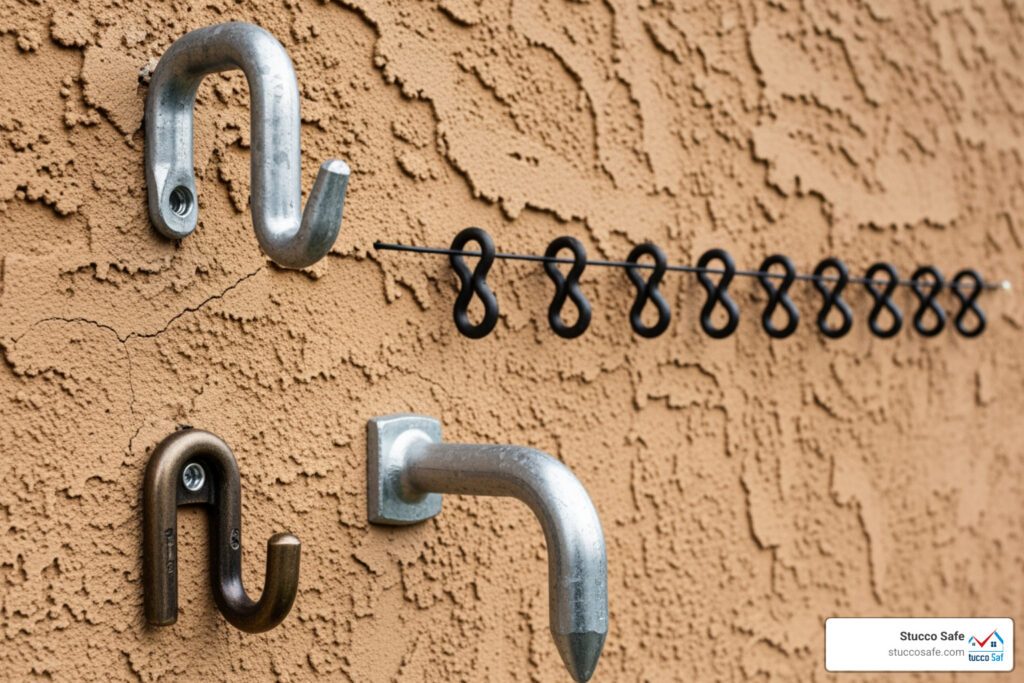
Screw Hooks for Stucco: 3 Best Safe Options
Why the Right Screw Hooks Matter for Your Stucco Walls
Screw hooks for stucco require specialized hardware designed for this unique, brittle material. Here’s what you need to know:
Best Options for Screw Hooks on Stucco:
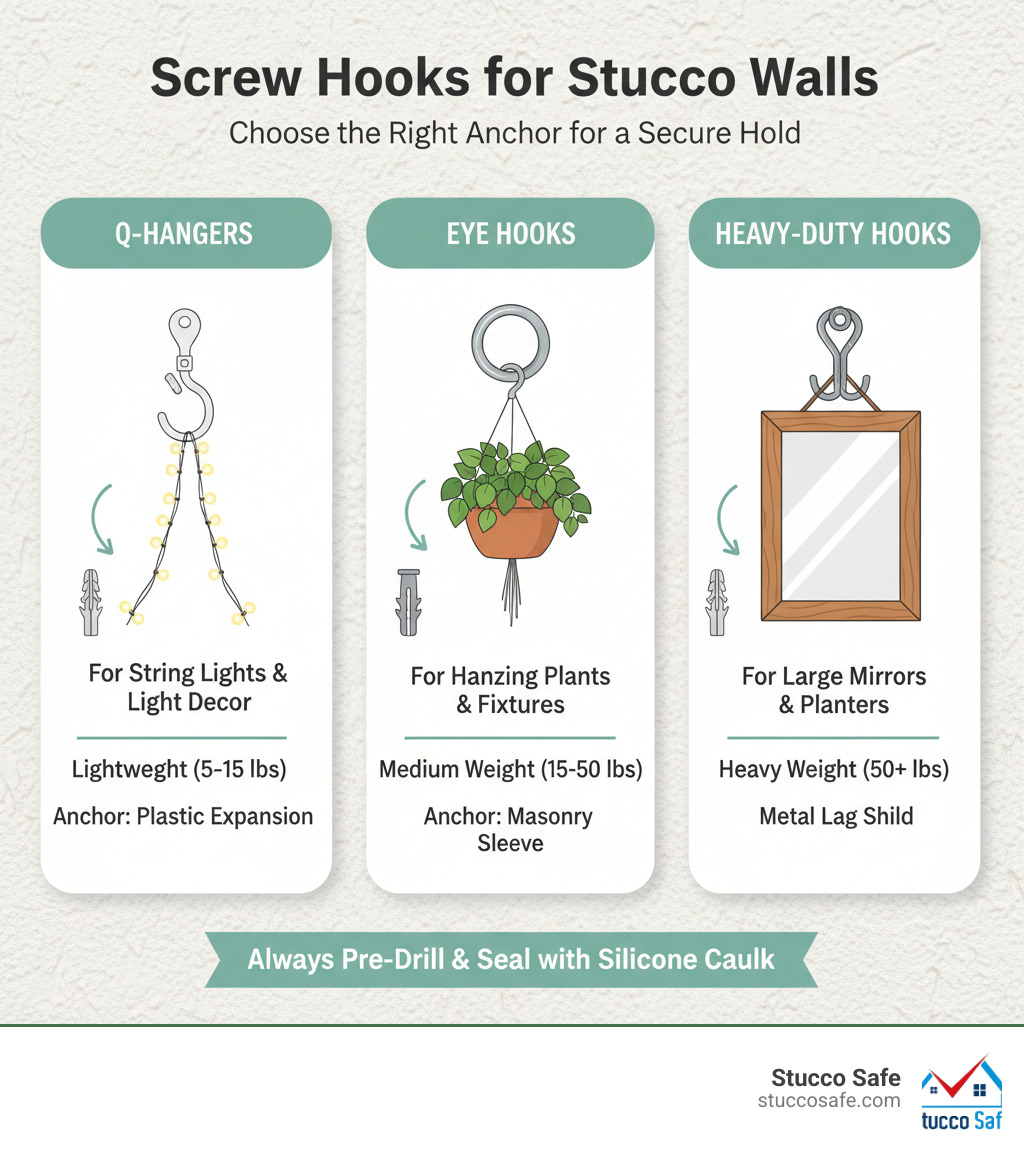
- Heavy-Duty Items (10+ lbs): Use masonry anchors like sleeve or expansion anchors with corrosion-resistant screw hooks.
- String Lights & Decor: Q-hanger screw hooks with safety buckles work well for outdoor lighting.
- Outdoor Applications: Choose stainless steel or galvanized hooks to prevent rust stains.
- Installation Rule: Always pre-drill with a masonry bit and use silicone caulk to seal against moisture.
Hanging items on stucco isn’t like working with wood or drywall; its cement-based surface can crack easily. Homeowners are increasingly seeking specialized solutions, with hundreds of “hooks for stucco” available online.
The challenge goes beyond finding a hook that holds. Stucco is a reservoir system that absorbs water, and each hole is a potential entry point for moisture. This can damage the water-resistant barrier and wood framing underneath—problems that aren’t visible until significant damage has occurred.
I’m Gabe Kesslick, an EDI Level 2 Certified Stucco Inspector with Stucco Safe. Since 2001, I’ve seen countless cases where improper hook installation led to moisture intrusion and costly repairs. These issues are preventable with the right approach.
Why Stucco Requires a Special Approach for Hanging
Drilling into stucco is different from wood or drywall. Its solid appearance is misleading, as its composition requires a special approach.
Stucco’s composition is a cement-based plaster applied in multiple layers: a scratch coat, a brown coat, and a finish coat. This layered structure is beautiful and weather-resistant, but also surprisingly brittle.
Careless drilling can cause hairline cracks to spider out from the hole. The brittle nature means standard screws or nails often lead to chipping and crumbling, creating enlarged holes that worsen over time. A screw hook for stucco bearing weight adds constant stress, which can spread cracks.
The biggest danger, however, is moisture intrusion. Stucco is a reservoir system, designed to absorb and release water. Each hole you drill is a potential path for moisture to bypass the protective layers and reach the vulnerable wood sheathing and framing behind it. This can lead to rot and mold, all happening out of sight until the damage is extensive and expensive to fix.
This is why screw hooks for stucco require special anchors and proper sealing. It’s not just about securing your item; it’s about protecting your wall system from hidden water damage. For more on how fasteners interact with stucco, see our Stucco Wall Anchors: Complete Guide. With the right hardware and technique, you can safely mount items on stucco.
A Roundup of the Best Types of Screw Hooks for Stucco
Choosing the right hook for stucco depends on what you’re hanging. Matching the hardware to the job is more important than the price tag.

Heavy-Duty Hooks with Masonry Anchors
For substantial items like a large wall planter or heavy artwork, you need heavy-duty hooks paired with masonry anchors. These anchors create a mechanical grip, distributing weight over a larger area than a screw alone. Retailers like The Home Depot offer a wide selection under Stucco Anchors – The Home Depot.
- Sleeve anchors expand a metal sleeve against the sides of the drilled hole as you tighten the screw.
- Expansion anchors work similarly, creating a tight hold through mechanical expansion.
- Toggle bolts are ideal for walls with a cavity behind the stucco, as they spread out to distribute weight.
Properly installed expansion anchors can support over 50 pounds each in stucco. For items over 100 pounds, use 1/2-inch toggle bolts anchored into the wall framing behind the stucco.
Q-Hanger Screw Hooks for Lights and Decor
Q-hanger screw hooks for stucco are a popular solution for outdoor lighting and seasonal decorations. Their distinctive “Q” shape, often with a safety buckle, prevents string lights from blowing off in the wind. They are excellent for hanging string lights, holiday decor, and lightweight plants.
Even these convenient hooks require proper installation. This means pre-drilling and using a suitable anchor depending on the weight. When installed correctly, Q-hangers work beautifully in stucco. For more details, see our guide on Stucco Screw Anchors.
Corrosion-Resistant Eye and Cup Hooks
For everyday needs like small signs or wreaths, use corrosion-resistant eye and cup hooks. This feature is critical for outdoor use. A standard steel hook will rust, leaving stubborn, unsightly stains on your stucco.
- Stainless steel offers the best rust and corrosion resistance for long-term outdoor exposure.
- Galvanized steel is a good, affordable alternative with its protective zinc coating.
- Vinyl-coated hooks add an extra protective layer.
In the varied climate of Southeastern Pennsylvania, New Jersey, and Delaware, your hardware must be durable. As discussed in our article on how to Anchor Screw Into Stucco, selecting corrosion-resistant materials is essential to avoid rust stains and maintain your home’s appearance.
How to Choose the Right Screw Hooks for Your Project
Choosing the right screw hooks for stucco involves balancing your project’s needs with the limitations of the material. A correct choice prevents failures and damage.

Understanding Weight Capacity and Load-Bearing
Weight capacity is the most critical factor. Start by assessing the actual weight of your item, remembering to account for a plant’s soil and water. The anchor strength is what truly matters, not just the hook itself, as stucco offers minimal holding power. The anchor system does the real work.
- Properly installed expansion anchors can support over 50 pounds per anchor.
- For items over 100 pounds, use 1/2-inch toggle bolts anchored directly into wall framing.
Always check the manufacturer’s specified weight capacity for both the hook and anchor. Also, consider the type of force. A hanging plant creates tensile force (downward pull), while a string light creates shear force (horizontal and downward pull). Most weight capacities assume tensile force, so add a safety margin for items creating shear force.
For more on anchor capacities, see our article on the Best Anchors for Stucco.
Selecting the Right Material and Finish for Durability
Outdoor hardware in areas like Southeastern Pennsylvania, New Jersey, and Delaware must withstand harsh weather. For any outdoor application, choose hooks with serious weather resistance to prevent rust stains.
- Stainless steel (304 or 316 grade) offers the best corrosion protection.
- Galvanized steel is an affordable, rust-preventive alternative.
- Vinyl coating adds another layer of protection.
Coated deck screws also offer excellent weather resistance. As we note in our article on how to Anchor Screw Into Stucco, corrosion-resistant materials are a best practice. Investing in quality materials ensures your screw hooks for stucco will last without degrading or damaging your home.
Matching the Hook Size and Shape to the Job
The hook’s physical dimensions are important for a secure installation.
- Screw length: The screw must penetrate all stucco layers to reach a solid substrate, like wood framing or masonry, for heavy loads.
- Hook opening: The opening should match your item to prevent it from slipping off, especially in windy conditions.
- Thread type: The screw threads must be compatible with your chosen anchor.
- Clearance: Ensure the hook projects far enough from the wall for your item to hang without scraping the stucco.
For heavy items, locate wall studs before choosing your hook placement to ensure maximum support. Our guide to Stucco Anchor Types offers more insight into matching fasteners to specific applications.
How to Properly Install Screw Hooks into Stucco
Properly installing screw hooks for stucco requires precision to avoid wall damage and ensure a secure hold. Rushing this process can lead to cracked stucco, failed anchors, and costly moisture problems. Following these steps makes it a manageable DIY project.
Step 1: Gather Your Tools and Mark the Spot
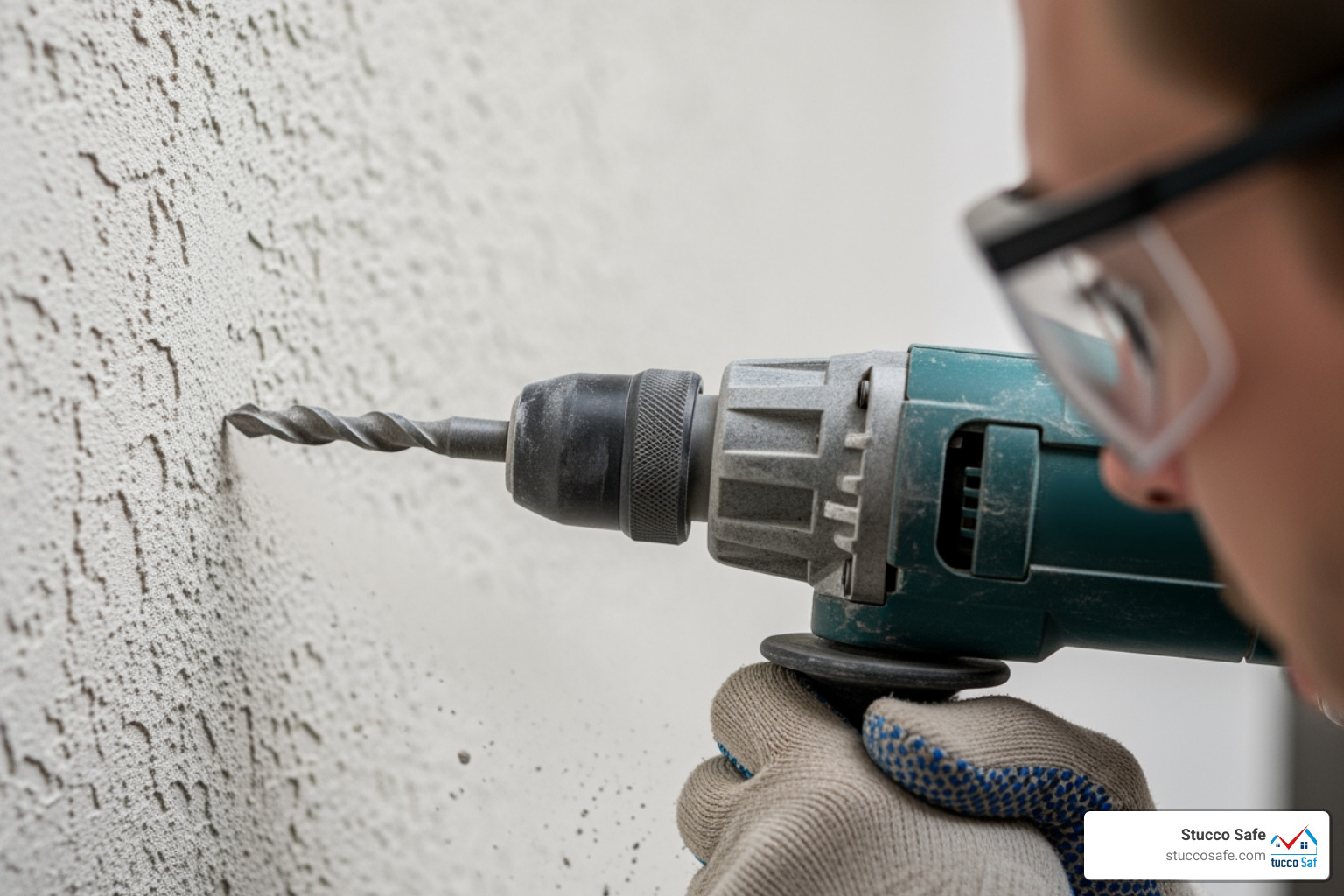
Before starting, gather your tools: a power drill, a sharp masonry drill bit of the correct diameter for your anchor, wall anchors, and silicone caulk. Always wear safety glasses when drilling into stucco. You will also need a level and pencil.
Use your level and pencil to mark the exact spot for your hook. Double-check the placement to avoid drilling unnecessary holes, as every hole is a potential moisture entry point.
Step 2: Drill a Clean Pilot Hole
The secret to drilling into stucco is patience. Drill slowly and steadily, applying consistent, light pressure. Aggressive drilling will crack the brittle, cement-based material.
Do not use a hammer drill. The hammering action will destroy stucco, creating spider-web cracks. Use the standard drill setting and let a sharp masonry bit do the work. A dull bit increases the risk of cracking. The hole diameter must exactly match the anchor manufacturer’s specification. A hole that’s too small will crack the stucco when the anchor is inserted; one that’s too large won’t provide a secure grip.
After drilling to the proper depth, clear all dust and debris from the hole using compressed air or a small brush. This ensures the anchor can expand fully and the caulk will adhere. For more details, see our guide on How to Install Anchors in Stucco.
Step 3: Insert the Anchor and Seal Against Moisture
This step is critical for protecting your home from future moisture damage. Gently tap your anchor into the pilot hole until it is flush with the stucco surface. If you meet resistance, stop and check your hole size; never force an anchor.
Next, create a waterproof seal. Before inserting the screw hook, fill the anchor cavity and the area around the hole with a high-quality, exterior-grade silicone caulk. This secures the anchor and creates a waterproof barrier.
As you screw the hook into the caulk-filled anchor, excess caulk will squeeze out, forming a watertight seal. Wipe away the excess immediately for a clean finish, leaving a good seal around the hook’s base. This approach ensures both mechanical security and moisture protection. For more on this, explore our Stucco Anchoring Ultimate Guide.
Frequently Asked Questions about Screw Hooks for Stucco
Here are answers to common questions about using screw hooks for stucco.
How much weight can a screw hook in stucco actually hold?
The holding power depends almost entirely on the anchor, not the hook. Stucco itself has poor holding strength. The anchor’s job is to transfer the load to the structure behind the stucco or distribute it across the stucco layers. A proper expansion anchor can support over 50 pounds when installed correctly. For items over 100 pounds, 1/2-inch toggle bolts that reach the wall framing are recommended.
Always check the anchor’s weight rating to determine what you can safely hang. For heavy or valuable items, anchor directly into a wall stud. Our guide on the Best Anchors for Stucco details the capabilities of different anchor types.
Can I install a screw hook directly into stucco without an anchor?
This is not recommended. Stucco is brittle and can crumble around a screw’s threads, causing the screw hook for stucco to pull out and damage the wall. Without an anchor, the threads alone do not create a secure hold and you create a larger hole that is vulnerable to moisture.
Anchors are essential for a secure, lasting hold, as they are engineered for stucco’s brittle nature. For more on proper anchoring, see our Stucco Screw Anchors guide.
How do I prevent the stucco from cracking when I drill?
Preventing cracks requires the right technique and tools.
- Use a new, sharp masonry drill bit. A dull bit generates heat and friction, causing cracks.
- Apply steady, low-speed pressure. Do not force the drill. Rushing or using too much pressure creates vibration that can cause spider-cracks.
- Place painter’s tape over the drill spot. This helps prevent the finish coat from chipping as the bit enters.
- Ensure the drill is not in “hammer” mode. The hammering action will cause large cracks. Use the standard rotation setting, a point emphasized in many professional installation guides like those for Stucco Anchors.
- Use the correct drill bit diameter for your anchor. An incorrect size will either crack the stucco or fail to grip properly. Our article on How to Install Anchors in Stucco walks through each step in detail.
Conclusion
Hanging items on your home with screw hooks for stucco can add personality and charm. However, stucco is a unique material that requires proper technique to avoid costly mistakes. A successful installation ensures your items are secure while protecting the long-term durability of your exterior.
Every hole is a potential entry point for moisture, and an improper anchor can crack the brittle material. While installing screw hooks for stucco is a manageable DIY project, poor technique can lead to moisture issues that compromise your home’s protective envelope. I’ve inspected hundreds of homes across Southeastern Pennsylvania, New Jersey, and Delaware where small penetrations led to significant hidden damage.
You can hang items safely on stucco with the right information and tools. Pre-drill with a sharp masonry bit, use appropriate anchors, seal every penetration with silicone caulk, and choose corrosion-resistant hardware. These steps make all the difference.
However, if you notice existing damage, soft spots, or are concerned about your home’s integrity, a professional inspection by Stucco Safe can identify problems before they worsen. Our EDI Level 2 Certified Stucco Inspectors use forensic testing to detect hidden moisture and structural issues. Stucco inspections range from $495 to $1595 or more, an investment that can save thousands in future repairs.
Taking an informed approach protects your investment. Whether you’re hanging lights or want peace of mind, we can help.
Learn more about stucco screw anchors and ensuring a safe installation