
Stop the Rot with These EIFS Repair Kits
What Every Homeowner Needs to Know About EIFS Stucco Repair
EIFS stucco repair is the process of fixing damage to your home’s Exterior Insulation and Finish System — the multi-layered synthetic stucco cladding found on millions of homes across the U.S.
Here’s a quick summary of what you need to know:
| Topic | Key Facts |
|---|---|
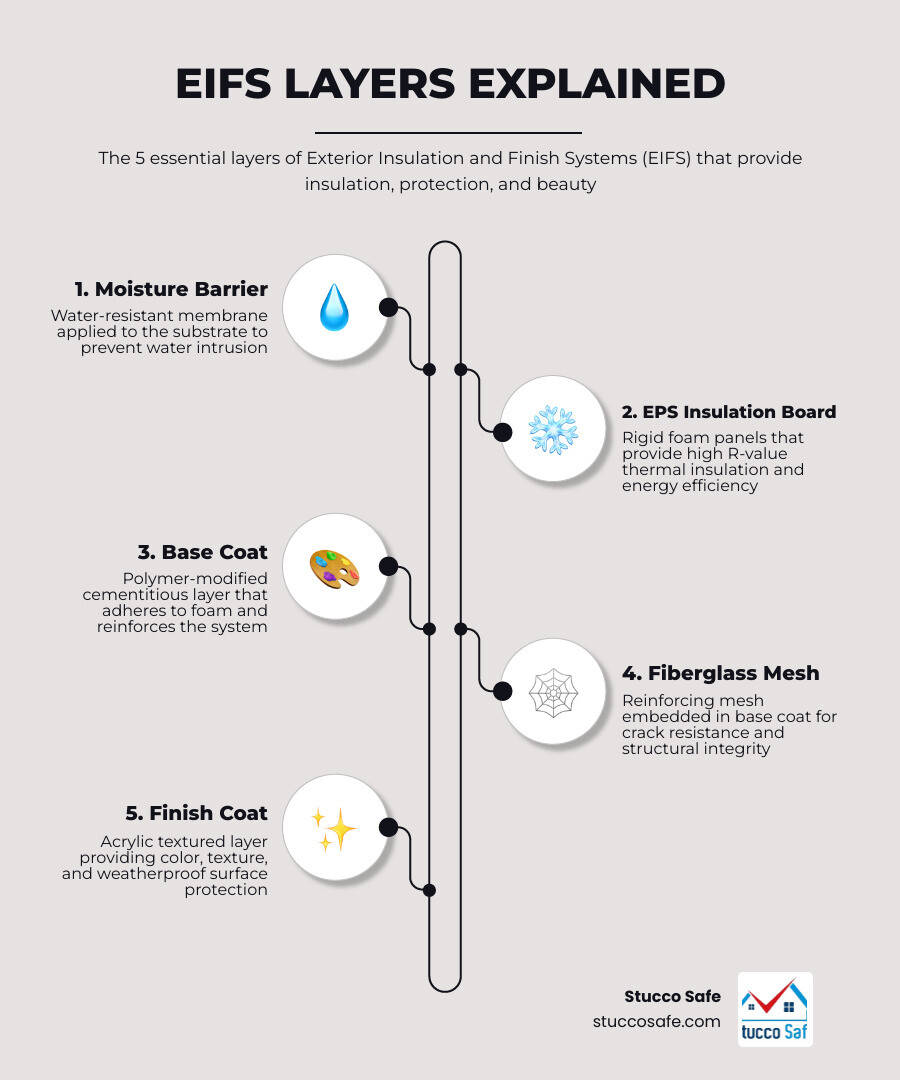
| What is EIFS? | A multi-layer system: moisture barrier, EPS insulation board, base coat, fiberglass mesh, and finish coat |
| Most common damage | Cracks, soft spots, bubbling, discoloration, mold growth |
| #1 cause of failure | Water intrusion — about 90% of EIFS repairs involve moisture damage |
| DIY vs. professional | Minor surface cracks can be patched; water damage or soft spots need a pro |
| Cost range | Small repairs: $300–$500; water/mold damage: $8–$45 per sq ft; structural repairs: $10,000+ |
| Lifespan | 20–60 years with proper installation and maintenance |
EIFS is genuinely impressive when it works. It insulates better than traditional stucco, resists cracking, and can cut energy bills by up to 20%. But it has one serious weakness: water.
When moisture gets behind the finish coat — through a crack as narrow as 1/16 of an inch — it can silently rot the wood framing behind your walls for years before you see any visible sign. By then, a simple repair has become a major renovation.
The tricky part? Most of that damage is completely invisible from the outside.
I’m Gabe Kesslick, founder of Stucco Safe, and I’ve been investigating EIFS stucco repair and leak detection since 2001 — including work as an EDI Level 2 Certified Stucco Inspector, AWCI EIFS Inspector, and Licensed Commercial Philadelphia EIFS Inspector. In this guide, I’ll walk you through the best repair kits and solutions available, so you can address damage the right way before it gets worse.
Eifs stucco repair vocab to learn:
Understanding EIFS vs. Traditional Stucco
To perform a successful eifs stucco repair, we first have to understand what we are working with. Many homeowners in Southeastern Pennsylvania and New Jersey use the terms “stucco” and “EIFS” interchangeably, but they are technically very different animals.
Traditional hard-coat stucco is a cement-based material applied over a metal lath. It’s heavy, rigid, and breathes naturally. EIFS (Exterior Insulation and Finish System), often called synthetic stucco, is a multi-layered “sandwich” of materials designed for maximum energy efficiency.
| Feature | Traditional Stucco | EIFS (Synthetic) |
|---|---|---|
| Composition | Sand, Portland cement, lime | EPS Insulation, polymer-based base coat |
| Weight | ~10 lbs per sq ft | ~1-2 lbs per sq ft (80% lighter) |
| Insulation | Low R-value | High R-value (R-5 to R-7 per inch) |
| Flexibility | Rigid; prone to hairline cracks | Flexible; moves with the building |
| Impact Resistance | Very high | Moderate (can dent or puncture) |
The “magic” of EIFS lies in the Expanded Polystyrene (EPS) insulation board. This creates a thermal bridge that keeps your home warmer in the winter and cooler in the summer. However, because it is polymer-based and essentially “wraps” your house in plastic, it doesn’t breathe like traditional cement. If water gets in, it stays in. This is why understanding synthetic stucco is vital before you start slapping patches on your walls.
Essential Components of an EIFS Stucco Repair Kit
If you’re looking for a professional-grade eifs stucco repair solution, you can’t just grab a tub of spackle from the local big-box store. A proper kit must contain materials that are chemically compatible with the existing system.

A standard professional repair kit typically includes:
- EPS Foam Blocks: To replace any damaged or wet insulation.
- Fiberglass Reinforcing Mesh: This is the “skeleton” of the repair. It provides the strength to prevent the patch from cracking.
- Polymer-Modified Base Coat: A cementitious material mixed with polymers for superior adhesion and water resistance.
- Acrylic Finish Coat: This provides the color and texture.
- EIFS-Approved Adhesives: Often a dry-base adhesive consisting of portland cement, sand, and dry polymers.
Using the wrong materials is a recipe for disaster. For instance, regular caulk will pull away from the synthetic finish within a year, leading to eifs moisture problems that can rot your sheathing.
Selecting the Right EIFS Stucco Repair Materials
When choosing materials, always look for products approved by major manufacturers like Dryvit or Sto. You can also reference the EIFS Industry Members Association (EIMA) for industry-standard specifications.
- Sealants: Never use “bargain-bin” caulk. You need EIFS-approved flexible sealants and backer rods. These allow the joints around windows and doors to expand and contract without breaking the seal.
- Mesh: Ensure your fiberglass mesh is alkali-resistant.
- Texture Matching: This is the hardest part of any repairing exterior cracks project. You may need to experiment with different trowel techniques or stippling with a damp brush to match the original “sand” or “swirl” finish.
- Non-Corrosive Fasteners: If you are attaching new drainage tracks or weep screeds, ensure they won’t rust and cause staining later.
Common Mistakes in EIFS Stucco Repair
In our years of inspecting homes in Villanova and King of Prussia, we’ve seen some truly creative (and destructive) DIY attempts. Here are the top mistakes to avoid:
- Using Regular Caulk: We can’t stress this enough. Standard silicone or latex caulk does not bond well with the acrylic finish of EIFS.
- Ignoring the Moisture: If you have a soft spot or a bulge, there is water behind it. Patching the surface without repairing small cracks in stucco and drying the substrate is like putting a band-aid on a shark bite.
- Skipping the Mesh: Without the fiberglass mesh embedded in the base coat, your patch will crack and fall out within months.
- Improper Sanding: You must sand the old finish down to the base coat around the repair area to ensure the new layers bond properly.
- Weather Conditions: Don’t attempt a repair if the temperature is below 40°F. The polymers need warmth to cure correctly.
Step-by-Step Guide to EIFS Stucco Repair
For minor impact damage—like a hole from a rogue lawnmower or a stray baseball—follow this professional stucco repair complete guide process:
- Assess and Cut: Use a utility knife to cut out a clean rectangle around the damaged area. Go at least 2 inches past the visible damage.
- Remove and Inspect: Pull out the damaged foam. This is your chance to look at the wood sheathing. If it’s dark, soft, or smells like a basement, stop—you have structural rot.
- Prepare the Patch: Cut a piece of EPS foam to fit the hole exactly. Glue it in place using EIFS-approved adhesive.
- Sand the Perimeter: Use 40-grit sandpaper to sand off the finish coat about 2-3 inches around the hole, exposing the original base coat.
- Apply Base Coat and Mesh: Apply a layer of base coat over the foam and the sanded area. Press a piece of fiberglass mesh into the wet base coat, then trowel another thin layer over it until the mesh is invisible.
- Dry and Finish: Let it dry for 24 hours. Apply the acrylic finish coat, using a trowel or brush to match the existing texture. “Feather” the edges with a damp brush to blend the new finish into the old.
When to Skip the DIY Kit and Call a Professional
While a small dent can be a weekend project, larger issues require a level of forensic investigation that a DIY kit simply can’t provide. About 90% of the repairs we see are compromised by hidden water damage.
You should put down the trowel and call us if you see:
- Bulging or Pillowing: This usually means the foam has detached from the wall because the wood behind it is soaking wet.
- Dark Staining: This is often a sign of mold or “weeping” from a failed window flashing.
- Interior Leaks: If you see water stains on your drywall in Cherry Hill or Newark, the EIFS has already failed significantly.
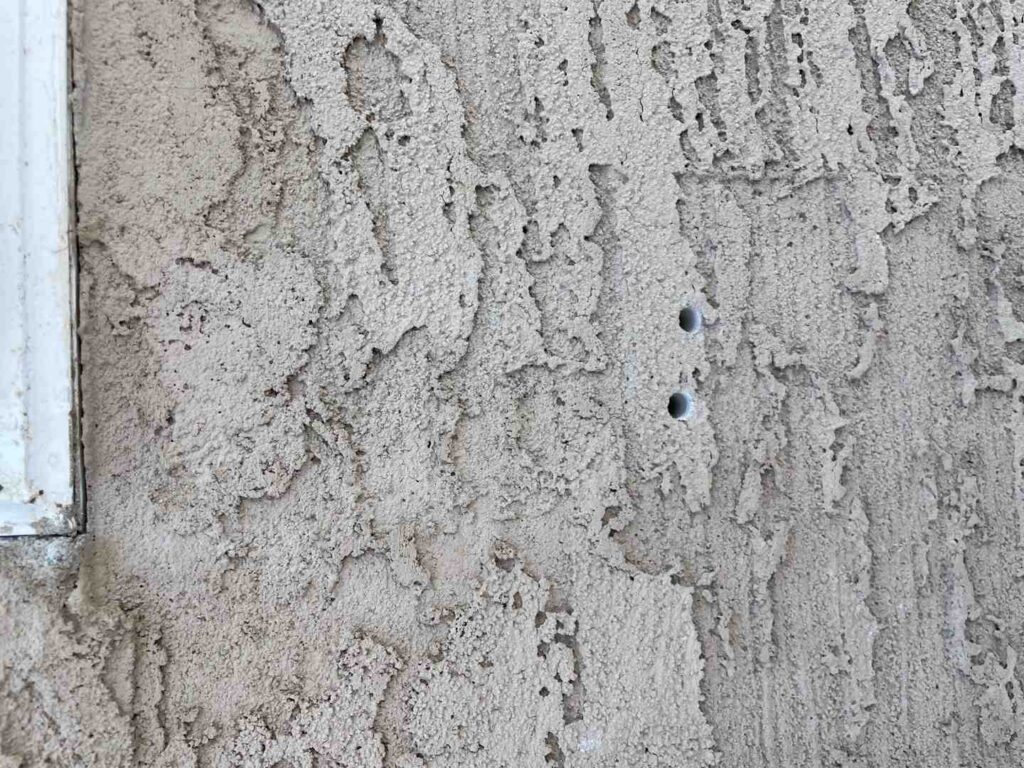
At Stucco Safe, we don’t just look at the surface. We use forensic testing methods, including infrared thermography and invasive moisture probes (drilling tiny 3/16th inch holes), to see what’s happening behind the “mask” of the stucco. Our certified EIFS inspector guide ensures that you aren’t just covering up a problem that will eventually cost you $20,000 in structural repairs.
Understanding eifs moisture issues is a specialized skill. Most general contractors don’t have the tools to detect moisture content on a scale of 1% to 100% like our Extech meters do.
Maintaining Your EIFS for Long-Term Durability
A properly installed and maintained EIFS system can last 25 to 60 years. The key is prevention.
- Annual Inspections: Walk around your home every spring and fall. Look for new cracks or gaps in the sealant. Use our eifs inspection checklist to stay organized.
- Sealant Maintenance: Sealant joints around windows and doors usually last 5-10 years. They will fail eventually, so be ready to replace them before they let water in.
- UV Coatings: Every 5-7 years, consider applying a UV-resistant acrylic coating to keep the system flexible and prevent sun damage.
- Drainage Clearance: Ensure there is a 6-inch gap between the bottom of your stucco and the ground. This prevents moisture and termites from “wicking” up into the system.
Frequently Asked Questions about EIFS Stucco Repair
Why is water the primary enemy of EIFS systems?
Because EIFS is a “barrier” system or a system with limited drainage, it is designed to keep water out entirely. However, if water does bypass the outer layer (through a crack or poor window flashing), it becomes trapped between the foam and the wood sheathing. Since it can’t evaporate quickly, it begins to rot the wood and grow mold.
How long does a properly repaired EIFS system last?
If the repair is done using manufacturer-approved materials and the underlying moisture issue is solved, the repair should last as long as the rest of the wall. However, if you just patch the surface without fixing the leak, the repair may fail within a single season.
Can I use regular house paint on my EIFS repair?
It is not recommended. Standard house paint can “seal” the surface too tightly, preventing any incidental moisture from escaping. Use a 100% acrylic EIFS coating or an elastomeric paint designed for masonry, which allows for better vapor permeability.
Conclusion
EIFS stucco repair doesn’t have to be a nightmare, but it does require respect for the science behind the system. Whether you are in Philadelphia, Edison, or Middletown, the humid climate of the Mid-Atlantic makes proper moisture management essential.
If you suspect your home has more than just a surface scratch, don’t guess. Stucco Safe provides professional, third-party certified inspections throughout Southeastern Pennsylvania, New Jersey, and Delaware. We don’t perform the repairs ourselves, which means our reports are 100% unbiased—we only care about telling you the truth about your home’s health.
Ready to stop the rot? Find a Stucco Inspection Near Me and get the peace of mind you deserve. A $495 inspection today can save you $40,000 in remediation tomorrow.