
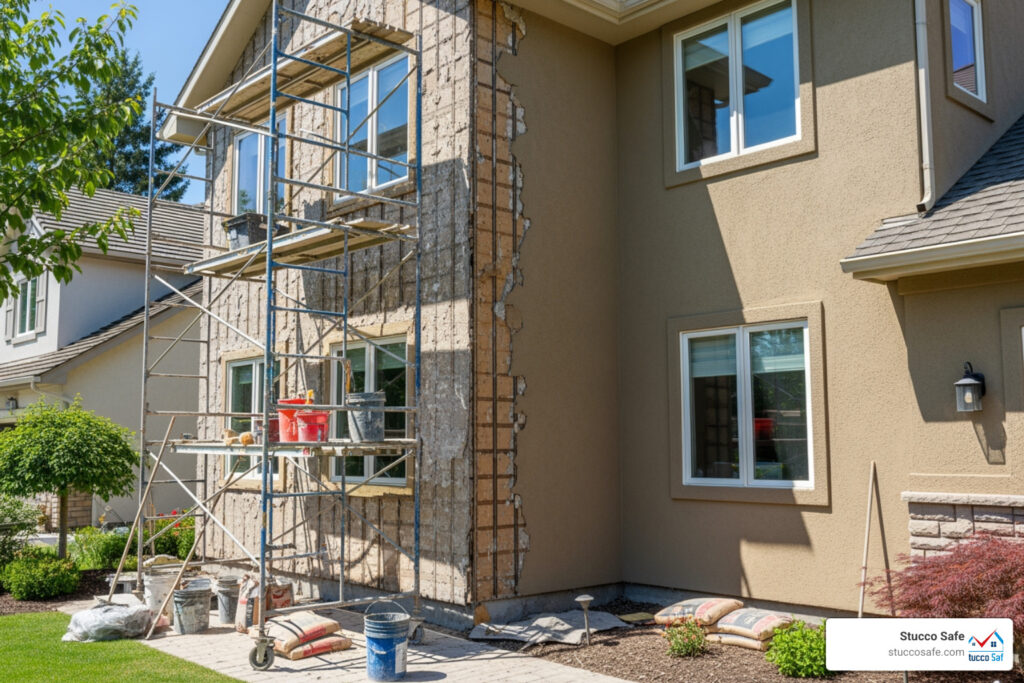
Stucco Wall Replacement: 1 Essential Guide
Why Stucco Wall Replacement Matters for Your Home
Stucco wall replacement is the process of removing old, failing stucco and installing a new exterior cladding system. This restores your home’s protection and curb appeal. Here’s what you need to know:
When Replacement is Needed:
- Large cracks wider than 1/8 inch
- Water stains or bulging sections
- Extensive crumbling or falling stucco
- Visible mold or structural damage
- Homes built between 1993-2006 (higher failure rates)
What It Involves:
- Complete stucco removal down to the sheathing
- Repair of water-damaged framing and rot
- Installation of proper weather barriers
- Application of new siding (stucco, fiber cement, vinyl, or brick)
Typical Costs:
- Full replacement: $50,000 to $100,000 for whole-house projects
- Alternative siding: $15,000 to $30,000 for medium homes
- Professional inspection: $495 to $1,595
When stucco fails, it can hide serious problems. Water intrusion behind the stucco can rot your home’s sheathing and framing without visible warning signs. By the time you see dark staining or bulging, the damage has often been accumulating for years.
The decision between patching cracks and a full replacement isn’t always obvious. A small repair might cost $400 to $1,500, while full replacement runs $50,000 or more. However, recurring repairs can quickly add up, especially when underlying moisture issues cause new damage.
Water damage often happens first, behind the facade. Homes built between 1993 and 2006 have an estimated failure rate as high as 90% because building codes didn’t require proper drainage systems. If your home was built during this window, replacement is often a matter of “when,” not “if.”
Replacing stucco is an opportunity to upgrade your home’s weather protection, improve energy efficiency, and boost curb appeal. Modern materials like fiber cement siding or properly installed stucco can provide a fresh look that lasts 50+ years with minimal maintenance.
As certified stucco inspectors, we have guided hundreds of homeowners through the stucco wall replacement process, from initial moisture testing to final contractor selection, helping them make informed decisions that protect their largest investment.
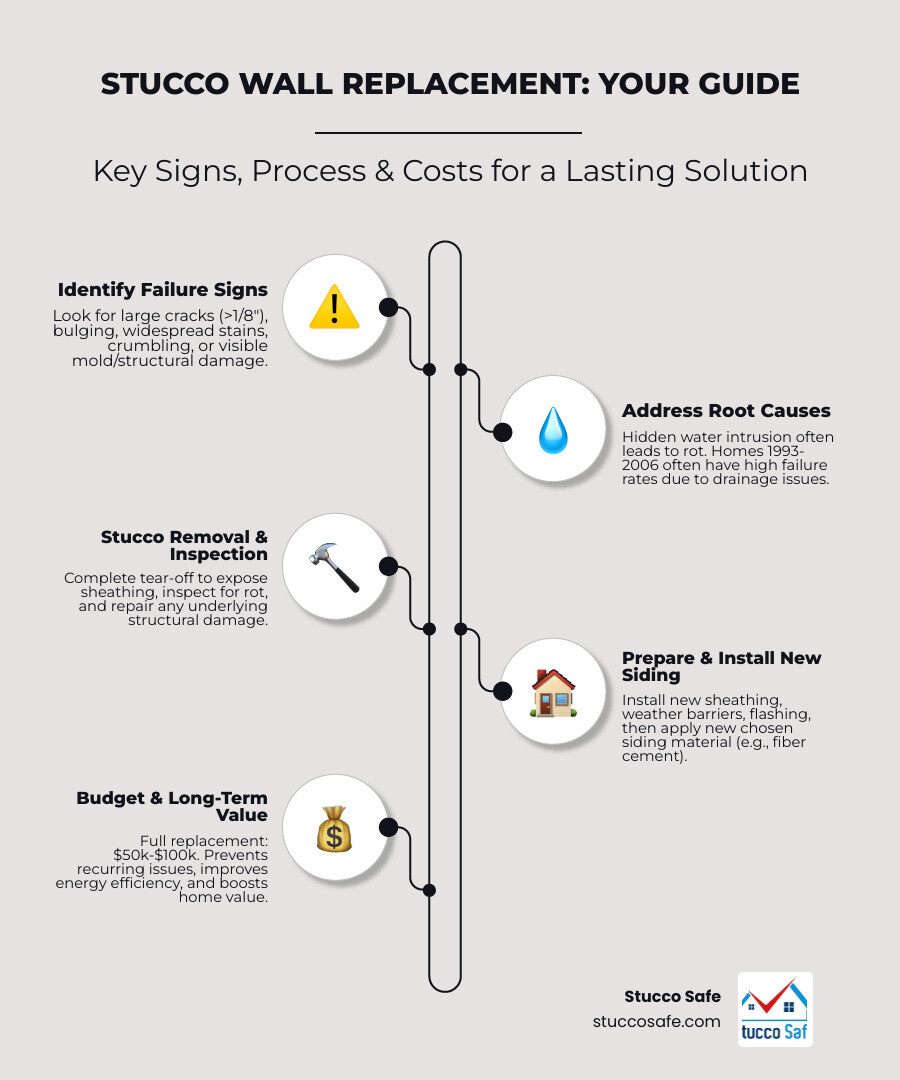
Stucco wall replacement basics:
The Tipping Point: When to Repair, Remediate, or Replace Stucco
Homeowners often wonder if a stucco issue needs a quick patch or a full stucco wall replacement. The decision depends on the extent of the damage.
Stucco is porous and designed to work with a drainage system behind it. When this system fails, trapped water leads to mold, rot, and structural damage. A small crack can be a gateway for significant water intrusion. Many homeowners spend thousands on recurring repairs only to find the underlying issues persist. While a basic repair costs $400 to $1,500, a full replacement ($50,000 to $100,000) or remediation offers a permanent solution with a better return on investment (ROI), often around 70% for new stucco.
Accurate diagnosis is key. At Stucco Safe, we use professional inspections and forensic testing in Southeastern Pennsylvania, New Jersey, and Delaware to uncover hidden moisture and help homeowners choose between repair, remediation, or stucco wall replacement.
Signs Your Stucco Needs Replacement, Not Just Repair
Knowing when to opt for stucco wall replacement is crucial. Here are the main signs that replacement is needed:

- Large Cracks (> 1/8 inch): While hairline cracks can be repaired, larger cracks indicate significant movement or underlying issues. They are open invitations for water to penetrate walls. Diagonal cracks from window corners are particularly concerning.
- Bulging or Swelling: If stucco appears to be bulging or bubbling, it’s a strong indicator of trapped moisture and delamination. The stucco is detaching from the wall, and significant water damage, rot, or mold is almost certainly underneath.
- Crumbling Sections: Stucco that is crumbling or falling off in large pieces is a clear sign of severe deterioration. This can be due to water damage, improper application, or age. Patching is only a temporary band-aid in this case.
- Widespread Staining: Persistent dark staining, or “stucco tears,” below windows or near the foundation is a classic symptom of water intrusion. It indicates water is entering the wall system and leaching out.
- Mold or Mildew Growth: Visible mold on exterior stucco or interior walls signals a serious moisture problem. Mold requires moisture to thrive, and its presence means water is getting in and staying there.
- Pest Infestation: Damaged stucco can create entry points for pests like termites and carpenter ants. Pest infestation is often a sign that the underlying wood structure is vulnerable.
When these signs appear, especially in combination, the problem is likely systemic, and a full stucco wall replacement is the most effective long-term solution.
Understanding Stucco Remediation vs. Simple Repair
Stucco repair and remediation are fundamentally different. Understanding the distinction is key to solving stucco problems permanently.
- Simple Stucco Repair: This involves addressing isolated, superficial damage like patching small cracks or holes. It’s a quick fix, often costing $8 to $20 per square foot. However, if the underlying cause isn’t addressed, the problem will reappear.
- Stucco Remediation: This is a comprehensive, long-term solution that addresses the root causes of failure. The process typically involves:
- Thorough Inspection: A detailed forensic inspection with moisture testing to identify all areas of water intrusion and damage.
- Stucco Removal: Tearing off old stucco from problem areas or the entire wall.
- Addressing Underlying Damage: Repairing any rotted wood (sheathing, framing), remediating mold, and ensuring structural integrity.
- Proper Weather Barrier Installation: Applying new house wrap and a rainscreen, which creates a drainage gap behind the new cladding to let moisture escape.
- Flashing and Sealing: Re-installing windows and doors with proper flashing and sealing to prevent water intrusion.
- New Stucco Application: Applying new stucco or an alternative siding material using modern techniques.
A partial repair often fails to create a continuous path for moisture to escape, potentially moving the problem elsewhere. Full remediation, though more involved, is often the only way to ensure the problem will not recur. For more professional guidance, consult resources like the The Sto Comprehensive Repair Guide – Sto Corp..
The Long-Term Cost Implications: Patching Now vs. Replacing Later
The upfront cost of a full stucco wall replacement can seem daunting, with whole-house projects costing between $50,000 and $100,000. However, this is often a better investment than repeated, superficial repairs.
Here’s why we advocate for comprehensive solutions:
- Recurring Repair Costs Add Up: Small repairs ($400 to $1,500) become a treadmill of expenses if the underlying problem isn’t fixed. Over time, you can easily spend more on piecemeal repairs than a single, permanent solution.
- Preventing Catastrophic Failure: Failing stucco is a structural threat. Water intrusion can lead to rotting sheathing and framing. Addressing these issues early prevents far more expensive repairs down the line.
- Increased Home Value and ROI: A properly executed stucco wall replacement can significantly boost a home’s value and curb appeal, with an ROI of about 70%. It also improves energy efficiency, leading to lower utility bills.
- Peace of Mind: Investing in a permanent solution eliminates the stress of constantly inspecting for new cracks or stains. You can rest easy knowing your home is properly protected.
While the initial cost is high, stucco wall replacement is a critical investment in your home’s longevity, safety, and value.
The Complete Stucco Wall Replacement Process
Starting on a stucco wall replacement in Southeastern PA, New Jersey, or Delaware is a significant but structured process. It’s a job for skilled professionals and involves three main phases: removal and inspection, repair and preparation, and new siding installation.
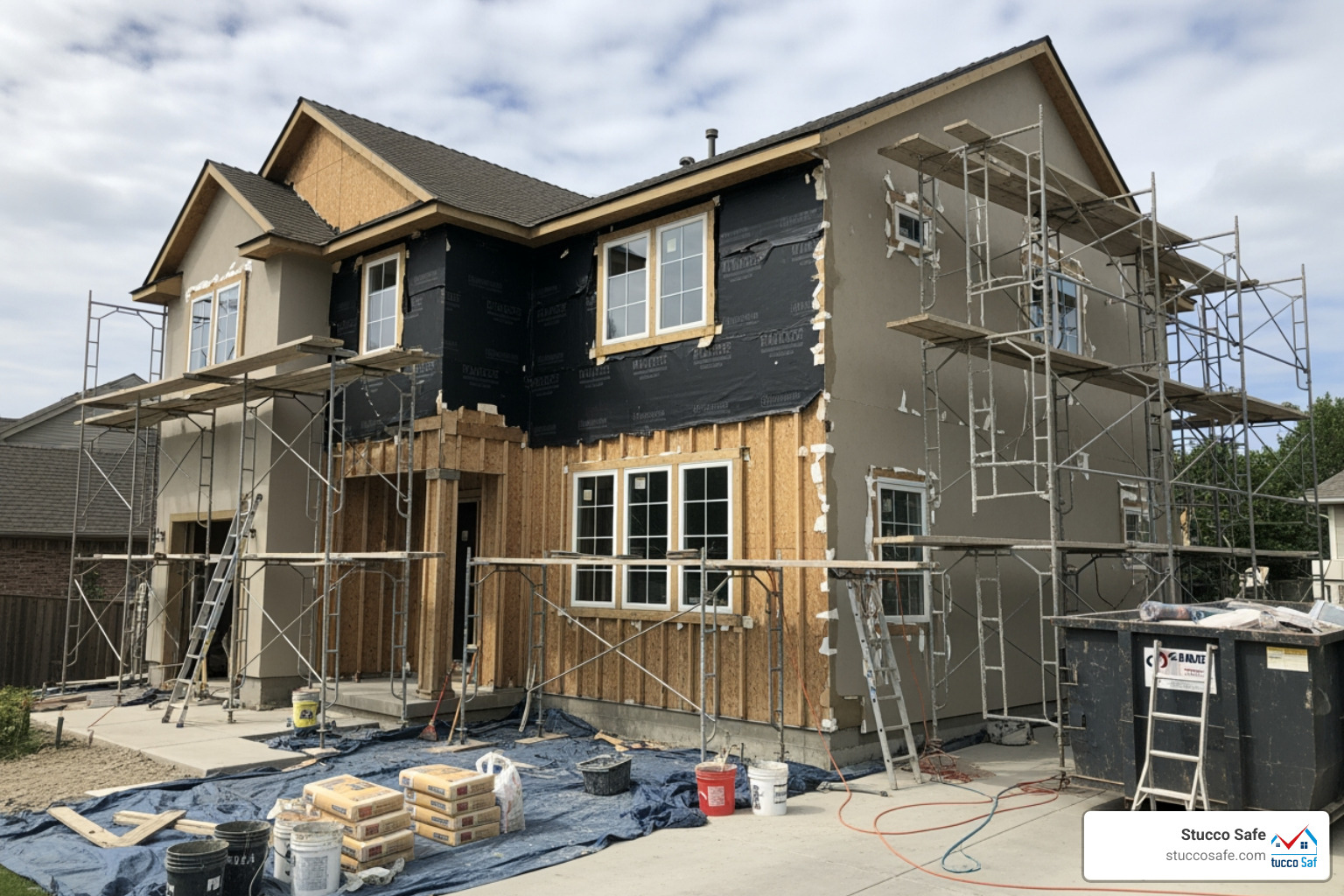
Step 1: Stucco Removal and Structural Inspection
The first step is the careful removal of old stucco and a thorough inspection of the underlying structure.
- Tear-Off Process: A team systematically removes the old stucco down to the sheathing using specialized tools. This requires precision to avoid damaging underlying components. For a visual of how improper installation leads to this, see Improper Siding Installation | Stucco Siding Replacement by Eby Exteriors.
- Debris Disposal: All demolition debris is properly disposed of in accordance with local regulations.
- Exposing the Substrate: Once the stucco is off, the underlying layers (lath, building paper, sheathing) are exposed, revealing the extent of any hidden damage.
- Inspecting Sheathing and Framing: The sheathing (plywood or OSB) and wall framing are carefully inspected for water damage, rot, or mold. Any soft or springy areas indicate issues that need immediate attention.
This phase dictates the scope of subsequent repairs and ensures the new exterior is built on a sound foundation.
Step 2: Repairing Damage and Preparing the Surface
With the old stucco gone, the next phase focuses on repairing damage and preparing the wall for new siding.
- Replacing Rotted Wood: Any sheathing, wall studs, or other wooden components compromised by moisture are removed and replaced with new, treated lumber.
- Mold Remediation: If mold is found, thorough remediation is performed to ensure healthy interior air quality.
- Installing New Sheathing: Damaged or inadequate sheathing is replaced to provide a solid, uniform surface.
- Applying House Wrap and Rainscreen: A durable water-resistant barrier (house wrap) is applied. Crucially, a rainscreen is then installed to create a small air gap between the house wrap and the new siding. This gap allows moisture to drain and dry, preventing it from being trapped.
- Flashing Installation and Window/Door Sealing: Windows and doors are properly flashed and sealed to prevent water entry. Weep screeds are installed at the base of walls to allow moisture to escape.
This comprehensive preparation equips the home with a robust defense against future moisture intrusion.
Step 3: Installing New Exterior Siding
With the structure repaired and a moisture management system in place, the new exterior siding is installed.
- Material Application: Whether it’s new stucco, fiber cement, or another material, skilled contractors carefully apply it. New stucco requires multiple coats with adequate curing time (24-48 hours for scratch, 5-7 days for brown, and a week for the finish coat).
- Manufacturer Guidelines: The team strictly adheres to the manufacturer’s installation guidelines to ensure warranty compliance and optimal performance.
- Finishing Details: Trim around windows, doors, and corners is installed to complete the aesthetic.
- Trim and Caulking: All seams and joints are carefully caulked with high-quality sealants to prevent water intrusion.
- Final Cleanup: The team conducts a thorough cleanup, leaving the property immaculate.
A professional installation relies on skill and the right tools. A crew will use:
- Measuring tapes, levels, and chalk lines
- Siding shears, circular saws, and utility knives
- Nail guns and hammers
- Scaffolding and ladders
- Caulking guns and trowels
- Protective gear: safety glasses, gloves, dust masks, and hard hats
This final phase transforms the home, providing improved curb appeal, energy efficiency, and lasting protection.
Beyond Stucco: Exploring Popular Siding Alternatives
During a stucco wall replacement, many homeowners in Southeastern PA, New Jersey, and Delaware opt for a different exterior material. This is an excellent opportunity to update a home’s aesthetic, improve performance, and reduce future maintenance. The choice of material impacts visual appeal, durability, and long-term costs.
| Material | Initial Cost (per sq ft) | Lifespan | Maintenance | Pros | Cons |
|---|---|---|---|---|---|
| Fiber Cement | $10-$25 | 50+ years | Periodic cleaning, occasional repairs | Highly durable, fire/pest resistant, versatile aesthetic, paintable | Higher initial cost than vinyl, requires painting (unless color-infused), heavier than vinyl |
| Vinyl | $5-$15 | 20-40 years | Occasional washing | Most affordable, low maintenance, wide color/style range, quick installation | Can crack/warp in extreme temps, less durable than fiber cement/brick, can look less premium |
| Brick/Brick Veneer | $15-$30+ | 75+ years | Minimal, repointing mortar over time | Extremely durable, timeless aesthetic, fire/pest resistant, excellent insulation, very low maintenance | Highest initial cost, limited color options, requires skilled masonry, heavier, longer installation time |
Fiber Cement Siding
Fiber cement siding is a fantastic option for homeowners seeking a balance of durability and aesthetics. Made from cement, sand, and cellulose fibers, it’s incredibly robust.
- Durability: This material is highly resistant to impact, rot, pests, and fire, holding up well in our region’s varied weather.
- Aesthetic Versatility: It can mimic the look of wood, shingles, or even stucco, and can be painted for extensive color customization.
- Maintenance & Cost: Fiber cement requires periodic cleaning and repainting every 10-15 years. At $10-$25 per square foot installed, it’s a mid-range option.
Vinyl Siding
Vinyl siding is a popular choice for stucco wall replacement due to its affordability and low maintenance.
- Affordability: Costing around $5-$15 per square foot, vinyl is one of the most budget-friendly options, often 10-40% less than stucco.
- Low Maintenance: It doesn’t require painting or staining; occasional washing is usually sufficient.
- Drawbacks & Lifespan: Vinyl can be susceptible to cracking or warping in extreme temperatures. With proper care, it can last 20 to 40 years.
Brick and Brick Veneer
For unparalleled longevity and a classic aesthetic, brick or brick veneer are premium choices for stucco wall replacement.
- Longevity & Durability: Brick is incredibly durable, often lasting over 75 years. It’s resistant to fire, pests, and rot.
- Aesthetic & Maintenance: Brick offers a traditional look that improves curb appeal. Maintenance is minimal, possibly requiring mortar repointing after several decades.
- Cost & Requirements: As the most expensive option ($15-$30+ per sq ft), brick may require additional foundation support and skilled masonry work.
Budgeting for Your Project: Understanding Stucco Replacement Costs
Understanding the financial commitment of a stucco wall replacement is crucial. Costs can range from $15,000 to $30,000 for a medium-sized home using alternative siding, to $50,000 to $100,000 for a whole-house stucco tear-off and replacement. Labor typically accounts for 40-60% of the total expense, with materials making up 20-40%. For more detailed cost insights, refer to resources like More information on stucco remediation costs.
Key Factors Influencing Stucco Wall Replacement Costs
Several variables determine the overall cost of a stucco wall replacement project:
- Home Size and Stories: Larger and multi-story homes require more materials and labor, increasing costs due to scaffolding and safety needs.
- Architectural Complexity: Homes with intricate details, gables, or curves are more expensive to re-side than simple rectangular structures.
- Choice of Replacement Material: Costs vary significantly between fiber cement ($10-$25/sq ft), vinyl ($5-$15/sq ft), and brick ($15-$30+/sq ft).
- Extent of Underlying Damage: This is the biggest unknown. Extensive rot or mold found after removal will increase remediation costs.
- Geographic Location: Labor and material costs can fluctuate within our service areas of Southeastern PA, New Jersey, and Delaware.
- Permit Fees and Inspections: Local building permits and inspections are a necessary part of the budget.
How to Get an Accurate Estimate for a stucco wall replacement
Getting a precise estimate is key to effective budgeting. We recommend a diligent approach:
- Start with a Professional Inspection: A comprehensive stucco inspection ($495 to $1,595) from Stucco Safe uses forensic testing to assess underlying damage. This report allows contractors to provide more accurate bids.
- Get Multiple Quotes: Obtain detailed estimates from at least three reputable contractors to compare pricing and scope of work.
- Vetting Contractors: Choose licensed and insured contractors with a proven track record in stucco wall replacement. Check certifications and ask for local references.
- Understanding Line Items: Ensure each estimate details costs for demolition, materials, labor, repairs, flashing, permits, and cleanup.
- Contingency Fund (10-20%): Always set aside a contingency fund of 10-20% of the project cost to cover unexpected repairs that may be finded.
- Written Contracts: Insist on a comprehensive written contract that outlines the scope of work, materials, payment schedule, timeline, and warranty information.
Following these steps helps ensure you get a fair price for quality work that protects your home for decades.
Frequently Asked Questions about Stucco Replacement
We often hear similar questions from homeowners considering stucco wall replacement. Here are some of the most common ones:
Does homeowners insurance typically cover stucco remediation or replacement?
The answer is usually, “it depends.” Insurance policies typically cover sudden and accidental damage (like from a storm), but generally do not cover damage from neglect, poor maintenance, or gradual deterioration.
- Poor Installation: If damage is a direct result of faulty original installation, some policies might offer coverage, but this is often difficult to prove.
- EIFS Exclusions: Some policies have specific exclusions for water damage related to synthetic stucco (EIFS), especially if improperly installed.
- Gradual vs. Sudden Damage: Most stucco-related water intrusion is a gradual process, which is often excluded from coverage.
We recommend reviewing your specific policy and consulting with your agent. A professional inspection report from us can be invaluable in documenting the cause of damage for any potential claim.
How long does a stucco wall last?
A properly installed and maintained stucco wall can last 50 to 70 years. Some sources suggest a remediated system can last 50 to 80 years. More information on this is available here: Stucco can last for decades with proper care.
However, longevity depends on:
- Proper Installation: This is the most critical factor. Inadequate drainage systems, common in homes built from 1993-2006, significantly reduce stucco lifespan.
- Maintenance: Regular cleaning, timely repair of small cracks, and maintaining caulk around windows and doors extends its life.
- Climate: Freeze-thaw cycles and humidity in our region can cause expansion and contraction, leading to cracks over time.
A stucco wall replacement essentially resets this lifespan, protecting your home for decades.
How do I find a reputable contractor for my project?
Finding the right contractor for a stucco wall replacement is paramount. Here’s our advice:
- Check for Specialization: Look for contractors who specialize in stucco remediation and exterior envelope restoration.
- Verify Insurance and Licensing: Ensure the contractor is fully licensed and insured in your state (Pennsylvania, New Jersey, or Delaware).
- Request Local References: Ask for references from past clients in your area and review their project portfolio.
- Assess Communication: Choose a contractor who communicates clearly and explains the process well.
- Ask Key Questions: When interviewing contractors, ask about:
- Their specific experience with stucco remediation in our region.
- The moisture management system they will install (e.g., rainscreen).
- How they protect your property during the project.
- Their warranty for materials and labor.
- How they handle unforeseen issues like extensive rot.
- Proof of their licensing and insurance.
By diligently vetting contractors, you can partner with a trustworthy professional for your stucco wall replacement.
Conclusion: A Sound Investment in Your Home’s Future
The decision to undertake a stucco wall replacement is a significant investment that pays dividends in the long run. It addresses pervasive water damage and structural issues while enhancing curb appeal and energy efficiency. Unlike superficial repairs, comprehensive remediation offers a lasting solution to underlying problems.
By understanding the replacement process and exploring material options like new stucco, fiber cement, or vinyl, homeowners can make informed choices. Stucco wall replacement is about protecting your most valuable asset and ensuring your home is safe, dry, and beautiful for decades to come.
This journey begins with a professional inspection to accurately diagnose the problem. At Stucco Safe, our certified inspectors use forensic testing to provide the clarity needed to make the right decision for your home in Southeastern Pennsylvania, New Jersey, or Delaware.
Don’t let failing stucco compromise your home’s integrity. Invest in the longevity and value of your property with a professionally executed stucco wall replacement.