

Screws for stucco walls: 3 Ultimate Fasteners
Why Fastening to Stucco Requires a Special Approach
Screws for stucco walls aren’t your typical wood or drywall fasteners. Stucco is hard like concrete, brittle like ceramic tile, and demands specialized hardware to hold securely without cracking. Here’s what you need to know:
Quick Answer: Best Screws for Stucco Walls
| Fastener Type | Best For | Load Capacity |
|---|---|---|
| Concrete/Masonry Screws | Light to medium items (mailboxes, house numbers) | 20-50 lbs |
| Metal Sleeve Anchors | Medium to heavy items (light fixtures, railings) | 25-100+ lbs |
| Lag Screws into Studs | Very heavy items (awnings, structural elements) | 100-200+ lbs |
Key Requirements:
- Always drill pilot holes with masonry bits
- Choose corrosion-resistant materials (stainless steel or galvanized)
- Seal all penetrations with exterior-grade caulk
- Match screw length to stucco thickness plus substrate penetration
Standard wood screws will either fail to penetrate stucco’s cement-based surface or crack it on entry. The material’s brittleness means any crack becomes a potential pathway for moisture to sneak behind your wall system—and water intrusion behind stucco can lead to thousands of dollars in hidden damage to your sheathing and framing.
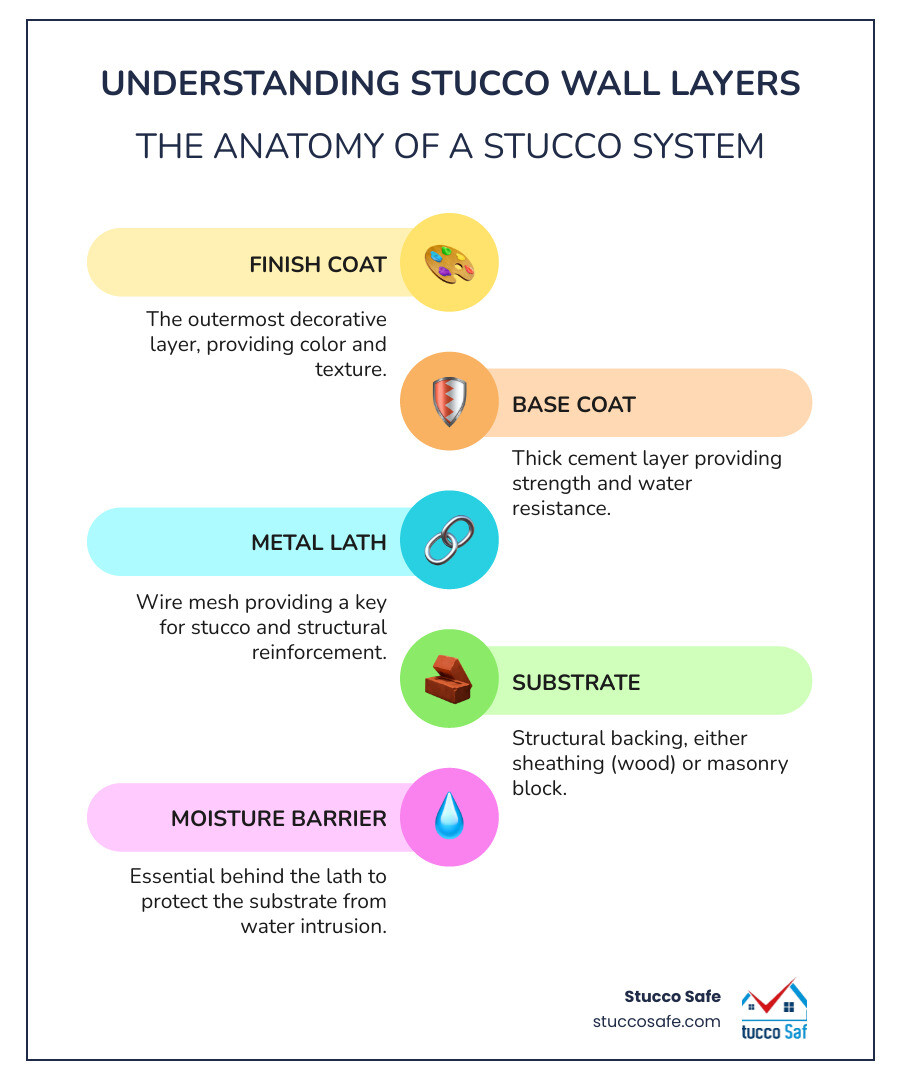
The solution isn’t complicated, but it does require understanding three things: the right screw material and coating, the proper installation technique, and how your specific wall is constructed. Traditional three-coat stucco over wood sheathing behaves differently than synthetic EIFS with foam insulation, and stucco applied directly to masonry block requires yet another approach.
I’m Gabe Kesslick, a certified stucco inspector who’s investigated countless fastener failures that led to moisture damage. Through years of forensic testing, I’ve seen how choosing the wrong screws for stucco walls—or installing them incorrectly—creates entry points for water that can compromise your home’s structural integrity.
The Anatomy of the Best Screws for Stucco Walls
When you’re dealing with stucco, you’re dealing with a material that demands respect. It’s hard as concrete and brittle as ceramic, which means choosing the wrong fastener isn’t just frustrating—it can crack your wall and create pathways for water damage. This section breaks down the essential features to look for when selecting your fasteners, so you can get a rock-solid connection that lasts for decades.
Choosing the Right Material and Finish
The material and finish of your screws for stucco walls determine whether they’ll still be holding strong in ten years or leaving rusty streaks down your beautiful exterior next summer. This isn’t the place to cut corners.
Stainless steel is your premium option and for good reason. Grades like 304 stainless or 316 stainless (for coastal areas) resist corrosion better than anything else on the market. If you live near the ocean or in a region with high humidity, stainless steel fasteners will save you from the heartbreak of rust stains and weakened connections. The trade-off? They cost more upfront, and because they’re slightly softer than hardened carbon steel, you’ll absolutely need to drill proper pilot holes—no shortcuts.
Galvanized steel screws give you solid corrosion resistance at a more wallet-friendly price point. These fasteners are coated with a protective layer of zinc that stands up well to the elements. The catch is that if you scratch or damage that zinc coating during installation, the exposed steel underneath can start rusting. For most exterior applications, though, galvanized screws offer an excellent balance of protection and affordability.
Many specialized masonry screws use hardened carbon steel with protective coatings—you’ve probably seen the distinctive blue-coated screws at your local hardware store. These fasteners combine exceptional strength with a self-threading design that bites into masonry like a champ. Some manufacturers also offer tan-colored versions that blend naturally with common stucco colors. Just remember that these coatings work great until they’re compromised, so handle them carefully during installation.
For any exterior stucco application, corrosion resistance isn’t optional. A single rusted screw can become a weak point that allows moisture behind your stucco system, and we’ve seen that scenario lead to thousands of dollars in hidden damage during our inspections.
Understanding Head and Drive Styles
The head and drive style might seem like minor details, but they make a real difference in how easily you can install your fasteners and how well they perform over time.
Hex-washer head screws are the workhorses of stucco fastening. That hexagonal head lets you apply serious torque with a socket wrench or hex driver bit without the frustration of the driver slipping out. The integrated washer does something clever—it spreads the load over a wider area, which matters a lot when you’re fastening directly to stucco’s brittle surface. You’ll find these on most quality masonry screws for good reason.
Flat head screws sit flush or slightly below the surface of whatever you’re attaching, giving you that clean, barely-there look. They’re perfect when aesthetics matter and you don’t want visible screw heads catching your eye every time you look at your wall. Most use Phillips or square drives.
Pan head screws have that slightly rounded, domed top that sits proudly above the surface. They provide excellent bearing surface and work well when you’re not concerned about a flush finish or when you actually want the hardware to be visible as part of the design.
Now, let’s talk drive styles. Phillips drive screws are everywhere—that familiar cross-shaped recess is practically universal. But here’s the thing: Phillips heads have a frustrating tendency to cam out (when your driver bit slips out of the screw head) if you don’t maintain perfect downward pressure or if your bit is even slightly worn. We’ve all been there, and it’s not fun when you’re on a ladder.
Star drive screws (also called Torx) are the professional’s choice for a reason. That six-pointed star pattern transfers way more torque and dramatically reduces cam-out compared to Phillips drives. When you’re driving into tough materials like stucco, that reliability means the difference between a smooth installation and a stripped screw head that ruins your day.
Choose based on your tools and your priorities. Need maximum driving power? Go with hex-washer head. Want a cleaner look? Flat head is your friend. And if you’re doing serious work, star drive will save you headaches.
How to Choose the Right Screw Length for screws for stucco walls
Getting the screw length right is absolutely critical. Too short, and you’re only grabbing the brittle stucco surface—which is basically useless. Too long, and you risk hitting electrical wiring or plumbing, or you might not get a secure bite in the right material.
Start by understanding what you’re working with. Traditional stucco typically runs between 5/8″ and 1½” thick. If your stucco is applied over wood sheathing (usually ½” to 5/8″ plywood or OSB), you want your screws for stucco walls to punch through the stucco and bite into the structural framing—the actual studs—by at least 1¼ inches for a truly secure hold. For lighter items like house numbers or a small mailbox, penetrating just the sheathing can work, but for anything with real weight, you need that stud connection.
Here’s where it gets trickier: if you have synthetic EIFS (Exterior Insulation and Finish Systems), there’s typically a foam insulation layer that can be anywhere from 2″ to 4″ thick. Your standard fasteners won’t even reach the structure. You’ll need much longer screws to penetrate through the foam, through the sheathing, and finally into the studs where they can actually hold.
A handy trick from years of inspections: measure around existing penetrations like weep screeds or plaster stops at the bottom of your wall. This gives you a clear picture of your stucco’s actual thickness without having to drill exploratory holes.
The math is straightforward once you know your layers: stucco thickness + sheathing thickness + minimum 1¼” into studs = your target screw length. For masonry block substrates, you’ll calculate differently—you want at least 1″ of embedment into the block itself for a solid connection.
For a more detailed breakdown of how to determine the ideal length and type of anchor for your specific wall system, check out our comprehensive guide: More info about stucco anchoring.
A Roundup of Stucco-Friendly Fasteners
Now that we’ve covered the anatomy of ideal screws for stucco walls, let’s dive into the types of fasteners that are actually up to the task. Think of this as your matchmaking service—pairing the right hardware with your project’s weight requirements and wall construction.
Concrete and Masonry Screws
These workhorses are often the first choice for attaching items to stucco, and for good reason. Concrete screws are made from hardened steel and feature an aggressive, self-threading design that cuts its own path into the pre-drilled pilot hole. No separate anchor sleeve needed—the screw does all the work.
The beauty of these fasteners lies in their simplicity. They offer impressive holding power for their size, typically supporting 20-50 pounds depending on the diameter and how deep they’re embedded. Some heavier-duty versions can handle even more. They’re perfect for mounting mailboxes, house numbers, light fixtures, small signs, or conduit clips—basically anything in the light to medium weight range.
But here’s the catch: precision matters. You need to drill your pilot hole with exactly the right-sized masonry bit. Too large, and the screw spins uselessly. Too small, and you risk snapping the screw as you drive it in. These screws are tough but can be brittle, especially if you hit rebar or over-torque them.
For more specific recommendations on these and other options, check out our guide on the Best Anchors for Stucco.
Sleeve and Expansion Anchors
When you need serious holding power—the kind that makes you confident hanging something heavy on your wall—sleeve and expansion anchors step up to the plate. These clever fasteners work by expanding inside the drilled hole, creating a mechanical lock against the surrounding material. It’s like they’re giving your stucco wall a firm handshake from the inside.
For lighter items in the 5-25 pound range, plastic or nylon sleeve anchors work well in stucco over masonry block. The plastic sleeve expands when you drive a screw into it, distributing the load and preventing surface cracks. They’re inexpensive and surprisingly effective for small decorative items.
When you’re dealing with medium to heavy loads—think handrails, sturdy shelving, or substantial light fixtures—metal expansion anchors are your best friend. Metal sleeve anchors use a threaded bolt with an expandable sleeve that grips tighter as you tighten the nut. They can reliably hold 25-100+ pounds and work beautifully in stucco applied over concrete or masonry block.
For the heaviest applications, wedge anchors are the heavyweight champions. These are designed for serious loads ranging from 50-200+ pounds or more. As you tighten the nut, a wedge at the end expands and locks firmly into solid concrete or masonry. They’re what you want for anything that absolutely cannot fail—heavy railings, structural brackets, or permanent fixtures.
The key advantage of all expansion anchors is how they distribute force. Rather than relying solely on the brittle stucco surface, they spread the load across a larger area of both the stucco and the solid substrate beneath it.
To understand the different types and their applications more thoroughly, refer to our Stucco Anchor Types guide.
Lag Screws for Hitting Studs
Sometimes you need to bypass the stucco entirely and anchor directly into the structural bones of your home. For very heavy items like large awnings, heavy gates, pergola attachments, or certain railings, lag screws are the way to go.
The first step is finding those elusive studs. Use a quality stud finder to pinpoint the exact location of the wood framing behind your stucco. In typical stucco-over-wood construction, studs are spaced either 16 or 24 inches apart from center to center. Mark your spots carefully—you only get one shot at this.
Lag screws are robust, heavy-duty fasteners with hexagonal heads that you drive with a socket wrench. They’re designed to bite deep into wood framing, providing immense holding power—typically 100-200+ pounds depending on the screw size and how deep it penetrates the stud. When you’re hanging something that could cause serious damage if it falls, this is the level of security you want.
The installation process involves drilling a pilot hole through the stucco, sheathing, and into the stud, then driving the lag screw home. Always use a generous bead of exterior-grade silicone caulk around the screw to seal out moisture. Any penetration through stucco is a potential pathway for water, and water behind stucco is your home’s worst enemy. For a general overview of the process, you can review this comprehensive guide to hanging items on stucco walls.
Here’s a quick comparison to help you choose the right fastener for your project:
| Fastener Type | Load Capacity (Approx.) | Best Stucco Over Wood Sheathing (into stud) | Best Stucco Over Masonry Block | Notes |
|---|---|---|---|---|
| Concrete/Masonry Screws | 20-50 lbs (light-medium) | Excellent | Good (strong grip in solid masonry) | Self-threading, requires pilot hole, no separate anchor needed |
| Plastic Sleeve Anchors | 5-25 lbs (light) | Fair | Good | Inexpensive, good for decorative items |
| Metal Sleeve Anchors | 25-100+ lbs (medium-heavy) | Good | Excellent | Distributes load well, very reliable |
| Wedge Anchors | 50-200+ lbs (heavy) | Not recommended | Excellent | Maximum holding power in solid masonry |
| Lag Screws into Studs | 100-200+ lbs (very heavy) | Excellent | Not applicable | Bypasses stucco entirely, anchors to structure |