
Synthetic Stucco Damage: 2025’s Urgent Warning
Understanding the Hidden Threat Behind Your Home’s Exterior
Synthetic stucco damage is often invisible until it’s catastrophic. Here’s what you need to know:
- What causes it: Water intrusion from improper installation, missing flashing, poor sealing, and lack of drainage systems
- What to look for: Dark staining, soft or spongy areas, cracks, musty odors inside, peeling interior paint
- The hidden danger: Trapped moisture leads to wood rot, mold growth, and structural decay—often undetectable until serious damage occurs
- When it’s worst: Homes built between 1993-2006 have failure rates as high as 90% due to incorrect building codes during that period
- What it costs: Unaddressed damage can escalate to tens of thousands in structural repairs; professional inspections range from $495 to $1,595
Synthetic stucco—technically called Exterior Insulation and Finish System (EIFS)—arrived in the U.S. in the 1970s, promising energy efficiency and sleek aesthetics. By the early 1990s, it covered nearly 30% of home exteriors in the Southeast.
But there was a problem.
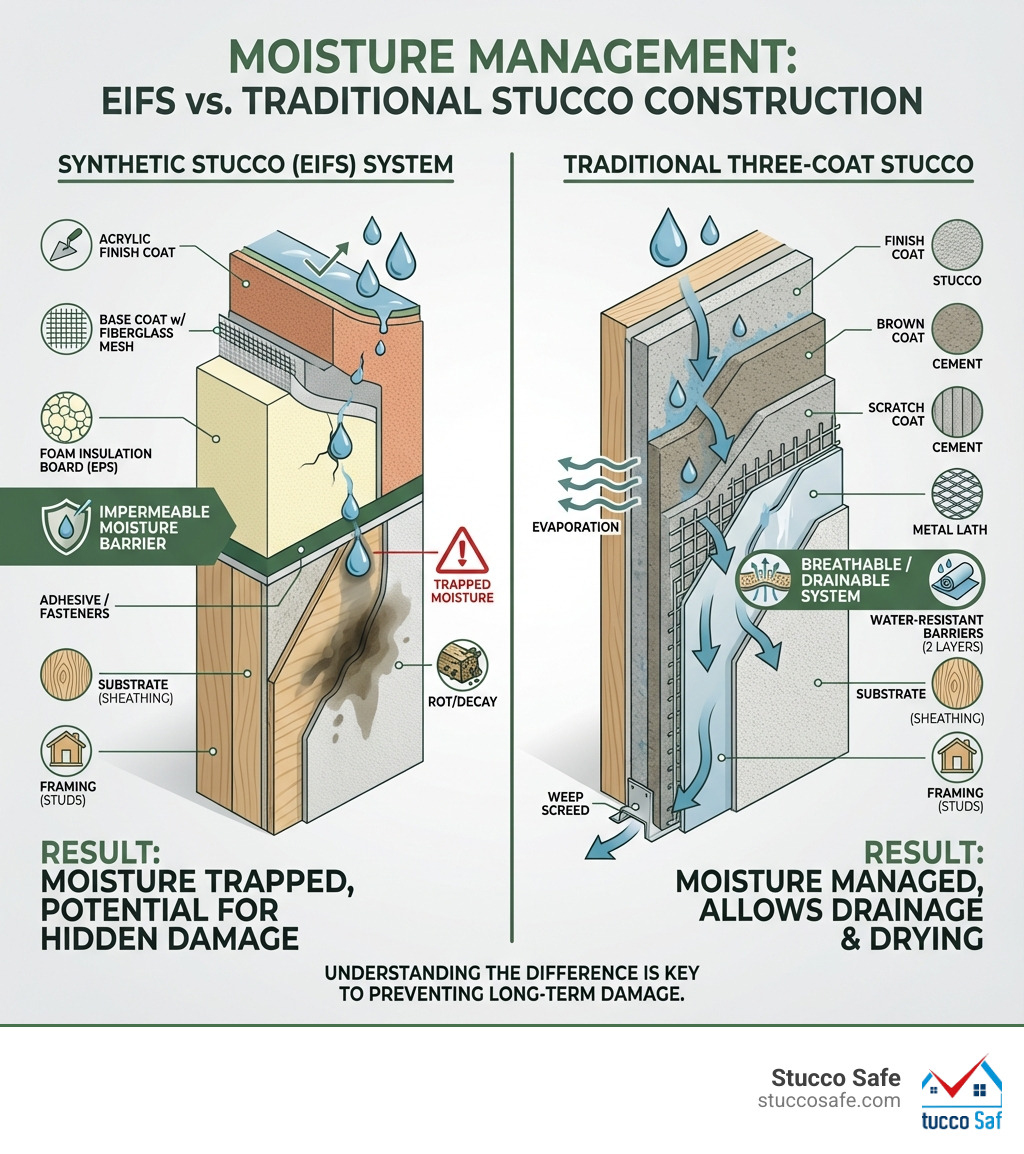
Unlike breathable traditional stucco, EIFS creates an impermeable barrier. When water gets behind it through installation flaws, it’s trapped. The wood sheathing and framing absorb the moisture, rotting silently behind a pristine-looking exterior.
The damage is often catastrophic before it’s visible. A 1995 North Carolina study found moisture problems in 30 of 32 EIFS homes. Studies in Wilmington found significant numbers of homes with moisture in wall cavities, contributing to the decay of structural lumber.
The worst part? You can’t see it happening. The stucco looks perfect while your home’s skeleton deteriorates.
I’m Gabe Kesslick, a certified stucco and building envelope inspector since 2001. I’ve investigated synthetic stucco damage and seen how EIFS can transform from a homeowner’s dream exterior into their worst nightmare—and I’ve learned exactly what warning signs to look for.
The “Perfect Storm”: Why Synthetic Stucco Traps Water
EIFS is like a high-tech raincoat for your home—an impenetrable barrier. While great for insulation, it’s a double-edged sword. If a tiny hole lets water in, it has no way out. This is the “perfect storm” that leads to severe synthetic stucco damage.
The early days of EIFS in the U.S. saw a boom in its use, but installation methods often differed from those in Europe, where EIFS was typically applied over masonry. In the U.S., it was often installed over wood sheathing, which behaves differently when wet. This, combined with a poor understanding of EIFS’s unique properties, set the stage for widespread problems. By the late 1980s, homes clad in EIFS began showing extensive signs of water damage, often permeating to the framing. This history highlights the critical need for meticulous installation and vigilance.
The underlying issue is the moisture-trapping mechanism. Unlike traditional stucco, which can absorb and release water naturally, EIFS is a barrier system. When water penetrates this barrier through cracks or failed sealants, it gets trapped between the EIFS and the wall sheathing. Studies have shown that water in EIFS walls can take 50-100 times longer to dry than in traditional systems. This creates an ideal, humid environment for wood decay, mold, and structural damage to flourish unseen.
What is Synthetic Stucco (EIFS)?
Synthetic stucco, or Exterior Insulation and Finish System (EIFS), is a multi-layered exterior wall system that provides insulation and a durable, customizable finish. It’s significantly different from its traditional counterpart.
Here’s a breakdown of its typical components:
- Insulation Board (EPS): Usually made of expanded polystyrene foam, this board is glued or mechanically fastened to the exterior sheathing. It’s the “E” in EIFS, providing excellent thermal insulation.
- Base Coat: A polymer-based cementitious material applied over the insulation board.
- Reinforcing Mesh: Typically made of fiberglass, this mesh is embedded into the wet base coat to provide impact resistance and strength, preventing cracking.
- Finish Coat: An acrylic-based, decorative top coat that provides color, texture, and the final aesthetic appeal. This coat is durable and flexible, giving EIFS its smooth, customizable finish.
One of EIFS’s touted benefits is its lightweight nature. It’s approximately 80% lighter than traditional stucco, weighing about 2 pounds per square foot. This makes it appealing for certain construction types and allows for greater aesthetic versatility.
The Role of Improper Installation
The Achilles’ heel of EIFS, and the primary cause of most synthetic stucco damage, is improper installation. EIFS requires extreme precision. If any part of the system is compromised, water can get in, and the system’s barrier-like nature ensures it stays trapped. This is why we often see significant issues in homes across Southeastern PA, New Jersey, and Delaware.
Common installation errors that turn EIFS into a water damage waiting game include:
- Missing or Improper Flashing: Flashing is critical around windows, doors, rooflines, and other penetrations. If it’s missing, incorrectly installed, or damaged, water will find a way in. This includes kickout flashing, which directs water away from wall-to-roof intersections.
- Improper Sealing: All joints, seams, and penetrations (like utility lines, light fixtures, and hose bibs) must be carefully sealed. Gaps or cracks in sealant provide direct pathways for water.
- Inadequate Drainage: Older barrier EIFS systems were designed to be waterproof, with no built-in drainage. Even with newer drainable systems, if weep screeds (channels at the base of the wall to allow water to escape) are missing or clogged, water can still accumulate.
- Ground Contact: EIFS should never extend below grade or directly touch the ground. This allows moisture from the soil to wick up into the system, bypassing the protective layers. We recommend a minimum of 6 inches of clearance from finished ground level.
- Lack of Weep Screeds: These are essential at the bottom of walls and above windows/doors to allow any trapped water to escape. Without them, water accumulates.
- Single-Layer Water-Resistive Barrier: Many older EIFS installations failed to use an adequate water-resistive barrier (WRB) behind the foam, or used a single layer that was easily compromised. Modern best practices often call for a two-layer system or a drainage mat.
These errors, often seemingly minor at the time of installation, become major vulnerabilities over time, leading to devastating synthetic stucco damage.
The Anatomy of Synthetic Stucco Damage: From Cracks to Catastrophe
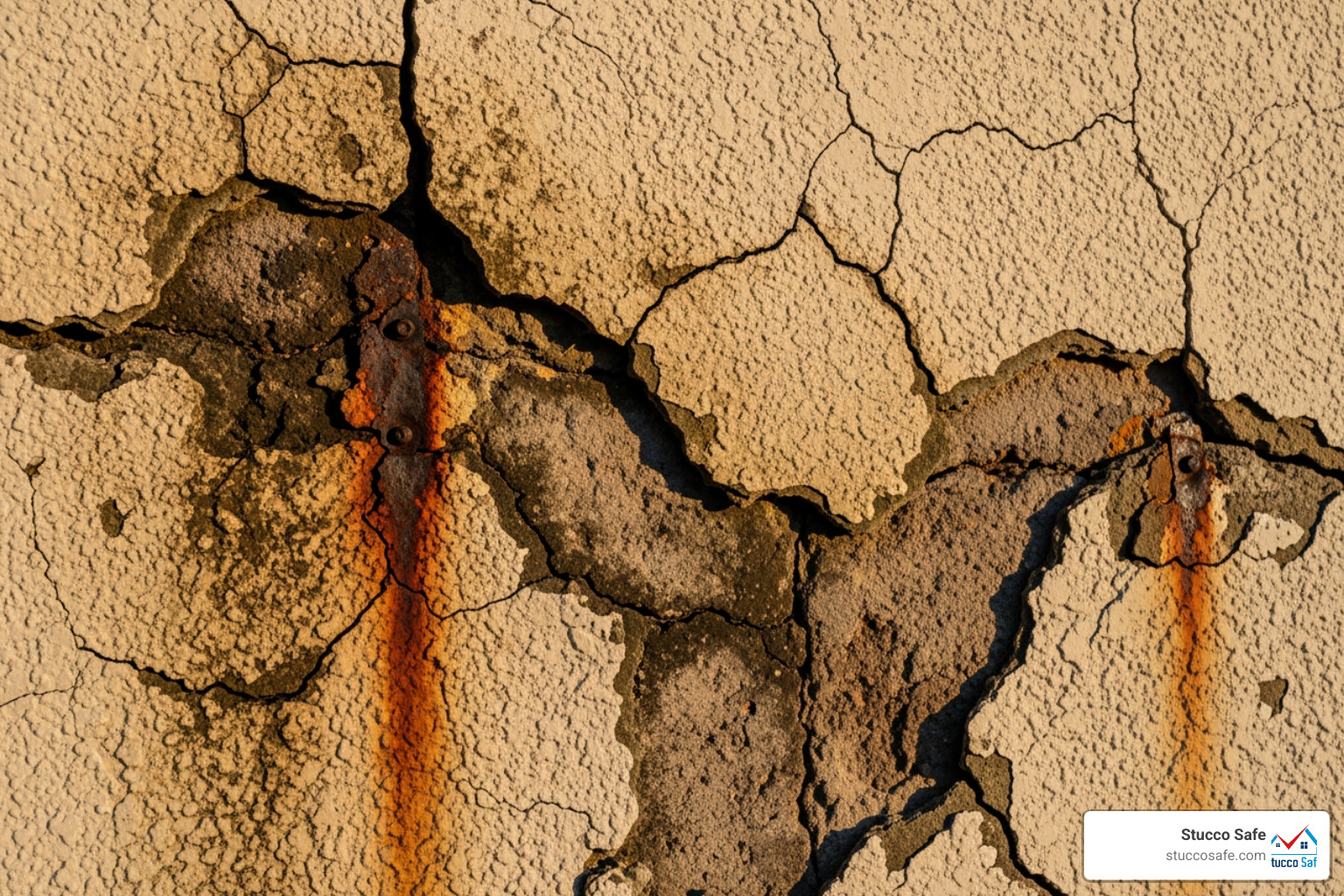
When water gets trapped behind EIFS, it actively destroys your home from the inside out. The consequences of unchecked synthetic stucco damage are far-reaching, affecting everything from structural integrity to your family’s health.
Primary Causes of Synthetic Stucco Damage
The primary culprit behind most EIFS problems is, without a doubt, moisture intrusion. But it’s rarely a single event; it’s often a combination of factors:
- Moisture Intrusion: As we’ve discussed, this is the big one. Water penetrates the EIFS through installation flaws, cracks, or failed sealants.
- Trapped Water Vapor: Once inside, this moisture can’t evaporate, leading to persistently wet conditions that accelerate decay.
- Building Settlement: Over time, all homes settle. This natural movement can cause stress on the EIFS, leading to cracks that act as entry points for water.
- Impact Damage: EIFS is more susceptible to impact damage than traditional stucco due to its foam backing. A wayward baseball, a ladder leaning against the wall, or even hail can create dents and holes, compromising the system’s integrity.
- Freeze-Thaw Cycles: In climates like ours in Southeastern PA, New Jersey, and Delaware, moisture that enters cracks can freeze and expand during winter, widening the cracks and causing further deterioration.
- Lack of Maintenance: Regular inspection and maintenance are crucial. Ignoring small cracks or failing caulk allows minor issues to escalate into major problems.
Cracking, Delamination, and Structural Risks
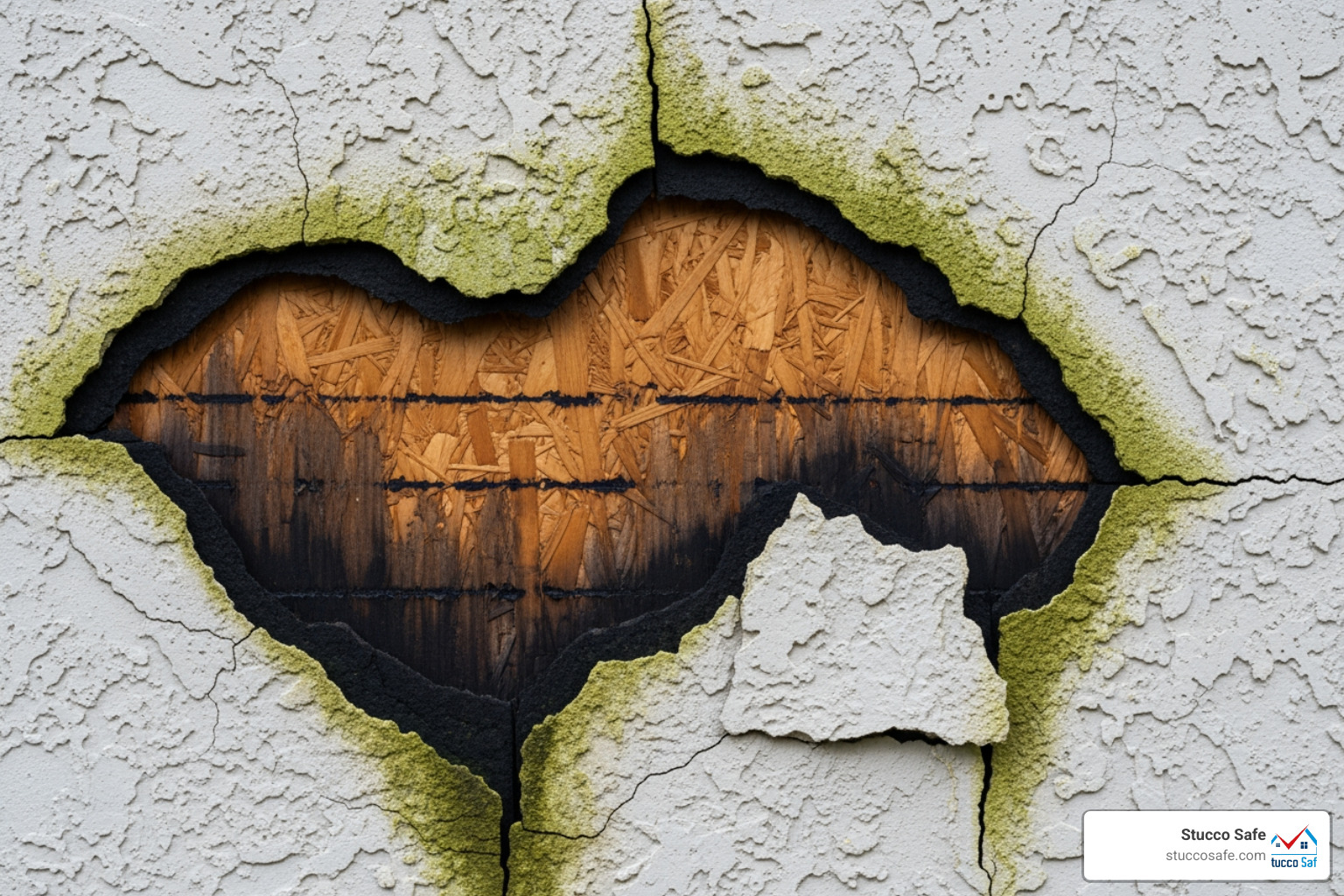
Cracks in EIFS are more than just cosmetic blemishes; they are often the first visible signs of underlying synthetic stucco damage. They are direct entry points for water, and once water gets behind the system, it can lead to:
- Delamination: This occurs when the EIFS layers (finish coat, base coat, or insulation board) separate from each other or from the wall sheathing. It often manifests as bulging or spongy areas. This separation can be caused by poor adhesion during installation, prolonged moisture exposure, or freeze-thaw cycles.
- Water Entry Points: Even hairline cracks can allow water to seep in. Failed sealants around windows, doors, and other penetrations are also prime entry points.
- Compromised Sheathing: The wood sheathing (like plywood or OSB) beneath the EIFS is particularly vulnerable. When wet, OSB swells and doesn’t return to its original dimensions, losing its structural integrity.
- Loss of Shear Strength: The sheathing contributes significantly to a home’s structural shear strength, which resists racking from wind and seismic forces. When the sheathing rots, the home’s overall structural stability is compromised.
- Fastener Corrosion: Moisture causes the fasteners holding the EIFS and sheathing to corrode, further weakening the system and its attachment to the house.
Mold, Mildew, and Indoor Air Quality Hazards
One of the most insidious consequences of trapped moisture is the proliferation of mold and mildew. This isn’t just an aesthetic problem; it’s a serious health concern.
- Hidden Mold Growth: Mold thrives in dark, damp environments. Once water gets behind the EIFS, mold spores find an ideal breeding ground on the wet wood sheathing and framing. This mold often remains completely hidden from view, growing extensively inside your walls.
- Musty Odors: One of the earliest and most reliable interior warning signs of hidden mold is a persistent musty or mildewy odor. If your home smells “off,” especially near exterior walls, it’s a red flag.
- Health Risks: Exposure to mold can lead to a range of health problems, including allergic reactions, asthma attacks, and respiratory issues. We’ve seen cases in Villanova and other communities where families suffered respiratory issues linked to hidden mold growth within their EIFS walls.
- Respiratory Issues: Individuals with existing respiratory conditions are particularly vulnerable, but even healthy individuals can develop symptoms from prolonged mold exposure.
- Water-damaged Drywall: As moisture penetrates further, it can affect interior drywall, leading to water stains, bubbling, or softening.
- More on water intrusion and its consequences can provide further insight into these significant issues.
Your Home’s Health Check: Identifying EIFS Warning Signs
The good news is that while synthetic stucco damage can be hidden, there are often subtle clues that something is amiss. Regular visual inspections are your first line of defense. Here’s what we recommend homeowners in Southeastern PA, New Jersey, and Delaware look for:
Exterior Red Flags
- Staining or Discoloration: Look for dark streaks, green or black biological growth (algae, mold), or brown “tea stains” running down the EIFS surface, especially below windows, doors, or rooflines. This often indicates water is getting behind the system and carrying tannins or dirt to the surface.
- Cracks and Bubbles: Inspect the EIFS surface for any cracks, from hairline to larger ones. Also look for areas where the EIFS appears to be bubbling, bulging, or separating from the wall.
- Bulging or Spongy Areas: Gently press on the EIFS in various spots. If it feels soft, spongy, or gives way, it could indicate delamination of the layers or severe rot of the sheathing beneath.
- Gaps at Windows and Doors: Check the caulk and sealant around all windows, doors, and other penetrations (e.g., hose bibs, utility lines, light fixtures). Any gaps, cracks, or missing sealant are direct pathways for water.
- Damaged Sealant/Caulking: Sealants have a lifespan of 5-10 years. If yours look dry, cracked, shrunken, or have separated from the EIFS or adjacent materials, they need attention.
- Efflorescence: White, powdery deposits on the EIFS surface can indicate water seeping through the material and depositing salts as it evaporates.
- Insufficient Clearance: Ensure the EIFS terminates at least 6 inches above grade. If it’s touching the ground, landscaping, or hardscaping, it’s wicking moisture.
- Missing or Damaged Flashing: Check for flashing around all roof-to-wall intersections and above windows/doors. Missing kickout flashing is a common issue.
Interior Warning Signs
While exterior signs are crucial, your home’s interior can also tell a story of hidden synthetic stucco damage:
- Musty or Mildewy Odors: A persistent, damp, earthy smell, especially near exterior walls, is a strong indicator of mold growth.
- Peeling Paint or Wallpaper: If paint is peeling or wallpaper is bubbling on interior walls that back up to EIFS, it suggests moisture is penetrating the wall cavity.
- Water Stains on Walls or Ceilings: Any unexplained water stains, particularly on exterior walls or ceilings below EIFS-clad areas, are a clear sign of moisture intrusion.
- Swollen Baseboards or Trim: Moisture migrating into the wall cavity can cause interior wood trim, such as baseboards or window sills, to swell, warp, or discolor.
- High Indoor Humidity: While not exclusive to EIFS issues, persistently high humidity levels, especially in specific rooms, can be exacerbated by moisture infiltration through the exterior.
Taking Action: Inspection, Remediation, and Prevention
When you observe any of these warning signs, it’s time to act. Ignoring potential synthetic stucco damage can lead to escalating costs and headaches. We believe in proactive solutions to protect your home in Southeastern PA, New Jersey, or Delaware.
When to Call a Professional Inspector
A professional EIFS inspection is not just a good idea; it’s often a necessity. Here’s when to call us:
- Suspected Damage: If you notice any of the exterior or interior warning signs we’ve discussed, don’t wait. Early detection is key to mitigating costs.
- Buying or Selling a Home: This is a critical time. For buyers, an inspection protects you from inheriting a costly problem. For sellers, a pre-listing inspection can identify issues, allowing you to address them and provide peace of mind to buyers, preserving your home’s value. Lenders in our service areas often require specialized EIFS inspections before mortgage approval.
- After Severe Weather: Heavy rains, hail, or strong winds can compromise EIFS. An inspection after such events can catch damage before it leads to widespread moisture intrusion.
- Visible Cracks or Stains: Even small cracks or stains should be evaluated. They might seem minor, but they can be entry points for water that causes significant hidden damage.
- Periodic Checks: Even without obvious signs, we recommend a professional EIFS inspection every 2-3 years, especially for homes built before 2006.
- More on EIFS water damage emphasizes the importance of these inspections.
Our certified inspectors at Stucco Safe use forensic testing methods, including moisture and resistance testing, to accurately assess the health of your EIFS system. We use state-of-the-art Extech moisture meters with hammer probes that read moisture content from 1% to 100%, providing a much more accurate picture than inferior meters. We drill small, inconspicuous holes (3/16th of an inch) that are color-matched and sealed after testing, ensuring minimal impact on your home’s appearance.
Long-Term Costs and Implications of Synthetic Stucco Damage
The financial implications of unaddressed synthetic stucco damage can be staggering, far exceeding the cost of an inspection.
- Repair vs. Replacement Costs: Minor, localized repairs might be possible, but widespread moisture damage often necessitates extensive remediation. This can include removing and reinstalling large sections of EIFS, or even full removal and replacement. Costs can easily escalate into the tens of thousands, or even hundreds of thousands for severe structural issues.
- Impact on Resale Value: Homes with known EIFS issues, or even just the presence of EIFS, often face a significant stigma in the real estate market. This can lead to property values being 5-15% lower than comparable homes and make the home much harder to sell. We’ve seen this impact across communities like Cherry Hill, NJ, and West Chester, PA.
- Insurance Coverage Issues: Homeowners insurance policies typically exclude damage from long-term moisture intrusion, mold, or gradual deterioration. The kind of damage caused by EIFS issues is often explicitly excluded, meaning homeowners are frequently left to bear the full cost of repairs.
- Structural Repair Expenses: If moisture has led to wood rot and structural decay, the costs can be astronomical. This might involve replacing sheathing, framing members, and even rebuilding entire sections of walls, as we’ve seen in cases where improperly flashed roof-wall intersections led to severe structural damage.
- Ongoing Maintenance Budgets: Even after remediation, continued vigilance and maintenance are required to prevent recurrence.
Professional stucco inspections range from $495 to $1,595 for residential properties, a small investment compared to the potential costs of ignoring the problem.
Solutions and Alternatives to Damaged EIFS
If our inspection reveals significant synthetic stucco damage, you’ll likely have a few paths forward:
- Stucco Remediation: For localized or less severe damage, targeted remediation might be possible. This involves identifying the source of moisture, repairing the underlying damage, and then patching or replacing specific sections of EIFS. This is often the most cost-effective option if the damage is caught early.
- Full Removal and Replacement: For widespread moisture damage, especially to the sheathing and framing, the most comprehensive and recommended solution is often the full removal of the existing EIFS system. This allows for thorough inspection and repair of the underlying structure, proper installation of a new water-resistive barrier and drainage plane, and then re-cladding with either a new, properly installed drainable EIFS system or an alternative material.
- Preventive Maintenance: Regardless of the chosen solution, ongoing maintenance is crucial. This includes:
- Annual visual inspections for cracks, gaps, and stains.
- Keeping gutters clean and ensuring downspouts direct water away from the foundation.
- Trimming vegetation away from the EIFS surface to improve airflow and prevent moisture retention.
- Replacing caulking and sealants around windows, doors, and penetrations every 5-10 years.
- Promptly addressing any small issues before they escalate.
Here’s a comparison of common cladding alternatives to EIFS:
| Cladding Alternative | Pros | Cons |
|---|---|---|
| Fiber Cement Siding | Durable, low maintenance, fire-resistant, can mimic wood or masonry, good moisture resistance when properly installed. | Can be heavy, requires skilled installation, may need periodic painting. |
| Brick Veneer | Extremely durable, low maintenance, excellent weather protection, classic aesthetic, good resale value. | Higher initial cost, requires significant foundation support, installation is labor-intensive. |
| Traditional Stucco | Durable, fire-resistant, breathable (allows moisture to escape), customizable textures and colors, long lifespan (50+ years when maintained). | Can crack over time, requires skilled application, not as insulating as EIFS, needs proper drainage plane. |
Frequently Asked Questions about Synthetic Stucco Damage
Are newer “drainable” EIFS systems completely safe from water damage?
Newer “drainable” EIFS systems are definitely an improvement over the older barrier-style systems that caused so many problems. They are designed with a drainage plane behind the insulation board, which allows any incidental moisture that gets in to escape. This is a critical advancement. However, it’s important to understand that:
- They manage incidental moisture: Drainable EIFS are not entirely “waterproof” in the sense that they prevent all water entry; rather, they manage the water that inevitably gets behind the system by providing a path for it to drain out.
- Proper installation is still critical: Even with drainable systems, improper installation (e.g., missing flashing, inadequate sealing, clogged weep screeds) can still lead to moisture trapping and synthetic stucco damage. The system is only as good as its installer.
- Market stigma can persist: Despite the improvements, the historical issues with EIFS mean that a stigma can still be attached to homes with this cladding, potentially impacting resale value even if the system is modern and properly installed.
- Professional inspection remains necessary: We still recommend regular professional inspections for homes with drainable EIFS to ensure the system is functioning as intended and no hidden issues are developing.
Does homeowners insurance typically cover synthetic stucco damage?
This is a critical question, and the answer is usually no, not for the kind of damage we typically see with EIFS.
- Coverage varies greatly: Every policy is different, and review your specific policy documents.
- Many policies exclude damage from long-term moisture intrusion: Homeowners insurance policies are generally designed to cover sudden and accidental events (like a fire or storm damage). Damage from gradual deterioration, neglect, mold, or long-term moisture infiltration is almost always excluded. Since synthetic stucco damage often results from chronic moisture intrusion over many years, it falls squarely into this exclusion.
- Sudden and accidental damage may be covered: If a tree falls and damages your EIFS, that might be covered. But if the damage is due to water slowly seeping in through a faulty installation, it’s unlikely.
- Review your policy for EIFS exclusions: Some policies may even have specific exclusions for EIFS cladding due to its history of issues. We strongly advise homeowners in Southeastern PA, New Jersey, and Delaware to consult with their insurance provider to understand their coverage.
Can I just paint over or patch small cracks in my EIFS?
We hear this question a lot, and while it might seem like a quick fix, our answer is usually a cautious no for significant issues.
- Painting can trap moisture: If you paint over cracked or damaged EIFS without addressing the underlying moisture problem, you risk sealing in any trapped moisture. This can accelerate the deterioration of the sheathing and framing behind the EIFS, worsening the synthetic stucco damage.
- Patching without addressing the cause is a temporary fix: Small cracks can be a symptom of a larger, systemic installation flaw or underlying structural movement. Simply patching the crack without identifying and resolving the root cause means the crack will likely reappear, and the hidden damage will continue to progress. As we say, you can’t “patch” a systemic problem.
- Small cracks can indicate larger hidden problems: Even hairline cracks are entry points for water. What appears to be a minor surface issue can be indicative of extensive moisture damage brewing behind the EIFS.
- Professional evaluation is recommended before repair: Before attempting any DIY repairs, we strongly recommend a professional inspection. We can accurately diagnose the cause of the cracks and advise on the most effective, long-term solution. Improper repairs can void warranties or worsen the problem.
Conclusion
The journey of synthetic stucco damage from a seemingly minor flaw to a catastrophic structural issue is a silent one, often hidden behind a facade that looks perfectly fine. We’ve seen homes across Southeastern PA, New Jersey, and Delaware where the beautiful exterior belied a rotting nightmare within. The inherent design of EIFS, coupled with historical installation shortcomings, means that vigilance is not just recommended—it’s essential.
Protecting your home, your family’s health, and your investment starts with understanding these hidden risks and knowing when to seek expert help. Don’t let your synthetic stucco become a water damage waiting game. If you have any concerns, or if your home hasn’t been inspected in the last few years, it’s time to act.
At Stucco Safe, we provide professional stucco inspection and stucco testing services for home buyers and property owners, specializing in detecting moisture and structural issues. Our certified inspectors use forensic testing methods to give you honest, accurate information about your home’s condition.
Learn more about professional EIFS inspection services and take the first step towards peace of mind.