
Weep Screeds: Directing Moisture Away from Your Stucco Facade
Understanding the Critical Role of Stucco Weep Screeds
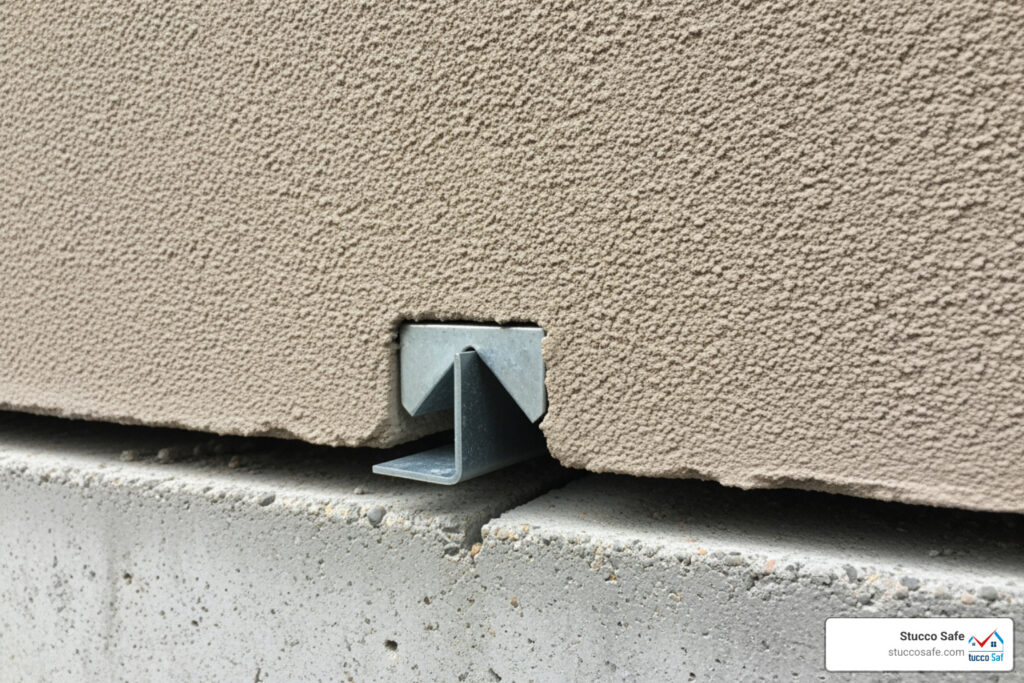
A stucco weep screed is a metal or plastic flashing installed at the base of exterior stucco walls. It serves two essential purposes: providing an exit point for trapped moisture and establishing a consistent thickness guide for the stucco application.
Key Facts About Stucco Weep Screeds:
- Primary Function: Directs water that gets behind stucco safely to the exterior.
- Typical Materials: Galvanized steel, vinyl/PVC, zinc alloy, or aluminum.
- Required Clearances: Minimum 4 inches above soil and 2 inches above paved surfaces.
- Building Code: Mandatory for most wood-framed stucco walls.
- Common Types: #7 (V-shaped) and J-Type (casing bead style).
Stucco is not waterproof. It is a porous, reservoir material that absorbs and releases moisture. Some water will inevitably get in through hairline cracks or around windows and doors.
This is where the weep screed becomes critical. Without it, moisture can get trapped behind your stucco, leading over time to rot, mold, and expensive structural damage. This is a common defect found during professional inspections, especially in homes built between 1993 and 2006 when building practices were often less consistent.
I’m Gabe Kesslick, an EDI Level 2 Certified Stucco Inspector and founder of Stucco Safe, with over two decades of experience identifying and resolving stucco moisture issues. Throughout my career, I’ve investigated many cases where a missing or blocked stucco weep screed caused significant hidden damage behind otherwise attractive facades.
Stucco weep screed terms to remember:
What is a Stucco Weep Screed and How Does It Work?
At its core, a stucco weep screed is a specialized lathing accessory designed to manage moisture in exterior walls. Developed in 1952 and part of the building code since 1970, this small component plays a vital role in protecting your home from water damage.
Its primary function is to allow water that has penetrated the stucco system to drain safely to the exterior. The term “weep screed” itself hints at its dual purpose:
- “Weep” refers to its ability to let moisture “weep” out through small holes or a designed gap. While the holes in V-style weep screeds are primarily for plaster keying, the main drainage often occurs through a natural shrinkage gap that forms between the cured plaster and the screed nose.
- “Screed” refers to its role as a guide for stucco application. It provides a straight, consistent edge at the bottom of the wall, ensuring the stucco is applied to the correct thickness and terminates neatly.
How Does a Weep Screed Work to Manage Moisture in Exterior Walls?
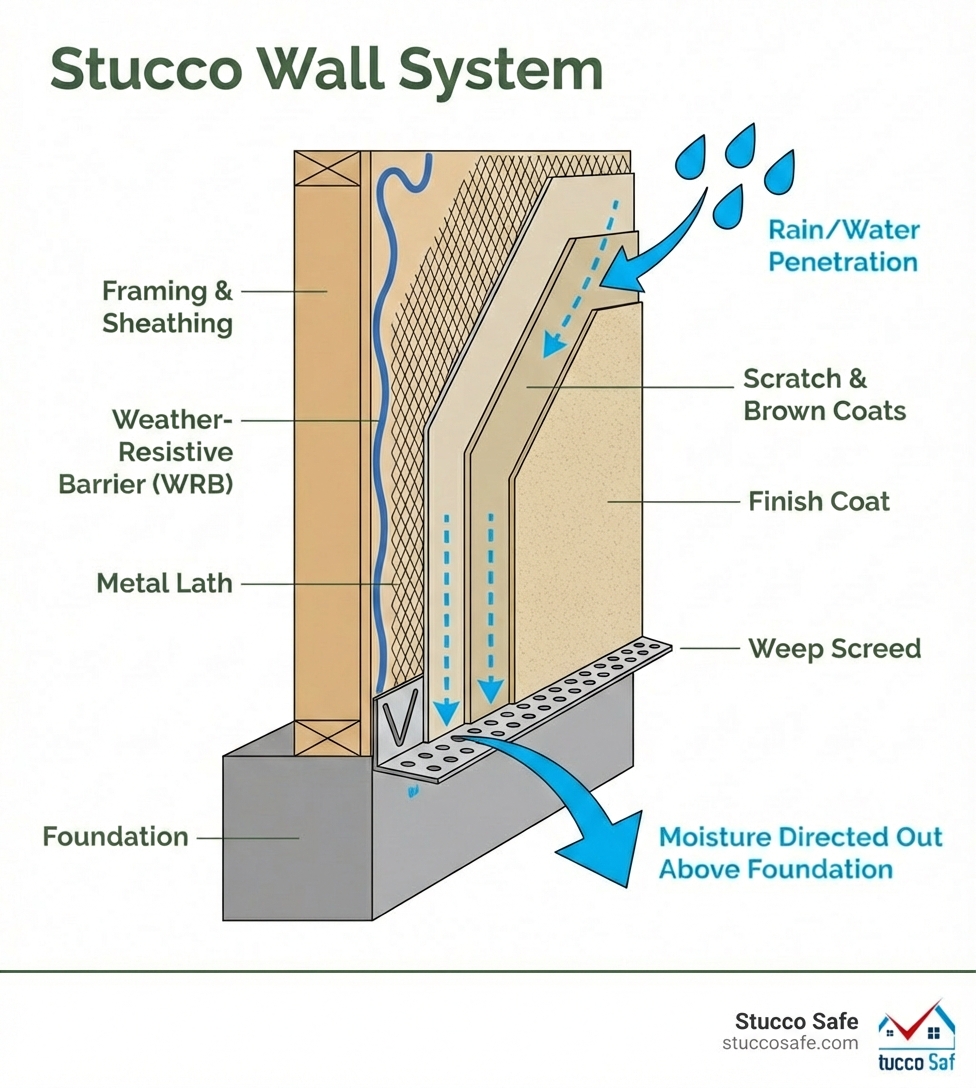
To understand how a stucco weep screed works, you need to know how a stucco wall is built. A typical stucco wall on a wood-framed building is a multi-layered assembly designed to manage moisture:
- Framing & Sheathing: The structural skeleton of your home.
- Weather-Resistive Barrier (WRB): A water-resistant layer (like housewrap) that protects the sheathing.
- Lath: A metal mesh that holds the stucco in place.
- Stucco: The final, visible exterior layer.
When rain hits your stucco facade, some water is absorbed. Gravity then pulls this moisture downwards. The WRB acts as a drainage plane, guiding any water that penetrates the stucco and lath down the wall. As this water reaches the bottom of the wall, it encounters the stucco weep screed, which is strategically placed to capture this water and direct it out of the wall assembly, preventing it from pooling against the vulnerable wood framing.
Types, Materials, and Where to Find Them
Just as there are different types of stucco systems, there are various types of stucco weep screeds designed to meet specific needs and building codes. Understanding these differences helps ensure proper moisture management for your home.
Common Materials for Weep Screeds
Weep screeds are manufactured from several corrosion-resistant materials, each with its own advantages:
- Galvanized Steel: A very common and economical option. The galvanization process (coating steel with zinc) provides protection against rust, making it suitable for many applications.
- Aluminum: Lighter and naturally corrosion-resistant. Aluminum weep screeds are often chosen for their durability, especially in areas where corrosion is a concern.
- Zinc: Zinc alloy weep screeds offer excellent corrosion resistance, similar to aluminum, and are often used in areas with high humidity or exposure to aggressive environmental conditions.
- Plastic (Vinyl/PVC): Completely rust-proof, lightweight, and often more flexible. These are a good choice where corrosion is a major concern or where compatibility with other plastic components is desired. They are also less prone to denting than metal alternatives.
A typical example of a metal weep screed profile used in the industry is the #7 Weep Screed from ClarkDietrich.
Purchasing Your Weep Screed
When it comes to purchasing a stucco weep screed, you will find options at a few different places:
- Big-Box Home Improvement Stores: Convenient, but they typically carry a limited selection, often just the most common galvanized #7 weep screeds.
- Specialty Stucco Supply Yards: For a wider variety of types, materials, and sizes, a dedicated stucco supply yard is your best bet. They will stock both #7 and J-type screeds, as well as specialty options and different material compositions.
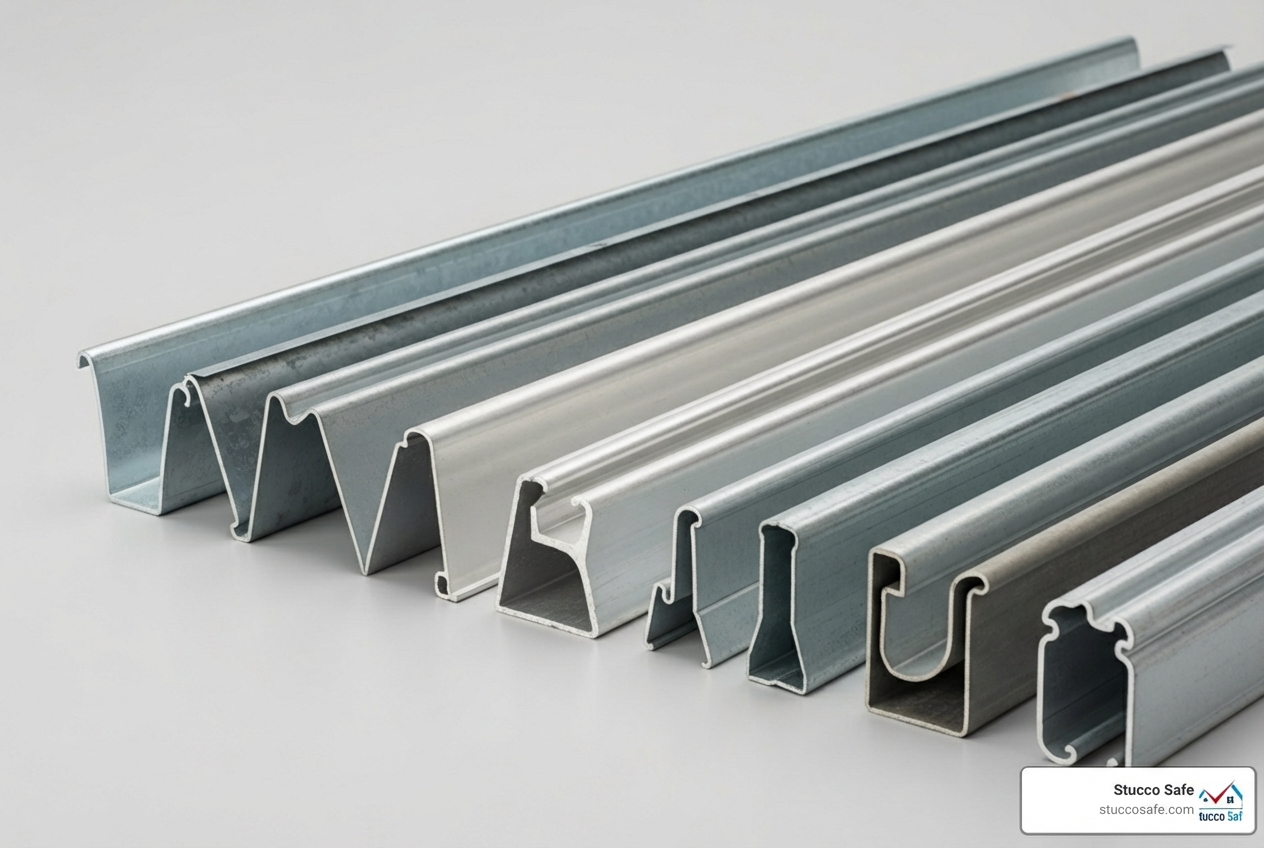
Common Styles: #7 vs. J-Type
The two most prevalent styles of stucco weep screeds you will encounter are the #7 and the J-Type. While both serve the same fundamental purpose of managing moisture, they have distinct profiles and typical uses.
| Feature | #7 Weep Screed (V-Shape) | J-Type Weep Screed (J-Shape) |
|---|---|---|
| Profile | V-shaped profile with a vertical attachment flange (commonly around 3 1/2 inches). | J-shaped profile, often referred to as a casing bead with weep holes. |
| Drainage | Provides a ground (often around 3/8 inch) with openings for moisture to escape. The angled design helps direct water away from the wall, and drainage also occurs through the natural gap between stucco and the screed nose. | Weep holes in the casing allow moisture to exit. The “J” channel encapsulates the bottom edge of the stucco for a neat termination. |
| Common Use | The most widely used type for standard stucco applications on wood-framed walls. | Often used where stucco meets a different material, like a concrete foundation or a roofline, to create a clean, finished edge. |
Choosing the Right Stucco Weep Screed Material
- Galvanized Steel: Best when budget is a priority and exposure conditions are moderate. Common in many residential applications.
- Aluminum or Zinc: Good choices where improved durability and corrosion resistance are desired, such as in higher-moisture environments.
- Vinyl/PVC: Ideal where rust is a major concern or where impact resistance against minor dents is important.
The right choice depends on your climate, exposure conditions, and the details of your stucco system. A qualified contractor or stucco inspector can help you select an appropriate option.
What Is a Weep Screed and What Is its Primary Function in Stucco Construction?
A stucco weep screed is a metal or plastic flashing fastened just below the bottom sill plate of an exterior stucco wall. Its primary function is to serve as a critical component in managing moisture within the building envelope. Stucco is a reservoir system that is designed to absorb some moisture. The weep screed provides the pathway for this absorbed water, and any water that infiltrates the stucco system, to drain to the exterior of the building.
The term “weep screed” itself describes its dual role:
- “Weep”: Refers to its ability to allow incidental moisture to escape. The weep screed typically has an angled profile, sometimes with small holes, that protrudes from the bottom of the vertical flange. This design ensures that any water draining down the wall cavity exits the system, preventing it from pooling against the building’s vulnerable framing. While some holes are present, especially in certain screed styles, the SMA (Stucco Manufacturers Association) notes that drainage primarily occurs through a natural shrinkage gap that forms between the cured plaster and the screed nose.
- “Screed”: Refers to its function as a guide for the stucco application. It acts as a “ground” or consistent edge that helps applicators establish the correct depth and a neat, finished termination for the stucco at the base of the wall. It can also help accommodate minor movement and reduce stress that might otherwise contribute to cracking in the stucco finish.
How Does a Weep Screed Work to Manage Moisture in Exterior Walls?
The function of a stucco weep screed is closely tied to the other components of a stucco system, working together as a moisture management solution. Here is its role within this system:
- Weather-Resistive Barrier (WRB): The first line of defense behind the stucco is the WRB, such as building paper or housewrap. This barrier is installed over the wall sheathing and is designed to shed any water that penetrates the outer stucco layers.
- Lath: Over the WRB, a metal lath (like expanded metal or woven wire) is mechanically fastened. This lath provides reinforcement and a bonding surface for the stucco.
- Stucco Application: Stucco is then applied in multiple coats (typically a scratch coat, brown coat, and finish coat) over the lath. Stucco can absorb water during wet weather.
- The Drainage Path: When water is absorbed by the stucco or finds its way through cracks and openings, gravity pulls it downwards. The WRB, acting as a drainage plane, guides this water down the wall cavity.
- The Weep Screed’s Role: At the bottom of the wall, where the stucco terminates, the stucco weep screed is installed. Its vertical flange is integrated with the WRB and lath, creating a continuous path for water. The design of the screed, with its angled bottom edge and drainage gap or weep holes, allows this accumulated water to exit the wall assembly and drain to the exterior, away from the foundation and structural elements.
This process prevents moisture from getting trapped behind the stucco, which is crucial for protecting the underlying wood framing, sheathing, and insulation from rot, mold, and other water-related damage.
The High Cost of Failure: Common Problems and Consequences
While the stucco weep screed is a small component, its absence or improper installation can lead to serious and costly damage. In Southeastern PA, New Jersey, and Delaware, neglecting this detail can compromise the integrity of an entire home.
Consequences of Not Installing or Improperly Installing a Weep Screed
Without a properly functioning weep screed:
- Trapped Moisture: Water that penetrates the stucco system has no escape route. It can become trapped behind the stucco and against the wall sheathing and framing.
- Wood Rot: Prolonged exposure to trapped moisture can lead to wood rot in wall studs, sheathing, and other structural components. This weakens the building’s integrity.
- Mold Growth: Damp, enclosed spaces are a breeding ground for mold. Mold degrades building materials and can pose health risks.
- Efflorescence: The white, powdery residue sometimes seen on stucco or masonry is caused by soluble salts carried to the surface by evaporating water. It is a clear indicator of excessive moisture movement.
- Pest Intrusion: Damp, deteriorating wood creates a favorable environment for pests like termites and carpenter ants, which can further damage structural elements.
- Hidden Damage: Much of the damage from weep screed failure occurs out of sight, behind the stucco, sometimes for years before visible signs appear. By then, remediation costs can be substantial.
In certain housing vintages, including many homes built between 1993 and 2006, inadequate or incorrect installation of moisture management components like weep screeds has been a significant factor in widespread stucco problems.
Common Installation Mistakes
Common issues related to stucco weep screeds include:
- Omission: Not installing a weep screed at all, leaving the bottom of the wall without a designated drainage point.
- Improper Placement: Installing the weep screed at the wrong height, either too low (allowing ground moisture to wick up) or too high (failing to protect the foundation-framing joint).
- Blocked Weep Openings: Openings can become clogged by:
- Caulk or Paint: Sealing the weep screed with caulk or painting over the weep area can trap water inside the wall.
- Backfill or Landscaping: Earth, mulch, or other landscaping materials piled too high against the foundation can block the weep screed.
- Paving or Decks: Concrete patios, walkways, or decks installed too close to the wall, or at an elevation higher than the weep screed, can obstruct drainage.
- Stucco Applied Too Low: Running the stucco finish coat below the weep screed can effectively bury it and prevent water from exiting.
- Incorrect Overlap with WRB: If the weather-resistive barrier is not properly lapped over the weep screed’s flange, water can get behind the screed and bypass its drainage function.
Identifying and Addressing Weep Screed Issues
Detecting problems with your stucco weep screed early can help limit damage and repair costs.
- Visual Inspection: Periodically inspect the base of your stucco walls. Look for:
- Staining: Dark streaks or discoloration on the stucco near the base.
- Efflorescence: White, powdery deposits that indicate moisture migration.
- Cracking or Delamination: Stucco that is cracking, crumbling, or detaching from the wall near the base.
- Blocked Openings: Confirm that the weep screed is visible and that its drainage area is clear of caulk, paint, debris, or landscaping.
- Professional Assessment: If you suspect an issue or your home shows signs of moisture intrusion, a professional stucco inspection is crucial. Our certified inspectors at Stucco Safe use forensic testing methods, including moisture probes, to detect hidden moisture behind the stucco in Southeastern PA, New Jersey, and Delaware. We can identify if a weep screed is missing, blocked, or improperly installed, and assess any resulting damage.
- Remediation: Addressing weep screed issues typically involves:
- Clearing Obstructions: Removing any landscaping, caulk, or paint blocking the weep screed.
- Adjusting Grade/Paving: Modifying landscaping or hardscaping to ensure proper clearances.
- Retrofitting (if missing): In some cases, if a weep screed was omitted, remedial saw cuts can be made in the plaster to create a drainage path. This is a delicate process best left to professionals to avoid damage to the WRB.
- Repairing Damage: Any underlying wood rot or mold must be remediated by qualified contractors.
A professional stucco inspection is a relatively small investment compared to the potential cost of extensive structural repairs that can result from long-term, unnoticed moisture problems.
Weep Screed Installation and Building Code Requirements
The installation of a stucco weep screed is not merely a common practice; it is a regulated aspect of construction, guided by building codes and industry standards. These regulations help ensure that the screed performs its function of moisture management and supports the integrity of the building envelope.
When is a Weep Screed Required?
In our service areas of Southeastern PA, New Jersey, and Delaware, as in most parts of the country, building codes provide clear direction on the necessity of weep screeds:
- Wood-Framed Walls: A stucco weep screed is generally required for stucco applied over wood-framed exterior walls, especially in new construction. Wood is susceptible to moisture damage, and the weep screed provides essential drainage to protect it.
- New Construction: For new buildings utilizing stucco over framed walls, the installation of a weep screed is typically mandatory by code, as referenced in IBC section 2512 and IRC requirements.
- Existing Structures/Renovations: There can be limited exemptions for existing stucco renovations, particularly if the renovation is purely for aesthetic reasons and designed to match construction that may predate current weep screed requirements. Any such exception should be verified with the local building department.
- Concrete and Masonry Walls: Weep screeds are generally not required for solid concrete or masonry (CMU block) walls where stucco is direct-applied. These cement-based materials are more tolerant of incidental moisture, and there is no wood-framed cavity to protect in the same way. However, a flanged casing bead or screed can still be used at the bottom of these walls for thickness control and a clean finish.
Building Code Requirements
The specifics of weep screed installation are detailed in various building codes and standards, including:
- International Building Code (IBC) and International Residential Code (IRC): These codes address weep screeds at the foundation plate line on exterior stud walls and require that they allow incidental moisture to drain to the exterior.
- ASTM C1063 (Standard Specification for Installation of Lathing and Furring): Provides guidelines for the installation of metal lath and furring, including details related to weep screeds.
- ASTM C926 (Standard Specification for Application of Portland Cement-Based Plaster): Outlines minimum stucco cladding requirements and references the use of weep screeds.
- SMA (Stucco Manufacturers Association) Commentary: Offers additional guidance and interpretations of these codes, often supporting alternate details when approved by design professionals and local jurisdictions. More information is available in the SMA Technical Bulletin on Weep Screeds.
Key Placement Rules for a Stucco Weep Screed
Proper placement and clearances are essential for a stucco weep screed to function correctly and comply with building codes.
- Flange Height: The nailing flange (the part of the weep screed attached to the wall) is commonly manufactured at about 3 1/2 inches tall. This allows adequate coverage and secure attachment.
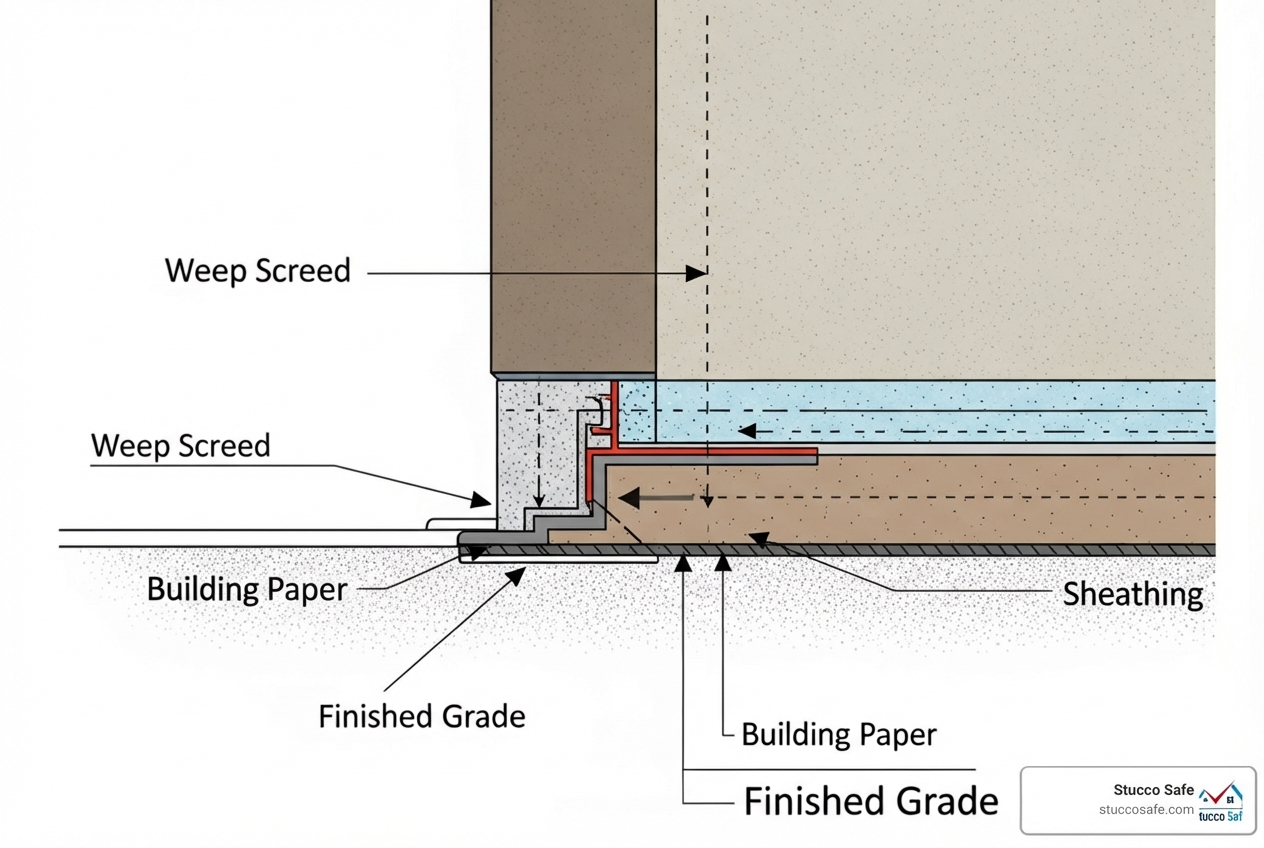
- Placement Relative to Foundation/Framing: The bottom edge of the weep screed lathing accessory should be located not less than 1 inch below the joint formed by the foundation and the framing. This helps ensure that water draining down the WRB is directed past this intersection and exits the wall assembly.
- Clearance Above Grade (Earth): The weep point (the lowest edge where water exits) should be a minimum of 4 inches above exposed earth. This reduces the risk of moisture wicking up from soil and keeps drainage clear of landscaping.
- Clearance Above Paved Surfaces: For paved surfaces like sidewalks, patios, or driveways, the weep point should be a minimum of 2 inches above the finished surface.
- Water-Resistive Barrier (WRB) Overlap: The WRB should lap over the nailing flange of the weep screed. This creates a shingle-lap effect so that water running down the WRB is directed onto the weep screed and out of the wall, rather than behind it.
- Attachment Spacing: Lathing accessory flanges, including the weep screed, are typically attached at regular intervals along framing members (often at or under 7 inches on center, per applicable standards) so that the screed is securely held in place and maintains its intended profile during stucco application.
- Do Not Seal: Weep screeds and other drainage devices should not be sealed with caulk, paint buildup, or other materials. Sealing can trap moisture inside the wall cavity and defeat the purpose of the weep screed.
The High Cost of Failure: Common Problems and Consequences
While the stucco weep screed is a small component, its absence or improper installation can lead to serious and costly damage. In Southeastern PA, New Jersey, and Delaware, neglecting this detail can compromise the integrity of an entire home.
Consequences of Not Installing or Improperly Installing a Weep Screed
Without a properly functioning weep screed:
- Trapped Moisture: Water that penetrates the stucco system has no dedicated escape route and can become trapped behind the stucco and against wall sheathing and framing.
- Wood Rot: Prolonged exposure to trapped moisture can lead to wood rot in wall studs, sheathing, and other structural components.
- Mold Growth: Damp, enclosed spaces are conducive to mold growth, which can affect both building materials and indoor air quality.
- Efflorescence: White, powdery residue on stucco or masonry can indicate excessive moisture moving through the wall.
- Pest Intrusion: Damp, deteriorating wood can attract pests like termites and carpenter ants, adding to structural concerns.
- Hidden Damage: Much of the damage from weep screed failure occurs out of sight, behind the stucco, sometimes for years before visible signs appear.
In many problematic stucco installations, particularly in certain housing vintages, insufficient attention to moisture management details like weep screeds has contributed to widespread issues.
Common Installation Mistakes
We frequently encounter several common mistakes related to stucco weep screeds:
- Omission: Not installing a weep screed at all.
- Improper Placement: Installing the weep screed at the wrong height, either too low or too high relative to grade and framing.
- Blocked Weep Openings: Openings can become clogged by:
- Caulk or Heavy Paint: Sealing the weep screed area can trap water.
- Backfill or Landscaping: Earth, mulch, or other materials piled too high against the foundation can block drainage.
- Paving or Decks: Concrete patios, walkways, or decks installed too close to the wall can obstruct the weep line.
- Stucco Applied Too Low: Running the stucco finish coat below the weep screed can bury it.
- Incorrect Overlap with WRB: If the weather-resistive barrier is not properly lapped over the screed flange, water can get behind the screed and bypass its drainage path.
Identifying and Addressing Weep Screed Issues
Early identification of stucco weep screed issues can help limit damage:
- Visual Inspection: Look for staining, efflorescence, cracking, delamination, or blocked openings near the base of stucco walls.
- Professional Assessment: If you see warning signs or suspect moisture intrusion, a professional stucco inspection is important. At Stucco Safe, our certified inspectors use forensic testing methods, including moisture probes, to evaluate stucco systems in Southeastern PA, New Jersey, and Delaware. This helps determine whether a weep screed is missing, blocked, or improperly installed, and whether hidden moisture is present.
- Remediation: Solutions may include clearing obstructions, adjusting grade or paving to restore proper clearances, retrofitting drainage paths where feasible, and repairing any underlying wood rot or mold through qualified contractors.
Proactive inspection and timely repairs are key to avoiding more extensive and expensive structural remediation later on.
Conclusion: Protecting Your Investment with Proper Stucco Drainage
The stucco weep screed might be an unassuming component of your home’s exterior, but its role in moisture management is significant. It serves as a critical drainage point that helps prevent trapped water within wall cavities from leading to wood rot, mold, and structural damage. A properly installed and maintained weep screed is fundamental to a healthy, long-lasting stucco system.
At Stucco Safe, our mission is to help homeowners in Southeastern PA, New Jersey, and Delaware understand how their stucco systems are performing and identify hidden moisture issues before they become major problems. Our certified inspectors use forensic testing methods to evaluate details like your stucco weep screed, verify that it is present and functioning, and check for liftd moisture levels behind the stucco.
Our detailed inspection reports provide clear insights into your stucco’s condition and practical recommendations for any necessary repairs or preventative maintenance.
To learn more about related cladding systems and moisture management, explore EIFS and stucco systems and see how we can help you verify your home’s stucco health.