
Don’t Crack Under Pressure: A Guide to Choosing Stucco Drill Bits
Can You Drill Into Stucco With Regular Drill Bit?
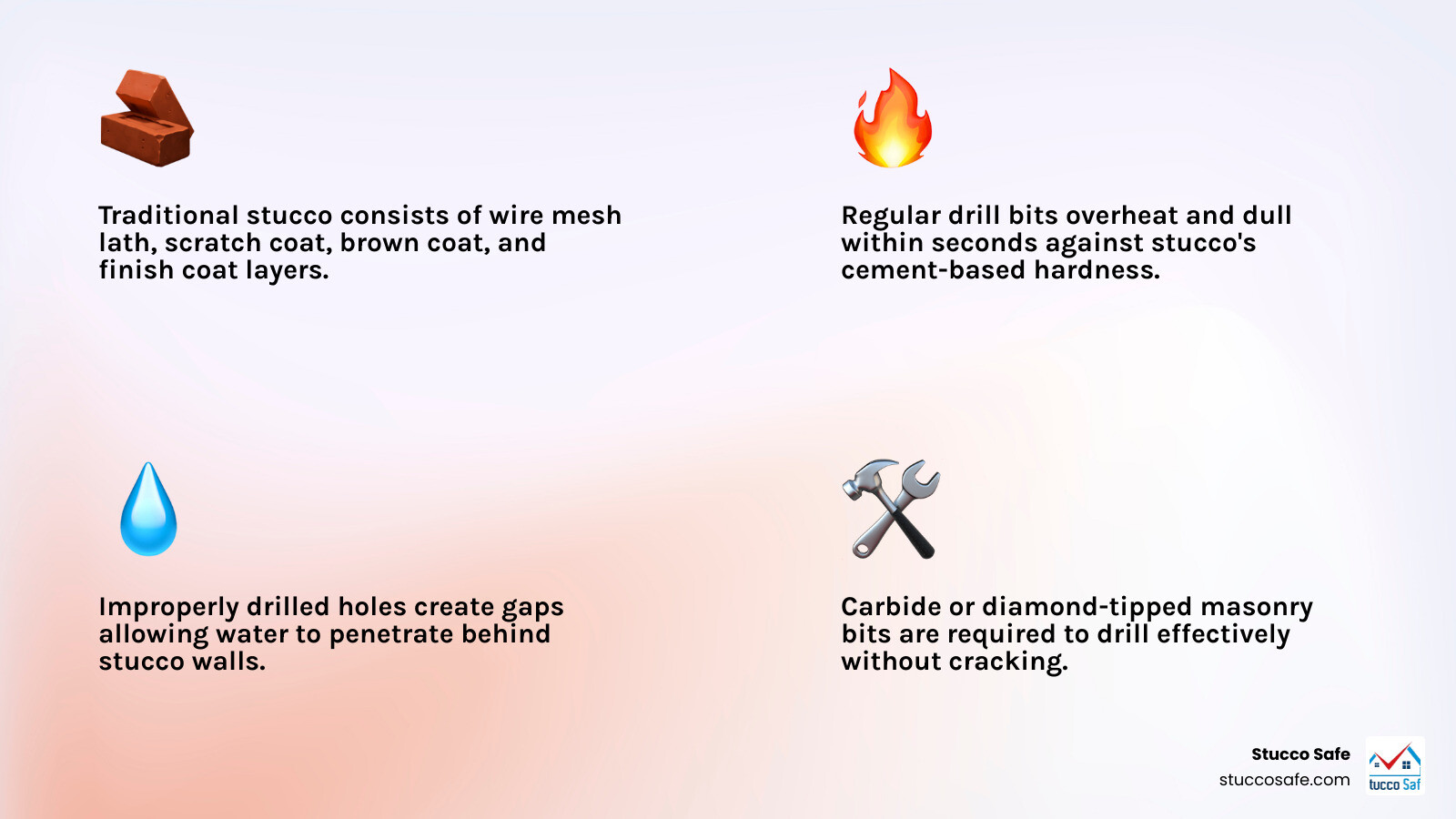
Can you drill into stucco with a regular drill bit? The short answer is: not effectively. Stucco is a cement-based material, and regular drill bits will dull quickly, overheat, and may crack the surface. You need a masonry bit with a carbide or diamond-coated tip.
Quick Answer:
| Hole Size | Drill Type Needed | Bit Type |
|---|---|---|
| Up to 3/8 inch | Standard power drill | Carbide-tipped masonry bit |
| 1/2 inch or larger | Hammer drill or rotary hammer | Carbide or diamond masonry bit |
| Any size | Regular drill + regular bit | Will not work reliably |
Stucco looks solid from the outside, but it hides layers of wire mesh, moisture barriers, and sheathing underneath. Drilling into it without the right tools can crack the surface, dull your bit in seconds, and – worse – create gaps that let water sneak behind the wall. For a homeowner planning to sell, that kind of hidden moisture damage is exactly what buyers (and their inspectors) look for.
I’m Gabe Kesslick, an EDI Level 2 Certified Stucco Inspector and founder of Stucco Safe, with over two decades of experience detecting the moisture damage that improper drilling – among other things – can cause behind stucco walls. Understanding can you drill into stucco with a regular drill bit is the first step to avoiding the costly repairs I see every day on the job.
Can you drill into stucco with regular drill bit terms to know:
When we talk about a “regular” drill bit, we are usually referring to high-speed steel (HSS) or titanium-coated bits designed for wood or soft metals. If you try to use one of these on your home’s exterior, you will find that it barely scratches the surface before the tip turns red-hot and the cutting edges disappear. Stucco is essentially a thin layer of concrete. To penetrate it, you need a drill bit stucco specifically engineered for masonry.
Masonry bits are easily identified by their wide, shovel-like tips made of carbide. Carbide is significantly harder than the sand and aggregate found in stucco. For even tougher jobs or very hard, aged stucco, diamond-coated bits are an excellent choice as they grind through the material rather than just chipping away at it.
The tool you choose also dictates your success. While a standard drill can spin a bit, it lacks the percussive force required to break through stone-like materials efficiently.
| Feature | Standard Drill | Hammer Drill | Rotary Hammer |
|---|---|---|---|
| Action | Rotation only | Rotation + rapid vibration | Rotation + heavy pounding (piston) |
| Best For | Wood, plastic, small stucco holes (<3/8") | Brick, block, standard stucco projects | Concrete, thick stone, large stucco holes |
| Bit Type | Straight shank masonry | Straight shank masonry | SDS-Plus or SDS-Max |
| Speed | High speed, low torque | Variable | High torque, lower RPM |
Why you cannot drill into stucco with regular drill bit effectively
The primary reason a standard wood or metal bit fails is the composition of the stucco itself. Stucco is a mixture of Portland cement, lime, sand, and water. It is incredibly abrasive. A regular bit works by “shaving” material away. Stucco doesn’t shave; it grinds.
Within seconds, the friction causes bit overheating, which destroys the temper of the steel, making it soft and useless. Furthermore, because a regular bit isn’t designed to impact the material, you often end up applying too much forward pressure. This excessive force is the leading cause of surface cracking and large chunks of the finish coat popping off. To understand the mechanics of why specialized tools are better, it helps to look at The difference between hammer drills and rotary hammers. A hammer drill acts like a miniature jackhammer, pulverizing the cement so the flutes of the bit can whisk the dust away.
Can you drill into stucco with regular drill bit for small holes?
If you are just hanging a lightweight solar light or a small house number, you might wonder if you can get away with using your standard DIY power drill. The answer is yes—but only if you use a what drill bits can i use for stucco masonry bit.
For holes 3/8 inch or smaller, a standard cordless drill with a sharp carbide-tipped masonry bit can do the job. It will take longer than a hammer drill, and you’ll need to be patient to avoid overheating the bit, but it is a viable option for “one-and-done” light-duty tasks. However, if you have more than two or three holes to drill, or if you are moving up to 1/2 inch diameters for something like a hose rack, a standard drill will struggle significantly and likely shorten the lifespan of your motor.
Step-by-Step Guide: How to Drill Into Stucco Safely
Drilling into your home’s exterior can be nerve-wracking. One wrong move and you could have a spiderweb of cracks across your beautiful finish. Following a proven how to drill into stucco process is the best way to ensure a professional result.
Preparing the surface and drilling the pilot hole
Before you even touch a drill, you need to know what’s behind the wall. We always recommend using a high-quality stud finder or checking for interior outlets to avoid hitting electrical wires or plumbing. Once you’ve cleared the area, follow these steps:
- Mark Your Spot: Use a pencil to mark the exact center of your hole.
- Apply Painter’s Tape: Place a small piece of painter’s tape over your mark. This provides a bit of “grip” for the drill bit so it doesn’t wander across the textured surface, and it helps prevent the edges of the stucco from chipping.
- The Pilot Hole: Never start with your full-size bit. Use a smaller 3/16 inch masonry bit to create a pilot hole. This smaller bit encounters less resistance and allows you to maintain better control.
- Steady Pressure: Hold the drill perfectly perpendicular to the wall. Apply firm, steady pressure, but let the tool do the work. If you find yourself leaning your entire body weight into the drill, your bit is likely dull or you are hitting a metal lath.
Drilling the main hole and clearing debris
Once your pilot hole is established, it’s time to move up to the final size required for your anchor. If you are mounting a heavy object, refer to a best way to drill into stucco guide to match your bit size to the specific hardware you’ve chosen.
- Slow the Speed: For the main hole, use a slower rotation speed. High speeds generate heat, which is the enemy of masonry bits.
- Water Cooling: If you are drilling multiple holes or working with very hard traditional stucco, keep a spray bottle of water handy. Periodically spraying the bit or dipping it in water will keep the carbide tip cool and extend its life.
- Clear the Dust: Every inch or so, pull the bit out (while it’s still spinning) to clear the cement dust from the hole. This prevents the bit from binding.
- Depth Stops: If your drill has a depth gauge, use it. If not, wrap a piece of electrical tape around your bit at the desired depth so you don’t drill deeper than necessary, which could damage the interior sheathing or moisture barrier.
Hardware, Anchors, and Sealing Best Practices
The hole is only half the battle. Because stucco is a “reservoir system”—meaning it is naturally porous and holds some moisture—how you finish the hole is critical for the long-term health of your home.
Choosing the right anchors for your load
Stucco itself has very little “holding power.” It is essentially a brittle shell. Therefore, you must use the correct drill into stucco complete guide for fasteners.
- Plastic Sleeve Anchors: Perfect for lightweight items like solar lights, small cameras, or decorative plaques. The anchor expands against the sides of the hole to create friction.
- Tapcons (Masonry Screws): These are blue-coated screws that thread directly into the masonry. They are excellent for medium-duty tasks.
- Toggle Bolts: If you are mounting something heavy, like a large hose rack or an awning, and you aren’t hitting a stud, you may need toggle bolts that expand behind the sheathing.
- Galvanized/Stainless Steel: Always use exterior-rated fasteners. Standard screws will rust, causing “bleeding” stains on your stucco and eventually failing. You can find more details on bit and anchor compatibility in our bit masonry guide.
Sealing the hole to prevent water damage
This is the most important step that many DIYers skip. Every time you drill into stucco, you are puncturing the moisture barrier (the “house wrap” or tar paper behind the cement). If left unsealed, water will follow the screw into the wall, leading to wood rot and mold.
Before you tap your anchor into the wall, inject a generous amount of high-quality silicone caulk or an ASTM C920-compliant sealant into the hole. When you push the anchor in, the sealant will be forced into the crevices, creating a watertight gasket. For the best results, use a cement drill bit that creates a clean, precise hole that is easier to seal. Once the screw is driven in, we recommend adding a small dab of caulk over the screw head for an extra layer of protection.
Frequently Asked Questions about Stucco Drilling
Do I need to use a pilot hole when drilling into stucco?
Yes, absolutely. Stucco is brittle and prone to “spalling,” which is when large flakes of the finish break away. A pilot hole allows you to clear a path for the larger bit with much less vibration and force. It also ensures that your final hole is exactly where you want it, as large masonry bits tend to “walk” on the rough texture of stucco.
What should I do if I hit metal mesh or lath?
Most traditional stucco is applied over a metal wire mesh called lath. You will know you’ve hit it when the drill suddenly stops making progress and you hear a metallic “chatter.” Do not force it. You can usually push through with a sharp carbide-tipped masonry bit and firm pressure. However, if the lath is particularly thick, you may need to briefly switch to a metal-cutting bit to clear the obstruction before returning to your masonry bit.
Is water or lubrication necessary to prevent overheating?
While not strictly required for a single small hole, water is highly recommended for larger projects. Stucco is very abrasive, and heat is the primary cause of bit failure. If you are using diamond-coated bits, water is often essential to keep the diamonds from “burning” off the bit. A simple spray bottle used every 30 seconds of drilling can make a $20 bit last for twenty holes instead of two.
Conclusion
Drilling into stucco doesn’t have to be a disaster, but it does require the right tools and a bit of patience. Remember: can you drill into stucco with a regular drill bit? You can try, but you’ll likely end up with a ruined bit and a cracked wall. Stick to carbide-tipped masonry bits and always seal your work to protect your home’s structural integrity.
At Stucco Safe, we see the long-term consequences of improper exterior maintenance every day. Whether it’s a poorly sealed vent or a DIY project gone wrong, moisture is the greatest threat to stucco homes in Southeastern Pennsylvania, New Jersey, and Delaware. We specialize in forensic testing and moisture detection to give homeowners peace of mind. Our certified inspectors use advanced technology to “see” behind the stucco without causing unnecessary damage.
If you are concerned about potential moisture issues or are preparing to buy or sell a home in King of Prussia, Cherry Hill, or Wilmington, don’t leave it to chance. More info about stucco inspections can help you understand the health of your home’s exterior. Our inspections typically range from $495 to $1595, depending on the size of the property, and provide a comprehensive look at what’s happening beneath the surface. Protect your investment—give us a call today.