
Decoding Stucco’s Distress: A Comprehensive Guide to Common Problems
Understanding the Warning Signs of Stucco Damage
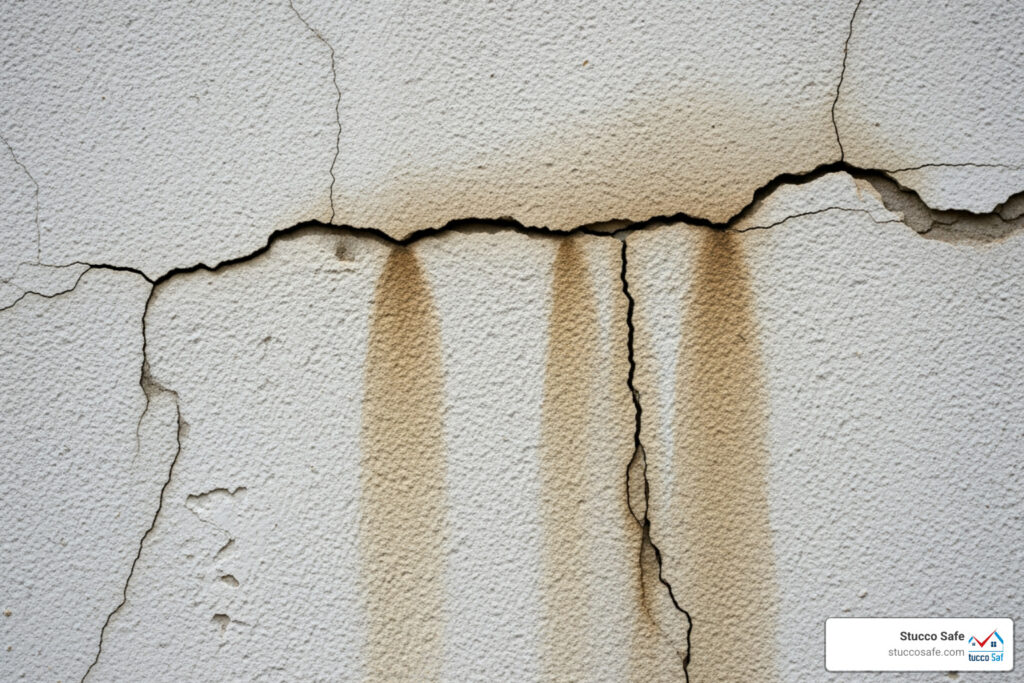
Stucco problems can range from minor cosmetic issues to serious structural damage that threatens your home’s integrity and value. Here are the most critical warning signs:
Common Stucco Problems:
- Cracking – Hairline, diagonal, or stair-step patterns indicating movement or settlement
- Moisture intrusion – Staining, discoloration, or dampness that persists after rain
- Bulging or warping – Walls that appear uneven or separated from the structure
- Mold and mildew – Growth on surfaces signaling trapped moisture
- Efflorescence – White salt deposits from water moving through the material
- Delamination – Bubbling or separating layers of the coating
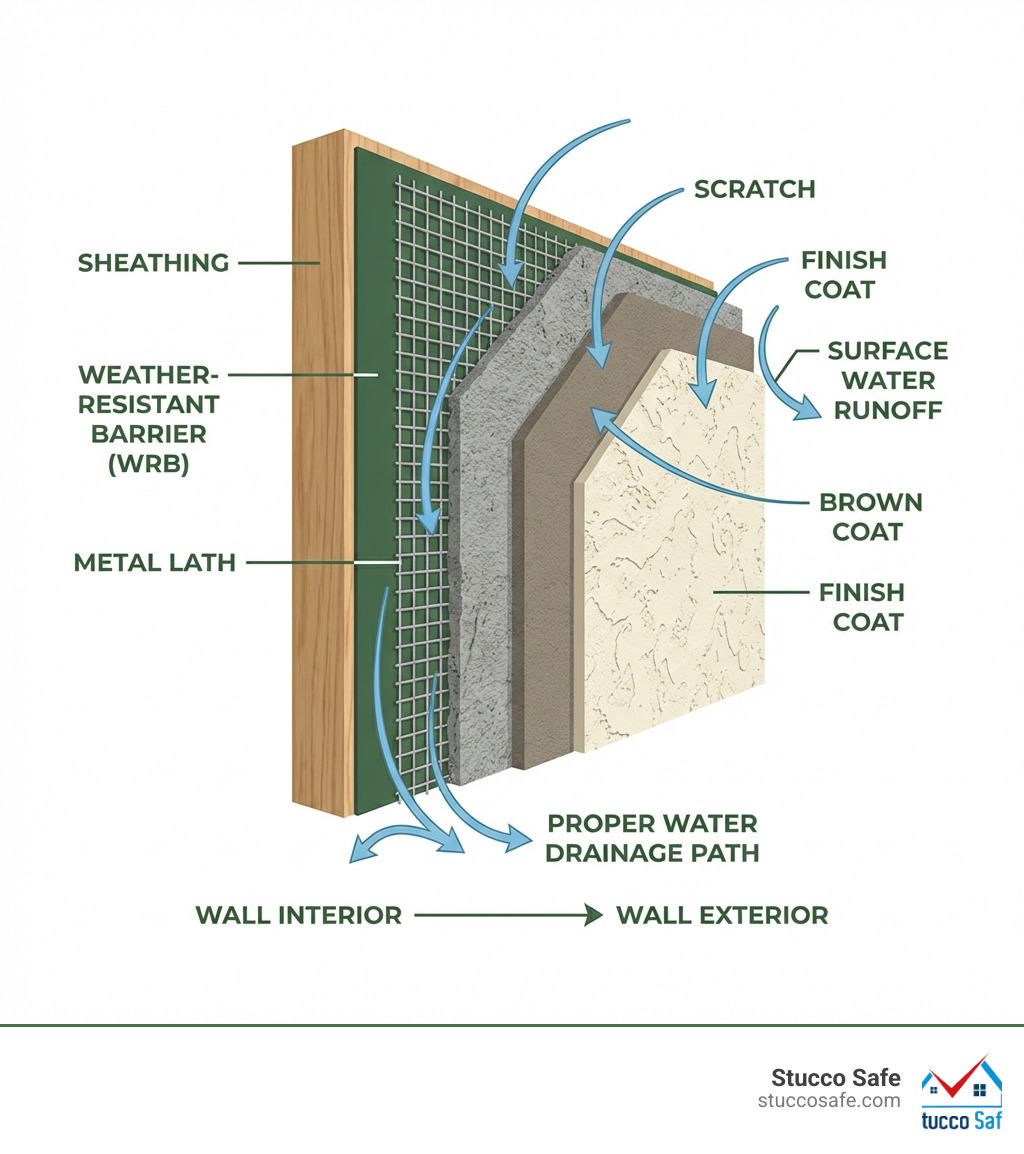
Stucco is fundamentally a porous material made from cement, sand, and lime. While it’s designed to be durable, lasting 50-80 years when properly installed, it naturally absorbs water during rain events. The key to a healthy system isn’t preventing all water entry—it’s ensuring proper drainage and drying through adequate flashing, weather-resistant barriers, and ventilation gaps.
Unfortunately, many homes built between 1993 and 2006 suffer from installation errors that prevent this natural drainage. Changes in building materials over the past 20-30 years—including the shift from plywood to OSB sheathing, the introduction of plastic building papers that bond too strongly to stucco, and increased insulation that reduces drying potential—have created what building scientists call a “perfect storm” of conditions for failure.
Eastern Pennsylvania has earned the unfortunate title of “stucco failure capital of the United States” due to the combination of these construction changes and the region’s challenging freeze-thaw climate. Even newly built homes are experiencing failures at alarming rates, often with damage hidden behind the exterior until it becomes severe.
The good news? Early detection through professional inspection can identify problems before they escalate into costly repairs. Stucco inspections typically range from $495 to $1,595 or more for very large homes—a small investment compared to the tens of thousands of dollars required for full remediation.
I’m Gabe Kesslick, and I’ve specialized in leak detection and repair since 2001, founding Stucco Safe in 2015 specifically to help homeowners understand and address stucco problems before they become catastrophic. As an EDI Level 2 Certified Stucco Inspector and BESI Level 2 Certified Building Envelope Forensic Inspector, I’ve investigated hundreds of failing systems and guided property owners through both minor repairs and complete remediations.
Stucco problems terms made easy:
Identifying Common Exterior Stucco Problems
When we walk up to a home in West Chester or Cherry Hill, we aren’t just looking at the surface; we’re looking for the story the walls are trying to tell us. Stucco problems rarely stay “just” on the surface. Because stucco is a reservoir system, it holds water like a sponge. If that water has nowhere to go, it starts looking for a way into your house.
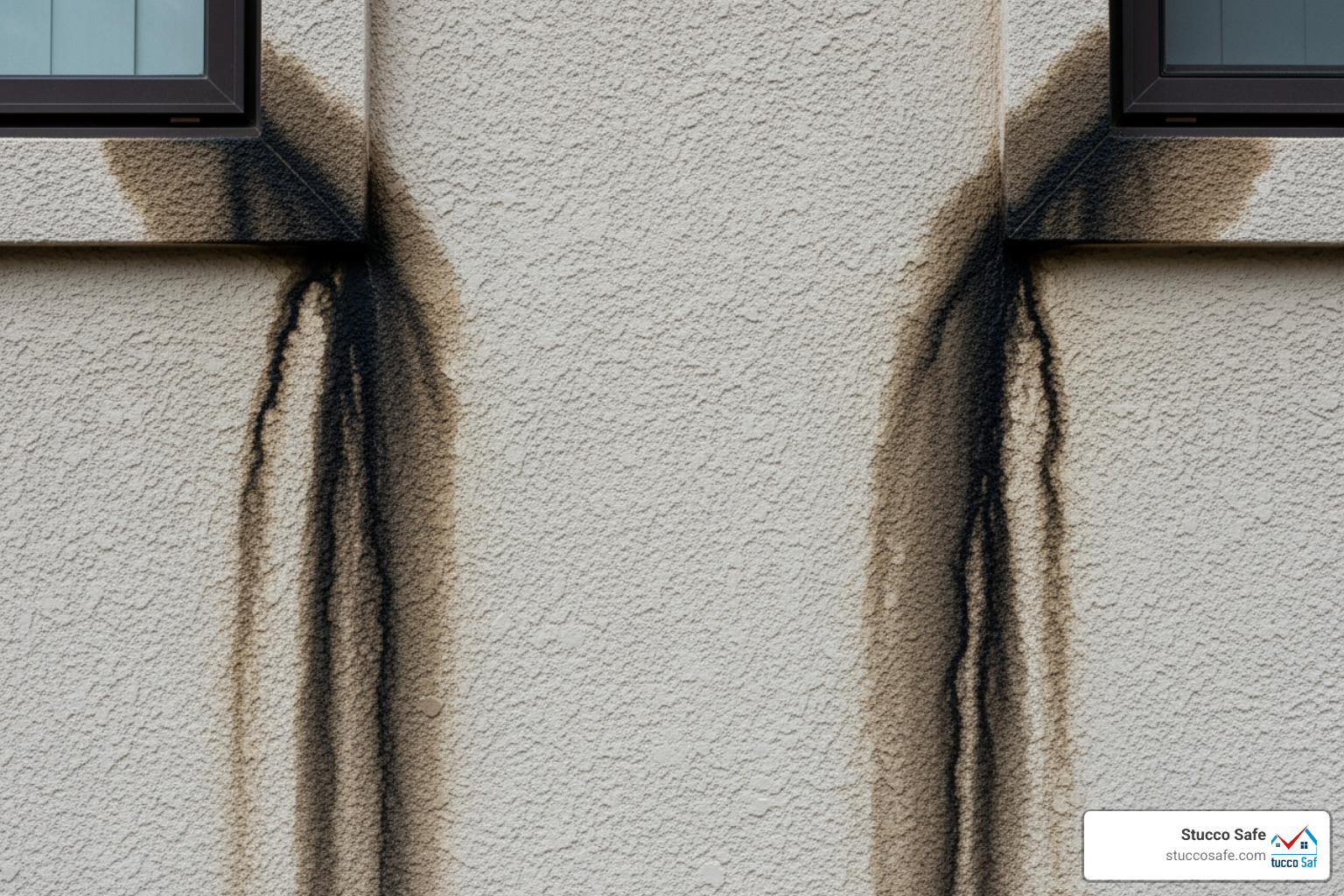
One of the first things we look for is Construction Defects: The Warning Signs of Stucco Failure. This often manifests as staining or discoloration. If you see dark streaks around the corners of your windows or hazy white deposits (efflorescence), your home is waving a red flag.
Moisture-Related Stucco Problems
Moisture is the undisputed king of stucco problems. In our humid climate across New Jersey and Southeastern PA, water doesn’t just sit on the surface; it wicks inward. When water gets trapped behind the stucco layers, it meets the wooden framing of your home. This is where the real “nightmare fuel” begins.
- Mold and Mildew: If you see black or green spots on your stucco, it’s not just a cleaning issue. It means the wall is staying damp long enough to support life. This can lead to serious respiratory issues for your family.
- Rotting Wood: This is the “silent killer.” By the time you notice a soft spot in the wall or a musty smell in your living room, the OSB sheathing or structural studs may already be the consistency of wet cardboard.
- Rusting Metal: Stucco is held up by a metal lath. When moisture persists, this lath rusts. As it rusts, it expands and then disintegrates, causing the stucco to lose its grip on the house.
- Insect Infestation: Termites and carpenter ants aren’t just looking for wood; they’re looking for wet wood. A moist stucco wall is basically a five-star resort for pests.
- Window Leaks and Plumbing Issues: Sometimes the water isn’t coming through the stucco face, but leaking from a poorly sealed window or a leaky pipe inside the wall. Because the stucco is so sealed on the outside, that water stays trapped, rotting the wall from the inside out.
Moisture Red Flags:
- Dark “tears” or streaks coming from window corners.
- Stucco that stays damp for days after the rain stops.
- White, crusty salt deposits (efflorescence) on the surface.
- Paint that is peeling or bubbling in specific areas.
- A musty, earthy smell near exterior walls.
Structural Stucco Problems and Cracking
Not all cracks are created equal. Some are just “growing pains,” while others are signs that your foundation is trying to tell you something.
- Hairline Cracks: These are typically less than 1/16th of an inch. They can be caused by the house settling or the stucco drying too quickly during installation. While common, they still need to be sealed because they act as tiny straws, sucking water into the wall.
- Diagonal Cracks: If you see a crack running diagonally from the corner of a window or door, pay attention. These are classic signs of foundation settlement or “heave” (where the ground pushes up).
- Spider Cracks: These look like a spider web and usually mean the stucco mix was off—too much water or sand, or it dried way too fast in the sun.
- Cross-Patterned Cracks: These often follow the lines of the metal lath or the sheathing underneath. This usually points to improper installation of the lath or the weather-resistant barrier.
- Stair-Step Cracks: In homes with a cinder block foundation, cracks that follow the mortar lines in a stair-step pattern are a major indicator of foundation movement.
The Science of Failure: Why Modern Systems Deteriorate
You might wonder why a 100-year-old stucco home in Villanova looks great, while a 15-year-old home in King of Prussia is falling apart. The answer lies in building science. We call it the “Perfect Storm,” a concept famously detailed in BSI-029: Stucco Woes—The Perfect Storm.
In the “old days,” we used plywood sheathing and heavy, tar-saturated building paper. If water got back there, the plywood would absorb it, spread it out, and eventually dry out because the house “breathed” more.
Modern construction changed everything:
- OSB Sheathing: Oriented Strand Board (OSB) is cheaper than plywood but reacts poorly to water. Unlike plywood, which dries relatively well, OSB stays wet and rots much faster.
- Plastic WRBs: Modern “house wraps” are often plastic-based. In many cases, the wet stucco actually bonds to the plastic, which eliminates the tiny “drainage plane” where water is supposed to trickled down and out.
- Increased Insulation: We love energy efficiency, but thick insulation means the walls stay at a more constant temperature. This sounds good, but it actually reduces the “drying potential” of the wall. In the old days, heat escaping from the house would help dry out a damp wall. Now, that moisture just sits there.
- Lack of Air Gaps: Without a ventilated air gap (a “rainscreen”), moisture has no way to evaporate.
To prevent these stucco problems, modern codes like ASTM C926 and ASTM C1063 require specific mix proportions and lath attachments. Unfortunately, in the building boom of the late 90s and early 2000s, these standards were frequently ignored.
Interior Concerns: Stucco Ceilings and Health Risks
While we spend a lot of time talking about exterior walls, we can’t ignore the “stucco” inside your home—specifically, those textured “popcorn” ceilings. While they were popular in the mid-20th century for their sound-dampening qualities and ability to hide imperfections, they come with their own set of stucco problems.
- Asbestos Risks: If your home was built before 1982, there is a significant chance your textured ceiling contains asbestos. If these ceilings are scraped or damaged, they can release microscopic fibers into the air, leading to severe lung diseases.
- Air Quality and Respiratory Health: The rough texture of these ceilings is a magnet for dust, cobwebs, and allergens. For people in places like Edison or Camden with asthma or allergies, these ceilings can be a constant trigger.
- Yellowing and Maintenance: Popcorn ceilings are incredibly difficult to clean. They absorb cooking grease, cigarette smoke, and humidity, leading to ugly yellow stains. You can’t just scrub them; the texture will fall right off!
- Resale Value: Let’s be honest—most buyers today see popcorn ceilings and immediately think “renovation cost.” They can significantly hurt your home’s resale value and make rooms feel darker and smaller.
Professional Solutions: Repair vs. Remediation
When we find stucco problems, the big question is always: “Can we just patch it, or do we need to tear it all off?”
Stucco Repair (Patching) is like putting a band-aid on a cut. It’s great for minor surface cracks or cosmetic dings. However, if the underlying cause is moisture intrusion or structural movement, a patch will fail within a year or two.
Stucco Remediation is the “reset button.” It involves removing the stucco, replacing any rotted wood, installing a proper drainage plane (like a rainscreen), and then applying a new exterior system. It’s more expensive, but it’s the only way to truly fix systemic failures.
How We Test
We don’t guess; we use forensic testing. This involves:
- Moisture Meters: We use advanced Extech meters to read the moisture levels behind the stucco.
- Invasive Testing: We drill tiny, 1/4-inch probe holes (usually under windows or near joints) to check the condition of the wood substrate. Don’t worry—we seal these holes with color-matched sealant so they’re virtually invisible when we’re done.
- Thermal Imaging: While some people use thermal cameras, we consider them a “thermal scam” if used alone. They can show temperature differences, but they can’t tell us if wood is rotting. Only a physical probe can do that.
| Feature | Minor Repair (Patching) | Full Remediation |
|---|---|---|
| Best For | Cosmetic cracks, bird holes | Systemic moisture, rotted sheathing |
| Longevity | 2–5 years (if lucky) | 30–50+ years |
| Cost | Low ($500 – $2,000) | High ($20k – $100k+) |
| Solves Root Cause? | No | Yes |
Frequently Asked Questions about Stucco Maintenance
How long does well-installed stucco typically last?
A well-installed “hardcoat” stucco system can easily last 50 to 80 years. However, that doesn’t mean it’s maintenance-free. You should expect to do small repairs or reseal joints every 5 to 10 years, depending on how much sun and rain your home gets. Think of it like a car—the engine might last 200,000 miles, but you still need to change the oil!
Can I repair stucco problems myself?
For a tiny hairline crack that isn’t growing? A little high-quality caulk can help. But for anything else—especially moisture stains, bulging, or large cracks—DIY is a dangerous game. You might seal the crack but trap the moisture inside, accelerating the rot. Because stucco problems are often hidden, you need a professional to see what’s happening behind the “curtain.”
What is the “stucco failure capital” of the United States?
That dubious honor goes to Eastern Pennsylvania. Why? It’s a combination of our specific climate (lots of rain followed by freezing temperatures) and the massive building boom in the 90s where many contractors were not properly trained on the newer, more complex moisture management systems required for modern homes.
Conclusion
Owning a stucco home in the Delaware Valley doesn’t have to be a source of constant anxiety. While stucco problems are common, they are also predictable and manageable if caught early. Whether you’re buying a beautiful new home in Villanova or maintaining a family property in Toms River, knowledge is your best defense.
At Stucco Safe, we pride ourselves on being the “detectives” of the stucco world. We serve Southeastern PA, New Jersey, and Delaware with one goal: providing you with the truth about your home’s exterior. Our forensic inspections—ranging from $495 to $1,595—provide the clarity you need to protect your biggest investment.
Don’t let a small stain turn into a structural disaster. If you’re concerned about stucco moisture problems, reach out to us. We’ll bring our moisture meters, our probes, and our decades of experience to ensure your home remains a safe, dry haven for years to come.