
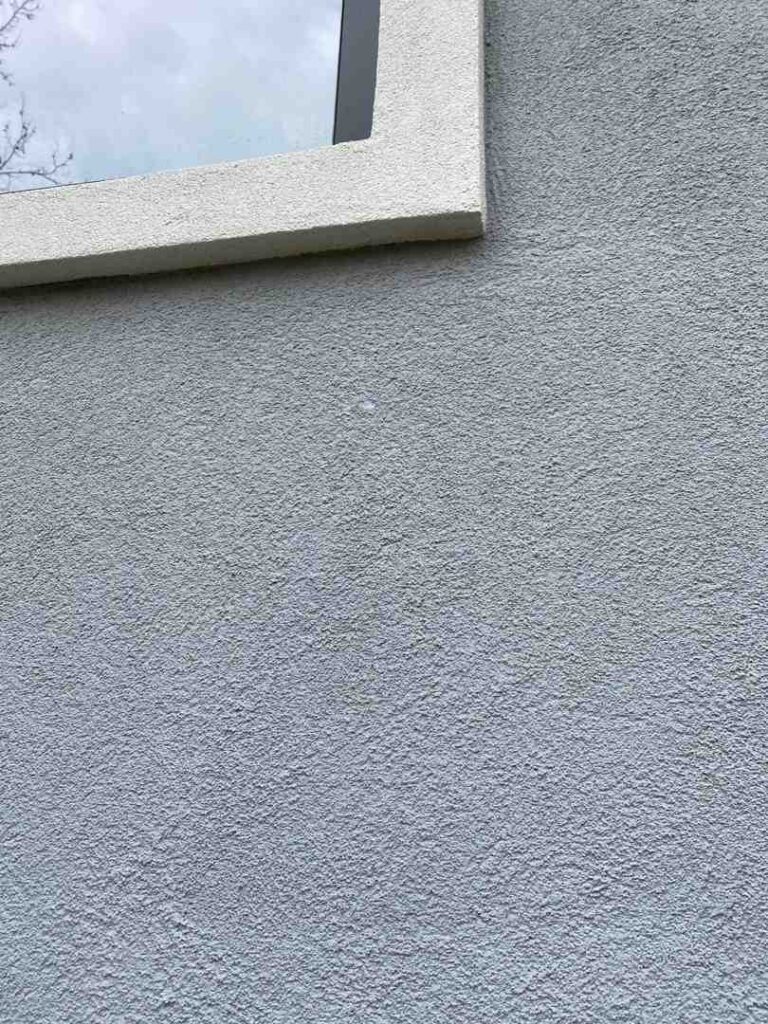
Is a Stucco Home Right for You? Everything You Need to Know About This Classic Finish
What You Need to Know About a Stucco Exterior Home
A stucco exterior home offers timeless appeal and architectural versatility that has made it one of the most popular siding choices in America. This cement-based plaster coating—made from Portland cement, sand, lime, and water—has been used for centuries and continues to rank as the second-most popular siding material in the U.S., behind only vinyl.
Quick Overview: Stucco Exterior Homes at a Glance
- Lifespan: 50-100+ years when properly maintained
- Cost: $7-$15 per square foot installed
- Best For: Warm, dry climates; Mediterranean, Spanish, and Modern architectural styles
- Key Benefits: Fire-resistant, pest-resistant, highly durable, low annual maintenance
- Main Concerns: Moisture intrusion, cracking, requires skilled installation
- Maintenance: Annual inspections, gentle cleaning, prompt crack repairs
But here’s what many homeowners don’t realize: the stucco itself is often the last component to show signs of failure. Water can penetrate behind your home’s beautiful exterior and cause extensive damage to the underlying structure—often without any visible warning signs on the surface. This is especially true for homes built between 1993 and 2006, which have a stucco failure rate estimated as high as 90% due to outdated building codes.
This guide covers stucco types, pros and cons, design trends, maintenance, and—most importantly—how to protect your investment from hidden moisture damage.
With over 20 years of experience as an EDI Level 2 Certified Stucco Inspector, Gabe Kesslick has investigated countless stucco exterior home issues. This guide leverages that expertise to help you make informed decisions, whether you’re building, buying, or maintaining a stucco home, and avoid costly surprises.
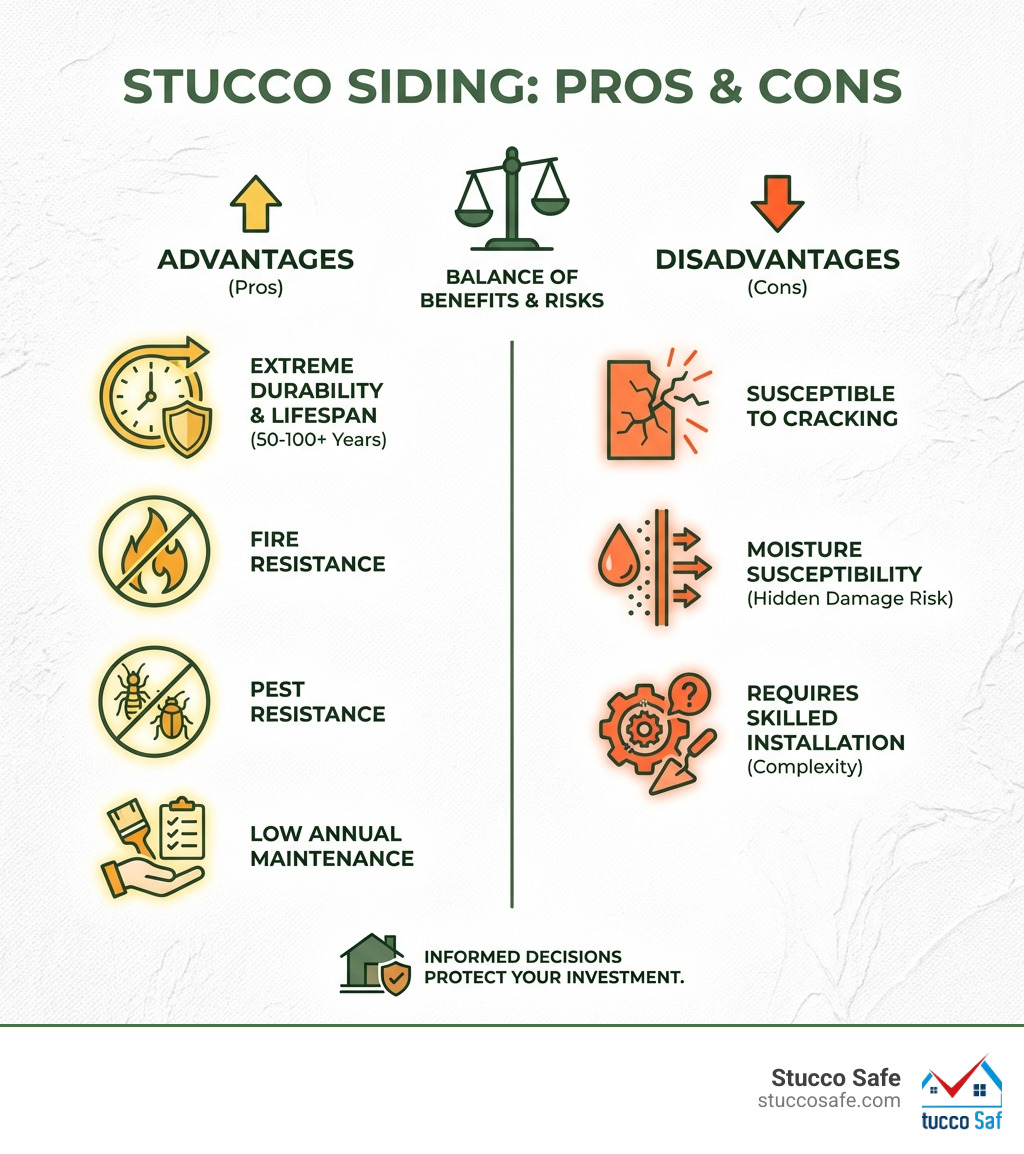
Stucco exterior home vocabulary:
The Anatomy of Stucco: Types, Finishes, and Application
Stucco is a versatile and durable exterior finishing plaster coat found on homes nationwide. While often mistaken for concrete, stucco has a unique composition and application process that sets it apart. It’s a cement-type mixture of Portland cement, lime, sand, and water. These ingredients are mixed and applied wet, then dried to form a hard, durable finish. Understanding the different types, finishes, and application methods is crucial to appreciating its qualities and ensuring its longevity. For a general overview of stucco, you can read What Is Stucco?.
Traditional vs. Synthetic Stucco Systems
When we talk about stucco, it’s important to distinguish between traditional (or hard-coat) stucco and its modern counterparts, like synthetic stucco (EIFS) and acrylic stucco. Each has its own characteristics, benefits, and considerations.
Traditional Stucco Traditional stucco is a time-tested material made primarily from cement, sand, and lime. The addition of lime makes it more breathable than pure concrete, allowing some moisture to escape. It’s known for its rigidity, durability, and resistance to fire and pests. Historically, traditional stucco was applied in multiple thick layers, creating a robust “hard-coat” system. While incredibly strong, this type of stucco can be prone to cracking, especially as a home settles or if not properly installed. These cracks, even hairline ones, can become entry points for moisture. You can learn More info about hard coat stucco problems.
Synthetic Stucco (EIFS) Exterior Insulation and Finish Systems, or EIFS, are often referred to as synthetic stucco. Unlike traditional stucco, EIFS is a multi-layered system that typically includes foam board insulation, a fiberglass mesh reinforcement, and an acrylic finish coat. This system offers superior insulation properties, making homes more energy-efficient. EIFS is also lighter weight and more flexible than traditional stucco, which helps reduce cracking. However, EIFS can be more complex to install, and if not done correctly, it can trap moisture behind the system, leading to significant hidden damage. It’s crucial to understand these potential issues, and you can Learn about EIFS moisture issues.
Acrylic Stucco Acrylic stucco is another modern variation that incorporates acrylic resin into the mix. This makes it more water-resistant and flexible than traditional stucco, further reducing the likelihood of cracks and offering a smoother, more consistent finish. It also provides a wider range of color choices that last longer than paint.
The Three-Coat Application Process
The application of stucco is a multi-step process, typically involving three coats, especially for traditional systems. Proper application is paramount for the longevity and performance of any stucco exterior home.
Substrate Preparation Before stucco can be applied, the underlying surface, or substrate, needs careful preparation.
- Masonry: For masonry surfaces like concrete blocks, stucco can be applied directly. Concrete masonry provides a stable base.
- Wood Sheathing: For wood-framed homes, the process is more intricate. First, a moisture barrier is essential. This usually involves applying two layers of building paper or a house wrap, which acts as a crucial defense against water intrusion. Understanding the role of this barrier is vital; learn more about Understanding moisture barriers.
Lath Installation Over the moisture barrier, a metal lath (wire mesh) is installed. This mesh provides a framework for the stucco to adhere to and reinforces the entire system. The lath is either self-furring or held slightly away from the wall to allow the stucco to key into it. For more details on this essential component, you can explore More on chicken wire stucco.
Scratch Coat The first layer of stucco applied is the scratch coat. This 3/8-inch thick cementitious mix is troweled onto the lath and scratched while wet to create grooves for the next layer. This coat must cure for at least 24-48 hours.
Brown Coat Once the scratch coat has cured, the brown coat is applied. This 3/8-inch thick layer is smoothed to create an even surface for the finish coat. Like the scratch coat, it also requires a curing period of at least 24-36 hours.
Finish Coat The final layer is the finish coat, which is typically about 1/8-inch thick. This is where the color and texture are introduced, giving the stucco exterior home its distinctive aesthetic. It can be tinted with pigments or later painted. The entire stucco system, after the finish coat, should be allowed to dry-cure for about 10 days to achieve optimal strength and minimize cracking. The total final assembly thickness should be no less than 7/8″.
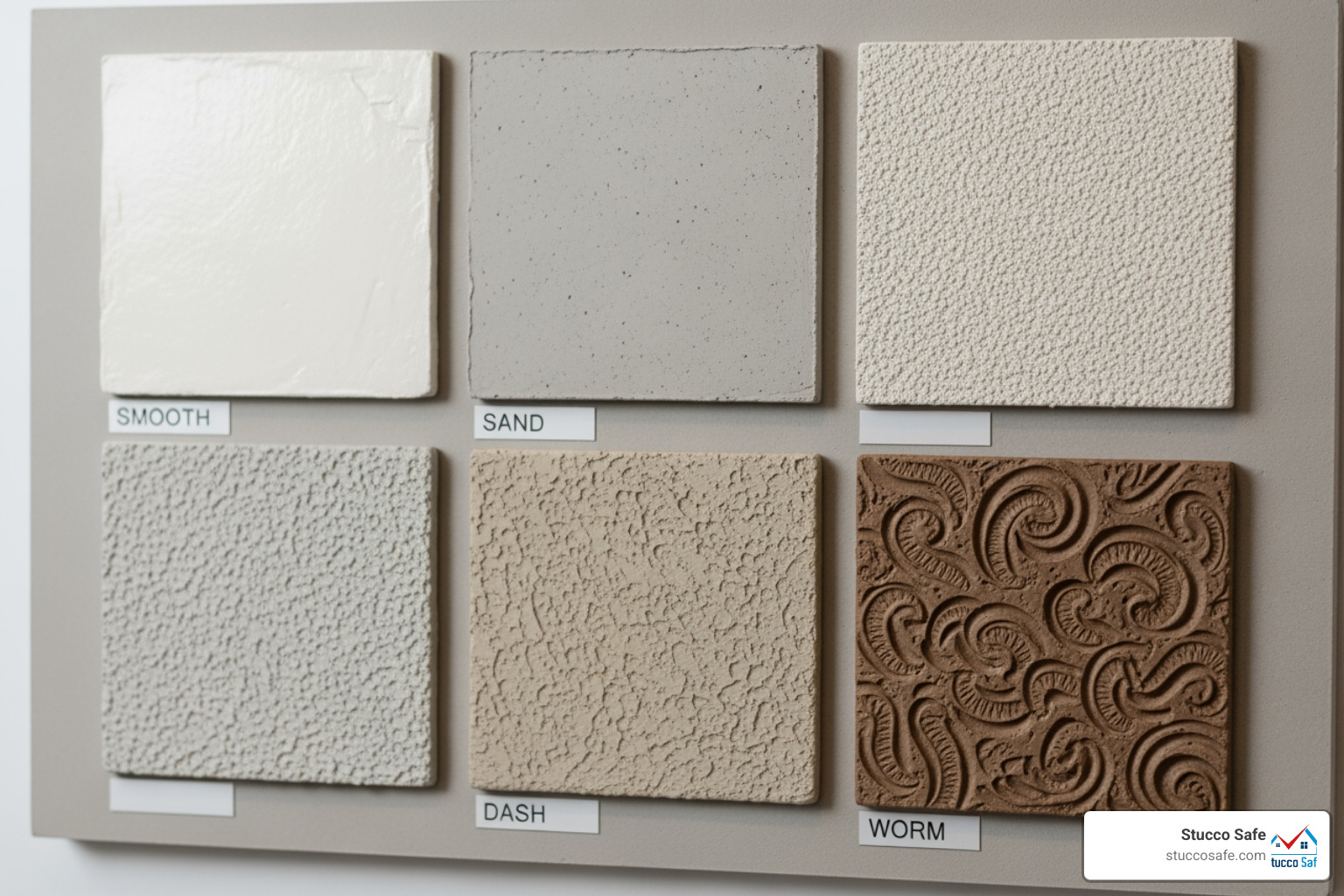
Popular Stucco Finishes and Textures
The finish coat offers a wide array of textures, each contributing a unique character to the stucco exterior home. Here are some popular choices:
- Sand (Float) Finish: This is one of the most common finishes, characterized by a fine, granular texture, similar to sandpaper. It’s achieved by using a float tool to spread the stucco, leaving behind a subtle, even texture.
- Dash Finish: A dash finish is created by flicking stucco onto the wall, resulting in a rough, spattered look. The size and density of the “dashes” can be varied for different effects.
- Lace and Skip: This finish involves applying a base coat, then “skipping” a trowel over it to create a raised, lacy pattern. It provides a more intricate, textured appearance.
- Smooth Finish: A smooth finish aims for a sleek, uniform surface. While visually appealing, it’s one of the most challenging to achieve perfectly and can highlight imperfections. Synthetic stucco is often more suitable for this finish due to its consistency.
- Worm Finish: Also known as “worm-hole” or “grooved” finish, this texture is created by dragging aggregates within the stucco mix, leaving distinct grooves that resemble worm trails. It offers a bold, unique look.
- English Finish: This finish often looks like fish scales and is commonly seen in older buildings, adding a historical touch.
- Santa Barbara Finish: Popular in California, this finish is known for its irregular, rustic, yet neat appearance.
- Cat Face Finish: This unique finish gets its name from the smooth areas and rough patches that resemble cat faces laid next to each other.
The Pros and Cons of a Stucco Exterior Home
Choosing the right exterior for your home is a significant decision. A stucco exterior home offers many compelling advantages, but it also comes with potential drawbacks that homeowners should be aware of. Let’s weigh the benefits against the challenges.
Advantages of Choosing Stucco
- Durability & Longevity: Stucco is renowned for its resilience. When properly applied and maintained, a stucco exterior can last for an impressive 50 to 100 years or even more. Its robust composition allows it to withstand various weather conditions. A Durability study by the Stucco Manufacturers Association highlights this longevity.
- Fire Resistance: Stucco is a highly fire-resistant material, offering a one-hour fire rating. This makes it an excellent choice for homes in fire-prone areas, providing an added layer of safety for your family and property.
- Pest and Rot Resistance: Unlike wood-based sidings, stucco is inorganic, making it naturally resistant to pests like termites and carpenter ants, as well as rot. This can save homeowners significant repair costs in the long run.
- Design Versatility: Stucco offers unparalleled aesthetic flexibility. It can be molded and textured in countless ways, from smooth and modern to rustic and traditional. It can be tinted to virtually any color or painted, allowing for endless customization to match any architectural style, from Mediterranean to contemporary.
- Low Maintenance Costs: While some maintenance is required, the annual costs for a well-installed stucco exterior are relatively low compared to many other siding materials. Regular cleaning and prompt attention to minor cracks can keep it looking great for decades.
- Sound Insulation: The dense nature of stucco provides excellent sound insulation, helping to create a quieter, more peaceful interior environment by dampening exterior noise.
Disadvantages and Potential Drawbacks
- Installation Sensitivity: The quality of a stucco exterior hinges heavily on its installation. It’s not a DIY project. Proper application requires a high skill set, specialized equipment, and often a team of professionals. Improper installation, especially concerning moisture barriers and flashing, can lead to severe hidden problems down the line. This is why Why professional installation matters.
- Moisture Susceptibility: Stucco is porous and can absorb moisture. If water gets trapped behind it through cracks or poor flashing, it can cause extensive, hidden damage to the wood structure underneath. This is a critical concern we often see in homes across Southeastern PA, New Jersey, and Delaware. Understanding moisture behind stucco is vital.
- Prone to Cracking: Stucco, being a rigid material, is susceptible to cracking. Hairline cracks are common and often result from normal house settling or drying shrinkage. However, larger stress cracks can indicate more significant structural movement or improper application, providing pathways for water intrusion.
- Repair Complexity: While minor cracks can be patched, significant stucco damage, especially that involving moisture intrusion, can be complex and costly to repair. Identifying the root cause of the damage often requires professional expertise, and repairs need to seamlessly blend with the existing finish.
Table: Stucco vs. Other Siding Materials
| Feature | Stucco | Vinyl Siding | Fiber Cement Siding |
|---|---|---|---|
| Durability | Very High (50-100+ years) | Moderate (20-40 years) | High (30-50 years) |
| Cost (Installed) | $7-$15 per sq ft | $3-$8 per sq ft | $6-$12 per sq ft |
| Maintenance | Low (annual inspection, cleaning) | Very Low (periodic cleaning) | Moderate (periodic painting, cleaning) |
| Fire Resistance | Excellent | Poor (melts) | Excellent |
| Pest/Rot Resist. | Excellent | Good | Excellent |
| Moisture Issues | Susceptible if improperly installed | Good (can trap moisture if not vented) | Good (requires proper sealing) |
| Aesthetics | Highly customizable (textures, colors) | Limited (panels, few textures) | Good (mimics wood, brick) |
| Insulation | Moderate (Traditional), High (EIFS) | Low (can add insulated backing) | Low |
Designing Your Dream Home: Stucco Colors, Styles, and Trends
Beyond its practical benefits, the aesthetic appeal of a stucco exterior home is a major draw. Its smooth or textured surface provides a perfect canvas for a wide range of colors and architectural styles, allowing homeowners to create a truly unique and stunning facade.
Best Paint Colors and Sheens for Stucco
Choosing the right paint color can transform your stucco home. While the classic white is undeniably popular, countless options can improve your home’s curb appeal.
Popular Colors
- Whites & Off-Whites: Timeless and versatile, white stucco creates a bright, clean, and classic look. Off-whites like Sherwin Williams’ Alabaster or Benjamin Moore’s Swiss Coffee offer a softer, warmer feel.
- Grays: Gray stucco can range from light, serene shades to deep, sophisticated charcoals. Sherwin Williams’ Worldy Gray is a popular earthy gray that can transform a home into a sophisticated showstopper. For a classic, neat look, consider Benjamin Moore’s Nantucket Gray which pairs beautifully with white accents.
- Earth Tones: Beige, tan, and warm brown shades blend seamlessly with natural surroundings, creating a cozy and inviting atmosphere.
- Darker Shades: For a dramatic and modern aesthetic, dark grays and even black stucco can be stunning. Benjamin Moore’s Raccoon Fur offers a saturated, dark gray that complements lighter trim and stone accents. Darker colors can make lighter stone accents pop and give a sleek, modern feel.
Best Sheen For stucco exteriors, a flat or satin finish is generally recommended. A flat sheen is particularly effective as it helps to conceal any minor imperfections or textures in the stucco surface, providing a uniform and refined appearance. Higher sheens tend to highlight irregularities.
Before committing to a color, we always recommend sampling and testing paint colors on your actual stucco. Factors like natural lighting, undertones, and your property’s fixed elements (roof, landscaping) will significantly impact how a color appears. You can Get paint samples here to ensure you love the color in real-world conditions. For more detailed painting advice, consult our Guide to painting a stucco house.
Popular Architectural Styles for a Stucco Exterior Home
Stucco’s adaptability makes it a favored material for a wide array of architectural styles.
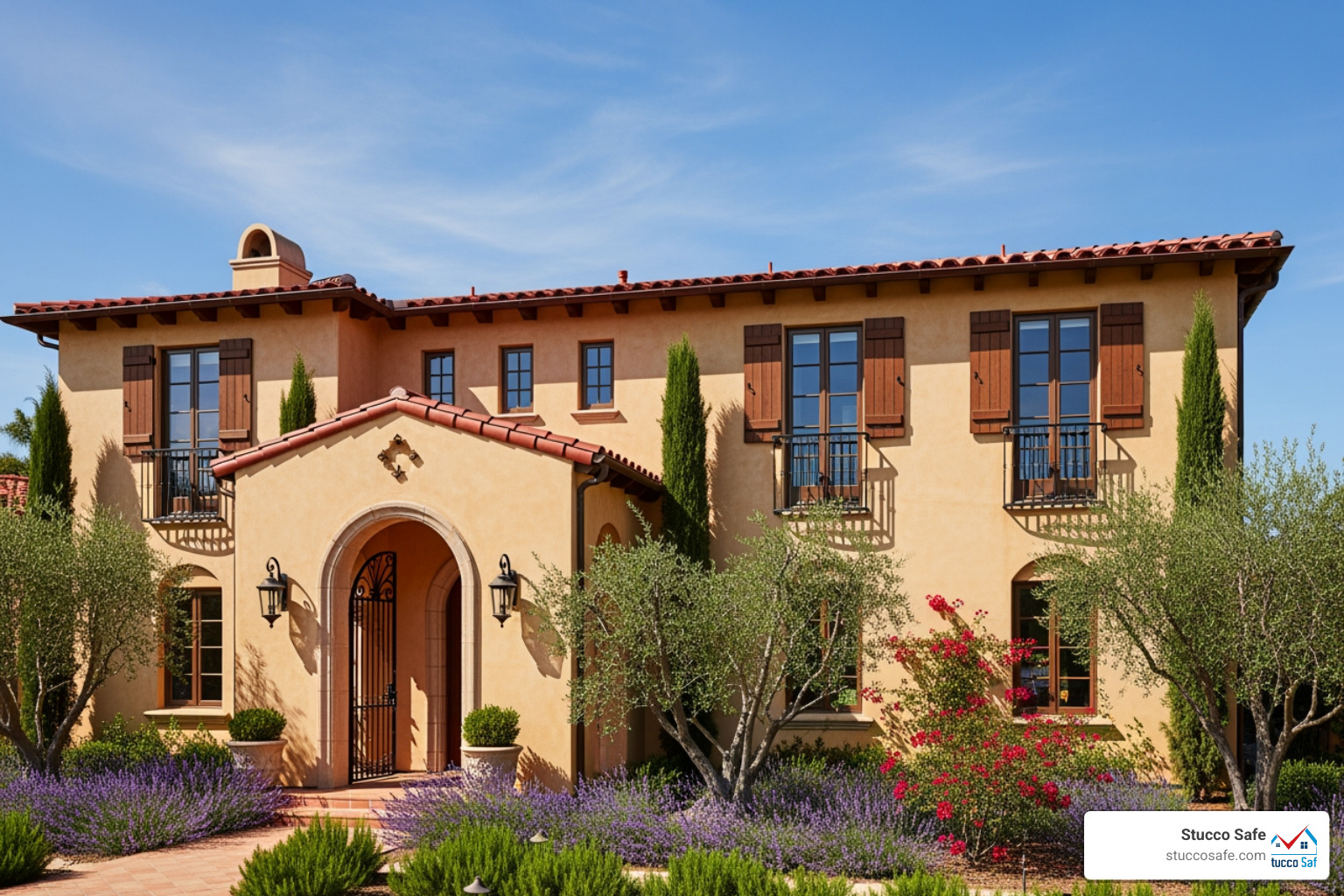
- Mediterranean & Spanish: Perhaps the most iconic pairing, stucco is central to Mediterranean and Spanish-style homes. Characterized by warm, earthy tones, red tile roofs, arched doorways, and intricate ironwork, stucco provides the smooth, sun-baked aesthetic these styles are known for.
- Tudor: While often associated with half-timbering, stucco can be beautifully incorporated into Tudor-style homes, often combined with stone or brick. Gray stucco, for instance, can tie together various architectural features and create a cohesive design.
- Modern & Contemporary: For homes with clean lines and minimalist designs, stucco offers a sleek, monolithic appearance. Smooth finishes and neutral colors (whites, grays, even dark charcoals) are popular in modern and contemporary architecture.
- French Country: Stucco lends itself well to the soft, rustic elegance of French Country homes. Paired with natural stone accents and gentle color palettes, stucco helps create that charming, pastoral look.
Protecting Your Investment: Stucco Maintenance, Problems, and Repairs
A stucco exterior home is a significant investment, and like any part of your home, it requires care to perform its best and maintain its beauty. Proactive maintenance can prevent small issues from becoming costly problems, especially when it comes to moisture.
Routine Stucco Maintenance and Cleaning
Consistent care is key to extending the life of your stucco and preventing severe damage.
- Annual Inspections: We recommend inspecting your stucco exterior at least once a year, or before and after harsh weather seasons. Look for any visible cracks, discoloration, efflorescence (white powdery residue), or staining. Pay close attention to areas around windows, doors, and rooflines, as these are common points of failure.
- Cleaning: Clean stucco annually to remove dirt and pollutants. Use a garden hose with mild pressure (never a high-pressure washer, which can force water into cracks) and a soft-bristle brush with mild detergent. For tougher stains, a diluted bleach or borax solution can be effective.
- Gutter and Downspout Maintenance: Ensure your gutters and downspouts are clear, functional, and properly direct water away from your stucco walls. Leaking or overflowing gutters can cause significant water staining and contribute to moisture intrusion.
- Sealing and Caulking: Promptly seal any hairline cracks (smaller than 1/8-inch) with a high-quality, paintable acrylic caulk. Regularly inspect and re-caulk around windows, doors, and other penetrations to maintain a watertight seal. For more comprehensive guidance, refer to our article on More on stucco exterior maintenance.
Common Problems with a Stucco Exterior Home and How to Fix Them
Despite its durability, stucco can develop issues, especially if not properly installed or maintained. Recognizing these problems early is crucial.
- Cracks:
- Hairline Cracks: These are small, superficial cracks often caused by normal settling or drying shrinkage. They are common and can usually be sealed with elastomeric caulk.
- Structural Cracks: Wider cracks (larger than 1/8-inch) that extend deeper into the stucco can indicate structural movement or underlying issues. These require professional assessment and repair. Learn How to fix cracked exterior stucco.
- Water Stains & Discoloration: Dark streaks, green algae, or white efflorescence often indicate water is not draining properly. This can be due to clogged gutters, improper flashing, or moisture trapped behind the stucco. Understanding Understanding stucco water stains is the first step to addressing the issue.
- Bubbling or Blistering: This is a tell-tale sign of trapped moisture beneath the stucco surface. As moisture accumulates and tries to escape, it can push the stucco outwards, causing bubbles or blisters. This often points to significant underlying water intrusion. Consult our Guide to bubbling stucco.
- Wood Rot: This is one of the most severe consequences of prolonged moisture intrusion. If water gets behind the stucco and saturates the wood sheathing or framing, it can lead to rot, compromising your home’s structural integrity. Often, wood rot remains hidden until significant damage has occurred. Learn about stucco and wood rot.
- Mold Growth: Trapped moisture behind stucco creates an ideal environment for mold and mildew. While visible mold on the exterior is a concern, mold growing behind the walls can impact indoor air quality and pose health risks. A professional mold inspection in stucco homes can determine the extent of the problem.
When to Repair vs. Remediate Your Stucco
Deciding whether to simply repair small issues or opt for full stucco remediation can be challenging. The key lies in understanding the extent and cause of the problem.
- Minor Repairs: If your stucco exterior home only has isolated hairline cracks, small cosmetic damage, or minor staining due to easily identifiable external factors (like a leaky gutter), targeted repairs are usually sufficient. This might involve cleaning, sealing small cracks, or patching small areas.
- Full Remediation: We often recommend full remediation when there’s evidence of systemic failure, widespread moisture damage, or issues stemming from improper original installation. This is particularly true for homes built between 1993 and 2006, which are known for higher failure rates. Remediation typically involves removing the existing stucco, addressing underlying moisture damage (like wood rot or mold), repairing the substrate, and then reinstalling a new, properly flashed and drained stucco system. For comprehensive guidance on this process, refer to our Stucco remediation guidelines.
- The Importance of Professional Assessment: Since stucco problems often hide behind the surface, a professional assessment is critical. A qualified stucco inspector can use forensic testing methods to identify moisture intrusion, assess the extent of hidden damage, and determine the root cause of the problem. This objective evaluation helps homeowners in Southeastern PA, New Jersey, and Delaware make informed decisions about the best course of action. It’s often worth hiring Why hire a separate stucco inspector? for an unbiased report. Many ask, Is a stucco inspection worth it? Our experience shows it can save you thousands by detecting issues early.
- Stucco Inspection Costs: A professional stucco inspection typically costs from $495 to $1595 or more for very large homes. This investment provides invaluable peace of mind and can prevent far more expensive repairs down the line.
Frequently Asked Questions about Stucco Homes
We get a lot of questions from homeowners and prospective buyers about stucco exterior homes. Here are some of the most common ones we encounter.
How long does a stucco exterior last?
A well-maintained stucco exterior home can boast an impressive lifespan of 50 to 100 years, or even longer. This longevity is largely dependent on several critical factors:
- Proper Installation: The initial quality of installation, including the correct application of moisture barriers, lath, and multiple coats, is the single most important factor.
- Climate: Stucco performs best in drier climates, but with proper drainage and maintenance, it can also thrive in humid regions like parts of Southeastern PA and New Jersey.
- Regular Maintenance: Annual inspections, prompt repair of cracks, and proper cleaning significantly extend its life. Neglecting these can drastically reduce its lifespan.
Is stucco expensive compared to other siding?
The cost of stucco can be a bit nuanced:
- Initial Cost: Generally, stucco installation costs more than vinyl siding, ranging from $7-$15 per square foot installed. However, it can be comparable to or even less than some high-end fiber cement or brick options.
- Long-Term Value: While the upfront cost may be higher than some alternatives, stucco often proves to be a cost-effective choice over its lifespan due to its exceptional durability and relatively low annual maintenance costs. This long-term value often outweighs the initial investment. If you’re considering removing and replacing failing stucco, you can find More on stucco replacement cost.
Can you get homeowners insurance for a stucco house?
Yes, you absolutely can get homeowners insurance for a stucco exterior home. Stucco is a common and widely accepted building material. However, there are a few considerations:
- Availability: Most insurance companies will cover stucco homes.
- Considerations with EIFS: Some insurers may have concerns or special requirements if your home has an EIFS (synthetic stucco) exterior, particularly if there’s a history of moisture intrusion issues in your area. They might request a professional stucco inspection before issuing a policy or renewal.
- Damage Coverage: The extent to which stucco damage is covered depends entirely on your specific policy. Damage from sudden, accidental events (like a tree falling) is usually covered, while damage from long-term neglect, poor maintenance, or pre-existing moisture issues might not be. We highly recommend reviewing your policy and discussing it with your insurance provider. For more details, you can explore Does home insurance cover stucco?.
Conclusion
A stucco exterior home offers a compelling blend of aesthetic appeal, durability, and versatility, making it a popular choice for homeowners across Southeastern PA, New Jersey, and Delaware. From its historical roots to modern synthetic systems, stucco provides a unique character that can improve any architectural style.
However, as we’ve explored, the beauty and longevity of stucco are directly tied to proper installation and diligent maintenance. The porous nature of stucco and the potential for hidden moisture damage mean that vigilance is not just recommended, it’s essential. Early detection of issues through professional inspections can save homeowners from extensive and costly remediation down the road.
When installed correctly and cared for diligently, a stucco home is an excellent choice that will provide decades of beauty and protection. We at Stucco Safe are committed to helping you understand, maintain, and protect your stucco investment, ensuring your home remains safe and sound.
For all your stucco needs, from understanding its intricacies to ensuring its health, we are here to help. You can also Learn more about professional stucco and painting services to improve and protect your home’s exterior.